Results by title
86 books match the query 'Home' and 19 start with t

The American Idea of Home
Conversations about Architecture and DesignBy Bernard Friedman; foreword by Meghan Daum
University of Texas Press, 2017
“Home is an idea,” Meghan Daum writes in her foreword, “a story we tell ourselves about who we are and who and what we want closest in our midst.” In The American Idea of Home, documentary filmmaker Bernard Friedman interviews more than thirty leaders in the field of architecture about a constellation of ideas relating to housing and home. The interviewees include Pritzker Prize winners Thom Mayne, Richard Meier, and Robert Venturi; Pulitzer Prize winners Paul Goldberger and Tracy Kidder; American Institute of Architects head Robert Ivy; and legendary architects such as Denise Scott Brown, Charles Gwathmey, Kenneth Frampton, and Robert A. M. Stern.
The American idea of home and the many types of housing that embody it launch lively, wide-ranging conversations about some of the most vital and important issues in architecture today. The topics that Friedman and his interviewees discuss illuminate five overarching themes: the functions and meanings of home; history, tradition, and change in residential architecture; activism, sustainability, and the environment; cities, suburbs, and regions; and technology, innovation, and materials. Friedman frames the interviews with an extended introduction that highlights these themes and helps readers appreciate the common concerns that underlie projects as disparate as Katrina cottages and Frank Lloyd Wright Usonian houses. Readers will come away from these thought-provoking interviews with an enhanced awareness of the “under the hood” kinds of design decisions that fundamentally shape our ideas of home and the dwellings in which we live.
The Changing Face of Home
The Transnational Lives of the Second GenerationPeggy Levitt
Russell Sage Foundation, 2002
The Colonizing Self
Or, Home and Homelessness in Israel/PalestineHagar Kotef
Duke University Press, 2020
The Comforts of Home
Prostitution in Colonial NairobiLuise White
University of Chicago Press, 1990
"White's book . . . takes a unique approach to a largely unexplored aspect of African History. It enhances our understanding of African social history, political economy, and gender studies. It is a book that deserves to be widely read."—Elizabeth Schmidt, American Historical Review
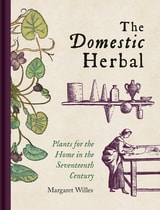
The Domestic Herbal
Plants for the Home in the Seventeenth CenturyMargaret Willes
Bodleian Library Publishing, 2020
In the seventeenth century most English households had gardens. These gardens were not merely ornamental; even the most elaborate and fashionable gardens had areas set aside for growing herbs, fruit, vegetables, and flowers for domestic use. Meanwhile, more modest households considered a functional garden to be a vital tool for the survival of the house and family. The seventeenth century was also a period of exciting introductions of plants from overseas, which could be used in all manner of recipes.
Using manuscript household manuals, recipe books, and printed herbals, The Domestic Herbal takes the reader on a tour of the productive garden and of the various parts of the house—kitchens and service rooms, living rooms and bedrooms—to show how these plants were used for cooking and brewing, medicines and cosmetics, in the making and care of clothes, and to keep rooms fresh, fragrant, and decorated. Recipes used by seventeenth-century households for preparations such as flower syrups, snail water, and wormwood ale are also included. A brief herbal gives descriptions of plants both familiar and less known to today’s readers, including the herbs used for common tasks like dyeing and brewing, and those that held a particular cultural importance in the seventeenth century. Featuring exquisite colored illustrations from John Gerard’s herbal book of 1597 as well as prints, archival material, and manuscripts, this book provides an intriguing and original focus on the domestic history of Stuart England.
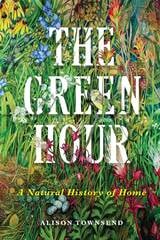
The Green Hour
A Natural History of HomeAlison Townsend
University of Wisconsin Press, 2021
With sparkling, lyrical prose, The Green Hour undulates effortlessly through time like a red-winged blackbird. Inspired by five beloved settings—eastern Pennsylvania, Vermont, California, western Oregon, and the spot atop the Wisconsin hill where she now resides—Townsend considers the role that place plays in shaping the self. She reveals the ways that a fresh perspective or new experience in any environment can incite wonder, build unexpected connections, and provide solace or salvation.
Mesmerizingly attentive to nature—its beauty, its fragility, and its redeeming powers—she asks what it means to live in community with wilderness and to allow our identities to be shaped by our interactions with it: our story as its story.
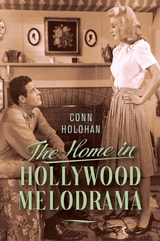
The Home in Hollywood Melodrama
Conn Holohan
Rutgers University Press, 2027
The Home in Hollywood Melodrama considers the home’s narrative, thematic, and visual construction within domestic melodramas of the 1930s and 1940s, exploring the assumptions of gender, class, and race through which the home is visualized on screen. Informed by approaches from genre studies, architectural and urban studies, feminist film theory, critical race theory, and phenomenology, amongst others, the book traces how routine domestic activities and unremarkable stylistic gestures become charged with meaning via melodrama’s emphasis on recurrence and return and its moral elevation of victimhood. Drawing on original archival research and detailed textual analysis, The Home in Hollywood Melodrama offers a series of detailed case studies that explore the onscreen home as a product of both Hollywood production norms and wider cultural conceptions of belonging. Addressing questions of female movement and labor, property relations and class, race, and national identity, the book argues that the generic structures of domestic melodrama are fundamental to understanding how the home within these films takes shape onscreen.

The Home of the Drowned
A NovelElin Anna Labba
University of Minnesota Press, 2026
The haunting, multigenerational saga of a family of Sámi women fighting the devastation of their way of life
Nothing is true, and everything is true; poetry will never hurt more than what has happened. Every summer, Iŋgá, her mother Rávdná, and her Aunt Ánne travel west to their village on the lake. But the summer Iŋgá is thirteen, they arrive to find their home and possessions have disappeared under water, the land flooded by a dam built to supply hydropower to a society that has continually stolen from them.
The Home of the Drowned follows these women’s fortunes over forty years—from 1942 to 1982—as the water their people have lived near for centuries is transformed into a menacing force that threatens all they hold dear. Defying the authorities, Rávdná decides to build a proper house on the lake to replace what was lost, becoming an unlikely activist even as her actions isolate her family from the rest of the community. Meanwhile, Ánne’s health is in decline, and a concerned Iŋgá merely longs to live like everyone else—an impossible wish when the Swedish state is relentlessly drowning her world.
Drawing on her own family’s history of forced relocation and violent colonial dispossession, Elin Anna Labba’s debut novel brings Sámi history to the fore through this intimate story. In poetic prose deftly translated by Elizabeth Clark Wessel, she reveals connections between land, water, and people that hauntingly reverberate with the question: what is it that makes a home?
Retail e-book files for this title are screen-reader friendly.
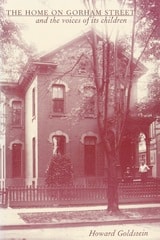
The Home on Gorham Street and the Voices of Its Children
Howard Goldstein
University of Alabama Press, 1996
Giving voice to childhood, memory, and resilience within a shared home.
The Home on Gorham Street looks back to an earlier era of care for orphaned and dependent children of Eastern European Jewish immigrants. Within this social history and ethnography, the voices of elders once wards of the home in the 1930s and 1940s tell us in sometimes poetic, often comic, usually ironic, and always poignant words what it was really like to grow up in an orphanage. Emerging from this penetrating adventure are principles for the future of effective group care in meeting the needs of the rapidly growing number of abused, forsaken, and orphaned children.
Goldstein's ethnography demonstrates amply that children who spend years in an institution can go on to lead productive lives under certain conditions. Such conditions may never have been met in any other children's institution. That they did exist one time, however, is cause not only to rejoice but also to understand that recreating these conditions is difficult and possibly impossible.
The Language of Home
StoriesRaymond Luczak
Gallaudet University Press, 2025
This short story collection offers readers many possible answers that reveal the Deaf experience in all its complexities. Written over nearly forty years by celebrated Deaf author Raymond Luczak, this collection of thirty stories paints a vivid panorama of Deaf lives. From a young DeafBlind boy feeling lost within his hearing family to a hearing son of Deaf parents caught between their infighting and a hearing mother realizing in the split second of her own death the full impact of the missteps she has taken while raising her Deaf son, Luczak crafts narratives that resonate with authenticity. Other stories feature an ASL interpreter feeling conflicted about a Deaf neighbor and a Deaf woman who becomes blacklisted as a backstabber. These characters often navigate the murky waters of the hearing world, sometimes with a touch of ASL gloss. The Language of Home is an exciting literary contribution that offers rare, nuanced representations of Deaf characters.
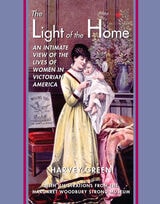
The Light of the Home
An Intimate View of the Lives of Women in Victorian AmericaHarvey Green
University of Arkansas Press, 2003
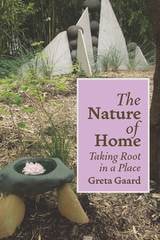
The Nature of Home
Taking Root in a PlaceGreta Gaard
University of Arizona Press, 2007
Gaard journeys through the deserts of southern California, through the High Sierras, the Wind River Mountains, and the Northern Cascades, through the wildlands and waterways of Washington and Minnesota, through snow season, rain season, mud season, and lilac season, yet her essays transcend mere description of natural beauty to investigate the interplay between place and identity. Gaard examines the earliest environments of childhood and the relocations of adulthood, expanding the feminist insight that identity is formed through relationships to include relationships to place. “Home” becomes not a static noun, but an active verb: the process of cultivating the connections with place and people that shape who we become.
Striving to create a sense of home, Gaard involves herself socially, culturally, and ecologically within her communities, discovering that as she works to change her environment, her environment changes her. As Gaard investigates environmental concerns such as water quality, oil spills, or logging, she touches on their parallels to community issues such as racism, classism, and sexism, uncovering the dynamic interaction by which “humans, like other life on earth, both shape and are shaped by our environments.”
While maintaining an understanding of the complex systems and structures that govern communities and environments, Gaard’s writing delves deeper to reveal the experiences and realities we displace through euphemisms or stereotypes, presenting issues such as homelessness or hunger with compelling honesty and sensitivity. Gaard’s essays form a quest narrative, expressing the process of letting go that is an inherent part of an impermanent life. And when a person is broken, in the aftermath of that letting go, it is a place that holds the pieces together.
As long as we are forced to move—by economics, by war, by colonialism—the strategies we possess to make and redefine home are imperative to our survival, and vital in the shaping of our very identities.
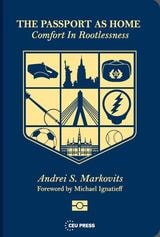
The Passport as Home
Comfort in RootlessnessAndrei S. Markovits
Central European University Press, 2021
A Scholar's Quest for Home and Identity
Experience the remarkable story of a Romanian-born, Hungarian-speaking Jewish professor. From Vienna to Columbia and Harvard, he navigates a life marked by rootlessness, seeking comfort and purpose. His journey unfolds against the backdrop of five decades, two continents, and significant political and cultural changes.
As we follow his pursuit of a home, we gain insight into the critical developments of post-1945 Europe and America. Markovits's emigration experiences, first from Romania to Vienna and later from Vienna to New York, shed light on the challenges he faced.
His journey offers a panoramic view of the forces shaping the latter half of the 20th century. Despite America's flaws, he finds it a beacon of academic excellence, intellectual openness, cultural diversity, and religious tolerance—qualities that Europe lacked.
Explore the complexities of identity, culture, and the universal search for belonging in this captivating narrative.
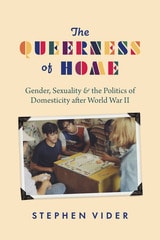
The Queerness of Home
Gender, Sexuality, and the Politics of Domesticity after World War IIStephen Vider
University of Chicago Press, 2021
From the Stonewall riots to the protests of ACT UP, histories of queer and trans politics have almost exclusively centered on public activism. In The Queerness of Home, Stephen Vider turns the focus inward, showing that the intimacy of domestic space has been equally crucial to the history of postwar LGBTQ life.
Beginning in the 1940s, LGBTQ activists looked increasingly to the home as a site of connection, care, and cultural inclusion. They struggled against the conventions of marriage, challenged the gendered codes of everyday labor, reimagined domestic architecture, and contested the racial and class boundaries of kinship and belonging. Retelling LGBTQ history from the inside out, Vider reveals the surprising ways that the home became, and remains, a charged space in battles for social and economic justice, making it clear that LGBTQ people not only realized new forms of community and culture for themselves—they remade the possibilities of home life for everyone.
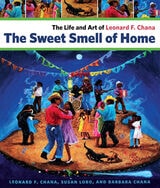
The Sweet Smell of Home
The Life and Art of Leonard F. ChanaLeonard F. Chana, Susan Lobo, and Barbara Chana
University of Arizona Press, 2009
He began his career by creating cards and soon was lending his art to posters and logos for many community-based Native organizations. Winning recognition from these groups, his work was soon actively sought by them. Chana’s work also appears on the covers and as interior art in a number of books on southwestern and American Indian topics.
The Sweet Smell of Home is an autobiographical work, written in Chana’s own voice that unfolds through oral history interviews with anthropologist Susan Lobo. Chana imparts the story of his upbringing and starting down the path toward a career as an artist. Balancing humor with a keen eye for cultural detail, he tells us about life both on and off the reservation.
Eighty pieces of art—26 in color—grace the text, and Chana explains both the impetus for and the evolution of each piece. Leonard Chana was a people’s artist who celebrated the extraordinary heroism of common people’s lives. The Sweet Smell of Home now celebrates this unique artist whose words and art illuminate not only his own remarkable life, but also the land and lives of the Tohono O’odham people

The Wandering Womb
Essays in Search of HomeS. L. Wisenberg
University of Massachusetts Press, 2023
Even as a fourth-generation Jewish Texan, S. L. Wisenberg has always felt the ghost of Europe dogging her steps, making her feel uneasy in her body and in the world. At age six, she’s sure that she hears Nazis at her bedroom window and knows that after they take her away, she’ll die without her asthma meds. In her late twenties, she infiltrates sorority rush at her alma mater, curious about whether she’ll get a bid now. Later in life, she makes her first and only trip to the mikvah while healing from a breast biopsy (benign this time), prompting an exploration of misogyny, shame, and woman-fear in rabbinical tradition.
With wit, verve, blood, scars, and a solid dose of self-deprecation, Wisenberg wanders across the expanse of continents and combs through history books and family records in her search for home and meaning. Her travels take her from Selma, Alabama, where her Eastern European Jewish ancestors once settled, to Vienna, where she tours Freud’s home and figures out what women really want, and she visits Auschwitz, which—disappointingly—leaves no emotional mark.
This Fine Place So Far from Home
Voices of Academics from the Working Classedited by C. L. Barney Dews and Carolyn Leste Law
Temple University Press, 1995
These autobiographical and analytical essays by a diverse group of professors and graduate students from working-class families reveal an academic world in which "blue-collar work is invisible." Describing conflict and frustration, the contributors expose a divisive middle-class bias in the university setting. Many talk openly about how little they understood about the hierarchy and processes of higher education, while others explore how their experiences now affect their relationships with their own students. They all have in common the anguish of choosing to hide their working-class background, to keep the language of home out of the classroom and the ideas of school away from home. These startlingly personal stories highlight the fissure between a working-class upbringing and the more privileged values of the institution.
Threshold
How Smart Homes Change Us Inside and OutHeather Suzanne Woods
University of Alabama Press, 2024
An urgent and cautionary examination of the totalizing effect of smart home technology on the lives of those who live in them—and those who don’t
Smart homes are here—domestic spaces bristling with networked technologies that appear to enhance work, entertainment, logistics, health, and security. But these technologies may also extract a cost in attention, money, and privacy. In Threshold, communication and technology expert Heather Suzanne Woods applies rhetorical theory to answer the urgent question of how swiftly proliferating smart homes alter those who inhabit them.
Building on extensive research into smart homes in the United States, Woods recounts how smart homes arose and predicts the trajectory of their future form. She pulls back the curtain on the technology, probes who is in control, and questions whether a home can be too smart. She reveals how smart homes incentivize ubiquitous computing as a daily practice, priming smart home occupants for permanent transactional existence largely controlled by corporate interests.
Woods suggests a dynamic cultural framework for understanding smart homes that takes into account sociotechnical variables such as gender, class, income, race, criminal justice, and more through which smart homes shape human life. Woods’s framework reveals how smart homes both reflect social norms about technology as well as whet consumer appetites for an ever more totalizing relationship with technology. She argues that this progression leads to “living in digitality,” a cultural state of constant use and reliance on technology.
Written for homeowners, policymakers, technology enthusiasts, and scholars, Threshold interweaves meticulously researched critical analysis with matter-of-fact graphics that map relationships between digital tools and social life. Readers will appreciate this bracing assessment of smart technologies that empowers smart home users to make informed decisions about their dwellings.
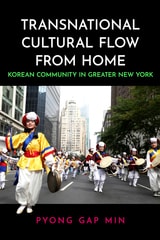
Transnational Cultural Flow from Home
Korean Community in Greater New YorkPyong Gap Min
Rutgers University Press, 2023
Transnational Cultural Flow from Home examines New York Korean immigrants’ collective efforts to preserve their cultural traditions and cultural practices and their efforts to transmit and promote them to New Yorkers by focusing on the Korean cultural elements such as language, foods, cultural festivals, and traditional and contemporary performing arts.
This publication was supported by the 2022 Korean Studies Grant Program of the Academy of Korean Studies (AKS-2022-P-009).