Results by title
84 books match the query 'In motion pictures' and 7 start with t
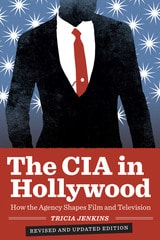
The CIA in Hollywood
How the Agency Shapes Film and TelevisionBy Tricia Jenkins
University of Texas Press, 2016
What’s your impression of the CIA? A bumbling agency that can’t protect its own spies? A rogue organization prone to covert operations and assassinations? Or a dedicated public service that advances the interests of the United States? Astute TV and movie viewers may have noticed that the CIA’s image in popular media has spanned this entire range, with a decided shift to more positive portrayals in recent years. But what very few people know is that the Central Intelligence Agency has been actively engaged in shaping the content of film and television, especially since it established an entertainment industry liaison program in the mid-1990s.
The CIA in Hollywood offers the first full-scale investigation of the relationship between the Agency and the film and television industries. Tricia Jenkins draws on numerous interviews with the CIA’s public affairs staff, operations officers, and historians, as well as with Hollywood technical consultants, producers, and screenwriters who have worked with the Agency, to uncover the nature of the CIA’s role in Hollywood. In particular, she delves into the Agency’s and its officers’ involvement in the production of The Agency, In the Company of Spies, Alias, The Recruit, The Sum of All Fears, Enemy of the State, Syriana, The Good Shepherd, and more. Her research reveals the significant influence that the CIA now wields in Hollywood and raises important and troubling questions about the ethics and legality of a government agency using popular media to manipulate its public image.
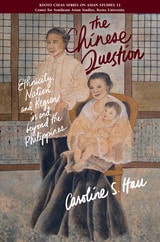
The Chinese Question
Ethnicity, Nation, and Region in and Beyond the PhilippinesCaroline S. Hau
National University of Singapore Press, 2014
With the revaluing of Chineseness has come a repositioning of “Chinese” racial and cultural identity. Philippine mestizos (people of mixed ancestry) form an important sub-group of the Filipino elite, but their Chineseness was occluded as they disappeared into the emergent Filipino nation. In the twentieth century, mestizos defined themselves and based claims to privilege on “white” ancestry, but mestizos are now actively reclaiming their “Chinese” heritage. At the same time, so-called “pure Chinese” are parlaying their connections into cultural, social, symbolic, or economic capital, and leaders of mainland Chinese state companies have entered into politico-business alliances with the Filipino national elite. As the meanings of “Chinese” and “Filipino” evolve, intractable contradictions are appearing in the concepts of citizenship and national belonging.
Through an examination of cinematic and literary works, The Chinese Question shows how race, class, ideology, nationality, territory, sovereignty, and mobility are shaping the discourses of national integration, regional identification, and global cosmopolitanism.
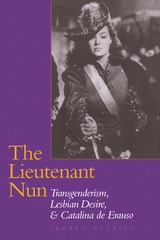
The Lieutenant Nun
Transgenderism, Lesbian Desire, and Catalina de ErausoBy Sherry Velasco
University of Texas Press, 2001
Catalina de Erauso (1592-1650) was a Basque noblewoman who, just before taking final vows to become a nun, escaped from the convent at San Sebastián, dressed as a man, and, in her own words, "went hither and thither, embarked, went into port, took to roving, slew, wounded, embezzled, and roamed about." Her long service fighting for the Spanish empire in Peru and Chile won her a soldier's pension and a papal dispensation to continue dressing in men's clothing.
This theoretically informed study analyzes the many ways in which the "Lieutenant Nun" has been constructed, interpreted, marketed, and consumed by both the dominant and divergent cultures in Europe, Latin America, and the United States from the seventeenth century to the present. Sherry Velasco argues that the ways in which literary, theatrical, iconographic, and cinematic productions have transformed Erauso's life experience into a public spectacle show how transgender narratives expose and manipulate spectators' fears and desires. Her book thus reveals what happens when the private experience of a transgenderist is shifted to the public sphere and thereby marketed as a hybrid spectacle for the curious gaze of the general audience.

The Reel Thrilling Events of Bank Robber Henry Starr
From Gentleman Bandit to Movie Star and Back AgainMark Archuleta
University of North Texas Press, 2025
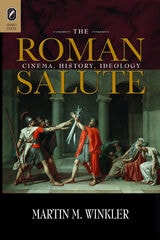
The Roman Salute
Cinema, History, IdeologyMartin M. Winkler
The Ohio State University Press, 2009

Touring the Screen
Tourism and New Zealand Film GeographiesAlfio Leotta
Intellect Books, 2011
Following the success of prominent feature films shot on location, including Tolkien’s wildly popular The Lord of the Rings, New Zealand boasts an impressive film tourism industry. This book examines the relationship between New Zealand’s cinematic representation—as both a vast expanse of natural beauty and a magical world of fantasy on screen—and its tourism imagery, including the ways in which savvy local tourism boards have in recent decades used the country’s film representations to sell New Zealand as a premiere travel destination. Focusing on the films that have had a strong impact on marketing strategies by local tourist boards, Touring the Screen will be of interest to all those working and studying in the fields of cinema, postcolonial history, and tourism studies.
Triumph over Containment
American Film in the 1950sRobert P. Kolker
Rutgers University Press, 2022
Triumph Over Containment offers an uncompromising look at some of the era’s greatest films and directors, from household names like Alfred Hitchcock and Stanley Kubrick to lesser-known iconoclasts like Samuel Fuller and Ida Lupino. Taking in everything from The Thing from Another World (1951) to Dr. Strangelove or: How I Learned to Stop Worrying and Love the Bomb (1964), acclaimed film scholar Robert P. Kolker scours a variety of different genres to find pockets of resistance to the repressive and oppressive norms of Cold War culture. He devotes special attention to two quintessential 1950s genres—the melodrama and the science fiction film—that might seem like polar opposites, but each offered pointed responses to containment culture.
This book takes a fresh look at such directors as Nicholas Ray, John Ford, and Orson Welles, while giving readers a new appreciation for the depth and artistry of 1950s Hollywood films.