Results by title
200 books match the query 'Indians of Mexico' and 44 start with t
Temporalities in Mesoamerican Ritual Practices
Valentina Vapnarsky
University Press of Colorado, 2024
Based on specific case studies, new analysis of fieldwork data, and long-term collaboration between authors, chapters engage empirically and theoretically with the multiple temporalities of ritual in relation to both the unfolding of ritual performance and its external and symbolic anchors. Taking rituals as a series of specific, formalized actions that produce transitory changes within an initial context, the authors examine activities that generate change linked to artifact production, life cycles, healing, conflict resolution, crisis management, the enthronement of rulers and transfers of responsibilities, and practices relating to the occupation, abandonment, reuse, or conversion of socialized spaces.
Adopting a multidisciplinary approach in archaeology, ethnohistory, anthropology, and linguistic anthropology, Temporalities in Mesoamerican Ritual Practices offers new insights into ritual time approached through multi-semiotic, material, sensorial, and pragmatic perspectives that encourage further interdisciplinary dialogue.
Teotihuacan and Early Classic Mesoamerica
Multiscalar Perspectives on Power, Identity, and Interregional RelationsClaudia García-Des Lauriers
University Press of Colorado, 2021
The volume offers a multiscalar view of power and identity, showing that the spread of Teotihuacan-related material culture may have resulted from direct and indirect state administration, colonization, emulation by local groups, economic transactions, single-event elite interactions, and various kinds of social and political alliances. The contributors explore questions concerning who interacted with whom; what kinds of materials and ideas were exchanged; what role interregional interactions played in the creation, transformation, and contestation of power and identity within the city and among local polities; and how interactions on different scales were articulated. The answers to these questions reveal an Early Classic Mesoamerican world engaged in complex economic exchanges, multidirectional movements of goods and ideas, and a range of material patterns that require local, regional, and macroregional contextualization.
Focusing on the intersecting themes of identity and power, Teotihuacan and Early Classic Mesoamerica makes a strong contribution to the understanding of the role of this important metropolis in the Early Classic history of the region. The volume will be of interest to scholars and graduate students of Mesoamerican archaeology, the archaeology of interaction, and the archaeology of identity.
Contributors: Sarah C. Clayton, Fiorella Fenoglio Limón, Agapi Filini, Julie Gazzola, Sergio Gómez-Chávez, Haley Holt Mehta, Carmen Pérez, Patricia Plunket, Juan Carlos Saint Charles Zetina, Yoko Sugiura, Gabriela Uruñuela, Gustavo Jaimes Vences
Texas and Northeastern Mexico, 1630-1690
By Juan Bautista Chapa
University of Texas Press, 1997
An English translation of Chapa's Historia de Nuevo León, the first history of the region that eventually became Texas and northeastern Mexico.
Winner, Presidio La Bahía Award, Sons of the Republic of Texas
In the seventeenth century, South Texas and Northeastern Mexico formed El Nuevo Reino de León, a frontier province of New Spain. In 1690, Juan Bautista Chapa penned a richly detailed history of Nuevo León for the years 1630 to 1690. Although his Historia de Nuevo León was not published until 1909, it has since been acclaimed as the key contemporary document for any historical study of Spanish colonial Texas.
This book offers the only accurate and annotated English translation of Chapa's Historia. In addition to the translation, William C. Foster also summarizes the Discourses of Alonso de León (the elder), which cover the years 1580 to 1649. In the appendix, Foster includes a translation of Alonso (the younger) de León's previously unpublished revised diary of the 1690 expedition to East Texas and an alphabetical listing of over 80 Indian tribes identified in this book.
Chapa was also an authority on the local Indians, and his Historia lists the names and locations of over 300 Indian tribes. This information, together with descriptions of the vegetation, wildlife, and climate in seventeenth-century Texas, make this book essential reading for ethnographers, anthropologists, and biogeographers, as well as students and scholars of Spanish borderlands history.
Textile Traditions of Mesoamerica and the Andes
An AnthologyEdited by Margot Blum Schevill, Janet Catherine Berlo, and Edward B. Dwyer
University of Texas Press, 1996
In this volume, anthropologists, art historians, fiber artists, and technologists come together to explore the meanings, uses, and fabrication of textiles in Mexico, Guatemala, Ecuador, Peru, and Bolivia from Precolumbian times to the present. Originally published in 1991 by Garland Publishing, the book grew out of a 1987 symposium held in conjunction with the exhibit "Costume as Communication: Ethnographic Costumes and Textiles from Middle America and the Central Andes of South America" at the Haffenreffer Museum of Anthropology, Brown University.
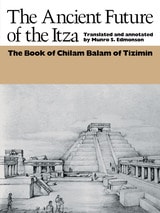
The Ancient Future of the Itza
The Book of Chilam Balam of TiziminTranslated and annotated by Munro S. Edmonson
University of Texas Press, 1982
The title of Edmonson's work refers to the Mayan custom of first predicting their history and then living it, and it may be that no other peoples have ever gone so far in this direction. The Book of Chilam Balam was a sacred text prepared by generations of Mayan priests to record the past and to predict the future. The official prophet of each twenty-year rule was the Chilam Balam, or Spokesman of the Jaguar—the Jaguar being the supreme authority charged with converting the prophet's words into fact.
This is a literal but poetic translation of one of fourteen known manuscripts in Yucatecan Maya on ritual and history. It pictures a world of all but incredible numerological order, slowly yielding to Christianity and Spanish political pressure but never surrendering. In fact, it demonstrates the surprising truth of a secret Mayan government during the Spanish rule, which continued to collect tribute in the names of the ruined Classic cities and preserved the essence of the Mayan calendar as a legacy for the tradition's modern inheritors.
The history of the Yucatecan Maya from the seventh to the nineteenth century is revealed. And this is history as the Maya saw it—of a people concerned with lords and priests, with the cosmology which justified their rule, and with the civil war which they perceived as the real dimension of the colonial period.
A work of both history and literature, the Tizimin presents a great deal of Mayan thought, some of which has been suspected but not previously documented. Edmonson's skillful reordering of the text not only makes perfect historical sense but also resolves the long-standing problem of correlating the two colonial Mayan calendars. The book includes both interpretative and literal translations, as well as the Maya parallel couplets and extensive annotations on each page. The beauty of the sacred text is illuminated by the literal translation, while both versions unveil the magnificent historical, philosophical, and social traditions of the most sophisticated native culture in the New World.
The prophetic history of the Tizimin creates a portrait of the continuity and vitality, of the ancient past and the foreordained future of the Maya.
The Archaeology of La Calsada
A Rockshelter in the Sierra Madre Oriental, MexicoBy C. Roger Nance
University of Texas Press, 1992
On a remote mountainside 2,000 meters above sea level in the northern Sierra Madre Oriental, the rockshelter at La Calsada has yielded basic archaeological data for one of the least understood regions of prehistoric North America, the state of Nuevo León in northern Mexico. This comprehensive site report, with detailed information on artifacts and stratigraphy, provides baseline data for further explorations in the region and comparisons with other North American hunter-gatherer groups.
Radiocarbon dating traces the earliest component at the site to 8600-7500 B.C., giving La Calsada arguably the earliest well-dated lithic complex in Mexico. Nance describes some 1,140 recovered stone tools, with comparisons to the archaeology of southern and southwestern Texas, as well as reported sites in Tamaulipas, Coahuila, and Nuevo León, Mexico.
From the lithic and stratigraphic analysis, Nance deduces occupational patterns at the site, beginning with Paleo-Indian cultures that lived in the area until about 7500 B.C. Through changes in tool technology, he follows the rise of the Abasolo tradition around 3000 B.C. and the appearance of a new culture with a radically different lithic industry around 1000 A.D.
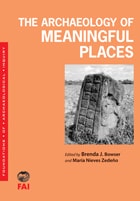
The Archaeology of Meaningful Places
Brenda J Bowser
University of Utah Press, 2009
Diverse spatial and temporal contexts in two culture areas--Mesoamerica and the Greater Southwest--serve as backdrops for nine chapters in which fourteen contributors show how place is an ideal starting point to begin unraveling the human past. Several authors further address the enduring significance of places of the past for contemporary peoples. Among the many strengths of this volume is the careful way in which powerful concepts, diverse lines of thought, and empirical models are integrated to reveal the multiple facets of meaningful places, and to illustrate ways in which places may be approached archaeologically, theoretically, and culturally. Ultimately, the book’s contributors champion the notion that place is a valid and useful analytical unit for describing, reconstructing, interpreting, and explaining the form, structure, and temporality of the meanings humans ascribe to their environment.
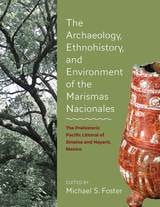
The Archaeology, Ethnohistory, and Environment of the Marismas Nacionales
Michael S. Foster
University of Utah Press, 2017
Between 1967 and 1975 archaeologists from SUNY-Buffalo led a multidisciplinary project in the Marismas Nacionales, a vast, resource-rich estuary and mangrove forest of coastal Sinaloa and Nayarit, west Mexico. Michael Foster and fellow archaeologists provide a much-needed synthesis of these investigations, drawing from previously unpublished data and published reports to provide a comprehensive look at the region.
While in the field, the SUNY team recovered a variety of material artifacts and 248 human remains. Their findings, along with the project’s background, history, and analyses, are detailed in this volume’s thirteen chapters and nine appendices. Also included are supporting geomorphic, environmental, and ethnohistoric studies that establish the context for local human settlement and change. Evidence indicates that as the coastal plain grew, ceramic-bearing agriculturalists moved into the area and participated in far-reaching exchanges of goods and resources. This book makes a significant and lasting contribution to our knowledge of what today remains an understudied region of greater Mesoamerica.
Marismas Burial Descriptions, Supplemental Digital Material
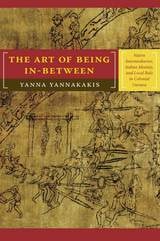
The Art of Being In-between
Native Intermediaries, Indian Identity, and Local Rule in Colonial OaxacaYanna Yannakakis
Duke University Press, 2008
Through interpretation of a wide array of historical sources—including descriptions of public rituals, accounts of indigenous rebellions, idolatry trials, legal petitions, court cases, land disputes, and indigenous pictorial histories—Yannakakis weaves together an elegant narrative that illuminates political and cultural struggles over the terms of local rule. As cultural brokers, native intermediaries at times reconciled conflicting interests, and at other times positioned themselves in opposing camps over the outcome of municipal elections, the provision of goods and labor, landholding, community ritual, the meaning of indigenous “custom” in relation to Spanish law, and representations of the past. In the process, they shaped an emergent “Indian” identity in tension with other forms of indigenous identity and a political order characterized by a persistent conflict between local autonomy and colonial control. This innovative study provides fresh insight into colonialism’s disparate cultures and the making of race, ethnicity, and the colonial state and legal system in Spanish America.
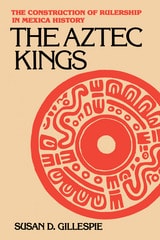
The Aztec Kings
The Construction of Rulership in Mexican HistorySusan D. Gillespie
University of Arizona Press, 1989
The Aztec Kings is the first major study to take into account the Aztec cyclical conception of time—which required that history constantly be reinterpreted to achieve continuity between past and present—and to treat indigenous historical traditions as symbolic statements in narrative form. Susan Gillespie focuses on the dynastic history of the Mexica of Tenochtitlan, whose stories reveal how the Aztecs used "history" to construct, elaborate, and reify ideas about the nature of rulership and the cyclical nature of the cosmos, and how they projected the Spanish conquest deep into the Aztec past in order to make history accommodate that event.
By demonstrating that most of Aztec history is nonliteral, she sheds new light on Aztec culture and on the function of history in society. By relating the cyclical structure of Aztec dynastic history to similar traditions of African and Polynesian peoples, she introduces a broader perspective on the function of history in society and on how and why history must change.
The Casas Grandes World
Curtis Schaafsma
University of Utah Press, 1999
The Casas Grandes World focuses on a remarkable prehistoric culture that extended through parts of present-day Chihuahua, Sonora, New Mexico, Texas, and Arizona, centering on the large Mexican site of Casas Grandes. The thousands of prehistoric sites in this vast area have only recently been considered related to each other, yet it now appears that for more than 200 years, from about AD 1200 to 1425, the people of the region traded with each other, made coursed-adobe pueblos in the desert country, manufactured magnificent pottery, and produced some of the most extraordinary rock art in North America. Casas Grandes was recently designated a World Heritage Site by the United Nations.
During is florescence Casas Grandes served as a conduit or nexus between the Anasazi of the ancient American Southwest and the Mexican civilizations to the south. Using the seminal work of Charles Di Peso as a touchstone, and drawing on significant new archaeological work, this volume offers a reevaluation of the extent, history, and meaning of the great site and its far-reaching connections. It also considers influences on the Hohokam of Arizona and the peoples of west Mexico, positing the existence of a vast sphere of Casas Grandes cultural influence.
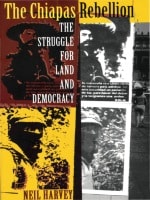
The Chiapas Rebellion
The Struggle for Land and DemocracyNeil Harvey
Duke University Press, 1998
Beginning with an exploration of the history of ethnic and class conflict in Chiapas since the Conquest, Harvey moves specifically to trace the development of peasant and indigenous organizations in Chiapas since the early 1970s. He compares the struggles for agrarian rights of three grassroots movements facing hostility from both local elites and federal bureaucrats. His examination of the complexities of political change in Chiapas includes the impact of neoliberal economic policies, the origins of the Zapatista army of National Liberation (EZLN), and the political impact of the rebellion itself. Engaging with current theoretical debates on the role and significance of social movements in Mexico and Latin America, Harvey focuses on the primacy of political struggle and on the importance of these movements in the construction and meaning of citizenship. While suggesting that the Zapatista revolution has heightened awareness among the people of Chiapas of such democratic issues as ethnicity, gender, and land distribution, he concludes with an analysis of the obstacles to peace in the region today.
This unprecedented study of the Zapatista rebellion will provoke discussion among students and scholars of contemporary Mexico, political science, Latin American studies, history, sociology, and anthropology.
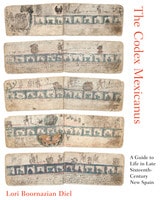
The Codex Mexicanus
A Guide to Life in Late Sixteenth-Century New SpainBy Lori Boornazian Diel
University of Texas Press, 2018
Winner, Roland H. Bainton Book Prize, The Sixteenth Century Society and Conference, 2019
Some sixty years after the Spanish conquest of Mexico, a group of Nahua intellectuals in Mexico City set about compiling an extensive book of miscellanea, which was recorded in pictorial form with alphabetic texts in Nahuatl clarifying some imagery or adding new information altogether. This manuscript, known as the Codex Mexicanus, includes records pertaining to the Aztec and Christian calendars, European medical astrology, a genealogy of the Tenochca royal house, and an annals history of pre-conquest Tenochtitlan and early colonial Mexico City, among other topics. Though filled with intriguing information, the Mexicanus has long defied a comprehensive scholarly analysis, surely due to its disparate contents.
In this pathfinding volume, Lori Boornazian Diel presents the first thorough study of the entire Codex Mexicanus that considers its varied contents in a holistic manner. She provides an authoritative reading of the Mexicanus’s contents and explains what its creation and use reveal about native reactions to and negotiations of colonial rule in Mexico City. Diel makes sense of the codex by revealing how its miscellaneous contents find counterparts in Spanish books called Reportorios de los tiempos. Based on the medieval almanac tradition, Reportorios contain vast assortments of information related to the issue of time, as does the Mexicanus. Diel masterfully demonstrates that, just as Reportorios were used as guides to living in early modern Spain, likewise the Codex Mexicanus provided its Nahua audience a guide to living in colonial New Spain.
The Dialogue of Earth and Sky
Dreams, Souls, Curing, and the Modern Aztec UnderworldTimothy J. Knab
University of Arizona Press, 2004
The Duplex Nature of Indigeneity
Navigating Identity in the Ahuehuepan DiasporaFrans J. Schryer
University Press of Colorado, 2025
Using a variety of sources, perspectives, and methods, Schryer takes a duplexity approach, which allows understanding the complexity of social reality and its complementary nature—it identifies fields, clusters, and layers as interconnected components of social life. The innovative methods consist of the combination of ethnographic description and an ethnohistorical census that provides information on every person going back to approximately 1850. That census is further examined with the use of inferential and non-inferential statistical techniques, archival research in locations not normally accessible to scholars, Facebook, phone interviews conducted over several years, and help from Nahuatl-speaking people whose perspectives on the findings generate additional information and insights.
Unique in this presentation, which dips into the lives of generations of people to draw insight on those who lay claim to transnational Indigeneity, Schryer’s work contributes to research and theoretical discussion in the field of migration and globalization studies through a close examination of one Indigenous community over the course of many years, utilizing a mix of qualitative and quantitative research methods in anthropology.
The Inscriptions of Calakmul
Royal Marriage at a Maya City in Campeche, MexicoJoyce Marcus
University of Michigan Press, 1987
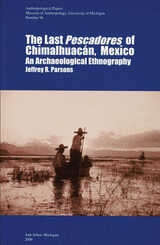
The Last Pescadores of Chimalhuacán, Mexico
An Archaeological EthnographyJeffrey R. Parsons
University of Michigan Press, 2006
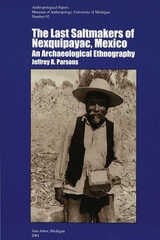
The Last Saltmakers of Nexquipayac, Mexico
An Archaeological EthnographyJeffrey R. Parsons
University of Michigan Press, 2001
The Late Archaic across the Borderlands
From Foraging to FarmingEdited by Bradley J. Vierra
University of Texas Press, 2005
Why and when human societies shifted from nomadic hunting and gathering to settled agriculture engages the interest of scholars around the world. One of the most fruitful areas in which to study this issue is the North American Southwest, where Late Archaic inhabitants of the Sonoran and Chihuahuan Deserts of Mexico, Arizona, and New Mexico turned to farming while their counterparts in Trans-Pecos and South Texas continued to forage. By investigating the environmental, biological, and cultural factors that led to these differing patterns of development, we can identify some of the necessary conditions for the rise of agriculture and the corresponding evolution of village life.
The twelve papers in this volume synthesize previous and ongoing research and offer new theoretical models to provide the most up-to-date picture of life during the Late Archaic (from 3,000 to 1,500 years ago) across the entire North American Borderlands. Some of the papers focus on specific research topics such as stone tool technology and mobility patterns. Others study the development of agriculture across whole regions within the Borderlands. The two concluding papers trace pan-regional patterns in the adoption of farming and also link them to the growth of agriculture in other parts of the world.

The Leverage of Labor
Managing the Cortés Haciendas in Tehuantepec, 1588–1688Lolita Gutiérrez Brockington
Duke University Press, 1989
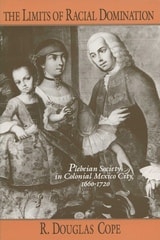
The Limits of Racial Domination
Plebeian Society in Colonial Mexico City, 1660–1720R. Douglas Cope
University of Wisconsin Press, 1994
In this distinguished contribution to Latin American colonial history, Douglas Cope draws upon a wide variety of sources—including Inquisition and court cases, notarial records and parish registers—to challenge the traditional view of castas (members of the caste system created by Spanish overlords) as rootless, alienated, and dominated by a desire to improve their racial status. On the contrary, the castas, Cope shows, were neither passive nor ruled by feelings of racial inferiority; indeed, they often modified or even rejected elite racial ideology. Castas also sought ways to manipulate their social "superiors" through astute use of the legal system. Cope shows that social control by the Spaniards rested less on institutions than on patron-client networks linking individual patricians and plebeians, which enabled the elite class to co-opt the more successful castas.
The book concludes with the most thorough account yet published of the Mexico City riot of 1692. This account illuminates both the shortcomings and strengths of the patron-client system. Spurred by a corn shortage and subsequent famine, a plebeian mob laid waste much of the central city. Cope demonstrates that the political situation was not substantially altered, however; the patronage system continued to control employment and plebeians were largely left to bargain and adapt, as before.
A revealing look at the economic lives of the urban poor in the colonial era, The Limits of Racial Domination examines a period in which critical social changes were occurring. The book should interest historians and ethnohistorians alike.
The Lowland Maya Postclassic
Edited by Arlen F. Chase and Prudence M. Rice
University of Texas Press, 1985
This collection represents a major step forward in understanding the era from the end of Classic Maya civilization to the Spanish conquest.
The Mark of Rebels
Indios Fronterizos and Mexican IndependenceBarry M. Robinson
University of Alabama Press, 2016
Explores social and cultural transformations among the indigenous communities of western Mexico, especially the indios fronterizos (Frontier Indians), preceding and during the struggle for independence
In The Mark of Rebels Barry Robinson offers a new look at Mexican Independence from the perspective of an indigenous population caught in the heart of the struggle. During the conquest and settlement of Mexico’s Western Sierra Madre, Spain’s indigenous allies constructed an indio fronterizo identity for their ethnically diverse descendants. These communities used their special status to maintain a measure of autonomy during the colonial era, but the cultural shifts of the late colonial period radically transformed the relationship between these indios fronterizos and their neighbors.
Marshalling an extensive array of archival material from Mexico, the United States, and Spain, Robinson shows that indio fronterizo participation in the Mexican wars of independence grafted into the larger Hidalgo Revolt through alignment with creole commanders. Still, a considerable gulf existed between the aims of indigenous rebels and the creole leadership. Consequently, the privileges that the indios fronterizos sought to preserve continued to diminish, unable to survive either the late colonial reforms of the Spanish regime or creole conceptions of race and property in the formation of the new nation-state.
This story suggests that Mexico’s transition from colony to nation can only be understood by revisiting the origins of the colonial system and by recognizing the role of Spain’s indigenous allies in both its construction and demolition. The study relates events in the region to broader patterns of identity, loyalty, and subversion throughout the Americas, providing insight into the process of mestizaje that is commonly understood to have shaped Latin America. It also foreshadows the popular conservatism of the nineteenth century and identifies the roots of post-colonial social unrest.
This book provides new context for scholars, historians, ethnographers, anthropologists, and anyone interested in the history of Mexico, colonization, Native Americans, and the Age of Revolutions.
The Mesoamerican Ballgame
Edited by Vernon L. Scarborough and David R. Wilcox
University of Arizona Press, 1991
The Mexican Dream
Or, The Interrupted Thought of Amerindian CivilizationsJ. M. G. Le Clézio
University of Chicago Press, 1993
Winner of the 2008 Nobel Prize for Literature, J. M. G. Le Clézio here conjures the consciousness of Mexico, powerfully evoking the dreams that made and unmade an ancient culture. Le Clézio’s haunting book takes us into the dream that was the religion of the Aztecs, a religion whose own apocalyptic visions anticipated the coming of the Spanish conquerors. Here the dream of the conquistadores rises before us, too, the glimmering idea of gold drawing Europe into the Mexican dream. Against the religion and thought of the Aztecs and the Tarascans and the Europeans in Mexico, Le Clézio also shows us those of the “barbarians” of the north, the nomadic Indians beyond the pale of the Aztec frontier.
Finally, Le Clézio’s book is a dream of the present, a meditation on what in Amerindian civilizations—in their language, in their way of telling tales, of wanting to survive their own destruction—moved the poet, playwright, and actor Antonin Artaud and motivates Le Clézio in this book. His own deep identification with pre-Columbian cultures, whose faith told them the wheel of time would bring their gods and their beliefs back to them, finds fitting expression in this extraordinary book, which brings the dream around.
“We are lucky to have in Le Clézio a writer of great quality who brings his particular sensibility and talent here to remind us of the very nature of the rituals and myths of the civilizations of ancient Mexico; he provides us with descriptions as precise as they are mysterious.”—Le Figaro
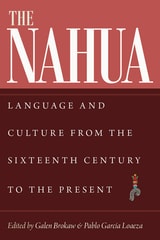
The Nahua
Language and Culture from the 16th Century to the PresentGalen Brokaw
University Press of Colorado, 2024
During the colonial period, Nahuatl became a means of empowerment, oppression, and indoctrination. In modern times, Nahuatl continues to serve as an ideological lightning rod for both the Mexican government and Indigenous communities. Contributors to this volume focus on Nahua intellectual production from the sixteenth century to the present; contact and the negotiation of meaning; adaptations of Christian lore that show how representations of creation, hell, and the Passion of Christ reflected Nahua perceptions and understandings; Nahua cultural expressions, including poetry, healing rituals, and even running; language and geography; Nahuatl place-names; and the transformation of Nahuatl speakers from antiquity to the present.
Showcasing how Nahuatl’s cultural resilience permanently shaped the region’s social geography, The Nahua engages the field’s interest in the nonhomogenous character of the language, with regional and subregional dialects and pronunciations that reflect the history of pre-Columbian migrations and modern-era influences. Bridging the study of Nahuatl as a “historical” Indigenous language tradition with the study of modern-day speakers and their experiences, this work is of significance to students, scholars, and speakers of the languages as well as those studying colonial New Spain, Indigenous resilience, or Indigenous linguistics.
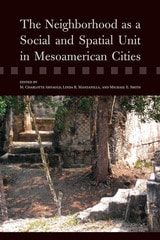
The Neighborhood as a Social and Spatial Unit in Mesoamerican Cities
Edited by M. Charlotte Arnauld, Linda R. Manzanilla, and Michael E. Smith
University of Arizona Press, 2012
The contributions gathered here provide fieldwork data to document the existence of sociopolitically distinct neighborhoods within ancient Mesoamerican settlements, building upon recent advances in multi-scale archaeological studies of these communities. Chapters illustrate the cultural variation across Mesoamerica, including data and interpretations on several different cities with a thematic focus on regional contrasts. This topic is relatively new and complex, and this book is a strong contribution for three interwoven reasons. First, the long history of research on the “Teotihuacan barrios” is scrutinized and withstands the test of new evidence and comparison with other Mesoamerican cities. Second, Maya studies of dense settlement patterns are now mature enough to provide substantial case studies. Third, theoretical investigation of ancient urbanization all over the world is now more complex and open than it was before, giving relevance to Mesoamerican perspectives on ancient and modern societies in time and space.
This volume will be of interest not only to scholars and student specialists of the Mesoamerican past but also to social scientists and urbanists looking to contrast ancient cultures worldwide.
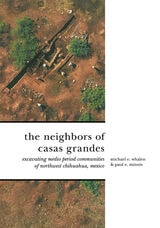
The Neighbors of Casas Grandes
Medio Period Communities of Northwestern ChihuahuaMichael E. Whalen and Paul E. Minnis
University of Arizona Press, 2009
This volume provides a fascinating and detailed look into the culture of the Casas Grandes area, involving not just the research of the architecture and artifacts left behind but also the ecology of the area. The authors’ research reveals the complex relationship Casas Grandes had with its neighbors, varying from very direct contact with some communities to more indirect links with others. Important internal influences on the area’s development come to light and population sizes throughout the period demonstrate the absorption of the surrounding populations into Casas Grandes as it reached the peak of its power in the region.
New discoveries suggest the need to revise the previously held beliefs about the age of Casas Grandes and the dates of its rise to power. This ancient civilization may have developed as early as 1180 AD. Such breakthroughs provide fresh insight about not only Casas Grandes but the nearby settlements as well. The Neighbors of Casas Grandes is an important and vital piece of primary field research for all those interested in the Southwest’s archaelogy and history. Its contribution to the knowledge of the Casas Grandes region is monumental in helping us better understand the society that once flourished there.
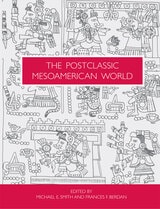
The Postclassic Mesoamerican World
Michael E Smith
University of Utah Press, 2003
Edited by Michael E. Smith and Frances F. Berdan
Anthropology and Archaeology
The past two decades have seen an explosion of research on Postclassic Mesoamerican societies. In this ambitious new volume, the editors and contributors seek to present a complete picture of the middle and late Postclassic period (ca. AD 1100-1500) employing a new theoretical framework.
Mesoamerican societies after the collapse of the great city-states of Tula and Chichen Itza stand out from earlier societies in a number of ways. They had larger regional populations, smaller polities, a higher volume of long-distance trade, greater diversity of trade goods, a more commercialized economy, and new standardized forms of pictorial writing and iconography. The emerging archaeological record reveals larger quantities of imported goods in Postclassic contexts, and ethnohistoric accounts describe marketplaces, professional merchants, and the use of money throughout Mesoamerica by the time of the Spanish conquest. The integration of this commercial economy with new forms of visual communication produced a dynamic world system that reached every corner of Mesoamerica.
Thirty-six focused articles by twelve authors describe and analyze the complexity of Postclassic Mesoamerica. After an initial theoretical section, chapters are organized by key themes: polities, economic networks, information networks, case studies, and comparisons. Covering a region from western Mexico to Yucatan and the southwestern Maya highlands, this volume should be in the library of anyone with a serious interest in ancient Mexico.
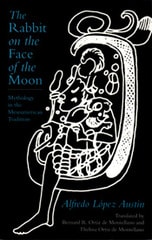
The Rabbit on the Face of the Moon
Mythology in the Mesoamerican TraditionAlfredo Lopez Austin
University of Utah Press, 1996
Eighteen essays provide an accessible, entertaining look into a system of millennia-old legends and beliefs.
Mythology is one of the great creations of humankind. It forms the core of sacred books and reflects the deepest preoccupations of human beings, their most intimate secrets, their glories, and their infamies.
In 1990, Alfredo López Austin, one of the foremost scholars of ancient Mesoamerican thought, began a series of essays about mythology in the Mesoamerican tradition, published in México Indígena. Although his articles were written for general readers, they were also intended to engage specialists. They span a divers subject matter: myths and names, eclipses, stars, left and right, Méxican origins, Aztec incantations, animals, and the incorporation of Christian elements into the living mythologies of Mexico. The title essay relates the Mesoamerican myth explaining why there is a rabbit o the moon’s face to a Buddhist image and suggests the importance of the profound mythical concepts presented by each image.
The eighteen essays in this volume are unified by their basis in Mesoamerican tradition and provide an accessible, entertaining look into a system of millennia-old legends and beliefs.
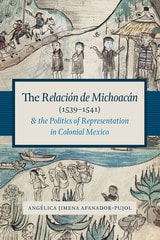
The Relación de Michoacán (1539-1541) and the Politics of Representation in Colonial Mexico
By Angélica Jimena Afanador-Pujol
University of Texas Press, 2015
Through close readings of the painted images in a major sixteenth-century illustrated manuscript, this book demonstrates the critical role that images played in ethnic identity formation and politics in colonial Mexico.
The Relación de Michoacán (1539–1541) is one of the earliest surviving illustrated manuscripts from colonial Mexico. Commissioned by the Spanish viceroy Antonio de Mendoza, the Relación was produced by a Franciscan friar together with indigenous noble informants and anonymous native artists who created its forty-four illustrations. To this day, the Relación remains the primary source for studying the pre-Columbian practices and history of the people known as Tarascans or P’urhépecha. However, much remains to be said about how the Relación’s colonial setting shaped its final form.
By looking at the Relación in its colonial context, this study reveals how it presented the indigenous collaborators a unique opportunity to shape European perceptions of them while settling conflicting agendas, outshining competing ethnic groups, and carving a place for themselves in the new colonial society. Through archival research and careful visual analysis, Angélica Afanador-Pujol provides a new and fascinating account that situates the manuscript’s images within the colonial conflicts that engulfed the indigenous collaborators. These conflicts ranged from disputes over political posts among indigenous factions to labor and land disputes against Spanish newcomers. Afanador-Pujol explores how these tensions are physically expressed in the manuscript’s production and in its many contradictions between text and images, as well as in numerous emendations to the images. By studying representations of justice, landscape, conquest narratives, and genealogy within the Relación, Afanador-Pujol clearly demonstrates the visual construction of identity, its malleability, and its political possibilities.
The Sierra Pinacate
Julian D. Hayden; Photographs by Jack Dykinga; With Essays by Charles Bowden and Bernard L. Fontana
University of Arizona Press, 1998
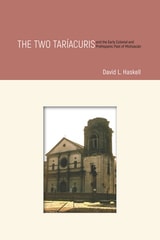
The Two Taríacuris and the Early Colonial and Prehispanic Past of Michoacán
David L. Haskell
University Press of Colorado, 2018
Informed by theoretical approaches to narrative, historicity, structure, and agency developed by cultural and historical anthropologists, Haskell demonstrates that the author of the Relación de Michoacán shaped, and was shaped by, a culturally distinct conceptualization and experience of the time in which the past and the present are mutually informing. The book asks, How reliable are past accounts of events when these accounts are removed from the events they describe? How do the personal agendas of past chroniclers and their informants shape our present understanding of their cultural history? How do we interpret chronicles such as the Relación de Michoacán on multiple levels? It also demonstrates that answers to these questions are possible when attention is paid to the context of narrative production and the narratives themselves are read closely.
The Two Taríacuris and the Early Colonial and Prehispanic Past of Michoacán makes a significant contribution to the scholarship on indigenous experience and its cultural manifestations in Early Colonial period Central Mexico and the anthropological literature on historicity and narrative. It will be of interest to Mesoamerican specialists of all disciplines, cultural and historical anthropologists, and theorists and critics of narrative.
The Urban Questions
Interdisciplinary and Multiscalar Approaches to Investigating the Ancient Mesoamerican CityLisa Johnson and Arianna Campiani
University of Utah Press, 2025
This groundbreaking volume presents a fresh and comprehensive look at the urban development of Mesoamerican cities. Moving beyond traditional methods, The Urban Questions adopts a dynamic, multidisciplinary approach to understanding the complexity and diversity of ancient settlements. By examining urbanism at multiple scales—from individual events to households, neighborhoods, and entire regions—it offers a nuanced view of how these cities evolved over time.
Contributors explore key themes such as community identity, infrastructure management, and the intersection of social, political, and economic processes. Rich in both spatial and material analysis, the chapters provide insights into the lived experience of ancient Mesoamerican inhabitants and the gradual expansion of their cities. With innovative archaeological methodologies and theoretical frameworks, this volume is an essential resource for scholars of Mesoamerican studies, archaeology, and urban history, shedding new light on the dynamic nature of ancient cities.
The Value of Aesthetics
Oaxacan Woodcarvers in Global Economies of CultureBy Alanna Cant
University of Texas Press, 2019
Unlike many other handicrafts in the Mexican state of Oaxaca, which have long cultural and historical trajectories, Oaxacan woodcarving began in the second half of the twentieth century and has always been done for the commercial market. In The Value of Aesthetics, Alanna Cant explores how one family’s workshop in the village of San Martín Tilcajete has become the most critically and economically successful, surpassing those of neighbors who use similar materials and techniques. The dominance of this family is tied to their ability to produce a new aesthetic that appeals to three key “economies of culture”: the tourist market for souvenirs, the national market for traditional Mexican artesanías, and the international market for indigenous art.
Offering a new analytical model by which anthropologists can approach visual aesthetics and conceptualize the power of artworks as socially active objects, The Value of Aesthetics shows how aesthetic practices produce and redefine social and political relationships. By investigating the links between aesthetics and issues of production, authorship, ownership, and identity, Cant shows aesthetic change to be a process that ultimately repackages everyday life into commodified objects in Oaxaca.
The Village Is Like a Wheel
Rethinking Cargos, Family, and Ethnicity in Highland MexicoRoger Magazine
University of Arizona Press, 2012
According to Magazine, where Western anthropologists often assume that persons are individuals capable of acting on their own to produce things, rural highland Mexicans see persons as inherently interdependent and in need of others even to act. He utilizes the term “active subjectivity” to denote the fact that what they produce in others is not simply action but also a subjective state or attitude of willingness to perform the action.
The author’s goals are to improve understandings of rural highland Mexicans’ lives and to contribute to a broader disciplinary effort aimed at revealing the cultural specificity or ethnocentricity of our supposedly universally applicable concepts and theories.
Themes of Indigenous Acculturation in Northwest Mexico
Edited by Thomas B. Hinton and Phil C. Weigand
University of Arizona Press, 1981
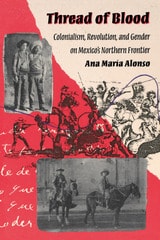
Thread of Blood
Colonialism, Revolution, and Gender on Mexico's Northern FrontierAna María Alonso
University of Arizona Press, 1995
The author demonstrates that a distinct kind of frontier serrano society was generated in Namiquipa between the mid-18th and mid-19th centuries. In exchange for keeping the Apaches at bay, colonists were provided with arms and land grants. At the same time, they developed a gendered sense of ethnic identity that equated honor with land, autonomy, and a kind of masculinity that distinguished the "civilized" colonist from the "barbarous" Indian. While this identity was itself ordered hierarchically between men and women, and between "Hispanic" and "Indian," it also provided serranos with a sense of pride and dignity that was not directly associated with wealth.
After the defeat of the Apaches, and with increased state control during the last decades of the Porfiriato, the serranos on the frontier were transformed from bulwarks of order to victims of progress. The expansion of capitalism and the manipulation of local political office by men no longer accountable to communal norms eroded the legitimacy of both powerholders and the central state. In response, serranos constructed an ideology of history based on past notions of masculine honor and autonomy. This ideology motivated their confrontations with the Mexican state during the 1890s and also served as the force behind their mobilization in the 1910 revolution.

Throwing Fire at the Sun, Water at the Moon
Anita Endrezze
University of Arizona Press, 2000
Throwing Fire at the Sun, Water at the Moon is a blend of ancient myths, poetry, journal extracts, short stories, and essays that tell her people's story from the early 1500s to the present, and her family's story over the past five generations. Reproductions of Endrezze's paintings add an additional dimension to her story and illuminate it with striking visual imagery. Endrezze has combed history and legend to gather stories of her immediate family and her mythical ancient family, the two converging in the spirit of storytelling. She tells Aztec and Yaqui creation stories, tales of witches and seductresses, with recurring motifs from both Yaqui and Chicano culture. She shows how Christianity has deeply infused Yaqui beliefs, sharing poems about the Flood and stories of a Yaqui Jesus. She re-creates the coming of the Spaniards through the works of such historical personages as Andrés Pérez de Ribas. And finally she tells of those individuals who carry the Yaqui spirit into the present day. People like the Esperanza sisters, her grandmothers, and others balance characters like Coyote Woman and the Virgin of Guadalupe to show that Yaqui women are especially important as carriers of their culture.
Greater than the sum of its parts, Endrezze's work is a new kind of family history that features a startling use of language to invoke a people and their past--a time capsule with a female soul. Written to enable her to understand more about her ancestors and to pass this understanding on to her own children, Throwing Fire at the Sun, Water at the Moon helps us gain insight not only into Yaqui culture but into ourselves as well.
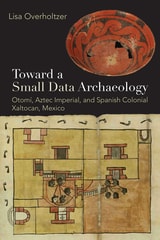
Toward a Small Data Archaeology
Otomí, Aztec Imperial, and Spanish Colonial Xaltocan, MexicoLisa Overholtzer
University Press of Colorado, 2025
Xaltocan served as the Otomí city-state capital before being conquered by the Tepanecs, subsequently incorporated into the Aztec Empire, and finally integrated into the vast Spanish colonial sphere. In reconstructing long-term household histories that bridge the pre-Hispanic and early Colonial periods, this book resists narratives that define Indigenous peoples solely through the lens of conquest and subordination. Instead, it presents richly detailed reconstructions of familial relationships and social networks, achieved through the rigorous analysis of artifacts, ecofacts, human remains, and ancient DNA. This meticulous and community-collaborative approach not only maximizes insights available from a limited archaeological record but also honors the ethical imperative to work with descendant communities.
Toward a Small Data Archaeology offers an innovative reexamination of the past by privileging the intricate, household-level narratives of Indigenous communities over the homogenizing tendencies of broad-scale "big data" approaches. By peopling the past, Overholtzer redefines methodological boundaries within archaeology, produces reconstructions and narratives that are more in line with Indigenous philosophies, and offers a compelling vision for a future in which historical narratives are reconstructed through a lens that is both deeply scientific and inherently humane.
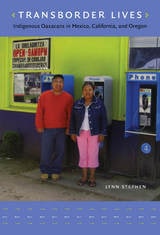
Transborder Lives
Indigenous Oaxacans in Mexico, California, and OregonLynn Stephen
Duke University Press, 2007
Stephen weaves the personal histories and narratives of indigenous transborder migrants together with explorations of the larger structures that affect their lives. Taking into account U.S. immigration policies and the demands of both commercial agriculture and the service sectors, she chronicles how migrants experience and remember low-wage work in agriculture, landscaping, and childcare and how gender relations in Oaxaca and the United States are reconfigured by migration. She looks at the ways that racial and ethnic hierarchies inherited from the colonial era—hierarchies that debase Mexico’s indigenous groups—are reproduced within heterogeneous Mexican populations in the United States. Stephen provides case studies of four grass-roots organizations in which Mixtec migrants are involved, and she considers specific uses of digital technology by transborder communities. Ultimately Stephen demonstrates that transborder migrants are reshaping notions of territory and politics by developing creative models of governance, education, and economic development as well as ways of maintaining their cultures and languages across geographic distances.
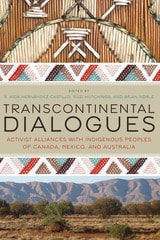
Transcontinental Dialogues
Activist Alliances with Indigenous Peoples of Canada, Mexico, and AustraliaEdited by R. Aída Hernández Castillo, Suzi Hutchings, and Brian Noble
University of Arizona Press, 2019
This volume presents a set of pieces that do not take the usual political or geographic paradigms as their starting point; instead, the particular dialogues from the margins presented in this book arise from a rejection of the geographic hierarchization of knowledge in which the Global South continues to be the space for fieldwork while the Global North is the place for its systematization and theorization. Instead, contributors in Transcontinental Dialogues delve into the interactions between anthropologists and the people they work with in Canada, Australia, and Mexico. This framework allows the contributors to explore the often unintended but sometimes devastating impacts of government policies (such as land rights legislation or justice initiatives for women) on Indigenous people’s lives.
Each chapter’s author reflects critically on their own work as activist-scholars. They offer examples of the efforts and challenges that anthropologists—Indigenous and non-Indigenous—confront when producing knowledge in alliances with Indigenous peoples. Mi’kmaq land rights, pan-Maya social movements, and Aboriginal title claims in rural and urban areas are just some of the cases that provide useful ground for reflection on and critique of challenges and opportunities for scholars, policy-makers, activists, allies, and community members.
This volume is timely and innovative for using the disparate anthropological traditions of three regions to explore how the interactions between anthropologists and Indigenous peoples in supporting Indigenous activism have the potential to transform the production of knowledge within the historical colonial traditions of anthropology.
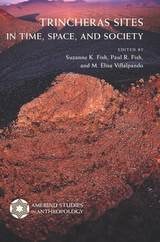
Trincheras Sites in Time, Space, and Society
Edited by Suzanne K. Fish, Paul R. Fish, and M. Elisa Villalpando
University of Arizona Press, 2008
This multi-author volume integrates a remarkable body of new data representing a textbook-like array of current research issues and methodologies in the archaeology of the region. Scholars from the United States and Mexico offer original research on trincheras sites in Chihuahua, Sonora, Arizona, and New Mexico. Scales of focus range from intensive intrasite sampling to the largest contiguous survey in the region. Authors incorporate spatial analyses, artifact studies, environmental and subsistence data, ethnographic analogs, ethnohistorical records, cross-cultural comparisons, archaeology, and archival resources.
The volume’s discussions contribute innovative approaches to worldwide interpretations of landscapes marked by hilltop sites. Contributors present meticulous research arguing that many trincheras sites were primarily used for habitation and ceremonial rites, in addition to previously predominant views of them as defensive refuges. Because trincheras occupations date from the late preceramic era to shortly before Spanish contact, authors relate them to early forms of agriculture, the emergence of village life, the appearance of differentiated settlement systems, and tendencies toward political and ritual centralization.
Detailed maps and figures illustrate the text, and close-up aerial photographs capture the visual essence of the sites, highlighted by a section that includes color photographs and an essay by renowned photographer Adriel Heisey.
Contributors:
Christian E. Downum
Paul R. Fish
Suzanne K. Fish
Robert J. Hard
Adriel Heisey
Stephen A. Kowalewski
Randall H. McGuire
Ben A. Nelson
John R. Roney
Judith Taylor
M. Elisa Villalpando
Joseph Vogel
Henry Wallace
David R. Wilcox
J. Scott Wood
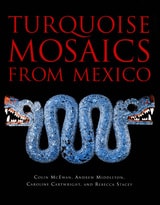
Turquoise Mosaics from Mexico
Colin McEwan, Andrew Middleton, Caroline Cartwright, and Rebecca Stacey
Duke University Press, 2006
Illustrated with more than 160 color images, this book describes the recent scientific findings about the mosaics in detail, revealing them to be rich repositories of information about ancient Mexico. The materials used to construct the mosaics demonstrate their makers’ deep knowledge of the natural world and its resources. The effort that would have been involved in procuring the materials testifies to the mosaics’ value and significance in a society imbued with myths and religious beliefs. The British Museum’s analyses have provided evidence of the way that the materials were prepared and assembled, the tools used, and the choices that were made by artisans. In addition, by drawing on historical accounts including early codices, as well as recent archaeological discoveries, specialists have learned more about the place of the mosaics in ancient Mexican culture.
Filled with information about the religion, art, and natural and cultural history as well as the extraordinary ability of modern science to enable detailed insight into past eras, Turquoise Mosaics from Mexico offers an overview of the production, utilization, and eventual fate of these beautiful and mysterious objects.