Results by title
130 books match the query 'Indonesia' and 22 start with t
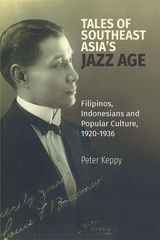
Tales of Southeast Asia’s Jazz Age
Filipinos, Indonesians and Popular Culture, 1920-1936Peter Keppy
National University of Singapore Press, 2019
This artistic era was marked by experimentation and adaption, and this was reflected in both Borromeo’s and Riboet’s styles. They were pioneering cultural brokers who dealt in hybrids. They were adept at combining high art and banal entertainment, tradition and modernity, and the foreign and the local.
Leaning on cultural studies and the work on cosmopolitanism and modernity by Henry Jenkins and Joel Kahn, Peter Keppy examines pop culture at this time as a contradictory social phenomenon. He challenges notions of Southeast Asia’s popular culture as lowbrow entertainment created by elites and commerce to manipulate the masses, arguing instead that audiences seized on this popular culture to channel emancipatory activities, to articulate social critique, and to propagate an inclusive nationalism without being radically anticolonial.

Television, Nation, and Culture in Indonesia
Ris Sea#104Philip Kitley
Ohio University Press, 2000
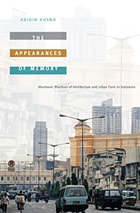
The Appearances of Memory
Mnemonic Practices of Architecture and Urban Form in IndonesiaAbidin Kusno
Duke University Press, 2010
Addressing developments in Indonesia since the fall of President Suharto’s regime in 1998, Kusno delves into such topics as the domestication of traumatic violence and the restoration of order in the urban space, the intense interest in urban history in contemporary Indonesia, and the implications of “superblocks,” large urban complexes consisting of residences, offices, shops, and entertainment venues. Moving farther back in time, he examines how Indonesian architects reinvented colonial architectural styles to challenge the political culture of the state, how colonial structures such as railway and commercial buildings created a new, politically charged cognitive map of cities in Java in the early twentieth century, and how the Dutch, in attempting to quell dissent, imposed a distinctive urban visual order in the 1930s. Finally, the present and the past meet in his long-term considerations of how Java has responded to the global flow of Islamic architecture, and how the meanings of Indonesian gatehouses have changed and persisted over time. The Appearances of Memory is a pioneering look at the roles of architecture and urban development in Indonesia’s ongoing efforts to move forward.

The Complete Lives of Camp People
Colonialism, Fascism, Concentrated ModernityRudolf Mrázek
Duke University Press, 2020
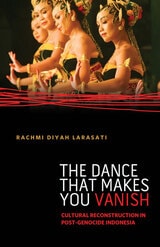
The Dance That Makes You Vanish
Cultural Reconstruction in Post-Genocide IndonesiaRachmi Diyah Larasati
University of Minnesota Press, 2013
Indonesian court dance, a purportedly pure and untouched tradition, is famed throughout the world for its sublime calm and stillness. Yet this unyieldingly peaceful surface conceals a time of political repression and mass killing. Between 1965 and 1966, some one million Indonesians—including a large percentage of the country’s musicians, artists, and dancers—were killed, arrested, or disappeared as Suharto established a virtual dictatorship that ruled for the next thirty years.
In The Dance That Makes You Vanish, an examination of the relationship between female dancers and the Indonesian state since 1965, Rachmi Diyah Larasati elucidates the Suharto regime’s dual-edged strategy: persecuting and killing performers perceived as communist or left leaning while simultaneously producing and deploying “replicas”—new bodies trained to standardize and unify the “unruly” movements and voices of those vanished—as idealized representatives of Indonesia’s cultural elegance and composure in bowing to autocratic rule. Analyzing this history, Larasati shows how the Suharto regime’s obsessive attempts to control and harness Indonesian dance for its own political ends have functioned as both smoke screen and smoke signal, inadvertently drawing attention to the site of state violence and criminality by constantly pointing out the “perfection” of the mask that covers it.
Reflecting on her own experiences as an Indonesian national troupe dancer from a family of persecuted female dancers and activists, Larasati brings to life a powerful, multifaceted investigation of the pervasive use of culture as a vehicle for state repression and the global mass-marketing of national identity.
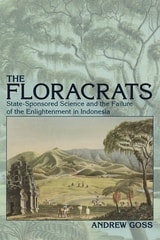
The Floracrats
State-Sponsored Science and the Failure of the Enlightenment in IndonesiaAndrew Goss
University of Wisconsin Press, 2011
Situated along the line that divides the rich ecologies of Asia and Australia, the Indonesian archipelago is a hotbed for scientific exploration, and scientists from around the world have made key discoveries there. But why do the names of Indonesia’s own scientists rarely appear in the annals of scientific history? In The Floracrats Andrew Goss examines the professional lives of Indonesian naturalists and biologists, to show what happens to science when a powerful state becomes its greatest, and indeed only, patron.
With only one purse to pay for research, Indonesia’s scientists followed a state agenda focused mainly on exploiting the country’s most valuable natural resources—above all its major export crops: quinine, sugar, coffee, tea, rubber, and indigo. The result was a class of botanic bureaucrats that Goss dubs the “floracrats.” Drawing on archives and oral histories, he shows how these scientists strove for the Enlightenment ideal of objective, universal, and useful knowledge, even as they betrayed that ideal by failing to share scientific knowledge with the general public. With each chapter, Goss details the phases of power and the personalities in Indonesia that have struggled with this dilemma, from the early colonial era, through independence, to the modern Indonesian state. Goss shows just how limiting dependence on an all-powerful state can be for a scientific community, no matter how idealistic its individual scientists may be.

The Forest of Taboos
Morality, Hunting, and Identity among the Huaulu of the MoluccasValerio Valeri
University of Wisconsin Press, 2000
“The Forest of Taboos may be considered among the most important books ever written by an anthropologist. Valeri writes superbly, and this book makes a fundamental contribution to one of the most central lines of thought in twentieth-century anthropology. He shows that taboo is finally comprehensible.”—John Stephen Lansing, University of Michigan
“The Forest of Taboos is no conventional ethnography, more an extended meditative essay on its subject, erudite, rich in ideas and data, wide-ranging in its theoretical inspiration, and self-consciously literary in form. It is a fitting memorial to an author whose life was so tragically cut short.”—Roy Ellen, University of Kent at Canterbury
This eloquent and profound book, completed by Valerio Valeri shortly before his death in 1998, contends that the ambivalence felt by all humans about sex, death, and eating other animals can be explained by a set of coordinated principles that are expressed in taboos. In elegant prose, Valeri evokes the world of the Huaulu, forest hunters of Indonesia. The hidden attractions of the animal world, which invades the human world in perilous ways, he shows, also delineate that which the Huaulu regard as most human about themselves.
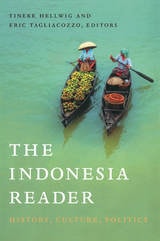
The Indonesia Reader
History, Culture, PoliticsTineke Hellwig and Eric Tagliacozzo, eds.
Duke University Press, 2009
Organized chronologically, the volume addresses early Indonesian civilizations; contact with traders from India, China, and the Arab Middle East; and the European colonization of Indonesia, which culminated in centuries of Dutch rule. Selections offer insight into Japan’s occupation (1942–45), the establishment of an independent Indonesia, and the post-independence era, from Sukarno’s presidency (1945–67), through Suharto’s dictatorial regime (1967–98), to the present Reformasi period. Themes of resistance and activism recur: in a book excerpt decrying the exploitation of Java’s natural wealth by the Dutch; in the writing of Raden Ajeng Kartini (1879–1904), a Javanese princess considered the icon of Indonesian feminism; in a 1978 statement from East Timor objecting to annexation by Indonesia; and in an essay by the founder of Indonesia’s first gay activist group. From fifth-century Sanskrit inscriptions in stone to selections related to the 2002 Bali bombings and the 2004 tsunami, The Indonesia Reader conveys the long history and the cultural, ethnic, and ecological diversity of this far-flung archipelago nation.

The Japanese Experience in Indonesia
Selected Memoirs of 1942-1945Anthony Reid
Ohio University Press, 1986
Although the wartime Japanese military administration of Indonesia was critical to the making of modern Indonesia, it remains shrouded in mystery, in part because of the systematic destruction of records following the Japanese surrender. These excerpts from personal memoirs of individual Japanese soldiers and administrators provide unique glimpses of the occupation—from the Japanese landing on Java and the Dutch surrender, to the independence proclamation in Jakarta, to the violence in Surabaya following the Japanese surrender. Through the eyes of Japanese at all levels of responsibility, we see the internal Indonesian turmoil, the struggle toward an independence movement, and the efforts of some Japanese to promote independence, despite the policies of imperial headquarters.
Not only does this collection illuminate modern Indonesian history, it provides students of Japanese history with a feeling for the variety of Japanese responses to the war effort. The Japanese Experience in Indonesia will therefore be of interest to Southeast and East Asian historians and political scientists, as well as to those with a more general interest in World War II.
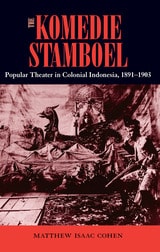
The Komedie Stamboel
Popular Theater in Colonial Indonesia, 1891–1903Matthew Isaac Cohen
Ohio University Press, 2006
Originating in 1891 in the port city of Surabaya, the Komedie Stamboel, or Istanbul-style theater, toured colonial Indonesia, Singapore, and Malaysia by rail and steamship. The company performed musical versions of the Arabian Nights, European fairy tales and operas such as Sleeping Beauty and Aida, as well as Indian and Persian romances, Southeast Asian chronicles, true crime stories, and political allegories. The actors were primarily Eurasians, the original backers were Chinese, and audiences were made up of all races and classes. The Komedie Stamboel explores how this new hybrid theater pointed toward possibilities for the transformation of self in a colonial society and sparked debates on moral behavior and mixed-race politics.
While audiences marveled at spectacles involving white-skinned actors, there were also racial frictions between actors and financiers, sexual scandals, fights among actors and patrons, bankruptcies, imprisonments, and a murder.
Matthew Isaac Cohen's evocative social history situates the Komedie Stamboel in the culture of empire and in late nineteenth-century itinerant entertainment. He shows how the theater was used as a symbol of cross-ethnic integration in postcolonial Indonesia and as an emblem of Eurasian cultural accomplishment by Indische Nederlanders. A pioneering study of nineteenth-century Southeast Asian popular culture, The Komedie Stamboel gives a new picture of the region's arts and culture and explores the interplay of currents in global culture, theatrical innovation, and movement in colonial Indonesia.ABOUT THE AUTHOR---Matthew Isaac Cohen is senior lecturer in Drama and Theatre Studies at Royal Holloway University of London. His articles on Southeast Asian performance have appeared in New Theatre Quarterly, Asian Theatre Journal, Journal of the Royal Asiatic Society, and Archipel. As a practicing shadow puppeteer, he has performed in the United States, Europe, and Asia.
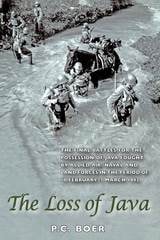
The Loss of Java
The Final Battles for the Possession of Java Fought by Allied Air, Naval and Land Forces in the Period of 18 February - 7 March 1942P.C. Boer
National University of Singapore Press, 2011
P.C. Boer considers whether the assessment of Major General Van Oyen that deploying the Allied air forces might prevent Japanese invasion of Java was realistic, and whether reliance on air power limited the capacity of land and naval forces to repel Japan's advances. The generally accepted idea is that the Allies were ineffective in their fight against the Japanese invaders but in fact the Japanese suffered serious losses. Boer's study shows that Dutch strategy grew out of a carefully-devised plan of defense, and that the battle for Java comprised not one (the Battle of the Java Sea) but four major engagements. However, Japanese commanders at various levels consciously took steps that exposed their forces to great risk but succeeded in putting the Allies under great pressure. In the end the Royal Netherlands East Indies Army (KNIL) and the allied forces capitulated on 8 March 1942.
This book is a translation of Het Verlies Van Java: Een kwestie van Air Power. De eindstrijd om Nederlands-Indie van de geallieerde lucht-, zee- en landstrijdkrschten in de periode van 18 februari t/m 7 maart 1942 (Amsterdam: Bataafsche Leeuw BV for the Koninklijke Militaire Academie, 2006).
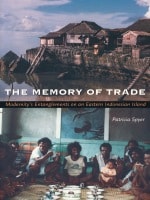
The Memory of Trade
Modernity's Entanglements on an Eastern Indonesian IslandPatricia Spyer
Duke University Press, 2000
Drawing on more than two years of archival and ethnographic research, Spyer examines the dynamics of contact with the Dutch and Europeans, Suharto’s postcolonial regime, and with the competing religions of Islam, Protestantism, and Catholicism in the context of the recent conversion of pagan Aruese. While arguing that Aru identity and community are defined largely in terms of absence, longing, memory, and desire, she also incorporates present-day realities—such as the ecological destruction wrought by the Aru trade in such luxury goods as pearls and shark fins—without overlooking the mystique and ritual surrounding these activities. Imprinted on the one hand by the archipelago’s long engagement with extended networks of commerce and communication and, on the other, by modernity’s characteristic repressions and displacements, Aruese make and manage their lives somewhat precariously within what they often seem to construe as a dangerously expanding—if still enticing—world. By documenting not only the particular expectations and strategies Aruese have developed in dealing with this larger world but also the price they pay for participation therein, The Memory of Trade speaks to problems commonly faced elsewhere in the frontier spaces of modern nation-states.
Balancing particularly astute analysis with classic ethnography, The Memory of Trade will appeal not only to anthropologists and historians but also to students and specialists of Southeast Asia, modernity, and globalization.
The Oil Palm Complex
Smallholders, Agribusiness and the State in Indonesia and MalaysiaEdited by Robert Cramb and John F. McCarthy
National University of Singapore Press, 2016
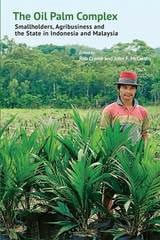
Based on detailed studies of specific communities and plantations and an analysis of the regional political economy of oil palm, this book unpicks the dominant policy narratives, business strategies, models of land acquisition, and labour-processes. It presents the oil palm industry in Malaysia and Indonesia as a complex system in which land, labour and capital are closely interconnected. Understanding this complex is a prerequisite to developing better strategies to harness the oil palm boom for a more equitable and sustainable pattern of rural development.
The Paradox of Agrarian Change
Food Security and the Politics of Social Protection in IndonesiaEdited by John McCarthy, Andrew McWilliam, and Gerben Nooteboom
National University of Singapore Press, 2023
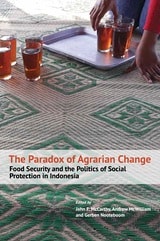
Economic growth in the middle-income countries of Southeast Asia over the past few decades has been widely praised for reducing poverty in both absolute and relative terms. Indonesia is a prime example. But while poverty has declined in Indonesia, patterns of food poverty persist across Indonesia. What explains this troubling paradox? How does it relate to Indonesia’s enthusiastic embrace of the “entitlements revolution,” the use of direct cash transfers as a tool for reducing poverty and building social inclusion?
This book analyzes the nature and social consequences of economic development and agrarian change processes in rural Indonesia in relation to the scope and effectiveness of Indonesia’s social protection programs. The findings are based on a series of extensive ground-up case studies in Indonesian communities in a variety of eco-agrarian settings that seek to understand the drivers of food insecurity and vulnerability at a household level. The results show that while high-value farming, diversification, and migration may offer a means of economic progress for poor households, opportunities for accumulation are limited. This, the authors show, is due to the way class, gender, and power work in remote local contexts, and the fact that much surplus income is used for enhanced consumption and changing lifestyles. There are few signs of the classical structural transformation of the countryside which has historically been considered the most decisive pathway out of rural poverty. The authors conclude that social assistance is unlikely to counter the persistence of rural poverty, food insecurity, and precarity in the absence of other redistributive strategies that shift the structural drivers of inequality.
The Phantom World of Digul
Policing as Politics in Colonial Indonesia, 1926–1941Takashi Shiraishi
National University of Singapore Press, 2020
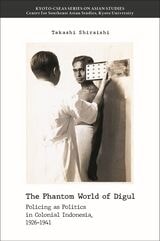
How did the government deploy political policing to achieve its policy objectives? What were the consequences and challenges for Indonesian activists? How was the government able to fashion its policing apparatus as the most potent instrument to achieve peace and order when the Great Depression hit the Indies, nationalist and communist forces were gaining strength in other places of the world, and war was coming both in Europe and Asia? This book answers those questions and more, breaking new ground for our understanding of the history of the Dutch Indies state in the early part of the twentieth century.

The Pulse of the Earth
Political Geology in JavaAdam Bobbette
Duke University Press, 2023
The Rope of God
James T. Siegel
University of Michigan Press, 2000

The Social World of Batavia
Europeans and Eurasians in Colonial IndonesiaJean Gelman Taylor
University of Wisconsin Press, 2009
Original in its focus on gender and use of varied sources—travelers’ accounts, newspapers, legal codes, genealogical data, photograph albums, paintings, and ceramics—The Social World of Batavia, first published in 1983, forged new paths in the study of colonial society. In this second edition, Gelman offers a new preface as well as an additional chapter tracing the development of these themes by a new generation of scholars.
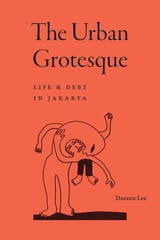
The Urban Grotesque
Life and Debt in JakartaDoreen Lee
Duke University Press, 2025
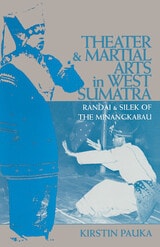
Theater and Martial Arts in West Sumatra
Randai and Silek of the MinangkabauKirstin Pauka
Ohio University Press, 1998
Randai, the popular folk theater tradition of the Minangkabau ethnic group in West Sumatra, has evolved to include influences of martial arts, storytelling, and folk songs. Theater and Martial Arts in West Sumatra describes the origin, development, and cultural background of randai and highlights two recent developments: the emergence of female performers and modern staging techniques.
This book also explores the indigenous martial arts form silek, a vital part of randai today. The strong presence of silek is illustrated in the martial focus of the stories that are told through randai, in its movement repertoire, and even in its costumes and musical accompaniment. As Kirstin Pauka shows, randai, firmly rooted in silek and Minangkabau tradition, is an intriguing mirror of the Minangkabau culture.

Thomas Stamford Raffles
Schemer or Reformer?Syed Hussein Alatas
National University of Singapore Press, 2020
This is not a new question—in fact, it was considered at length as far back as 1971, in Syed Hussein Alatas’s slim but devastating volume Thomas Stamford Raffles: Schemer or Reformer?. While the book failed to spark a wide debate on Raffles’s legacy in 1970s Singapore, nearly 50 years after its original publication this powerful work feels wholly fresh and relevant. This edition features a new introduction by Syed Farid Alatas assessing contemporary Singapore’s take on Raffles, and how far we have, or have not, come in thinking through Singapore’s colonial legacy.

To Remain Myself
The History of OnghokhamDavid Reeve
National University of Singapore Press, 2022