Results by title
84 books match the query 'International cooperation' and 13 start with t
Telecommunications and Empire
Jill Hills
University of Illinois Press, 2007
Jill Hills picks up from her pathbreaking study The Struggle for Control of Global Communication: The Formative Century to continue her examination of the political, technological, and economic forces at work in the global telecommunications market from World War II to the World Trade Organization agreement of 1997. In the late twentieth century, focus shifted from the creation and development of global communication markets to their intense regulation. The historical framework behind this control--where the market was regulated, by what institution, controlled by what power, and to whose benefit--masterfully complements Hills's analysis of power relations within the global communications arena.
Hills documents attempts by governments to direct, replace, and bypass international telecommunications institutions. As she shows, the results have offered indirect control over foreign domestic markets, government management of private corporations, and government protection of its own domestic communication market. Hills reveals that the motivation behind these powerful, regulatory efforts on person-to-person communication lies in the unmatched importance of communication in the world economy.
As ownership of communications infrastructure becomes more valuable, governments have scrambled to shape international guidelines. Hills provides insight into struggles between U.S. policymakers and the rest of the world, illustrating the conflict between a growing telecommunications empire and sovereign states that are free to implement policy changes. Freshly detailing the interplay between U.S. federal regulation and economic power, Hills fosters a deep understanding of contemporary systems of power in global communications.
Temple of Peace
International Cooperation and Stability since 1945Ingo Trauschweizer
Ohio University Press, 2021
This collection raises timely questions about peace and stability as it interrogates the past and present status of international relations.
The post–World War II liberal international order, upheld by organizations such as the United Nations, the North Atlantic Treaty Organization, and similar alliances, aspired to ensure decades of collective security, economic stability, and the rule of law. All of this was a negotiated process that required compromise—and yet it did not make for a peaceful world.
When Winston Churchill referred to the UN framework as “the temple of peace” in his famous 1946 Iron Curtain speech, he maintained that international alliances could help provide necessary stability so free people could prosper, both economically and politically. Though the pillars of international order remain in place today, in a world defined as much by populism as protest, leaders in the United States no longer seem inclined to serve as the indispensable power in an alliance framework that is built on shared values, human rights, and an admixture of hard and soft power.
In this book, nine scholars and practitioners of diplomacy explore both the successes and the flaws of international cooperation over the past seventy years. Collectively, the authors seek to address questions about how the liberal international order was built and what challenges it has faced, as well as to offer perspectives on what could be lost in a post-American world.
The Banality of Good
The UN's Global Fight against Human TraffickingLieba Faier
Duke University Press, 2024
The Carbon Calculation
Global Climate Policy, Forests, and Transnational Governance in Brazil and MozambiqueRaquel Rodrigues Machaqueiro
University of Arizona Press, 2023
Focusing on REDD+ (Reducing Emissions from Deforestation and Forest Degradation), the book demonstrates how industrialized countries are able to maintain their socioeconomic models largely unaltered while claiming to address global warming using forests in the Global South to offset their pollution. By examining the creation and implementation of REDD+ historically and ethnographically, the book traces the social life of this mechanism as it travels across a complex network spanning several interacting levels: international, national, and local. Through cases in the Brazilian state of Acre and the Zambézia province in Mozambique, the author demonstrates how global climate policy has created new opportunities and rationales for unprecedented levels of intervention in the Global South—all under the guise of saving the planet.
The Carbon Calculation critically highlights the ways in which politics has reinforced a scientific focus on one possible solution to the problem of climate change—namely those that largely absolve the industrialized world from undertaking politically painful transformations in its own economic model.
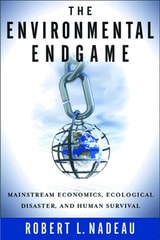
The Environmental Endgame
Mainstream Economics, Ecological Disaster, and Human SurvivalNadeau, Robert L
Rutgers University Press, 2006
In this groundbreaking book, Robert L. Nadeau warns that we have moved menacingly close to a global environmental catastrophe and that to evade this fate we must stop drawing a distinction between issues that are "environmental" or "scientific" and those that reside in the sphere of "real life." Although scientists have attempted to bring ecological concerns to the forefront of global issues, problems are rarely communicated in ways that can be readily understood by those outside the scientific community.
Bringing together perspectives from a variety of disciplines, including economics, politics, biology, and the history of science, The Environmental Endgame articulates the concerns of scientists in a way that they become the real-life, tangible concerns of people around the world. Nadeau asserts that we have entered a new phase of human history that cannot be one of separation and division but must be one of cooperation and mutual goals.
Nadeau demonstrates that our current governmental and financial institutions, based on neoclassical economics, lack the mechanisms for implementing viable solutions to large-scale crises. Such steps cannot be taken without moving beyond the power politics of the nation-state system. The book concludes with a call to view the natural world as part of humanity, not separate from it. This unifying worldview would be a catalyst for implementing the international government organizations necessary to resolving the crisis.
The Environmental Endgame is an ambitious and timely book that will change the way we think about our economy, our government, and the environment. It should be read by everyone who cares about the pervasive neglect and abuse of planet Earth and wants to know what can be done about it.

The Euro-American Cinema
By Peter Lev
University of Texas Press, 1993
With McDonalds in Moscow and Disneyland in Paris and Tokyo, American popular culture is spreading around the globe. Regional, national, and ethnic cultures are being powerfully affected by competition from American values and American popular forms. This literate and lively study explores the spread of American culture into international cinema as reflected by the collision and partial merger of two important styles of filmmaking: the Hollywood style of stars, genres, and action, and the European art film style of ambiguity, authorial commentary, and borrowings from other arts.
Peter Lev departs from the traditional approach of national cinema histories and discusses some of the blends, overlaps, and hegemonies that are typical of the world film industry of recent years. In Part One, he gives a historical and theoretical overview of what he terms the "Euro-American art film," which is characterized by prominent use of the English language, a European art film director, cast and crew from at least two countries, and a stylistic mixing of European art film and American entertainment.
The second part of Lev’s study examines in detail five examples of the Euro-American art film: Contempt (1963), Blow-Up (1966), The Canterbury Tales (1972), Paris, Texas (1983), and The Last Emperor (1987). These case studies reveal that the European art film has had a strong influence on world cinema and that many Euro-American films are truly cultural blends rather than abject takeovers by Hollywood cinema.

The Game of Conservation
International Treaties to Protect the World’s Migratory AnimalsMark Cioc
Ohio University Press, 2009
The Game of Conservation is a brilliantly crafted and highly readable examination of nature protection around the world.
Twentieth-century nature conservation treaties often originated as attempts to regulate the pace of killing rather than as attempts to protect animal habitat. Some were prompted by major breakthroughs in firearm techniques, such as the invention of the elephant gun and grenade harpoons, but agricultural development was at least as important as hunting regulations in determining the fate of migratory species. The treaties had many defects, yet they also served the goal of conservation to good effect, often saving key species from complete extermination and sometimes keeping the population numbers at viable levels. It is because of these treaties that Africa is dotted with large national parks, that North America has an extensive network of bird refuges, and that there are any whales left in the oceans. All of these treaties are still in effect today, and all continue to influence nature-protection efforts around the globe.
Drawing on a wide variety of primary and secondary sources, Mark Cioc shows that a handful of treaties—all designed to protect the world’s most commercially important migratory species—have largely shaped the contours of global nature conservation over the past century. The scope of the book ranges from the African savannahs and the skies of North America to the frigid waters of the Antarctic.
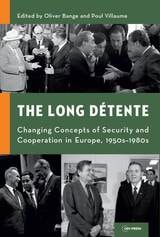
The Long Détente
Changing Concepts of Security and Cooperation in Europe, 1950s–1980sPoul Villaume
Central European University Press, 2017
The Network Inside Out
Annelise Riles
University of Michigan Press, 2001
The immediate subject of Riles's ethnographic work was a group of Fijian bureaucrats and activists preparing for and participating in the United Nations Fourth World Conference on Women. Participants in this meeting and the activities surrounding it understood themselves to be "focal points" in national, regional, and global "networks."
Starting from the premise that anthropologists are "inside" the Network, that is, that they are producers, consumers, and aesthetes, not simply observers, of the artifacts of late modern institutional life, Riles enacts a new ethnographic method for turning the network "inside out." The resulting experiment in the theory and ethnography of transnational institutional practices makes an important contribution to the anthropology of knowledge.
With its focus on developing a method for studying transnational phenomena, The Network Inside Out will appeal not only to anthropologists, but also to legal scholars and political scientists.
Annelise Riles is Assistant Professor, Northwestern University School of Law, Research Fellow, American Bar Foundation.
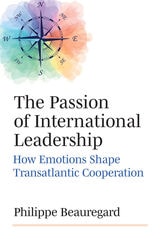
The Passion of International Leadership
How Emotions Shape Transatlantic CooperationPhilippe Beauregard
University of Michigan Press, 2022
How do international leaders emerge and why are they successful in bringing followers to converge on their positions? The Passion of International Leadership draws on recent advances in political psychology and state-of-the-art research in International Relations to go beyond current knowledge and simplistic accounts of international leadership. It tells surprising and intense stories of policymakers at the head of great powers attempting to cooperate during crisis moments, and uses these stories to challenge commonly held beliefs and intuitions about international leadership.
Beauregard explores international leadership in four cases of transatlantic cooperation when Western policymakers were confronted with foreign conflicts, like civil or secessionist wars. He provides a fascinating study of the recognition of Slovenia, Croatia, and Bosnia during the wars in Yugoslavia; the peace mediation during the Russia-Georgia war in 2008; the adoption of economic sanctions against Russia over the conflict in Ukraine; and finally, cooperation on striking against the Islamic State in Iraq and Syria. The book argues that leaders are driven by their convictions, and that they must strike a balance between the intense emotions associated with their beliefs and their need to represent a broader community. At the same time as they seek to bring followers on board by persuading them, they need to pay attention to emotionally contagious and resonant events that can alter the course of international cooperation.
The Politics of Expertise
Competing for Authority in Global GovernanceOle Jacob Sending
University of Michigan Press, 2015
Drawing on insights from sociology, political science, and institutional theory, Sending challenges theories centered on particular actors’ authority, whether it is the authority of so-called epistemic communities, the moral authority of advocacy groups, or the rational-legal authority of international organizations. Using in-depth and historically oriented case studies of population and peacebuilding, he demonstrates that authority is not given nor located in any set of particular actors. Rather, continuous competition for recognition as an authority to determine what is to be governed, by whom, and for what purpose shapes global governance in fundamental ways.
Advancing a field-based approach, Sending highlights the political stakes disguised by the technical language of professionals and thus opens a broader public debate over the key issues of our time.
The Soviet Union and the Gutting of the UN Genocide Convention
Anton Weiss-Wendt
University of Wisconsin Press, 2017
Based on extensive archival research, Anton Weiss-Wendt reveals in detail how the political aims of the superpowers rendered the convention a weak instrument for addressing abuses against human rights. The Kremlin viewed the genocide treaty as a political document and feared repercussions. What the Soviets wanted most was to keep the subjugation of Eastern Europe and the vast system of forced labor camps out of the genocide discourse. The American Bar Association and Senate Committee on Foreign Relations, in turn, worried that the Convention contained vague formulations that could be used against the United States, especially in relation to the plight of African Americans. Sidelined in the heated discussions, Weiss-Wendt shows, were humanitarian concerns for preventing future genocides.
The View from Prague
The Expectations of World Leaders at the Dawn of the 21st CenturyJirí Musil
Central European University Press, 2007