Results by title
105 books match the query 'Iran' and 21 start with t
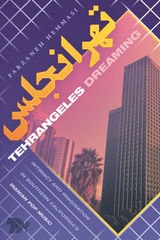
Tehrangeles Dreaming
Intimacy and Imagination in Southern California's Iranian Pop MusicFarzaneh Hemmasi
Duke University Press, 2020
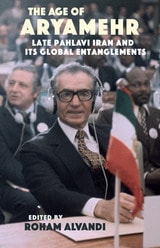
The Age of Aryamehr
Late Pahlavi Iran and Its Global EntanglementsEdited by Roham Alvandi
Gingko, 2025
The reign of the last Shah of Iran, Mohammad Reza Pahlavi (1941–79), marked the high point of Iran’s global interconnectedness. Never before had Iranians felt the impact of global political, social, economic, and cultural forces so intimately in their national and daily lives, nor had Iranian actors played such an important global role – on battlefields, barricades, and in board rooms far beyond Iran’s borders. Iranian intellectuals, technocrats, politicians, workers, artists, and students alike were influenced by the global ideas, movements, markets, and conflicts that they also helped to shape.
From the launch of the Shah’s White Revolution in 1963 to his overthrow in the popular revolution of 1978–79, Iran saw the longest period of sustained economic growth that the country had ever experienced. An entire generation took its cue from the shift from oil consumption to oil production to dream of, and aspire to, a modernized Iran, and the history of Iran in this period has tended to be presented as a prologue to the revolution. Those histories usually locate the political, social, and cultural origins of the revolution firmly within a national context, into which global actors intruded as Iranian actors retreated. While engaging with that national narrative, this volume is concerned with Iran’s place in the global history of the 1960s and ’70s. It examines and highlights the transnational threads that connected Pahlavi Iran to the world, from global traffic in modern art and narcotics to the embrace of American social science by Iranian technocrats and the encounter of European intellectuals with the Iranian Revolution.
The Aggada of the Bavli and Its Cultural World
Geoffrey Herman
SBL Press, 2018
Essays that explore the rich engagement of the Talmud with its cultural world
The Babylonian Talmud (Bavli), the great compilation of Jewish law edited in the late Sasanian era (sixth–seventh century CE), also incorporates a great deal of aggada, that is, nonlegal material, including interpretations of the Bible, stories, folk sayings, and prayers. The Talmud’s aggadic traditions often echo conversations with the surrounding cultures of the Persians, Eastern Christians, Manichaeans, Mandaeans, and the ancient Babylonians, and others. The essays in this volume analyze Bavli aggada to reveal this rich engagement of the Talmud with its cultural world.
Features:
- A detailed analysis of the different conceptions of martyrdom in the Talmud as opposed to the Eastern Christian martyr accounts
- Illustration of the complex ways rabbinic Judaism absorbed Christian and Zoroastrian theological ideas
- Demonstration of the presence of Persian-Zoroastrian royal and mythological motifs in talmudic sources
The Color Black
Enslavement and Erasure in IranBeeta Baghoolizadeh
Duke University Press, 2024

The Cruel Way
Switzerland to Afghanistan in a Ford, 1939Ella K. Maillart
University of Chicago Press, 2013
While the core of the book is the journey itself and their interactions with people oppressed by political conflict and poverty, towards the end of the trip the women’s increasingly troubled relationship takes center stage. By then the glamorous, androgynous Schwarzenbach, whose own account of the trip can be found in All the Roads Are Open, is fighting a losing battle with her own drug addiction, and Maillart’s frustrated attempts to cure her show the profound depth of their relationship.
Complete with thirteen of Maillart’s own photographs from the journey, The Cruel Way is a classic of travel writing, and its protagonists are as gripping and fearless as any in literature.
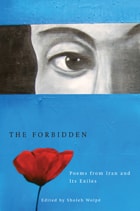
The Forbidden
Poems from Iran and its ExilesSholeh Wolpé
Michigan State University Press, 2012
During the 1979 revolution, Iranians from all walks of life, whether Muslim, Jewish, Christian, socialist, or atheist, fought side-by-side to end one tyrannical regime, only to find themselves in the clutches of another. When Khomeini came to power, freedom of the press was eliminated, religious tolerance disappeared, women’s rights narrowed to fit within a conservative interpretation of the Quran, and non-Islamic music and literature were banned. Poets, writers, and artists were driven deep underground and, in many cases, out of the country altogether. This moving anthology is a testament to both the centuries-old tradition of Persian poetry and the enduring will of the Iranian people to resist injustice. The poems selected for this collection represent the young, the old, and the ancient. They are written by poets who call or have called Iran home, many of whom have become part of a diverse and thriving diaspora.
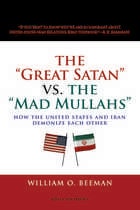
The Great Satan vs. the Mad Mullahs
How the United States and Iran Demonize Each OtherWilliam O. Beeman
University of Chicago Press, 2008
“William Beeman’s analysis of dissonant perceptions of Iran and the USA is compelling and important. . . . I am particularly grateful for this work.”—James Peacock, University of North Carolina at Chapel Hill
“[Beeman] is more interested in informing the reader than in impressing his peers. The other strength of the book lies in the author’s knowledge of Iranian history and culture. . . . It challenges the reader and forces him to question stereotypes about Iran and Washington’s perspective on the country.”—Abbas William Samii, Middle East Journal
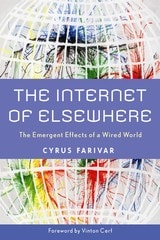
The Internet of Elsewhere
The Emergent Effects of a Wired WorldFarivar, Cyrus
Rutgers University Press, 2011
Through the lens of culture, The Internet of Elsewhere looks at the role of the Internet as a catalyst in transforming communications, politics, and economics. Cyrus Farivar explores the Internet's history and effects in four distinct and, to some, surprising societies—Iran, Estonia, South Korea, and Senegal. He profiles Web pioneers in these countries and, at the same time, surveys the environments in which they each work. After all, contends Farivar, despite California's great success in creating the Internet and spawning companies like Apple and Google, in some areas the United States is still years behind other nations.
Surprised? You won't be for long as Farivar proves there are reasons that:
- Skype was invented in Estonia—the same country that developed a digital ID system and e-voting;
- Iran was the first country in the world to arrest a blogger, in 2003;
- South Korea is the most wired country on the planet, with faster and less expensive broadband than anywhere in the United States;
- Senegal may be one of sub-Saharan Africa's best chances for greater Internet access.
The Internet of Elsewhere brings forth a new complex and modern understanding of how the Internet spreads globally, with both good and bad effects.
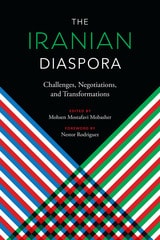
The Iranian Diaspora
Challenges, Negotiations, and TransformationsEdited by Mohsen Mostafavi Mobasher
University of Texas Press, 2018
The Iranian revolution of 1978–1979 uprooted and globally dispersed an enormous number of Iranians from all walks of life. Bitter political relations between Iran and the West have since caused those immigrants to be stigmatized, marginalized, and politicized, which, in turn, has discredited and distorted Iranian migrants’ social identity; subjected them to various subtle and overt forms of prejudice, discrimination, and social injustice; and pushed them to the edges of their host societies. The Iranian Diaspora presents the first global overview of Iranian migrants’ experiences since the revolution, highlighting the similarities and differences in their experiences of adjustment and integration in North America, Europe, Australia, and the Middle East.
Written by leading scholars of the Iranian diaspora, the original essays in this volume seek to understand and describe how Iranians in diaspora (re)define and maintain their ethno-national identity and (re)construct and preserve Iranian culture. They also explore the integration challenges the Iranian immigrants experience in a very negative context of reception. Combining theory and case studies, as well as a variety of methodological strategies and disciplinary perspectives, the essays offer needed insights into some of the most urgent and consequential issues and problem areas of immigration studies, including national, ethnic, and racial identity construction; dual citizenship and dual nationality maintenance; familial and religious transformation; politics of citizenship; integration; ethnic and cultural maintenance in diaspora; and the link between politics and the integration of immigrants, particularly Muslim immigrants.

The Khwan Niamut
Or, Nawab'S Domestic CookeryDavid E. Schoonover
University of Iowa Press, 1992
The Memory of Elephants
A NovelBoman Desai
University of Chicago Press, 2001
The Persian Empire
Lindsay Allen
University of Chicago Press, 2005
In her cultural and political history of the development of this power, Lindsay Allen-whose posts in the Ancient Near East departments of the British Museum and the Metropolitan Museum of Art make her one of the leading authorities on Persia-surveys written sources, art objects, warfare, politics, archaeological sites, and daily life during Persian rule. She traces the evolution of the monarchy, showing how it fostered unprecedented international communication and cultural exchange, and describes how the Persian expedition into Greece in the early fifth century BCE became a defining moment that established a European identity apart from an Asian one. Throughout, lavish illustrations bring to life the traditions of this ancient Middle Eastern civilization and finally place Alexander's invasion within a Persian context. As the subject experiences renewed interest, The Persian Empire promises to be the definitive work on one of the most powerful dynasties in ancient history.
The Place of Stones
A NovelAli Hosseini
Northwestern University Press, 2017
The Place of Stones is Ali Hosseini’s newly translated first novel, his second book to appear in English. In it, he paints a vivid portrait of Sangriz, a village in the southern part of Iran where life has been disrupted by industrialization and the revolution of 1979.
Haydar and Jamal are best friends, and their families have always made their living from the land in the foothills of Iran’s Zagros Mountains. Haydar is a dreamer who searches the hills for an ancient treasure called the Black Globe. Jamal is in love with Haydar’s sister, Golandam, and he attempts to accommodate himself to modernization as a way to create a better life for the two of them. The rapacious conversion of farmland to brick factories draws the trio into escalating conflict with the village landlord.
As Jamal, Haydar, and their families confront land reform, industrialization, revolution, and war, their lives are pulled forcefully toward the explosive events that will change them all. In masterfully crafted prose that never sinks into sentimentality, The Place of Stones illuminates how a lost past continues to shape the present.

The Poetics and Politics of the Veil in Iran
An Archival and Photographic AdventureAzadeh Fatehrad
Intellect Books, 2019
The Poetics and Politics of the Veil in Iran features Fatehrad’s own photographs in addition to work by artists Hengameh Golestan, Shirin Neshat, Shadi Ghadirian, Abbas Kiarostami, Mohsen Makhmalbaf, Adolf Loos, Gaëtan Gatian de Clérambault, and Alison Watt. In exploring women’s lives in post-revolutionary Iran, Fatehrad considers the role of the found image and the relationship between the archive and the present, resulting in an illuminating history of feminism in Iran in the twentieth and twenty-first centuries.
The Sasanian Empire at War
Persia, Rome, and the Rise of Islam, 224–651Michael J. Decker
Westholme Publishing, 2025
A comprehensive military history of one of the most important empires of Late Antiquity
The Sasanian Empire at War: Persia, Rome, and the Rise of Islam, 224–651 is the first comprehensive study in English examining war and society in one of the most important empires in world history: the Persian Empire of 224-651 AD, ruled by the Sasanian clan. At its height the Sasanians governed lands from the Indus River in the east to Egypt and the Mediterranean in the west. Adversaries of Rome, they also faced grave challenges from nomadic powers from Central Asia, notably the Huns and Turks. The Sasanians were able to maintain their empire for hundreds of years through nearly constant warfare, but when their expansion was checked in the north by the Byzantines at Constantinople in 626, and with the Muslim invasions to their south and west beginning in the 630s, the empire could no longer be sustained, and it finally collapsed.
In this book, Michael J. Decker examines Sasanian warfare, including military capabilities, major confrontations, organization and weapons of the Persian army. In addition to providing a comprehensive overview of the conflicts that marked this vital period in the history of Eurasia, The Sasanian Empire at War challenges long cherished notions of the inferiority of Sasanian military capabilities and renders a new image of a sophisticated, confident culture astride the heart of Eurasia at the end of the ancient world and birth of the Silk Road. Persian arms were among the many features of their culture that drew widespread admiration and was one of the keys to the survival of Iranian culture beyond the Arab Conquest and into the present day.
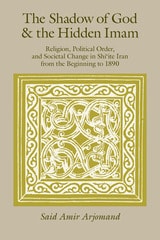
The Shadow of God and the Hidden Imam
Religion, Political Order, and Societal Change in Shi'ite Iran from the Beginning to 1890Said Amir Arjomand
University of Chicago Press, 1984
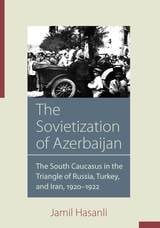
The Sovietization of Azerbaijan
The South Caucasus in the Triangle of Russia, Turkey, and Iran, 1920–1922Jamil Hasanli
University of Utah Press, 2017
World War I and the fall of tsarist Russia brought brief independence to Azerbaijan, but by 1920 the Bolshevik revolution pushed south with the twofold purpose of accessing the oil-rich fields near Baku on the Caspian Sea and spreading communism into the Caucasus. Azerbaijan, the richest and earliest significant source of oil in the world, was the first republic in the South Caucasus occupied by the Red Army, which then advanced into neighboring Armenia and Georgia. Pulling from confidential, newly accessed archives, Hasanli describes Soviet Russia’s aggressive policy toward the three South Caucasian nations, which led to their absorption into the USSR by the end of 1922.
The book highlights the Caucasian peoples’ struggle to retain political independence against Soviet Russia and an international cast that included European powers wanting to retain petroleum concessions; Kemalist Turkey, which claimed special ties to the Turkic Azeris; and Iran, which controlled South Azerbaijan and was thus a possible route of expansion eastward for Bolshevik movement. The author also considers the impact on Azerbaijani-Armenian relations of the first two years of Sovietization and explains how Azerbaijan provided space for Bolshevik experiments. Throughout his book, Hasanli illuminates the tragedy of the complex, confused period of Sovietization of the South Caucasus.
This Flame Within
Iranian Revolutionaries in the United StatesManijeh Moradian
Duke University Press, 2022
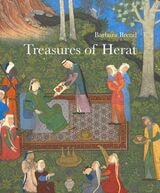
Treasures of Herat
Two Manuscripts of the Khamsah of Nizami in the British LibraryBarbara Brend
Gingko, 2021
With this book, Barbara Brend provides thorough consideration of two celebrated Persian manuscripts housed in the British Library. These two copies of the Khamsah (Quintet) a set of five narrative poems by twelfth-century poet Nizami, a master of allegorical poetry in Persian literature, were produced in Herat in the fifteenth century, one of the greatest periods of Persian painting. Although well known, the manuscripts have never before been written about in relation to each other. Brend tells the story of each poem and the painting that illustrates it, and she formally analyzes the images, placing them in their historical and artistic context.
The images from both highly prized manuscripts are beautifully reproduced in color, and the ownership history of one of the manuscripts—recorded in the form of seal impressions and inscriptions— is also included. Ursula Sims-Williams provides a translation and commentary of these important marks of ownership which identify the Mughal rulers Akbar, Jahangir, Shah Jahan, and Aurangzeb, among many others.
Tremors
New Fiction by Iranian American WritersAnita Amirrezvani
University of Arkansas Press, 2013
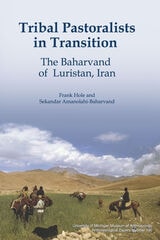
Tribal Pastoralists in Transition
The Baharvand of Luristan, IranFrank Hole and Sekandar Amanolahi-Baharvand
University of Michigan Press, 2021
Supplementary videos (on the migration, weaving, harvesting, and the bazaars) can be found on Fulcrum (fulcrum.org/UMMAA).