Results by title
54 books match the query 'Islamic Studies' and 12 start with t

The Contemporary Arab Reader on Political Islam
Edited by Ibrahim M. Abu-Rabi' and Tere Vaden
Pluto Press, 2010
The Contemporary Arab Reader on Political Islam brings together the writings of highly influential figures in the field of Islamism in the contemporary Arab world, many of whose writings have never been available before in English.
Addressing the key issues such as human rights, civil society, secularism, globalisation and ummah, and the impact of the West on the modern Arab world, this is the perfect starting point for students and academics looking to understand 'Political Islam' in contemporary Arab and Muslim societies.
The contributors include such important Islamist thinkers and activists as Abdullah Azzam, central to the spread of Islamism in Afghanistan, Sayyid Muhammad Hussain Fadlallah, a major Shiite figure in contemporary Lebanon and Ahmad Bin Yousuf, a political advisor to Akram Haniyya in Gaza.

The Friday Mosque in the City
Liminality, Ritual, and PoliticsEdited by A. Hilâl Ugurlu and Suzan Yalman
Intellect Books, 2020
This edited volume explores the dynamic relationship between the Friday mosque and the Islamic city, addressing the traditional topics through a fresh new lens and offering a critical examination of each case study in its own spatial, urban, and socio-cultural context. While these two well-known themes—concepts that once defined the field—have been widely studied by historians of Islamic architecture and urbanism, this compilation specifically addresses the functional and spatial ambiguity or liminality between these spaces.
Instead of addressing the Friday mosque as the central signifier of the Islamic city, this collection provides evidence that there was (and continues to be) variety in the way architectural borders became fluid in and around Friday mosques across the Islamic world, from Cordoba to Jerusalem and from London to Lahore. By historicizing different cases and exploring the way human agency, through ritual and politics, shaped the physical and social fabric of the city, this volume challenges the generalizing and reductionist tendencies in earlier scholarship.
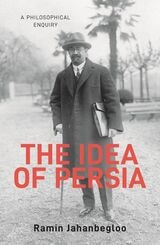
The Idea of Persia
A Philosophical EnquiryRamin Jahanbegloo
Gingko, 2026
This book explores the idea of Persia as a means of investigating the soul of the fascinating nation.
In 1721, the French philosopher Montesquieu posed the question “Comment peut-on être persan?” ("How can one be Persian?") in the title to his famous Persian Letters. After centuries of invasion, murder, destruction, authoritarian rule, decay of political theory, and increasing dissolution in Iran’s politics, this volume is an investigation into what the answer to that question might be today.
The Idea of Persia explores the notion of what it is to be Persian, but not as it has been constituted in the past with reference to the political experience of antiquity, nor as an affirmation of the secular-rational project of modernity. Rather, the book examines the question of what it is to be Persian against the backdrop of centuries in which a common, plural subjectivity of Persian-ness has been continually delayed by those who, with or without ideologies, believed in politics only as a means of ruling or of being ruled without laws or citizenship.
The historical battle for social and political freedoms is still underway in Iran. As the nation wrestles with the possibility of an extended period of political, social, and cultural decline, it is a timely moment to return to the perspective embodied in the enlightened thinking of figures such as the writer and three times prime minister of Iran Mohammed Ali Foroughi (1877–1942) and his vision of a country possessing rational and moral capabilities, and to a possible renaissance of social and political institutions.
The idea of Persia as it is presented here sees hope in the future as the means by which Iranians may liberate themselves from the duality of heroes and saints and remake their political mentality while staying true to an age-old idea of Persia and to freedom as an essential virtue.
The Impossibility of Muslim Boyhood
Shenila Khoja-Moolji
University of Minnesota Press, 2024
How the construction of Muslim boys as proto-terrorists is integral to the story of American racial capitalism
How do we understand an incident where a five-year-old Muslim boy arrives at Dulles airport and is preemptively detained as a “threat”? To answer that question, Shenila Khoja-Moolji examines American public culture, arguing that Muslim boyhood has been invented as a threat within an ideology that seeks to predict future terrorism. Muslim boyhood bridges actual past terrorism and possible future events, justifying preemptive enclosure, surveillance, and punishment. Even in the occasional reframing of individual Muslim boys as innocent, Khoja-Moolji identifies a pattern of commodity antiracism, through which elites buy public goodwill but leave intact the collective anti-Muslim notion that fuels an expanding carceral and security state. Framing Muslim boyhood as a heuristic device, she turns to a discussion of Hindutva ideology in India to show how Muslim boyhood may be resituated in global contexts.
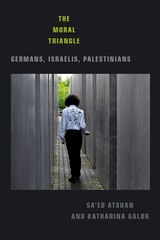
The Moral Triangle
Germans, Israelis, PalestiniansSa'red Atshan and Katharina Galor
Duke University Press, 2020
The Next Threat
Western Perceptions of IslamEdited by Jochen Hippler and Andrea Lueg
Pluto Press, 1995
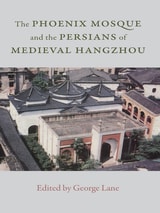
The Phoenix Mosque and the Persians of Medieval Hangzhou
Edited by George Lane
Gingko, 2018
The State of Islam
Culture and Cold War Politics in PakistanSaadia Toor
Pluto Press, 2011
The State of Islam tells the story of Pakistan through the lens of the Cold War, and more recently the War on Terror, to shed light on the domestic and international processes behind the global rise of militant Islam.
Unlike existing scholarship on nationalism, Islam and the state in Pakistan, which tends to privilege events in a narrowly-defined ‘political’ realm, Saadia Toor highlights the significance of cultural politics in Pakistan from its origins to the contemporary period. This extra dimension allows Toor to explain how the struggle between Marxists and liberal nationalists was influenced and eventually engulfed by the agenda of the religious right.
Timely and unique, this book is a must for anyone who wants to understand the roots of modern Pakistan and the likely outcome of current power struggles in the country.
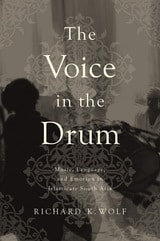
The Voice in the Drum
Music, Language, and Emotion in Islamicate South AsiaRichard K. Wolf
University of Illinois Press, 2014
Times of History
Universal Topics in Islamic HistoriographyAziz Al-Azmeh
Central European University Press, 2007
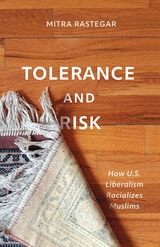
Tolerance and Risk
How U.S. Liberalism Racializes MuslimsMitra Rastegar
University of Minnesota Press, 2021
How apparently positive representations of Muslims in U.S. media cast Muslims as a racial population
Portrayals of Muslims as the beneficiaries of liberal values have contributed to the racialization of Muslims as a risky population since the September 11 attacks. These discourses, which hold up some Muslims as worthy of tolerance or sympathy, reinforce an unstable good Muslim/bad Muslim binary where any Muslim might be moved from one side to the other. In Tolerance and Risk, Mitra Rastegar explores these discourses as a component of the racialization of Muslims—where Muslims are portrayed as a highly diverse population that nevertheless is seen to contain within it a threat that requires constant vigilance.
Tolerance and Risk brings together several case studies to examine the interrelation of representations of Muslims abroad and in the United States. These include human-interest stories and opinion polls of Muslim Americans, media representations of education activist Malala Yousafzai, LGBTQ activist discourses, local New York controversies surrounding Muslim-led public projects, and social media discourses of the Syrian refugee crisis. Tolerance and Risk demonstrates how representations of tolerable or sympathetic Muslims produce them as a population with distinct characteristics, capacities, and risks, and circulate standards by which the trustworthiness or threat of individual Muslims must be assessed.
Tolerance and Risk examines the ways that discourses of liberal rights, including feminist and LGBTQ rights discourses, are mobilized to racialize Muslims as uncivilized, even as they garner sympathy and identification with some Muslims.
Transnational Political Islam
Religion, Ideology and PowerEdited by Azza Karam
Pluto Press, 2003
Political Islam, to be distinguished from Islam as a culture or a religion, and from Islamic Fundamentalism, is an increasingly important feature of the western political scene. The ideologies of Political Islam reflect the fact that some of their adherents live and work within a Western socio-political context.
Although Political Islam has been widely written about in Muslim countries, very little has been published the West, and this book attempts to redress that imbalance.
With a range of outstanding contributors that includes academics and human rights advocates this book tackles the diversity of Islamist thinking and practice in various Western countries and explores their transnational connections in both East and West.
The book analyses developments in Islamist thinking and activities, and their connections to the latest global political and economic trends, and discusses future evolutions of the ideology and its manifestations.