Results by title
220 books match the query 'Israel' and 36 start with t
Tangled Roots
The Emergence of Israeli CultureIsrael Bartal
SBL Press, 2020
A new interpretation of the roots of Israeli culture
In Tangled Roots: The Emergence of Israeli Culture, Israel Bartal traces the history of modern Hebrew culture prior to the emergence of political Zionism. Bartal examines how traditional and modernist ideals and Western and non-European Jewish cultures merged in an unprecedented encounter between an ancient land (Israel) and a multigenerational people (the Jews). Premodern Jewish traditionalists, Palestinian locals, foreign imperial forces, and Jewish intellectuals, writers, journalists, and party functionaries each affected the Israeli culture that emerged. As this new Hebrew culture was taking shape, the memory of the recent European past played a highly influential role in shaping the image of the New Hebrew, that mythological hero who was meant to supplant the East European exilic Jew.
Features
- A critical revision of most contemporary politicized histories of Jewish nationalism
- An examination of the history of modern Hebrew culture prior to political Zionism
Teaching Israel
Studies of Pedagogy from the FieldEdited by Sivan Zakai and Matt Reingold
Brandeis University Press, 2024
Jewish Americans are divided in their views on Israel. While scholars have outlined philosophical principles to guide educators who teach about Israel, there has been less scholarship focused on the pedagogy surrounding the country. This book resituates teaching—the questions, dilemmas, and decision-making that teachers face—as central to both Israel studies and Israel education. Contributors illuminate how educators from differing pedagogical orientations, who teach in a range of educational settings learn, understand, undertake, and ultimately improve the work of teaching Israel. The volume also looks at the professional support and learning opportunities teachers may need to engage with these pedagogical questions.
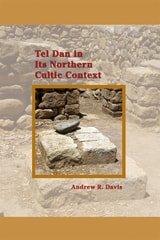
Tel Dan in Its Northern Cultic Context
Andrew R. Davis
SBL Press, 2013
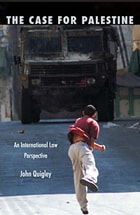
The Case for Palestine
An International Law PerspectiveJohn Quigley
Duke University Press, 2005
In this volume, Quigley provides a thorough understanding of both sides of the conflict in the context of international law. He contends that the Palestinians have a stronger legal claim to Jerusalem than do the Israelis; that Palestinian refugees should be repatriated to areas including those within the borders of Israel; and that Israel should withdraw from the territory it occupied in 1967. As in his earlier volume, Quigley provides an extensively documented evaluation of the conflict over the last century, discussing the Zionist movement, the League of Nations’ decision to promote a Jewish homeland in Palestine, the 1948 war and creation of Israel, and Israel’s occupation of the West Bank, Gaza Strip, and Golan Heights during the 1967 war.
The Challenges of Sovereignty
Essays on Israel and ZionismDavid Ellenson
Brandeis University Press, 2026
Key essays by a notable scholar address some of the most pressing questions facing Israel today.
Over the course of his rich career, David Ellenson—one of the most outstanding Jewish scholars, intellectuals, and thinkers of our time—probed the tension between tradition and modernity, especially as reflected in the ceaseless reinterpretation of liturgical and halakhic texts. Alongside that scholarly interest, largely centered on European Jewry, Ellenson produced an impressive body of work on Zionism and Israel.
This volume follows the arc of this body of work from Ellenson’s early articles on the Zionism of American rabbis to his last essay on the struggle between Jewish and democratic impulses in Israeli society. He draws on familiar sources of inquiry—Jewish prayers and legal sources—to chart changes in Israeli religious life and to excavate its theological-political foundation. What emerges is a profound meditation on some of the most important questions that Israel faces today: what does it mean to be Jewish in the state? What role should Halakhah play in a self-defined Jewish state? How should the state treat its non-Jewish minority? How deeply rooted is democracy in the state and its foundational texts? And can the state ever escape seemingly irrepressible internal and external conflict?
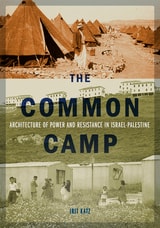
The Common Camp
Architecture of Power and Resistance in Israel–PalestineIrit Katz
University of Minnesota Press, 2022
Seeing the camp as a persistent political instrument in Israel–Palestine and beyond
The Common Camp underscores the role of the camp as a spatial instrument employed for reshaping, controlling, and struggling over specific territories and populations. Focusing on the geopolitical complexity of Israel–Palestine and the dramatic changes it has experienced during the past century, this book explores the region’s extensive networks of camps and their existence as both a tool of colonial power and a makeshift space of resistance.
Examining various forms of camps devised by and for Zionist settlers, Palestinian refugees, asylum seekers, and other groups, Irit Katz demonstrates how the camp serves as a common thread in shaping lands and lives of subjects from across the political spectrum. Analyzing the architectural and political evolution of the camp as a modern instrument engaged by colonial and national powers (as well as those opposing them), Katz offers a unique perspective on the dynamics of Israel–Palestine, highlighting how spatial transience has become permanent in the ongoing story of this contested territory.
The Common Camp presents a novel approach to the concept of the camp, detailing its varied history as an apparatus used for population containment and territorial expansion as well as a space of everyday life and subversive political action. Bringing together a broad range of historical and ethnographic materials within the context of this singular yet versatile entity, the book locates the camp at the core of modern societies and how they change and transform.

The Economy of Modern Israel
Malaise and PromiseAssaf Razin and Efraim Sadka
University of Chicago Press, 1993
The authors present the first detailed economic analysis of the Palestinian uprising, showing how the unrest has led to a fall in Arab employment in Israel and serious economic loss to the occupied territories with some loss to Israel. They also examine how the uprising has affected Israel's financial standing internationally and the inflow of foreign aid.
Razin and Sadka see promise for Israel's economy in the waves of immigration from the former Soviet Union, despite the current difficulties in absorbing the immigrants; in the coexistence of a flourishing and highly competitive private sector with a relatively large public sector, which is undergoing privatization; and in a tax structure that encourages long-term saving and business growth. By examining the interplay between the exchange rate, interest rates, and monetary and anti-inflation policies, the authors investigate the possibilities for renewed growth and conclude that the future of Israel's economy crucially depends on serious efforts to secure peace in the Middle East.
The First Fifty Years
A Jubilee in Prose and Poetry Honoring Women RabbisRabbi Sue Levi Elwell, Jessica Greenbaum, Rabbi Hara E. Person
Central Conference of American Rabbis, 2023
The ordination of Rabbi Sally J. Priesand in 1972 was a watershed moment in Jewish history. In The First Fifty Years, contributors from across the Jewish and gender spectrums reflect on the meaning of this moment and the ensuing decades, both personally and for the Jewish community. In short pieces of new prose, authors—many of them pioneering rabbis—share stories, insights, analysis, and celebrations of women in the rabbinate. These are intertwined with a wealth of poetry that poignantly captures the spirit of this anniversary. The volume is a deep, heartfelt tribute to women rabbis and their indelible impact on all of us.
The Footsteps of Israel
Understanding Jews in Anglo-Saxon EnglandAndrew P. Scheil
University of Michigan Press, 2004
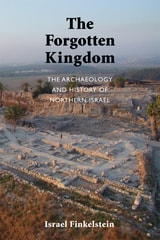
The Forgotten Kingdom
The Archaeology and History of Northern IsraelIsrael Finkelstein
SBL Press, 2013
A new understanding of the history of the northern kingdom from 1350 B.C.E. to 720 B.C.E.
Beginning with the Canaanite city-states, through the Saulide dynasty, to the fall of Israel, Finkelstein presents the first comprehensive history of Israel integrating the analysis of more than thirty years of archaeological work with interpretation of ancient Near Eastern and biblical texts. Though Judah dominates the pages of the Hebrew Bible and contemporary studies, Israel dominates here as Finkelstein reveals the glory of the Omride dynasty, outlines how the two kingdoms of Israel and Judah developed parallel to one another, and highlights Israel’s transformation from kingdom to foundational idea.
Features:
- Archaeological analysis of the region of the northern kingdom
- Primary and secondary textual analysis from the ancient Near East and the biblical narrative
- Maps, tables, and images
- Discussion of Israel’s legacy
The Fragile Dialogue
New Voices of Liberal ZionismRabbi Stanley M. Davids and Rabbi Lawrence A. Englander, DHL
Central Conference of American Rabbis, 2018

The Global Political Economy of Israel
Jonathan Nitzan and Shimshon Bichler
Pluto Press, 2002
Over the past century, Israel has been transformed from an agricultural colony, to a welfare-warfare state, to a globally integrated "market economy" characterised by great income disparities. What lies behind this transformation? In order to understand capitalist development, argue Bichler and Nitzan, we need to break the artificial separation between "economics" and "politics", and think of accumulation itself as "capitalisation of power". Applying this concept to Israel, they reveal the big picture that never makes it to the news. Diverse processes – such as regional conflicts and energy crises, ruling class formation and dominant ideology, militarism and dependency, inflation and recession, the politics of high-technology and the transnationalisation of ownership – are all woven into a single story. The result is a fascinating account of one of the world’s most volatile regions.
The Islamic Movement in Israel
Tilde Rosmer
University of Texas Press, 2022
Since its establishment in the late 1970s, Israel’s Islamic Movement has grown from a small religious revivalist organization focused on strengthening the faith of Muslim Palestinian citizens of Israel to a countrywide sociopolitical movement with representation in the Israeli legislature. But how did it get here? How does it differ from other Islamic movements in the region? And why does its membership continue to grow?
Tilde Rosmer examines these issues in The Islamic Movement in Israel as she tells the story of the movement, its identity, and its activities. Using interviews with movement leaders and activists, their documents, and media reports from Israel and beyond, she traces the movement’s history from its early days to its 1996 split over the issue of its relationship to the state. She then explores how the two factions have functioned since, revealing that while leaders of the two branches have pursued different approaches to the state, until the outlawing of the Northern Branch in 2015, both remained connected and dedicated to providing needed social, education, and health services in Israel’s Palestinian towns and villages. The first book in English on this group, The Islamic Movement in Israel is a timely study about how an Islamist movement operates within the unique circumstances of the Jewish state.

The Jewish Radical Right
Revisionist Zionism and Its Ideological LegacyEran Kaplan
University of Wisconsin Press, 2005
Published with support from the Koret Jewish Studies Program
The King David Report
Stefan Heym
Northwestern University Press, 1997
Written by one of Germany's most acclaimed dissident authors, The King David Report is both an analysis of the writer's obligations to truth, and an astute satire on the workings of history and politics in a totalitarian state.
The Kingdoms of Israel and Judah in the Eighth and Seventh Centuries B.C.E.
Antoon Schoors
SBL Press, 2013
The Modern Israeli and Palestinian Diasporas
A Comparative ApproachEdited by Nahum Karlinsky
University of Texas Press, 2024
A comparative study of contemporary Israeli and Palestinian diasporas.
Exilic and diasporic experience have become ubiquitous in recent decades. Jews, lacking a homeland, spread to various parts of the world, making the Jewish diaspora paradigmatic. But after the establishment of Israel in 1948, a different kind of diaspora emerged, as more than a tenth of Israeli citizens have chosen to leave their newly established state and resettle. Meanwhile, about half of all Palestinians, including Palestinian citizens of Israel, now reside in exile, predominantly as a result of the ongoing Palestinian-Israeli conflict.
Recognizing that Israeli-Jewish and Palestinian-Arab societies coexist and are engaged in constant relations, Nahum Karlinsky has assembled an impressive array of contributors to explore these diasporas alongside one another and in dialogue with other diasporic communities. The collected essays cover such topics as Palestinian exiles and diasporas, the demographics of today’s Israeli diaspora, immigrant enterprises, transnationalism and development, the unique place of Israeli Jews in the United States, the literature of Palestinian transnationals, and the emergence of Berlin as a queer Israeli-Jewish immigrant enclave.The Modern Israeli and Palestinian Diasporas challenges and reimagines the very notion of a homeland.
The Moral Triangle
Germans, Israelis, PalestiniansSa'red Atshan and Katharina Galor
Duke University Press, 2020

The New Jewish Diaspora
Russian-Speaking Immigrants in the United States, Israel, and GermanyGitelman, Zvi
Rutgers University Press, 2016
The Origins of Israel, 1882–1948
A Documentary HistoryEran Kaplan
University of Wisconsin Press, 2011
In 1880 the Jewish community in Palestine encompassed some 20,000 Orthodox Jews; within sixty-five years it was transformed into a secular proto-state with well-developed political, military, and economic institutions, a vigorous Hebrew-language culture, and some 600,000 inhabitants. The Origins of Israel, 1882–1948: A Documentary History chronicles the making of modern Israel before statehood, providing in English the texts of original sources (many translated from Hebrew and other languages) accompanied by extensive introductions and commentaries from the volume editors.
This sourcebook assembles a diverse array of 62 documents, many of them unabridged, to convey the ferment, dissent, energy, and anxiety that permeated the Zionist project from its inception to the creation of the modern nation of Israel. Focusing primarily on social, economic, and cultural history rather than Zionist thought and diplomacy, the texts are organized in themed chapters. They present the views of Zionists from many political and religious camps, factory workers, farm women, militants, intellectuals promoting the Hebrew language and arts—as well as views of ultra-Orthodox anti-Zionists. The volume includes important unabridged documents from the origins of the Arab-Israeli conflict that are often cited but are rarely read in full. The editors, Eran Kaplan and Derek J. Penslar, provide both primary texts and informative notes and commentary, giving readers the opportunity to encounter voices from history and make judgments for themselves about matters of world-historical significance.
Best Special Interest Books, selected by the Public Library Reviewers
Best Books for General Audiences, selected by the American Association of School Librarians
The Political Economy of Israel's Occupation
Repression Beyond ExploitationShir Hever
Pluto Press, 2010
The Israeli occupation of the Palestinian territories since 1967 has many important economic aspects that are often overlooked. In this highly original book, Shir Hever shows that understanding the economic dimensions of the occupation is crucial to unravelling the Israeli-Palestinian conflict.
Hever rejects the premise that Israel keeps control over Palestinian territories for material gain, and also the premise that Israel is merely defending itself from Palestinian aggression. Instead, he argues that the occupation has reached an impasse, with the Palestinian resistance making exploitation of the Palestinians by Israeli business interests difficult, but the Israeli authorities reluctant to give up control.
With traditional economic analysis failing to explain this turn of events, this book will be invaluable for students, activists and journalists struggling to make sense of the complex issues surrounding Israel's occupation.
The Politics of Denial
Israel and the Palestinian Refugee ProblemNur Masalha
Pluto Press, 2003
The 1948 war ended in the expulsion of hundreds of thousands of Palestinians from their villages and homes. Israeli settlers moved in to occupy their land and the Palestinian refugees found themselves in refugee camps, or in neighbouring Arab countries. Today there are nearly four million Palestinian refugees -- and they want the right to go home. Their problem is the greatest and most enduring refugee problem in the world.
Since 1948 Israeli refugee policy has become a classic case of denial: the denial that Zionist "transfer committees" had operated between 1937 and 1948; denial of any wrong-doing or any historical injustice; denial of the "right of return"; denial of restitution of property and compensation; and indeed denial of any moral responsibility or culpability for the creation of the refugee problem.
The aim of this book is to analyze Israeli policies towards the Palestinian refugees as they evolved from the 1948 catastrophe (or nakba) to the present. It is the first volume to look in detail at Israeli law and policy surrounding the refugee question. Drawing on extensive primary sources and previously classified archive material, Masalha discusses the 1948 exodus; Israeli resettlement schemes since 1948; Israeli approaches to compensation and restitution of property; Israeli refugee policies towards the internally displaced (‘present absentees’); and Israeli refugee policies during the Madrid and Oslo negotiations.
Masalha asks what rights Palestinians possess under international law? How can a refugee population be compensated, and will they ever be able to return to their homes? Masalha questions the official Israeli position that the only solution to the problem is resettlement of the refugees in Arab states or elsewhere. This book is a valuable resource for anyone interested in the subject that lies at the heart of the ongoing conflict in the Middle East.
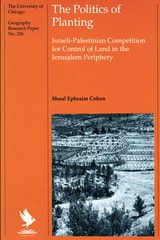
The Politics of Planting
Israeli-Palestinian Competition for Control of Land in the Jerusalem PeripheryShaul Ephraim Cohen
University of Chicago Press, 1993
Shaul Ephraim Cohen has conducted an unprecedented study of planting in the region and the control of land it signifies. In The Politics of Planting, he provides historical background and examines both the politics behind Israel's afforestation policy its consequences. Focusing on the open land surrounding Jerusalem and four Palestinian villages outside the city, this study offers a new perspective on the conflict over land use in a region where planting has become a political tool.
For the valuable data it presents—collected from field work, previously unpublished documents, and interviews—and the insight it provides into this political struggle, this will be an important book for anyone studying the Israeli-Palestinian conflict.
The Power of Dialogue between Israelis and Palestinians
Stories of Change from the School for PeaceSonnenschein, Nava
Rutgers University Press, 2019
The Privatisation of Israeli Security
Shir Hever
Pluto Press, 2017
The Quest for the Historical Israel
Debating Archaeology and the History of Early IsraelIsrael Finkelstein
SBL Press, 2007
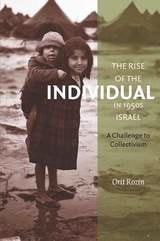
The Rise of the Individual in 1950s Israel
A Challenge to CollectivismOrit Rozin
Brandeis University Press, 2011
The Suppression of Guilt
The Israeli Media and the Reoccupation of the West BankDaniel Dor
Pluto Press, 2005
In the three years that have passed since Operation Defensive Shield – three years marked by denial, deceit, rage and resentment – one fact remains uncontroversial: never, until the operation, had there been such a wide breach between the Israeli collective consciousness and international public opinion. Israeli scholar Daniel Dor measures this gap and concludes that Israeli society has withdrawn into an unprecedented sense of isolation and victimization – largely because of the role played by the Israeli media.
Different media outlets provided their readers and viewers with significantly different perspectives on the operation, but they all shared a certain emotional attitude, not vis-à-vis the operation itself, but in relations to the global discourse of blame against Israel: they all projected an urgent, desperate, almost obsessive urge to suppress, to dismiss, to fend off guilt.
Dor shows how analysing this type of reporting as an attempt to manufacture consent with the government and the military fails to capture its essential nature. He argues that, at its core, the coverage proposed alternatives for the construction of an Israeli identity. During the operation, all the different media converged around one assertion: being Israeli at this point in time feels like being accused by the entire world of something we are not guilty of. Basing his arguments on detailed analyses of media reports, Dor explores how the Israeli media work within the context of the global media and world opinion, rather than within the classic context of the nation-state -- and what it means for the future of the country.
The Time beneath the Concrete
Palestine between Camp and ColonyNasser Abourahme
Duke University Press, 2025
The Two Houses of Israel
State Formation and the Origins of Pan-Israelite IdentityOmer Sergi
SBL Press, 2023
The Two Houses of Israel: State Formation and the Origins of Pan-Israelite Identity bridges the gap between the biblical narrative of the great united monarchy ruled by David and Solomon and archaeological and historical reconstructions of a gradual, independent formation of Israel and Judah. Based on a thorough examination of the material remains and settlement patterns in the southern Levant during the Late Bronze Age and the Iron Age and on a review of the relevant historical sources, this book provides a detailed reconstruction of the ways in which Israel and Judah were formed as territorial polities and specifically how the house of David rose to power in Jerusalem and Judah. Omer Sergi further situates the stories of Saul and David in their accurate social and historical context in order to illuminate the historical conception of the united monarchy and the pan-Israelite ideology out of which it grew. Sergi provides a new history of the early Israelite monarchies, their formation, and the ways in which these social and political developments were commemorated in the cultural memory of generations to come.
The Zionist Paradox
Hebrew Literature and Israeli IdentityYigal Schwartz
Brandeis University Press, 2014

Theater in Israel
Linda Ben-Zvi, Editor
University of Michigan Press, 1996
The first volume of its kind in English or Hebrew, Theater in Israel gathers original essays, interviews, and commentaries by leading international theater practitioners and critics. The book explores the rich history and diversity of Israel's theater and illustrates the ways in which this politically committed theater mirrors the historical and cultural forces that have shaped Israeli-Arab relations, the events in the Middle East, and the post-Holocaust Jewish experience. The collection provides a thorough and engaging survey of the playwrights, directors, actors, and productions that comprise this dynamic theater, a theater whose evolution and ideology diverge from Anglo-American models.
The book's early essays trace the development of Hebrew drama from its inception in Moscow in 1918 to the establishment of a national theater and the emergence of a national repertoire. Succeeding essays explore the personalities and themes that have dominated the Israeli stage, featuring interviews with leading Israeli playwrights, actors, directors, and dramaturgs. The book also provides highlights from the first Palestinian and Israeli Arab Theater Symposium, focusing on the history, themes, and future of Arab theater. The contributors include Karen Alkalay-Gut, Shosh Avigal, Linda Ben-Zvi, Erella Brown, Joseph Chaikin, Scott Cummings, Ben-Ami Feingold, Gad Kaynar, Shimon Lev- Ari, Shimon Levy, Gabriella Moscati-Steindler, Freddie Rokem, Eli Rozik, Gershon Shaked, Chaim Shoham, Michael Taub, Dan Urian, Shoshana Weitz, and Nurit Yaari.
Threat
Palestinian Political Prisoners in IsraelEdited by Abeer Baker and Anat Matar
Pluto Press, 2011
Palestinian prisoners charged with security-related offences are immediately taken as a threat to Israel's security. They are seen as potential, if not actual, suicide bombers. This stereotype ignores the political nature of the Palestinian prisoners' actions and their desire for liberty.
By highlighting the various images of Palestinian prisoners in the Israel-Palestine conflict, Abeer Baker and Anat Matar chart their changing fortunes. Essays written by prisoners, ex-prisoners, Human rights defenders, lawyers and academic researchers analyse the political nature of imprisonment and Israeli attitudes towards Palestinian prisoners. These contributions deal with the prisoners' status within Palestinian society, the conditions of their imprisonment and various legal procedures used by the Israeli military courts in order to criminalise and de-politicise them. Also addressed are Israel's breaches of international treaties in its treatment of the Palestinian prisoners, practices of torture and solitary confinement, exchange deals and prospects for release.
This is a unique intervention within Middle East studies that will inspire those working in human rights, international law and the peace process.
To Come to the Land
Immigration and Settlement in 16th-Century Eretz-IsraelAbraham David, translated by Dena Ordan
University of Alabama Press, 1999
To Come to the Land makes available in English a vast body of research,
previously available only in Hebrew, on the early history of the land now
known as Israel.
Abraham David here focuses on the Spanish and Portuguese Jews who fled
the Iberian Peninsula during the 16th century, tracing the beginnings of
Sephardic influence in the land of Israel.
After the Ottoman Turks conquered Syria, Palestine, and Egypt in 1516,
the Ottoman regime, unlike their Mamluk predecessors, encouraged economic
development and settlement throughout the region. This openness to immigration
offered a solution to the crisis Iberian Jews were undergoing as a result
of their expulsion from Spain and the forced conversions in Portugal. Within
a few years of the Ottoman conquest, Jews of Spanish extraction, many of
them clustered in urban areas, dominated the Jewish communities of Eretz-Israel.
In this carefully researched study, David examines the lasting impression
made by these enterprising Jewish settlers on the commercial, social, and
intellectual life of the area under early Ottoman rule. Of particular interest
is his examination of the cities of Jerusalem and Safed and David's succinct
biographies of leading Jewish personalities throughout the region.
This first English translation of a ground-breaking Hebrew work provides
a comprehensive overview of a significant chapter in the history of Israel
and explores some of the factors that brought to it the best minds of the
age. Essential for scholars of late Medieval Jewish history, To Come to
the Land will also be an important resource for scholars of intellectual
history, as it provides background crucial to an understanding of the intellectual
flourishing of the period.
Transformative Justice
Israeli Identity on TrialLeora Bilsky
University of Michigan Press, 2004

Two Kinds of Rationality
Kibbutz Democracy and Generational ConflictT.M.S. Evens
University of Minnesota Press, 1995
Two Kinds of Rationality was first published in 1995. Minnesota Archive Editions uses digital technology to make long-unavailable books once again accessible, and are published unaltered from the original University of Minnesota Press editions.
Beginning with a discussion of mind-body dualism in social anthropology, Evens presents a profound theory of human conduct that deploys notions of hierarchy and practice. He uses the case study of an Israeli kibbutz to address the central anthropological problem of rationality.
Of particular interest is Evens's interpretation of the Genesis myth, as well as his reading of Rousseau's revision of this myth, as paradigms of generational conflict and the kibbutz's logic of moral order. These interpretations are tied to Evens's detailed discussion of a controversial attempt to introduce secret balloting into a particular kibbutz's directly democratic process.
Two Kinds of Rationality distinguishes between instrumental and mythic rationality, picturing the latter as a value rationality. Projecting reality as basically ambiguous, Evens offers a critique of theoretical approaches to social action and a rethinking of contemporary notions of human agency. This revolutionary theoretical work will appeal to social and political theorists, anthropologists, and students of cultural studies, social movements, and Jewish studies.
T. M. S. Evens is professor of anthropology at the University of North Carolina, Chapel Hill. He is the author of numerous articles and coeditor of Transcendence in Society: Case Studies (1990), a comparative study of social movements.