Results by title
59 books match the query 'Joseph, Gilbert M.' and 10 start with t
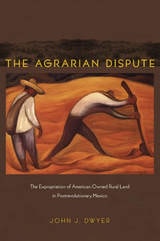
The Agrarian Dispute
The Expropriation of American-Owned Rural Land in Postrevolutionary MexicoJohn J. Dwyer
Duke University Press, 2008
Dwyer weaves together elite and subaltern history and highlights the intricate relationship between domestic and international affairs. Through detailed studies of land redistribution in Baja California and Sonora, he demonstrates that peasant agency influenced the local application of Cárdenas’s agrarian reform program, his regional state-building projects, and his relations with the United States. Dwyer draws on a broad array of official, popular, and corporate sources to illuminate the motives of those who contributed to the agrarian dispute, including landless fieldworkers, indigenous groups, small landowners, multinational corporations, labor leaders, state-level officials, federal policymakers, and diplomats. Taking all of them into account, Dwyer explores the circumstances that spurred agrarista mobilization, the rationale behind Cárdenas’s rural policies, the Roosevelt administration’s reaction to the loss of American-owned land, and the diplomatic tactics employed by Mexican officials to resolve the international conflict.
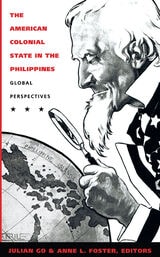
The American Colonial State in the Philippines
Global PerspectivesJulian Go and Anne L. Foster, eds.
Duke University Press, 2003
Written by social scientists and historians, these essays investigate various aspects of American colonial government through comparison with and contextualization within colonial regimes elsewhere in the world—from British Malaysia and Dutch Indonesia to Japanese Taiwan and America's other major overseas colony, Puerto Rico. Contributors explore the program of political education in the Philippines; constructions of nationalism, race, and religion; the regulation of opium; connections to politics on the U.S. mainland; and anticolonial resistance. Tracking the complex connections, circuits, and contests across, within, and between empires that shaped America's colonial regime, The American Colonial State in the Philippines sheds new light on the complexities of American imperialism and turn-of-the-century colonialism.
Contributors. Patricio N. Abinales, Donna J. Amoroso, Paul Barclay, Vince Boudreau, Anne L. Foster, Julian Go, Paul A. Kramer
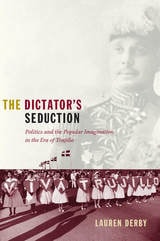
The Dictator's Seduction
Politics and the Popular Imagination in the Era of TrujilloLauren Derby
Duke University Press, 2009
Drawing on previously untapped documents in the Trujillo National Archives and interviews with Dominicans who recall life under the dictator, Derby emphasizes the role that public ritual played in Trujillo’s exercise of power. His regime included the people in affairs of state on a massive scale as never before. Derby pays particular attention to how events and projects were received by the public as she analyzes parades and rallies, the rebuilding of Santo Domingo following a major hurricane, and the staging of a year-long celebration marking the twenty-fifth year of Trujillo’s regime. She looks at representations of Trujillo, exploring how claims that he embodied the popular barrio antihero the tíguere (tiger) stoked a fantasy of upward mobility and how a rumor that he had a personal guardian angel suggested he was uniquely protected from his enemies. The Dictator’s Seduction sheds new light on the cultural contrivances of autocratic power.
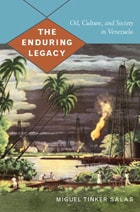
The Enduring Legacy
Oil, Culture, and Society in VenezuelaMiguel Tinker Salas
Duke University Press, 2009
North American and British petroleum companies, seeking to maintain their stakes in Venezuela, promoted the idea that their interests were synonymous with national development. They set up oil camps—residential communities to house their workers—that brought Venezuelan employees together with workers from the United States and Britain, and eventually with Chinese, West Indian, and Mexican migrants as well. Through the camps, the companies offered not just housing but also schooling, leisure activities, and acculturation into a structured, corporate way of life. Tinker Salas contends that these practices shaped the heart and soul of generations of Venezuelans whom the industry provided with access to a middle-class lifestyle. His interest in how oil suffused the consciousness of Venezuela is personal: Tinker Salas was born and raised in one of its oil camps.
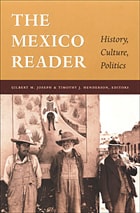
The Mexico Reader
History, Culture, PoliticsGilbert M. Joseph and Timothy J. Henderson, eds.
Duke University Press, 2002
A diverse collection of more than eighty selections, The Mexico Reader brings together poetry, folklore, fiction, polemics, photoessays, songs, political cartoons, memoirs, satire, and scholarly writing. Many pieces are by Mexicans, and a substantial number appear for the first time in English. Works by Octavio Paz and Carlos Fuentes are included along with pieces about such well-known figures as the larger-than-life revolutionary leaders Pancho Villa and Emiliano Zapata; there is also a comminiqué from a more recent rebel, Subcomandante Marcos. At the same time, the book highlights the perspectives of many others—indigenous peoples, women, politicians, patriots, artists, soldiers, rebels, priests, workers, peasants, foreign diplomats, and travelers.
The Mexico Reader explores what it means to be Mexican, tracing the history of Mexico from pre-Columbian times through the country’s epic revolution (1910–17) to the present day. The materials relating to the latter half of the twentieth century focus on the contradictions and costs of postrevolutionary modernization, the rise of civil society, and the dynamic cross-cultural zone marked by the two thousand-mile Mexico-U.S. border. The editors have divided the book into several sections organized roughly in chronological order and have provided brief historical contexts for each section. They have also furnished a lengthy list of resources about Mexico, including websites and suggestions for further reading.
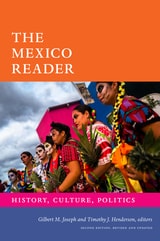
The Mexico Reader
History, Culture, PoliticsGilbert M. Joseph and Timothy J. Henderson, editors
Duke University Press, 2022
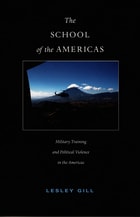
The School of the Americas
Military Training and Political Violence in the AmericasLesley Gill
Duke University Press, 2004
Based on her unprecedented level of access to the School of the Americas, Gill describes the School’s mission and training methods and reveals how its students, alumni, and officers perceive themselves in relation to the dirty wars that have raged across Latin America. Assessing the School’s role in U.S. empire-building, she shows how Latin America’s brightest and most ambitious military officers are indoctrinated into a stark good-versus-evil worldview, seduced by consumer society and the “American dream,” and enlisted as proxies in Washington’s war against drugs and “subversion.”
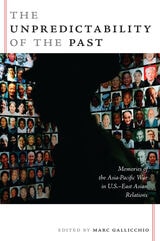
The Unpredictability of the Past
Memories of the Asia-Pacific War in U.S.-East Asian RelationsMarc Gallicchio, ed.
Duke University Press, 2007
The contributors interpret mass media sources, museum displays, monuments, film, and literature, as well as the archival sources traditionally used by historians. They explore how American ideas about Japanese history shaped U.S. occupation policy following Japan’s surrender in 1945, and how memories of the Asia-Pacific War influenced Washington and Tokyo policymakers’ reactions to the postwar rise of Soviet power. They investigate topics from the resurgence of Pearl Harbor images in the U.S. media in the decade before September 11, 2001, to the role of Chinese war museums both within China and in Chinese-Japanese relations, and from the controversy over the Smithsonian Institution’s Enola Gay exhibit to Japanese tourists’ reactions to the USS Arizona memorial at Pearl Harbor. One contributor traces how a narrative commemorating African Americans’ military service during World War II eclipsed the history of their significant early-twentieth-century appreciation of Japan as an ally in the fight against white supremacy. Another looks at the growing recognition and acknowledgment in both the United States and Japan of the Chinese dimension of World War II. By focusing on how memories of the Asia-Pacific War have been contested, imposed, resisted, distorted, and revised, The Unpredictability of the Past demonstrates the crucial role that interpretations of the past play in the present.
Contributors. Marc Gallicchio, Waldo Heinrichs, Haruo Iguchi, Xiaohua Ma, Frank Ninkovich, Emily S. Rosenberg, Takuya Sasaki, Yujin Yaguchi, Daqing Yang
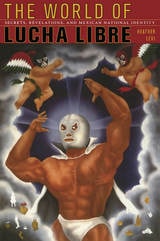
The World of Lucha Libre
Secrets, Revelations, and Mexican National IdentityHeather Levi
Duke University Press, 2008
Levi considers lucha libre in light of scholarship about sport, modernization, and the formation of the Mexican nation-state, and in connection to professional wrestling in the United States. She examines the role of secrecy in wrestling, the relationship between wrestlers and the characters they embody, and the meanings of the masks worn by luchadors. She discusses male wrestlers who perform masculine roles, those who cross-dress and perform feminine roles, and female wrestlers who wrestle each other. Investigating the relationship between lucha libre and the mass media, she highlights the history of the sport’s engagement with television: it was televised briefly in the early 1950s, but not again until 1991. Finally, Levi traces the circulation of lucha libre symbols in avant-garde artistic movements and its appropriation in left-wing political discourse. The World of Lucha Libre shows how a sport imported from the United States in the 1930s came to be an iconic symbol of Mexican cultural authenticity.
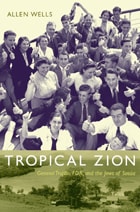
Tropical Zion
General Trujillo, FDR, and the Jews of SosúaAllen Wells
Duke University Press, 2009
Why did a dictator admit these desperate refugees when so few nations would accept those fleeing fascism? Eager to mollify international critics after his army had massacred 15,000 unarmed Haitians, Trujillo sent representatives to Évian, France, in July, 1938 for a conference on refugees from Nazism. Proposed by FDR to deflect criticism from his administration’s restrictive immigration policies, the Évian Conference proved an abject failure. The Dominican Republic was the only nation that agreed to open its doors. Obsessed with stemming the tide of Haitian migration across his nation’s border, the opportunistic Trujillo sought to “whiten” the Dominican populace, welcoming Jewish refugees who were themselves subject to racist scorn in Europe.
The Roosevelt administration sanctioned the Sosúa colony. Since the United States did not accept Jewish refugees in significant numbers, it encouraged Latin America to do so. That prodding, paired with FDR’s overriding preoccupation with fighting fascism, strengthened U.S. relations with Latin American dictatorships for decades to come. Meanwhile, as Jewish organizations worked to get Jews out of Europe, discussions about the fate of worldwide Jewry exposed fault lines between Zionists and Non-Zionists. Throughout his discussion of these broad dynamics, Wells weaves vivid narratives about the founding of Sosúa, the original settlers and their families, and the life of the unconventional beach-front colony.