Results by title
99 books match the query 'Kinship' and 19 start with t
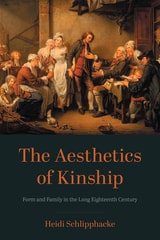
The Aesthetics of Kinship
Form and Family in the Long Eighteenth CenturyHeidi Schlipphacke
Bucknell University Press, 2023
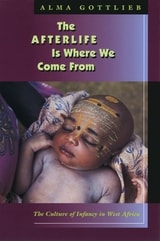
The Afterlife Is Where We Come From
Alma Gottlieb
University of Chicago Press, 2003
In this unique and engaging ethnography of babies, Alma Gottlieb explores how religious ideology affects every aspect of Beng childrearing practices—from bathing infants to protecting them from disease to teaching them how to crawl and walk—and how widespread poverty limits these practices. A mother of two, Gottlieb includes moving discussions of how her experiences among the Beng changed the way she saw her own parenting. Throughout the book she also draws telling comparisons between Beng and Euro-American parenting, bringing home just how deeply culture matters to the way we all rear our children.
All parents and anyone interested in the place of culture in the lives of infants, and vice versa, will enjoy The Afterlife Is Where We Come From.
"This wonderfully reflective text should provide the impetus for formulating research possibilities about infancy and toddlerhood for this century." — Caren J. Frost, Medical Anthropology Quarterly
The Archaeology of Kinship
Advancing Interpretation and Contributions to TheoryBradley E. Ensor
University of Arizona Press, 2013
The Archaeology of Kinship supports Ensor’s objectives: to demonstrate the relevance of kinship to major archaeological questions, to describe archaeological methods for kinship analysis independent of ethnological interpretation, to illustrate the use of those techniques with a case study, and to provide specific examples of how diachronic analyses address broader theory. As Ensor shows, archaeological diachronic analyses of kinship are independently possible, necessary, and capable of providing new insights into past cultures and broader anthropological theory. Although it is an old subject in anthropology, The Archaeology of Kinship can offer new and exciting frontiers for inquiry.
Kinship research in general—and prehistoric kinship in particular—is rapidly reemerging as a topical subject in anthropology. This book is a timely archaeological contribution to that growing literature otherwise dominated by ethnology.
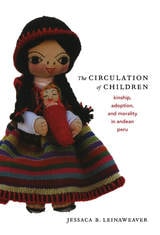
The Circulation of Children
Kinship, Adoption, and Morality in Andean PeruJessaca B. Leinaweaver
Duke University Press, 2008
Leinaweaver provides insight into the emotional and material factors that bring together and separate indigenous Andean families in the highland city of Ayacucho. She describes how child circulation is intimately linked to survival in the city, which has had to withstand colonialism, economic isolation, and the devastating civil war unleashed by the Shining Path. Leinaweaver examines the practice from the perspective of parents who send their children to live in other households, the adults who receive them, and the children themselves. She relates child circulation to international laws and norms regarding children’s rights, adoptions, and orphans, and to Peru’s history of racial conflict and violence. Given that history, Leinaweaver maintains that it is not surprising that child circulation, a practice associated with Peru’s impoverished indigenous community, is alternately ignored, tolerated, or condemned by the state.
The Cultural Dialectics of Knowledge and Desire
Charles W. Nuckolls
University of Wisconsin Press, 1996
Why is culture a problem that can never be solved? Charles W. Nuckolls poses this question to his readers, and offers a genuinely synthetic approach to culture that is both cognitive and psychoanalytic. He develops a theory of cultural dialectics based on the concept of paradox, in which he shows how ambivalence and conflicts, and the desire to resolve them, are at the heart of all cultural knowledge systems.
Nuckolls combines and synthesizes the ideas of Max Weber and Sigmund Freud—major influences in the cognitive and psychoanalytic paradigms—and develops the concept basic to both: the dialectic. He recovers the legacy of Gregory Bateson, who provided the foundation for a theory of paradox in culture. With his integrated theory, Nuckolls explains the conflicts of knowledge and desire in a South Asian knowledge system, in particular the religious mythology and divinatory system of the Jalaris, a Telugu-speaking fishing caste on the southeastern coast of India.
This provocative book allows us to rethink the relationship between the currently competing discourses in psychological and cultural anthropology, and at the same time offers a general synthetic theory of cultural dynamics.
The Feeling of Kinship
Queer Liberalism and the Racialization of IntimacyDavid L. Eng
Duke University Press, 2010
Eng develops the concept of “queer diasporas” as a critical response to queer liberalism. A methodology drawing attention to new forms of family and kinship, accounts of subjects and subjectivities, and relations of affect and desire, the concept differs from the traditional notions of diaspora, theories of the nation-state, and principles of neoliberal capitalism upon which queer liberalism thrives. Eng analyzes films, documentaries, and literature by Asian and Asian American artists including Wong Kar-wai, Monique Truong, Deann Borshay Liem, and Rea Tajiri, as well as a psychoanalytic case history of a transnational adoptee from Korea. In so doing, he demonstrates how queer Asian migrant labor, transnational adoption from Asia, and the political and psychic legacies of Japanese internment underwrite narratives of racial forgetting and queer freedom in the present. A focus on queer diasporas also highlights the need for a poststructuralist account of family and kinship, one offering psychic alternatives to Oedipal paradigms. The Feeling of Kinship makes a major contribution to American studies, Asian American studies, diaspora studies, psychoanalysis, and queer theory.
The Last Called Mormon Colonization
Polygamy, Kinship, and Wealth in Wyoming's Bighorn BasinJohn Gary Maxwell
University of Utah Press, 2021
The LDS Church officially abandoned polygamy in 1890, but evidence that the practice was still tolerated (if not officially sanctioned) by the church circulated widely, resulting in intense investigations by the U.S. Senate. In 1896 Abraham Owen Woodruff, a rising star in LDS leadership and an ardent believer in polygamy, was appointed to head the LDS Colonization Company. Maxwell explores whether under Woodruff’s leadership the Bighorn Basin colony was intended as a means to insure the secret survival of polygamy and if his untimely death in 1904, together with the excommunication of two equally dedicated proponents of polygamy—Apostles John Whitaker Taylor and Matthias Foss Cowley—led to its collapse.
Maxwell also details how Mormon settlers in Wyoming struggled with finance, irrigation, and farming and how they brought the same violence to indigenous peoples over land and other rights as did non-Mormons.
The 1900 Bighorn Basin colonization provides an early twentieth-century example of a Mormon syndicate operating at the intersection of religious conformity, polygamy, nepotism, kinship, corporate business ventures, wealth, and high priesthood status. Maxwell offers evidence that although in many ways the Bighorn Basin colonization failed, Owen Woodruff’s prophecy remains unbroken: “No year will ever pass, from now until the coming of the Savior, when children will not be born in plural marriage.”
The Livelihood of Kin
Making Ends Meet "The Kentucky Way"By Rhoda H. Halperin
University of Texas Press, 1990
Rural Appalachians in Kentucky call it "The Kentucky Way"—making a living by doing many kinds of paid and unpaid work and sharing their resources within extended family networks. In fact, these strategies are practiced by rural people in many parts of the world, but they have not been studied extensively in the United States. In The Livelihood of Kin, Rhoda Halperin undertakes a detailed exploration of this complex, family-oriented economy, showing how it promotes economic well-being and a sense of identity for the people who follow it.
Using actual life and work histories, Halperin shows how people make a living "in between" the cash economy of the city and the agricultural subsistence economy of the country. In regionally based, three-generation kin networks, family members work individually and jointly at many tasks: small-scale agricultural production, food processing and storage, odd jobs, selling used and new goods in marketplaces, and wage labor, much of which is temporary. People can make ends meet even in the face of job layoffs and declining crop subsidies. With these strategies people win a considerable degree of autonomy and control over their lives.
Halperin also examines how such multiple livelihood strategies define individual identity by emphasizing a person’s role in the family network over an occupation. She reveals, through psychiatric case histories, what damage can result when individuals leave the family network for wage employment in the cities, as increasing urbanization has forced many people to do.
While certainly of interest to scholars of Appalachian studies, this lively and readable study will also be important for economic anthropologists and urban and rural sociologists.
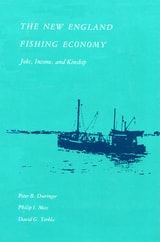
The New England Fishing Economy
Jobs, Income, and KinshipPeter B. Doeringer
University of Massachusetts Press, 1987
The authors also present new data on the skills, job attachment, and economic options of workers in key New England ports, particularly Gloucester and New Bedford. The fishing industry is concentrated in economically fragile ports, and the authors show the importance of a strong fishing industry and a growth economy for easing adjustment problems. The study develops a set of innovative recommendations for fisheries management and addresses policies for promoting stabilization and growth in port economies.

The Owners of Kinship
Asymmetrical Relations in Indigenous AmazoniaLuiz Costa
HAU, 2017
Building on anthropological studies of the acquisition, distribution, and consumption of food and its role in establishing relations of asymmetrical mutuality and kinship, this book breaks theoretical ground for studies in Amazonia and beyond. By investigating how the feeding relation traverses Kanamari society—from the relation between women and the pets they raise, shaman and familiar spirit, mother and child, chiefs and followers, to those between the Brazilian state and the Kanamari—The Owners of Kinship reveals how the mutuality of kinship is determined by the asymmetry of ownership.
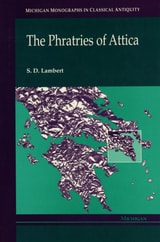
The Phratries of Attica
S. D. Lambert
University of Michigan Press, 1998
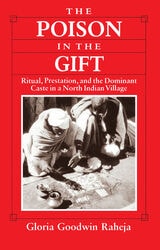
The Poison in the Gift
Ritual, Prestation, and the Dominant Caste in a North Indian VillageGloria Goodwin Raheja
University of Chicago Press, 1988
The Politics of Kinship
Race, Family, GovernanceMark Rifkin
Duke University Press, 2024
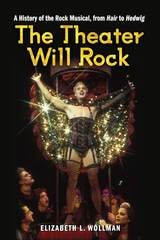
The Theater Will Rock
A History of the Rock Musical, from Hair to HedwigElizabeth L. Wollman
University of Michigan Press, 2010
"A much-needed study of the impact of rock music on the musical theater and its resulting challenges, complexities, failures, and successes. Anyone interested in Broadway will learn a great deal from this book."
---William Everett, author of The Musical: A Research Guide to Musical Theatre
"As Wollman weaves her historical narrative, she compellingly returns to . . . the conflict between the aesthetics and ideologies of rock music and the disciplined and commercial practices of the musical stage."
---Theatre Research International
"This well-written account puts the highs and lows of producing staged rock musicals in New York City into perspective and is well worth reading for the depth of insight it provides."
---Studies in Musical Theatre
Despite the genre’s influence and fame, there are still some critics who claim that the term “rock musical” is an oxymoron. The relationship between rock and the musical theater has been stormy from the start, and even the comparatively recent success of Rent has done little to convince theater producers that rock musicals are anything but highly risky ventures. Elizabeth L. Wollman explores the reasons behind these problematic connections and looks at the socioeconomic forces that underlie aesthetic decisions. She weighs the influence on the rock musical by mass media, sound, and recording technology, and the economic pressures that have affected New York theater in general over the past three decades. Finally, Wollman offers a meditation on the state of the musical, its relation to rock, and, ultimately, its future.
Packed with candid commentary by members of New York's vibrant theater community, The Theater Will Rock traces the rock musical’s evolution over nearly fifty years, in popular productions such as Hair, The Who's Tommy, Jesus Christ Superstar, The Rocky Horror Picture Show, Little Shop of Horrors, Rent, and Mamma Mia!—and in notable flops such as The Capeman.
Elizabeth L. Wollman is Assistant Professor of Music at Baruch College of the City University of New York.
The Way of Kinship
An Anthology of Native Siberian LiteratureAlexander Vaschenko
University of Minnesota Press, 2010
The first anthology of Native Siberian literature in English, The Way of Kinship represents writers from regions extending from the Ob River in the west to the Chukotka peninsula, the easternmost point of the Siberian Russian Arctic. Drawn from seven distinct ethnic groups, this diverse body of work-prose fiction, poetry, drama, and creative nonfiction-chronicles ancient Siberian cultures and traditions threatened with extinction in the contemporary world.
Translated and edited by Alexander Vaschenko and Claude Clayton Smith, leading scholars in Native Siberian literature, The Way of Kinship is an essential collection that will introduce readers to new writers and new worlds.
The Western Illusion of Human Nature
With Reflections on the Long History of Hierarchy, Equality and the Sublimation of Anarchy in the West, and Comparative Notes on Other Conceptions of the Human ConditionMarshall Sahlins
Prickly Paradigm Press, 2008
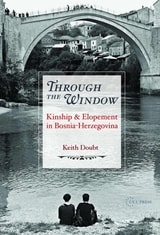
Through the Window
Kinship and Elopement in Bosnia-HerzegovinaKeith Doubt
Central European University Press, 2014
This book is not about war crimes, crimes against humanity, genocide, evil, or the killing of a society. It is about a cultural heritage, something vital to a society as a society, something that was not killed in the previous war, something that is resilient.
Through the Window brings an original perspective to folklore of Bosnians at a certain period of time and the differences and similarities of the three main ethnic groups in Bosnia and Herzegovina. It examines the transethnic character of cultural heritage, against divisions that dominate their tragic recent past.
The monograph focuses in particular on customs shared by different ethnic groups, specifically elopement, and affinal visitation. The elopement is a transformative rite of passage where an unmarried girl becomes a married woman. The affinal visitation, which follows, is a confirmatory ceremony where ritualized customs between families establish in-lawships These customs reflect a transethnic heritage shared by people in Bosnia as a national group, including Bosniaks, Serbs and Croats.
Tired of Weeping
Mother Love, Child Death, and Poverty in Guinea-BissauJonina Einarsdottir
University of Wisconsin Press, 2004
Transnational Aging and Reconfigurations of Kin Work
Dossa, Parin
Rutgers University Press, 2017