171 books match the query 'Labor unions' and 23 start with t

cover of Talking Union

Talking Union

Judith Stepan-Norris and Maurice Zeitlin

University of Illinois Press, 1996

As an institutional, political,
        and cultural oral history of the struggle to unionize the River Rouge
        Plant near Detroit during the 1930s and 40s, this book affords us a rare
        insight into the difficulties of organizing a union in the face of the
        then anti-union Ford Motor Company. Against a backdrop of the depression
        and entrenched racism, history was made by courageous individuals whose
        rich, eloquent stories illuminate the character and views of others like
        them across the nation, from all backgrounds: left, right, and center;
        black and white; native and foreign born, Jew and gentile.
 
[more]
cover of Teamsters Metropolis

Teamsters Metropolis

Ryan Patrick Murphy

University of Michigan Press, 2025

In the 1950s, the International Brotherhood of Teamsters empowered poor immigrants who had grown up in the crowded blocks of the central city to move upward and outward to comfortable suburbs. It delivered unprecedented benefits to workers—especially to those in retail, services, and light manufacturing—locking in hourly pay that bought the patio furniture sets, the pontoon boats, and the station wagons that defined the consumer culture of the decade. Yet suburban comfort came with strict, new institutions that defined the middle-class culture of the era: the nuclear family, heterosexual monogamy, the husband breadwinner, and the dependent wife. Many workers yearned for the pleasures they left behind in the core of the industrial city, even as poor people, people of color, and queer people were locked out of the suburbs.

Teamsters Metropolis argues that the union achieved unprecedented organizing success in the immediate postwar period precisely because its members defied bourgeois cultural standards. They wore overly flamboyant clothes, instigated jarringly violent confrontations, used aliases, extorted money, flouted the law, and often blended friendship, sex, and love in a way that challenged the boundaries of heteronormativity. Perhaps no one exemplified this freedom more than Jimmy Hoffa, who delivered better pay and worker conditions to marginal workers while also using coercive tactics, embezzling money, and colluding with the Mafia. Rather than impeding the union’s growth, unruly organizing, illicit business techniques, and dissident cultural practices appealed to prospective members and offered an opportunity to circumvent some of the suburban regulations, helping the International Brotherhood of Teamsters become the largest U.S. union of the mid-twentieth century.
[more]
cover of Tell Tchaikovsky the News: Rock 'n' Roll, the Labor Question, and the Musicians' Union, 1942-1968

Tell Tchaikovsky the News

Rock 'n' Roll, the Labor Question, and the Musicians' Union, 1942-1968

Michael James Roberts

Duke University Press, 2014
For two decades after rock music emerged in the 1940s, the American Federation of Musicians (AFM), the oldest and largest labor union representing professional musicians in the United States and Canada, refused to recognize rock 'n' roll as legitimate music or its performers as skilled musicians. The AFM never actively organized rock 'n' roll musicians, although recruiting them would have been in the union's economic interest. In Tell Tchaikovsky the News, Michael James Roberts argues that the reasons that the union failed to act in its own interest lay in its culture, in the opinions of its leadership and elite rank-and-file members. Explaining the bias of union members—most of whom were classical or jazz music performers—against rock music and musicians, Roberts addresses issues of race and class, questions of what qualified someone as a skilled or professional musician, and the threat that records, central to rock 'n' roll, posed to AFM members, who had long privileged live performances. Roberts contends that by rejecting rock 'n' rollers for two decades, the once formidable American Federation of Musicians lost their clout within the music industry.
[more]
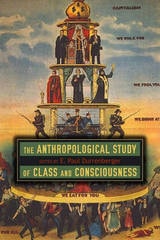
cover of The Anthropological Study of Class and Consciousness

The Anthropological Study of Class and Consciousness

E. Paul Durrenberger

University Press of Colorado, 2012

Presenting prehistoric, historic, and ethnographic data from Mongolia, China, Iceland, Mexico, Brazil, and the United States, The Anthropological Study of Class and Consciousness offers a first step toward examining class as a central issue within anthropology. Contributors to this volume use the methods of historical materialism, cultural ecology, and political ecology to understand the realities of class and how they evolve.

Five central ideas unify the collection: the objective basis for class in different social orders; people's understanding of class in relation to race and gender; the relation of ideologies of class to realities of class; the U.S. managerial middle-class denial of class and emphasis on meritocracy in relation to increasing economic insecurity; and personal responses to economic insecurity and their political implications.

Anthropologists who want to understand the nature and dynamics of culture must also understand the nature and dynamics of class. The Anthropological Study of Class and Consciousness addresses the role of the concept of class as an analytical construct in anthropology and how it relates to culture. Although issues of social hierarchy have been studied in anthropology, class has not often been considered as a central element. Yet a better understanding of its role in shaping culture, consciousness, and people's awareness of their social and natural world would in turn lead to better understanding of major trends in social evolution as well as contemporary society. This book will be of great interest to students and scholars of anthropology, labor studies, ethnohistory, and sociology.
[more]
cover of The Anthropology of Labor Unions

The Anthropology of Labor Unions

E. Paul Durrenberger

University Press of Colorado, 2010

The Anthropology of Labor Unions presents ethnographic data and analysis in eight case studies from several very diverse industries. It covers a wide range of topics, from the role of women and community in strikes to the importance of place in organization, and addresses global concerns with studies from Mexico and Malawu.

Union-organized workplaces consistently afford workers higher wages and better pensions, benefits, and health coverage than their nonunion counterparts. In addition, women and minorities who belong to unions are more likely to receive higher wages and benefits than their nonunion peers. Given the economic advantages of union membership, one might expect to see higher rates of organization across industries, but labor affiliation is at an all-time low. What accounts for this discrepancy?

The contributors in this volume provide a variety of perspectives on this paradox, including discussions of approaches to and findings on the histories, cultures, and practices of organized labor. They also address substantive issues such as race, class, gender, age, generation, ethnicity, health and safety concerns, corporate co-optation of unions, and the cultural context of union-management relationships.

The first to bring together anthropological case studies of labor unions, this volume will appeal to cultural anthropologists, social scientists, sociologists, and those interested in labor studies and labor movements.
[more]
cover of The Assault on American Labor Law: Unions Before the Supreme Court, 1965–2025

The Assault on American Labor Law

Unions Before the Supreme Court, 1965–2025

Roger C. Hartley

University of Massachusetts Press, 2025

Reviewing the dismantling of American labor law in more than 100 Supreme Court cases

The National Labor Relations Act (NLRA), signed into law by Franklin Delano Roosevelt in 1935, guarantees the right of private sector employees to organize into trade unions, engage in collective bargaining, and take collective action such as strikes. Since its passage, the NLRA has functioned as the foundational statute of United States labor law. Opposed by conservatives and members of the Republican Party from the beginning, its provisions were largely upheld by the Supreme Court until the 1960s. In the latter part of the twentieth century and into the twenty-first, however, the Court began to erode the protections of the NLRA. While some cases have received widespread attention from commentators and scholars, such as Starbucks Corp. v. McKinney (2024), there have been numerous detrimental rulings that are little discussed. Taken as a whole, the Supreme Court’s efforts to undermine the NLRA appear sustained and systematic.

In The Assault on American Labor Law, distinguished labor law professor Roger C. Hartley collects and carefully reviews every Supreme Court decision concerning the NLRA over the past sixty years. By examining approximately 100 cases, Hartley demonstrates that the Court has often operated more like a legislature than a judicial body, effectively amending the NLRA’s collectivist policy underpinnings in favor of the interests of individuals and businesses. These judicial decisions create staggering obstacles for American workers to collectively organize and force them to face globalization, deindustrialization, and technological change individually, without the negotiating leverage provided by union representation. While scholars have suggested individual reforms to re-establish the efficacy of the NLRA, Hartley’s thorough study illuminates how the current crisis in US labor law evolved—a comprehensive view that is necessary to help restore the rights of workers to unionize.
[more]
cover of The Black Musician and the White City: Race and Music in Chicago, 1900-1967

The Black Musician and the White City

Race and Music in Chicago, 1900-1967

Amy Absher

University of Michigan Press, 2014

Amy Absher’s The Black Musician and the White City tells the story of African American musicians in Chicago during the mid-twentieth century. While depicting the segregated city before World War II, Absher traces the migration of black musicians, both men and women and both classical and vernacular performers, from the American South to Chicago during the 1930s to 1950s.

Absher’s work diverges from existing studies in three ways: First, she takes the history beyond the study of jazz and blues by examining the significant role that classically trained black musicians played in building the Chicago South Side community. By acknowledging the presence and importance of classical musicians, Absher argues that black migrants in Chicago had diverse education and economic backgrounds but found common cause in the city’s music community. Second, Absher brings numerous maps to the history, illustrating the relationship between Chicago’s physical lines of segregation and the geography of black music in the city over the years. Third, Absher’s use of archival sources is both extensive and original, drawing on manuscript and oral history collections at the Center for Black Music Research in Chicago, Columbia University, Rutgers’s Institute of Jazz Studies, and Tulane’s Hogan Jazz Archive. By approaching the Chicago black musical community from these previously untapped angles, Absher offers a history that goes beyond the retelling of the achievements of the famous musicians by discussing musicians as a group. In The Black Musician and the White City, black musicians are the leading actors, thinkers, organizers, and critics of their own story.
[more]
cover of The Bosses' Union: How Employers Organized to Fight Labor before the New Deal

The Bosses' Union

How Employers Organized to Fight Labor before the New Deal

Vilja Hulden

University of Illinois Press, 2023

At the opening of the twentieth century, labor strife repeatedly racked the nation. Union organization and collective bargaining briefly looked like a promising avenue to stability. But both employers and many middle-class observers remained wary of unions exercising independent power.

Vilja Hulden reveals how this tension provided the opening for pro-business organizations to shift public attention from concerns about inequality and dangerous working conditions to a belief that unions trampled on an individual's right to work. Inventing the term closed shop, employers mounted what they called an open-shop campaign to undermine union demands that workers at unionized workplaces join the union. Employer organizations lobbied Congress to resist labor's proposals as tyrannical, brought court cases to taint labor's tactics as illegal, and influenced newspaper coverage of unions. While employers were not a monolith nor all-powerful, they generally agreed that unions were a nuisance. Employers successfully leveraged money and connections to create perceptions of organized labor that still echo in our discussions of worker rights.
[more]
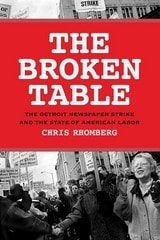
cover of The Broken Table: The Detroit Newspaper Strike and the State of American Labor

The Broken Table

The Detroit Newspaper Strike and the State of American Labor

Chris Rhomberg

Russell Sage Foundation, 2012
When the Detroit newspaper strike was settled in December 2000, it marked the end of five years of bitter and violent dispute. No fewer than six local unions, representing 2,500 employees, struck against the Detroit News, the Detroit Free Press, and their corporate owners, charging unfair labor practices. The newspapers hired permanent replacement workers and paid millions of dollars for private security and police enforcement; the unions and their supporters took their struggle to the streets by organizing a widespread circulation and advertising boycott, conducting civil disobedience, and publishing a weekly strike newspaper. In the end, unions were forced to settle contracts on management's terms, and fired strikers received no amnesty. In The Broken Table, Chris Rhomberg sees the Detroit newspaper strike as a historic collision of two opposing forces: a system in place since the New Deal governing disputes between labor and management, and decades of increasingly aggressive corporate efforts to eliminate unions. As a consequence, one of the fundamental institutions of American labor relations—the negotiation table—has been broken, Rhomberg argues, leaving the future of the collective bargaining relationship and democratic workplace governance in question. The Broken Table uses interview and archival research to explore the historical trajectory of this breakdown, its effect on workers' economic outlook, and the possibility of restoring democratic governance to the business-labor relationship. Emerging from the New Deal, the 1935 National Labor Relations Act protected the practice of collective bargaining and workers' rights to negotiate the terms and conditions of their employment by legally recognizing union representation. This system became central to the democratic workplace, where workers and management were collective stakeholders. But efforts to erode the legal protections of the NLRA began immediately, leading to a parallel track of anti-unionism that began to gain ascendancy in the 1980s. The Broken Table shows how the tension created by these two opposing forces came to a head after a series of key labor disputes over the preceding decades culminated in the Detroit newspaper strike. Detroit union leadership charged management with unfair labor practices after employers had unilaterally limited the unions' ability to bargain over compensation and work conditions. Rhomberg argues that, in the face of management claims of absolute authority, the strike was an attempt by unions to defend workers' rights and the institution of collective bargaining, and to stem the rising tide of post-1980s anti-unionism. In an era when the incidence of strikes in the United States has been drastically reduced, the 1995 Detroit newspaper strike stands out as one of the largest and longest work stoppages in the past two decades. A riveting read full of sharp analysis, The Broken Table revisits the Detroit case in order to show the ways this strike signaled the new terrain in labor-management conflict. The book raises broader questions of workplace governance and accountability that affect us all.
[more]
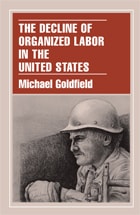
cover of The Decline of Organized Labor in the United States

The Decline of Organized Labor in the United States

Michael Goldfield

University of Chicago Press, 1987
Michael Goldfield challenges standard explanations for union decline, arguing that the major causes are to be found in the changing relations between classes. Goldfield combines innovative use of National Labor Relations Board certification election data, which serve as an accurate measure of new union growth in the private sector, with a sophisticated analysis of the standard explanations of union decline. By understanding the decline of U.S. labor unions, he maintains, it is possible to begin to understand the conditions necessary for their future rebirth and resurgence.
[more]
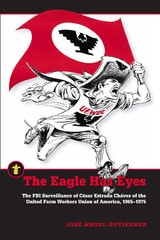
cover of The Eagle Has Eyes: The FBI Surveillance of César Estrada Chávez of the United Farm Workers Union of America, 1965–1975

The Eagle Has Eyes

The FBI Surveillance of César Estrada Chávez of the United Farm Workers Union of America, 1965–1975

José Angel Gutiérrez

Michigan State University Press, 2019
This book is the first of its kind to bring transparency to the FBI’s attempts to destroy the incipient Chicano Movement of the 1960s. While the activities of the deep state are current research topics, this has not always been the case. The role of the U.S. government in suppressing marginalized racial and ethnic minorities began to be documented with the advent of the Freedom of Information Act and most recently by disclosures of whistle blowers. This book utilizes declassified files from the FBI to investigate the agency’s role in thwarting Cesar E. Chavez’s efforts to build a labor union for farm workers and documents the roles of the FBI, California state police, and local police in assisting those who opposed Chavez. Ultimately, The Eagle Has Eyes is a must-read for academics and activists alike.
[more]
cover of The Economics of Trade Unions

The Economics of Trade Unions

Albert Rees

University of Chicago Press, 1989
In this third edition of his highly acclaimed and influential study, Albert Rees updates his material to reflect the major changes in the labor scene occurring during the 1970s and 1980s. New to this edition is a chapter on the decline of private sector unions, and other chapters have been substantially revised. The treatment of the effect of unions on relative wages has been completely recast to reflect the results of recent research. Students of labor economics will find that Rees's well-balanced account provides an excellent, comprehensive view of all aspects of the activities of unions, from their early development and history, through analysis of their sources of power, to the effects of their policies. In the final chapters, Rees broadens his evaluation to survey noneconomic as well as economic aspects of union activity.
[more]
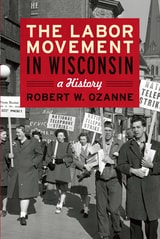
cover of The Labor Movement in Wisconsin: A History

The Labor Movement in Wisconsin

A History

Robert W. Ozanne

Wisconsin Historical Society Press, 1984
Wisconsin’s workers and their leaders have always been in the vanguard of those concerned with social justice, fair labor practices, humane working conditions, and political equality. Professor Ozanne’s book, based upon years of research in newspapers, manuscripts, and the archives of both labor and management, provides a broad overview of an important chapter in Wisconsin history.
[more]
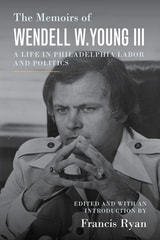
cover of The Memoirs of Wendell W. Young III: A Life in Philadelphia Labor and Politics

The Memoirs of Wendell W. Young III

A Life in Philadelphia Labor and Politics

Francis Ryan

Temple University Press, 2019

Philadelphia native Wendell W. Young III was one of the most important American labor leaders in the last half of the twentieth century. An Acme Markets clerk in the 1950s and ’60s, he was elected top officer of the Retail Clerks Union when he was twenty-four. His social justice unionism sought to advance wages while moving beyond collective bargaining to improve the conditions of the working-class majority, whether in a union or not. Young quickly gained a reputation for his independence, daring at times to publicly criticize the policies of the city’s powerful AFL-CIO leadership and tangle with the city’s political machine.

Editor Francis Ryan, whose introduction provides historical context, interviewed Young about his experiences working in the region’s retail and food industry, measuring the changes over time and the tangible impact that union membership had on workers. Young also describes the impact of Philadelphia’s deindustrialization in the 1970s and ’80s and recounts his activism for civil rights and the anti-war movements as well as on John F. Kennedy’s presidential campaign. 

The Memoirs of Wendell W. YoungIII  provides the most extensive labor history of late twentieth-century Philadelphia yet written.
[more]
cover of The New Left and Labor in 1960s

The New Left and Labor in 1960s

Peter B. Levy

University of Illinois Press, 1994

It is a powerful story: the relationship between the 1960s New Left and organized labor was summed up by hardhats confronting students and others over US involvement in Vietnam. But the real story goes beyond the "Love It or Leave It" signs and melees involving blue-collar types attacking protesters. 

Peter B. Levy challenges these images by exploring the complex relationship between the two groups. Early in the 1960s, the New Left and labor had cooperated to fight for civil rights and anti-poverty programs. But diverging opinions on the Vietnam War created a schism that divided these one-time allies. Levy shows how the war, combined with the emergence of the black power movement and the blossoming of the counterculture, drove a permanent wedge between the two sides and produced the polarization that remains to this day.
[more]
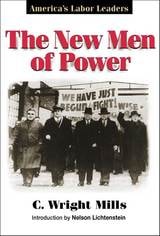
cover of The New Men of Power: America's Labor Leaders

The New Men of Power

America's Labor Leaders

C. Wright Mills

University of Illinois Press, 1948

When C. Wright Mills published The New Men of Power in 1948, he
thought labor leaders a new strategic elite and the unions a set of vanguard organizations that were crucial to "stopping the main drift towards war and slump." Today, as the unions once again seek to play a decisive role in American life, Mills' remarkable probe into the structure and ideology of mid-twentieth-century trade unionism remains essential reading. A new introduction by historian Nelson Lichtenstein offers insight into the Millsian political world at the time he wrote The New Men of Power.
 
[more]
cover of The Politics of Solidarity: Privatisation, Precarious Work and Labour in South Africa

The Politics of Solidarity

Privatisation, Precarious Work and Labour in South Africa

Carmen Ludwig

Campus Verlag, 2019

Politics of Solidarity explores the transformation of public services in post-apartheid South Africa and the effects of privatization in three cities: Johannesburg, Ekurhuleni, and Cape Town. Drawing on extensive qualitative fieldwork, Carmen Ludwig sheds light on local conflicts on the provision of public services and on trade union strategies that cope with rising public-private partnerships. In the face of persistent social inequality and the rise of precarious work, Ludwig asks how trade unions can create solidarity in fragmented workforces and bridge the gap between permanent workers and those on the margins in the workplace and society. Politics of Solidarity offers insights into the changing world of municipal work, the struggles of precarious workers and more broadly, on the labor dynamics of contemporary South Africa.
 
[more]
cover of The Revival of Labor Liberalism

The Revival of Labor Liberalism

Andrew Battista

University of Illinois Press, 2008

The Revival of Labor Liberalism is a careful analysis of the twentieth-century decline of the labor-liberal coalition and the important efforts to revive their political fortunes. Andrew Battista chronicles the efforts of several new political organizations that arose in the 1970s and 1980s with the goal of reuniting unions and liberals. Drawing from extensive documentary research and in-depth interviews with union leaders and political activists, Battista shows that the new organizations such as the Progressive Alliance, Citizen Labor Energy Coalition, and National Labor Committee made limited but real progress in reconstructing and strengthening the labor-liberal coalition. Although the labor-liberal alliance remained far weaker than the rival business-conservative alliance, Battista illuminates that it held a crucial role in labor and political history after 1968. Focuses on a fraught but evolving partnership, Battista provides a broad analysis of factional divisions among both unions and liberals and considers the future of unionism and the labor-liberal coalition in America.

[more]
cover of The Samuel Gompers Papers, Volume 13: Cumulative Index

The Samuel Gompers Papers, Volume 13

Cumulative Index

Samuel Gompers, Edited by Peter J. Albert and Grace Palladino

University of Illinois Press, 2013
Samuel Gompers (1850–1924) devoted his life to improving the conditions of American workers through better wages, shorter workdays, and safer workplaces, achieved through common effort, democratic organization, and practical action. His objective was betterment, or, as he often said, "more." His moral vision was grounded in a commitment to social justice and a passion for service. A cigar maker by trade, he became the American Federation of Labor's first president in 1886 and, except for one year, remained its president until his death, guiding it through prosperity and recession, war and peacetime. By the time Gompers died, the AFL was a major force on the national scene and had claimed over four million members.
 
Gompers was a tireless writer and impassioned speaker, and he left behind an immense archive of articles and editorials, addresses and testimony before a variety of audiences, and extensive correspondence with allies and adversaries alike. His correspondents included trade unionists and political leaders, reformers and radicals, captains of industry defending their positions, and workers asking for help or advice.
 
The twelve volumes of The Samuel Gompers Papers, edited by Stuart B. Kaufman, Peter J. Albert, and Grace Palladino, for the first time make Gompers' wide-ranging and complex documentary legacy accessible to scholars, students, historians, and serious readers in the labor movement and among the public at large.
 
This invaluable comprehensive index provides a key to the Gompers volumes. It not only allows quick reference to individual documents but permits scholars to see at a glance the contours and emphases in subject matter and locate the substantive annotations of key individuals and unions, strikes and lockouts, conferences and meetings, and legislation and key concepts in the history of the Gompers era.
[more]
cover of The Secret Lives of Citizens: Pursuing the Promise of American Life

The Secret Lives of Citizens

Pursuing the Promise of American Life

Thomas Geoghegan

University of Chicago Press, 2000

In this witty combination of memoir and observation, Thomas Geoghegan addresses the widespread cynicism about our government and explores what it means to be a "national" civil servant and a "local" citizen.

"This is unlike any public-policy book I've ever read: part Catcher in the Rye, part The Road to Wigan Pier, part The Federalist Papers, it is mesmerizing, rueful, painfully honest, and never, ever dull."—Nicholas Lemann, author of The Big Test

"Extraordinary. It has the essential trait of a memorable book, in that after reading it you look at daily life in a lastingly different way." —James Fallows, author of Breaking the News

"[Geoghegan] has written a book that is not only compelling to read but that provokes us to seriously reflect on the choices we make and how we spend our time." —Jonathan Coleman, Washington Post Book World

"Geoghegan's language is playful. . . . Personal reminiscence mixing with historical anecdote, dipping into complex themes . . . shifting from wistful nostalgia to dark comedy." —Robert B. Reich, New York Times Book Review

"A truly strange and wonderful book." — William Finnegan
[more]
cover of The Way We Build: Restoring Dignity to Construction Work

The Way We Build

Restoring Dignity to Construction Work

Mark Erlich

University of Illinois Press, 2023

The construction trades once provided unionized craftsmen a route to the middle class and a sense of pride and dignity often denied other blue-collar workers. Today, union members still earn wages and benefits that compare favorably to those of college graduates. But as union strength has declined over the last fifty years, a growing non-union sector offers lower compensation and more hazardous conditions, undermining the earlier tradition of upward mobility. Revitalization of the industry depends on unions shedding past racial and gender discriminatory practices, embracing organizing, diversity, and the new immigrant workforce, and preparing for technological changes.

Mark Erlich blends long-view history with his personal experience inside the building trades to explain one of our economy’s least understood sectors. Erlich’s multifaceted account includes the dynamics of the industry, the backdrop of union policies, and powerful stories of everyday life inside the trades. He offers a much-needed overview of construction’s past and present while exploring roads to the future.

[more]
cover of The World of Worker: LABOR IN TWENTIETH-CENTURY AMERICA

The World of Worker

LABOR IN TWENTIETH-CENTURY AMERICA

James R. Green

University of Illinois Press, 1998

 
      The World of the Worker illuminates workers' lives at home, on
        the job, and in the voting booths. A new preface enhances this social,
        cultural, and political history: an unparalleled picture of working people
        during the turbulent rise and fall of the labor movement.
      "A fresh and provocative look at twentieth-century American unions,
        and a fine introduction to recent labor history scholarship." --
        Leslie Woodcock Tentler, Washington Post Book World
      "Will be welcomed by anyone with a serious interest in labor history."
        -- Library Journal
      "Probably the best social history of twentieth-century labor
        there is." -- Kirkus Reviews
      "Virtually replaces any previously existing one-volume popular history
        of the labor movement." -- Ron Radosh, Democratic Left
 
[more]
cover of The Writers: A History of American Screenwriters and Their Guild

The Writers

A History of American Screenwriters and Their Guild

Banks, Miranda J

Rutgers University Press, 2016

Screenwriters are storytellers and dream builders. They forge new worlds and beings, bringing them to life through storylines and idiosyncratic details. Yet up until now, no one has told the story of these creative and indispensable artists. The Writers is the only comprehensive qualitative analysis of the history of writers and writing in the film, television, and streaming media industries in America. 

Featuring in-depth interviews with over fifty writers—including Mel Brooks, Norman Lear, Carl Reiner, and Frank Pierson—The Writers delivers a compelling, behind-the-scenes look at the role and rights of writers in Hollywood and New York over the past century. Granted unprecedented access to the archives of the Writers Guild Foundation, Miranda J. Banks also mines over 100 never-before-published oral histories with legends such as Nora Ephron and Ring Lardner Jr., whose insight and humor provide a window onto the enduring priorities, policies, and practices of the Writers Guild.

With an ear for the language of storytellers, Banks deftly analyzes watershed moments in the industry: the advent of sound, World War II, the blacklist, ascension of television, the American New Wave, the rise and fall of VHS and DVD, and the boom of streaming media. The Writers spans historical and contemporary moments, and draws upon American cultural history, film and television scholarship and the passionate politics of labor and management. Published on the sixtieth anniversary of the formation of the Writers Guild of America, this book tells the story of the triumphs and struggles of these vociferous and contentious hero-makers.
[more]