Results by title
52 books match the query 'Latin American literature' and 12 start with t

Textual Confrontations
Comparative Readings in Latin American LiteratureAlfred J. Mac Adam
University of Chicago Press, 1987
Mac Adam describes the changes that have taken place in Latin American literature since the time of Modernismo (roughly 1880-1920), when Spanish American writers tried to update their literary language by imitating foreign, mostly French, literature. Since then, as he demonstrates, Latin American writing has achieved a pioneering status by means of a different kind of imitation—parody—whereby it gives back to the former centers of Western culture their own writing, now distorted and reshaped into something new.
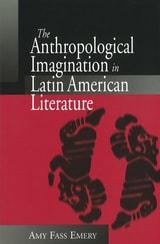
The Anthropological Imagination in Latin American Literature
Amy Fass Emery
University of Missouri Press, 1996
In this examination of the cross between anthropology and literature in contemporary Latin America, Amy Fass Emery studies how Latin American writers' experiences and studies in the field of anthropology have shaped their representations of cultural Others in fiction. She approaches her subject first in broad terms and then in close textual readings of important writers such as Alejo Carpentier, José María Arguedas, and Miguel Barnet.
Emery develops the concept of an "anthropological imagination"--that is, the conjunction of anthropology and literature in twentieth-century Latin American literary texts. While exploring the uses of anthropology in contemporary narrative and fiction, Emery also gives consideration to documentary and testimonial writings.
The major focus of this engaging work is the study of the novel. Analyzing fictions by authors from Cuba, Argentina, Brazil, and Peru, Emery covers a wide geographical region, as well as a diverse group of topics. Subjects such as surrealist primitivism, the testimonio, the transcultural novel, and the relation of the anthropological imagination to the vexed question of postmodernism in the Latin American context are all given insightful deliberation.
As the first extended study of interrelations between anthropology and literature in Latin America, Emery's work will prove invaluable to a wide spectrum of Latin Americanists and to those with comparative interests in anthropology, twentieth-century literature, and postmodernism.
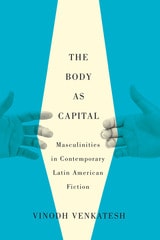
The Body as Capital
Masculinities in Contemporary Latin American FictionVinodh Venkatesh
University of Arizona Press, 2015
Addressing this, Vinodh Venkatesh uses contemporary Latin American literature to examine how masculinity is constructed and conceived. The Body as Capital centers socioeconomic and political concerns, anxieties, and paradigms on the male anatomy and on the matrices of masculinities presented in fiction. Developing concepts such as the “market of masculinities” and the “transnational theater of masculinities,” the author explains how contemporary fiction centers the male body and masculine expressions as key components in the relationship between culture, space, and global tensile forces.
Venkatesh includes novels by canonical and newer writers from Mexico, Central America, the Caribbean, Peru, and Chile. He focuses on texts produced after 1990, coinciding with what has popularly been termed the neoliberal experiment. In addition to probing well-known novels such as La fiesta del Chivo and La mujer habitada and their accompanying body of criticism, The Body as Capital defines and examines several masculine tropes that will be of interest to scholars of contemporary Latin American literature and gender studies. Ultimately, Venkatesh argues for a more holistic approximation of discursive gender that will feed into other angles of criticism, forging a new path in the critical debates over gender and sexuality in Latin American writing.
The Exhaustion of Difference
The Politics of Latin American Cultural StudiesAlberto Moreiras
Duke University Press, 2001
What, asks Moreiras, is the function of critical reason in the present moment? What is regionalistic knowledge in the face of globalization? Can regionalistic knowledge be an effective tool for a critique of contemporary reason? What is the specificity of Latin Americanist reflection and how is it situated to deal with these questions? Through examinations of critical regionalism, restitutional excess, the historical genealogy of Latin American subalternism, testimonio literature, and the cultural politics of magical realism, Moreiras argues that while cultural studies is increasingly institutionalized and in danger of reproducing the dominant ideologies of late capitalism, it is also ripe for giving way to projects of theoretical reformulation. Ultimately, he claims, critical reason must abandon its allegiance to aesthetic-historicist projects and the destructive binaries upon which all cultural theories of modernity have been constructed.
The Exhaustion of Difference makes a significant contribution to the rethinking of Latin American cultural studies.
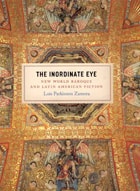
The Inordinate Eye
New World Baroque and Latin American FictionLois Parkinson Zamora
University of Chicago Press, 2006
The New World Baroque combines indigenous, African, and European forms of expression, and, in the early decades of the twentieth century, Latin American writers began to recuperate its visual structures to construct an alternative account of modernity, using its hybrid forms for the purpose of creating a discourse of “counterconquest”—a postcolonial self-definition aimed at disrupting entrenched power structures, perceptual categories, and literary forms.
Zamora engages this process, discussing a wide range of visual forms—Baroque façades and altarpieces, portraits of saints and martyrs (including the self-portraits of Frida Kahlo), murals from indigenous artisans to Diego Rivera—to elucidate works of fiction by Borges, Carpentier, Lezama Lima, Sarduy, Garro, García Márquez, and Galeano, and also to establish a critical perspective external to their work. Because visual media are “other” to the verbal economy of modern fiction, they serve these writers (and their readers) as oblique means by which to position their fiction culturally, politically, and aesthetically.
The first study of its kind in scope and ambition, The Inordinate Eye departs radically from most studies of literature by demonstrating how transcultural conceptions of the visual image have conditioned present ways of seeing and reading in Latin America.
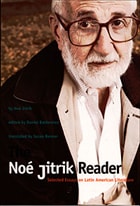
The Noé Jitrik Reader
Selected Essays on Latin American LiteratureNoé Jitrik
Duke University Press, 2005
The Noé Jitrik Reader showcases Jitrik’s reflections on marginality and the canon, exile and return, lack and excess, autobiography, Argentine nationalism, the state of literary criticism, the avant-garde, and the so-called Boom in Latin American literature. Among the writers whose work he analyzes in the essays collected here are Jorge Luis Borges, Esteban Echeverría, Domingo Faustino Sarmiento, José Martí, César Vallejo, José Bianco, Juan Carlos Onetti, José María Arguedas, Julio Cortázar, and Augusto Roa Bastos. The Noé Jitrik Reader offers English-language readers a unique opportunity to appreciate the rigor and thoughtfulness of one of Latin America’s most informed and persuasive literary critics.
The Other Side of the Popular
Neoliberalism and Subalternity in Latin AmericaGareth Williams
Duke University Press, 2002
Williams develops his argument through studies of events highlighting Latin America’s uneasy, and often violent, transition to late capitalism over the past thirty years. He looks at the Chiapas rebellion in Mexico, genocide in El Salvador, the Sendero in Peru, Chile’s and Argentina’s transitions to democratic governments, and Latin Americans’ migration northward. Williams also reads film, photography, and literary works, including Ricardo Piglia’s The Absent City and the statements of a young Salvadoran woman, the daughter of ex-guerrilleros, living in South Central Los Angeles.
The Other Side of the Popular is an incisive interpretation of Latin American culture and politics over the last few decades as well as a thoughtful meditation on the state of Latin American cultural studies.
The Places of History
Regionalism Revisited in Latin AmericaDoris Sommer, ed.
Duke University Press, 1999
Representing a broad range of contemporary criticism, this volume features many short essays by the most well-known and respected Latin Americanists, each devoting attention to specific matters of history. The topics range from Incan architecture to Chicano and Nuyorican habitats; from turn of the century Argentine criminology to Caribbean homophobia; from the rhetorics of independence and dictatorship to Mexican ambivalence about opera and Brazil’s move beyond monarchy; and from the precarious survival of Spanish language in Latin America to its paradoxical legacy of enlightenment in the Philippines. Originally published as a special issue of Modern Language Quarterly (June 1996), this expanded edition includes a new introduction by Doris Sommer and a new essay by Vincente Rafael. Viewed together, these essays reveal a cultural richness that is sure to interest literary scholars and Latin Americanists alike.
Contributors. Carlos J. Alonso, Antonio Benítez-Rojo, John Beverley, Debra A. Castillo, Arcadio Diaz-Quiñones, Juan Flores, Mary M. Gaylord, José Limón, Josefina Ludmer, Francine Masiello, Antonio Mazzotti, Walter D. Mignolo, Sylvia Molloy, Mary Louise Pratt, Vincente Rafael, Julio Ramos, Susana Rotker, Roberto Schwarz, Diana Taylor, Nancy Vogeley

The Rights of Nature and the Testimony of Things
Literature and Environmental Ethics from Latin AmericaMark Anderson
Vanderbilt University Press, 2024
Drawing Native Amazonian thought into productive tension with a variety of posthumanist theoretical frameworks—ranging from Derrida’s conceptualization of passive decision and hospitality to biosemiotics, Karen Barad’s theorization of intra-activity, and Isabelle Stengers’ proposal for cosmopolitical diplomacy—Anderson analyzes literary works by Julio Cortázar, Clarice Lispector, José Eustasio Rivera, and Davi Kopenawa that reframe environmental ethics in terms of collective, multispecies work and reciprocal care and politics as a cosmopolitics of friendship rooted in diplomacy across difference. Finally, Anderson examines the points of connection and divergences between Latin American relational ontologies and Euro American posthumanist theories within Indigenous Latin American remodernization projects that reappropriate and repurpose ancestral practices as well as develop new technologies with the goal of forging alternative modernities compatible with a livable future for all species.
The Social Conscience of Latin American Writing
By Naomi Lindstrom
University of Texas Press, 1998
A CHOICE Outstanding Academic Book
Literature in Latin America has long been a vehicle for debates over the interpretation of social history, cultural identity, and artistic independence. Indeed, Latin American literature has gained international respect for its ability to present social criticism through works of imaginative creation.
In this comprehensive, up-to-the-minute survey of research and opinion by leading Latin American cultural and literary critics, Naomi Lindstrom examines five concepts that are currently the focus of intense debate among Latin American writers and thinkers. Writing in simple, clear terms for both general and specialist readers of Latin American literature, she explores the concepts of autonomy and dependency, postmodernism, literary intellectuals and the mass media, testimonial literature, and gender issues, including gay and lesbian themes. Excerpts (in English) from relevant literary works illustrate each concept, while Lindstrom also traces its passage from the social sciences to literature.
The Space In-Between
Essays on Latin American CultureSilviano Santiago
Duke University Press, 2001
Santiago’s work creates a theoretical field that transcends both the study of a specific national literature and the traditional perspectives of comparative literature. He examines the pedagogical and modernizing mission of Western voyagers from the conquistadors to the present. He deconstructs the ideas of “original” and “copy,” unpacking their implications for the notions of so-called dominant and dominated cultures. Santiago also confronts questions of cultural dependency and analyzes the problems involved in the imposition of an alien European history, the cultural displacements experienced by the Indians through their religious conversion, and the hierarchical suppression of native and Afro-Brazilian values.
Elegantly written and translated, The Space In-Between will provide insights and perspectives that will interest cultural and literary theorists, postcolonial scholars, and other students of contemporary culture.

The Wandering Signifier
Rhetoric of Jewishness in the Latin American ImaginaryErin Graff Zivin
Duke University Press, 2008
In her readings of Spanish American and Brazilian fiction, Graff Zivin highlights inventions of Jewishness in which the concept is constructed as a rhetorical device. She argues that Jewishness functions as a wandering signifier that while not wholly empty, can be infused with meaning based on the demands of the textual project in question. Just as Jews in Latin America possess distinct histories relative to their European and North American counterparts, they also occupy different symbolic spaces in the cultural landscape. Graff Zivin suggests that in Latin American fiction, anxiety, desire, paranoia, attraction, and repulsion toward Jewishness are always either in tension with or representative of larger attitudes toward otherness, whether racial, sexual, religious, national, economic, or metaphysical. She concludes The Wandering Signifier with an inquiry into whether it is possible to ethically represent the other within the literary text, or whether the act of representation necessarily involves the objectification of the other.