Results by title
97 books match the query 'Lesbians' and 20 start with t
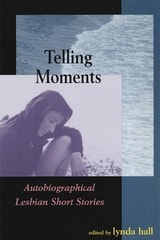
Telling Moments
Autobiographical Lesbian Short StoriesEdited by Lynda Hall
University of Wisconsin Press, 2003
The stories are by well-known contemporary writers—Gloria Anzaldúa, Mary Cappello, Emma Donoghue, Jewelle Gomez, Karla Jay, Anna Livia, Valerie Miner, Lesléa Newman, Minnie Bruce Pratt, Ruthann Robson, Sarah Schulman, and Jess Wells—and exciting newer voices, such as Donna Allegra and Marion Douglas. There are also stories from performance artists Carmelita Tropicana, Peggy Shaw, and Maya Chowdhry. Anna Livia’s protagonist appreciates her mother’s artful garden creation. Ruthann Robson tells of a survivor of the health care system. In Marion Douglas’s story a teenager dances with an alluring classmate. Donna Allegra’s strong construction worker copes with the death of her mother. And Karla Jay sets her character forth to swim with sharks. Most of the stories are accompanied by an author photo, biographical sketch, and—a most significant feature—a commentary from the author on her writing process and the autobiographical nature of her story, illustrating the truth behind the fiction.
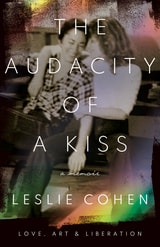
The Audacity of a Kiss
Love, Art, and LiberationLeslie Cohen
Rutgers University Press, 2021
Rendered in bronze, covered in white lacquer, two women sit together on a park bench in Greenwich Village. One of the women touches the thigh of her partner as they gaze into each other’s eyes. The two women are part of George Segal’s iconic sculpture “Gay Liberation,” but these powerful symbols were modeled on real people: Leslie Cohen and her partner (now wife) Beth Suskin.
In this evocative memoir, Cohen tells the story of a love that has lasted for over fifty years. Transporting the reader to the pivotal time when brave gay women and men carved out spaces where they could live and love freely, she recounts both her personal struggles and the accomplishments she achieved as part of New York’s gay and feminist communities. Foremost among these was her 1976 cofounding of the groundbreaking women’s nightclub Sahara, which played host to such luminaries as Betty Friedan, Gloria Steinem, Pat Benatar, Ntozake Shange, Rita Mae Brown, Adrienne Rich, Patti Smith, Bella Abzug, and Jane Fonda. The Audacity of a Kiss is a moving and inspiring tale of how love, art, and solidarity can overcome oppression.

The Constitutional Underclass
Gays, Lesbians, and the Failure of Class-Based Equal ProtectionEvan Gerstmann
University of Chicago Press, 1999
The Court divides people into legal classes that receive varying levels of protection; gays and lesbians and other groups, such as the elderly and the poor, receive the least. Gerstmann reveals how these standards are used to favor certain groups over others, and also how Amendment 2 advocates used the Court's doctrine to convince voters that gays and lesbians were seeking "special rights" in Colorado.
Concluding with a call for wholesale reform of equal-protection jurisprudence, this book is essential reading for anyone interested in fair, coherent, and truly equal protection under the law.
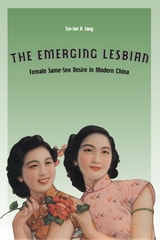
The Emerging Lesbian
Female Same-Sex Desire in Modern ChinaTze-Lan D. Sang
University of Chicago Press, 2003
In this first ever book-length study of Chinese lesbians, Tze-lan D. Sang convincingly ties the debate over female same-sex love in China to the emergence of Chinese modernity. As women's participation in social, economic, and political affairs grew, Sang argues, so too did the societal significance of their romantic and sexual relations. Focusing especially on literature by or about women-preferring women, Sang traces the history of female same-sex relations in China from the late imperial period (1600-1911) through the Republican era (1912-1949). She ends by examining the reemergence of public debate on lesbians in China after Mao and in Taiwan after martial law, including the important roles played by globalization and identity politics.
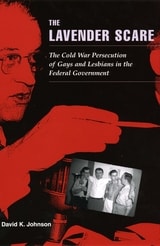
The Lavender Scare
The Cold War Persecution of Gays and Lesbians in the Federal GovernmentDavid K. Johnson
University of Chicago Press, 2003
Historian David K. Johnson here relates the frightening, untold story of how, during the Cold War, homosexuals were considered as dangerous a threat to national security as Communists. Charges that the Roosevelt and Truman administrations were havens for homosexuals proved a potent political weapon, sparking a "Lavender Scare" more vehement and long-lasting than McCarthy's Red Scare. Relying on newly declassified documents, years of research in the records of the National Archives and the FBI, and interviews with former civil servants, Johnson recreates the vibrant gay subculture that flourished in New Deal-era Washington and takes us inside the security interrogation rooms where thousands of Americans were questioned about their sex lives. The homosexual purges ended promising careers, ruined lives, and pushed many to suicide. But, as Johnson also shows, the purges brought victims together to protest their treatment, helping launch a new civil rights struggle.
The Lavender Scare shatters the myth that homosexuality has only recently become a national political issue, changing the way we think about both the McCarthy era and the origins of the gay rights movement. And perhaps just as importantly, this book is a cautionary tale, reminding us of how acts taken by the government in the name of "national security" during the Cold War resulted in the infringement of the civil liberties of thousands of Americans.
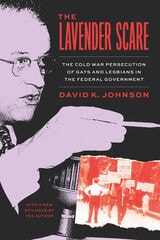
The Lavender Scare
The Cold War Persecution of Gays and Lesbians in the Federal GovernmentDavid K. Johnson
University of Chicago Press, 2023
In The Lavender Scare, David K. Johnson tells the frightening story of how, during the Cold War, homosexuals were considered as dangerous a threat to national security as Communists. Charges that the Roosevelt and Truman administrations were havens for homosexuals proved a potent political weapon, sparking a “Lavender Scare” more vehement and long-lasting than Joseph McCarthy’s Red Scare. Drawing on declassified documents, years of research in the records of the National Archives and the FBI, and interviews with former civil servants, Johnson recreates the vibrant gay subculture that flourished in midcentury Washington and takes us inside the security interrogation rooms where anti-homosexual purges ruined the lives and careers of thousands of Americans. This enlarged edition of Johnson’s classic work of history—the winner of numerous awards and the basis for an acclaimed documentary broadcast on PBS—features a new epilogue, bringing the still-relevant story into the twenty-first century.
The Lesbian Issue
Essays from SignsEdited by Estelle B. Freedman, Barbara C. Gelpi, Susan L. Johnson, and Kathleen M. Weston
University of Chicago Press, 1985
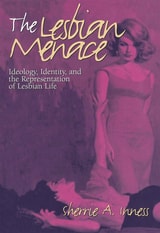
The Lesbian Menace
Ideology, Identity, and the Representation of Lesbian LifeSherrie A. Inness
University of Massachusetts Press, 1997
Electroshock. Hysterectomy. Lobotomy. These are only three of the many “cures” to which lesbians have been subjected in this century. How does a society develop such a profound aversion to a particular minority? In what ways do images in the popular media perpetuate cultural stereotypes about lesbians, and to what extent have lesbians been able to subvert and revise those images? This book addresses these and other questions by examining how lesbianism has been represented in American popular culture in the twentieth century and how conflicting ideologies have shaped lesbian experiences and identity.
In the first section, “Inventing the Lesbian,” Sherrie A. Inness explores depictions of lesbians in popular texts aimed primarily at heterosexual consumers. She moves from novels of the 1920s to books about life at women's colleges and boarding schools, to such contemporary women's magazines as Cosmopolitan, Glamour, and Vogue.
In the next section, “Forms of Resistance,” Inness probes the ways in which lesbians have refashioned texts intended for a heterosexual audience or created their own narratives. One chapter shows how lesbian readers have reinterpreted the Nancy Drew mysteries, looking at them from a distinctly “queer” perspective. Another chapter addresses the changing portrayal of lesbians in children's books over the past two decades.
The last section, “Writing in the Margins,” scrutinizes the extent to which lesbians, themselves a marginalized group, have created a society that relegates some of its own members to the outskirts. Topics include the geographic politics of lesbianism, the complex issue of "passing," and the meaning of butch identity in twentieth-century lesbian culture.
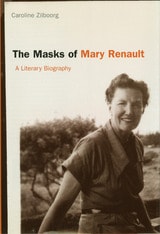
The Masks of Mary Renault
A Literary BiographyCaroline Zilboorg
University of Missouri Press, 2001
Born Eileen Mary Challans in London in 1905, Mary Renault wrote six successful contemporary novels before turning to the historical fiction about ancient Greece for which she is best known. While Renault's novels are still highly regarded, her life and work have never been completely examined. Caroline Zilboorg seeks to remedy this in The Masks of Mary Renault by exploring Renault's identity as a gifted writer and a sexual woman in a society in which neither of these identities was clear or easy.
Although Renault's life was anything but ordinary, this fact has often been obscured by her writing. The daughter of a doctor, she grew up comfortably and attended a boarding school in Bristol. She received a degree in English from St. Hugh's College in Oxford in 1928, but she chose not to pursue an academic career. Instead, she decided to attend the Radcliffe Infirmary in Oxford, where she trained to be a nurse. With the outbreak of the Second World War, she was assigned to the Winford Emergency Hospital in Bristol and briefly worked with Dunkirk evacuees. She went on to work in the Radcliffe Infirmary's brain surgery ward and was there until 1945.
It was during her nurse's training that Renault met Julie Mullard, who became her lifelong companion. This important lesbian relationship both resolved and posed many problems for Renault, not the least of which was how she was to write about issues at once intensely personal and socially challenging. In 1939, Renault published her first novel under a pseudonym in order to mask her identity. It was a time when she was struggling not only with her vocation (nursing and writing), but also with her sexual identity in the social and moral context of English life during the war.
In 1948, Renault left England with Mullard for South Africa and never returned. It was in South Africa that she made the shift from her early contemporary novels of manners to the mature historical novels of Hellenic life. The classical settings allowed Renault to mask material too explosive to deal with directly while simultaneously giving her an "academic" freedom to write about subjects vital to her—among them war, peace, career, women's roles, female and male homosexuality, and bisexuality.
Renault's reception complicates an understanding of her achievement, for she has a special status within the academic community, where she is both widely read and little written about. Her interest in sexuality and specifically in homosexuality and bisexuality, in fluid gender roles and identities, warrants a rereading and reevaluation of her work. Eloquently written and extensively researched, The Masks of Mary Renault will be of special value to anyone interested in women's studies or English literature.
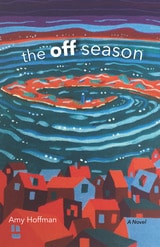
The Off Season
Amy Hoffman
University of Wisconsin Press, 2019
In the damp, windy winter, Nora contends with heartbreak, aging, and local environmental worries, while painting what she hopes will be her masterpiece. Along the way, she encounters the chain-smoking, motor scooter–driving landlady Miss Ruby; Reverend Patsy, the vegan minister of the Unitarian church; and Brunhilde, barista extraordinaire and rival for Baby's affections. As the first tourists begin to arrive in June, Nora must decide what she really wants from life.
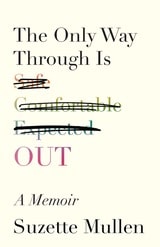
The Only Way Through Is Out
Suzette Mullen
University of Wisconsin Press, 2024
Digging into her past, Suzette uncovered a deeply buried truth: she’d been in love with her best friend—a woman—for nearly two decades—and still was. Leaning into these “unspeakable” feelings would put Suzette’s identity, relationships, and life of privilege at risk—but taking this leap might be her only chance to feel fully alive. As Suzette opened herself up to new possibilities, an unexpected visit to a new city helped her discover who she was meant to be.
Introspective, bittersweet, and empowering, The Only Way Through Is Out is both a coming-out and coming-of-age story, as well as a call to action for every human who is longing to live authentically but is afraid of the cost.
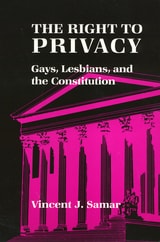
The Right To Privacy
Gays, Lesbians, and the ConstitutionVincent J. Samar
Temple University Press, 1992
Where did the right to privacy come from and what does it mean? Grappling with the critical issues involving women and gays that relate to the recent Supreme Court appointment, Vincent J. Samar develops a definition of legal privacy, discusses the reasons why and the degree to which privacy should be protected, and shows the relationship between privacy and personal autonomy. He answers former Supreme Court nominee Robert Bork’s questions about scope, content, and legal justification for a general right to privacy and emphasizes issues involving gays and lesbians, Samar maintains that these privacy issues share a common constitutional-ethical underpinning with issues such as abortion, surrogate motherhood, drug testing, and the right to die.
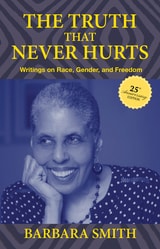
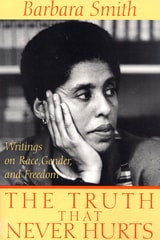
The Truth That Never Hurts 25th anniversary edition
Writings on Race, Gender, and FreedomBarbara Smith
Rutgers University Press, 2024
Barbara Smith has been doing groundbreaking work since the early 1970s, describing a Black feminism for Black women. Her work in Black women's literary traditions; in examining the sexual politics of the lives of women of color; in representing the lives of Black lesbians and gay men; and in making connections between race, class, sexuality and gender is gathered in The Truth That Never Hurts. This collection contains some of her major essays on Black women's literature, Black lesbian writing, racism in the women's movement, Black-Jewish relations, and homophobia in the Black community. Her forays into these areas ignited dialogue about topics that few other writers were addressing at the time, and which, sadly, remain pertinent to this day. This twenty-fifth anniversary edition, in a beautiful new package, also contains the essays from the original about the 1968 Chicago convention demonstrations; attacks on the NEA; the Anita Hill-Clarence Thomas Senate hearings; and police brutality against Rodney King and Abner Louima, which, after twenty-five years, still have the urgency they did when they were first written.
The Truth That Never Hurts
Writings on Race, Gender, and FreedomSmith, Barbara
Rutgers University Press, 2000
Smith’s essay “Toward a Black Feminist Criticism,” is often cited as a major catalyst in opening the field of black women’s literature. Pieces about racism in the women’s movement, black and Jewish relations, and homophobia in the Black community have ignited dialogue about topics that few other writers address. The collection also brings together topical political commentaries on the 1968 Chicago convention demonstrations; attacks on the NEA; the Anita Hill–Clarence Thomas Senate hearings; and police brutality against Rodney King and Abner Louima. It also includes a never-before-published personal essay on racial violence and the bonds between black women that make it possible to survive.
The Whole Truth?
A Case of Murder on the Appalachian TrailH. L. Pohlman
University of Massachusetts Press, 1999
On May 13, 1988, Stephen Roy Carr, a so-called mountain man living in Michaux State Forest in south central Pennsylvania, shot two female hikers while they were making love at a campsite near the Appalachian Trail. Rebecca Wight died at the scene. Claudia Brenner, despite five bullet wounds, survived to testify against her attacker.
In this book, H. L. Pohlman reconstructs the dramatic story of this murder case and traces its disposition through the criminal justice system. Drawing on interviews with participants as well as court records, he closely examines competing interpretations of the evidence. Was the attack a hate crime? A sex crime? A class crime? At the same time, he shows how a broad range of substantive and procedural issues—from the rights of the accused to evaluation of potential mitigating circumstances—can influence the assessment of culpability in homicide cases.
The World Turned
Essays on Gay History, Politics, and CultureJohn D Emilio
Duke University Press, 2002
In this collection of essays, D’Emilio brings his historian’s eye to bear on these profound changes in American society, culture, and politics. He explores the career of Bayard Rustin, a civil rights leader and pacifist who was openly gay a generation before almost everyone else; the legacy of radical gay and lesbian liberation; the influence of AIDS activist and writer Larry Kramer; the scapegoating of gays and lesbians by the Christian Right; the gay-gene controversy and the debate over whether people are "born gay"; and the explosion of attention focused on queer families. He illuminates the historical roots of contemporary debates over identity politics and explains why the gay community has become, over the last decade, such a visible part of American life.
Things No Longer There
A Memoir of Losing Sight and Finding VisionSusan Krieger
University of Wisconsin Press, 2005
Krieger's touching memoir explores the ways that outer landscapes may change and sight may be lost, but inner visions persist, giving meaning, jarring the senses with a very different picture than what appears before the eyes. This book will reward both the general reader and those interested in disability studies, feminist ethnography, and lesbian studies.

Tortilleras Negotiating Intimacy
Love, Friendship, and Sex in Queer Mexico CityAnahi Russo Garrido
Rutgers University Press, 2020
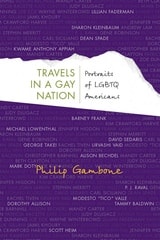
Travels in a Gay Nation
Portraits of LGBTQ AmericansPhilip Gambone
University of Wisconsin Press, 2010
In this age when contemporary gay America is still coming under attack, Gambone captures the humanity of each individual. For some, their identity as a sexual minority is crucial to their life’s work; for others, it has been less so, perhaps even irrelevant. But, whether splashy or quiet, center-stage or behind the scenes, Gambone’s subjects have managed—despite facing ignorance, fear, hatred, intolerance, injustice, violence, ridicule, or just plain indifference—to construct passionate, inspiring lives.
Outstanding Book in the High School Category, selected by the American Association of School Libraries
Best Book in Special Interest Category, selected by the Public Library Association

Two-Spirit People
Native American Gender Identity, Sexuality, and SpiritualityEdited by Sue-Ellen Jacobs; Wesley Thomas; and Sabine Lang
University of Illinois Press, 1997
1997 Winner of the Ruth Benedict Prize for an edited book given by the Society of Lesbian and Gay Anthropologists.