Results by title
238 books match the query 'Libraries' and 45 start with t
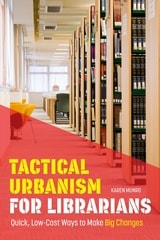
Tactical Urbanism for Librarians
Quick, Low-Cost Ways to Make Big ChangesKaren Munro
American Library Association, 2017
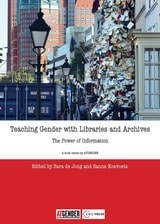
Teaching Gender with Libraries and Archives
Sara De Jong
Central European University Press, 2014

Techniques for Electronic Resource Management
TERMS and the Transition to OpenJill Emery
American Library Association, 2020
Technology Disaster Response and Recovery Planning
A LITA GuideMary Mallery
American Library Association, 2015
Technology Training in Libraries
American Library Association, 2010
Technology for Small and One-Person Libraries
A LITA GuideRene J. Erlandson
American Library Association, 2013
Teens and Libraries
Getting It RightElaine Meyers
American Library Association, 2003
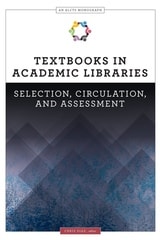
Textbooks in Academic Libraries
Selection, Circulation, and AssessmentChris Diaz
American Library Association, 2017
The Black Belt Librarian
Real-World Safety & SecurityWarren Graham
American Library Association, 2011
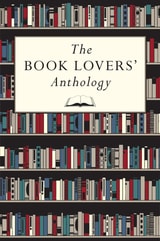
The Book Lovers' Anthology
A Compendium of Writing about Books, Readers and LibrariesEdited by the Bodleian Library
Bodleian Library Publishing, 2014
“Much reading is like much eating, wholly useless without digestion.”—Robert South
“If I had read as much as other men, I should have been as ignorant as they.” —Thomas Hobbes
Can books corrupt? Do badly written books sharpen or dull the minds of their readers? Ought we to take seriously the old saw that excessive reading can damage one’s sight? The Book Lovers’ Anthology offers answers to these questions and many more with a remarkable collection of reflections on books, readers, and libraries— by writers whose books are among the world’s best known and best loved.
Throughout the centuries, books have been a source of fascination— and sometimes frustration—for writers. Between the covers of the Anthology are excerpts from the novels of Jane Austen, George Eliot, and Jonathan Swift, among many others, all of whom paused in their fiction to extol the virtues of the written page. Those who are taken with the smell of books will find a like mind in Charles Dickens, who waxed poetic about the “pleasant smell of paper freshly pressed.” Very avid readers might even nod in knowing agreement with John Donne, who declared, “I shall die reading.” Other poets whose musings on libraries or books are excerpted for the Anthology include Shakespeare, Wordsworth, Milton, and Chaucer. These writings are interspersed by the meditations of essayists and diarists of centuries past—among them, Samuel Johnson, James Boswell, John Ruskin, and Michel de Montaigne.
With contributions from major writers across ages and genres, this is an essential anthology for which any bibliophile will want to find space on the shelf.
The Comparative Guide to WordPress in Libraries
A LITA GuideAmanda L. American Library Association
American Library Association, 2014
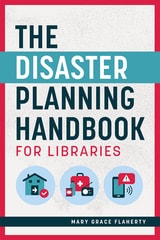
The Disaster Planning Handbook for Libraries
Mary Grace Flaherty
American Library Association, 2021
Your library is a vital information hub and resource provider every single day, and that’s doubly true when calamity strikes. In fact, your library’s role as an “essential community function” during disasters is now encoded in U.S. law. Engaging as a partner in planning and preparedness will build much-needed community support should disaster strike, and even a basic plan will also save you time and stress later on. No matter where your library is in the disaster planning cycle, this handbook will make the process clearer and less daunting. You’ll get tools, activities, easy-to-adapt templates, and hands-on guidance on such topics as
- the six phases of disaster response;
- 15 first-hand accounts of library disaster planning or responses, helping you identify the library services most needed during a disaster;
- three essential factors that will shape the form of your disaster plan;
- preparing for hurricanes, tornadoes, fires, floods, and earthquakes;
- ideas for connecting with your community’s emergency response teams;
- federal government planning resources;
- pointers on working with state and local governments;
- a sample Memorandum of Understanding to outline mutual support for a speedier recovery;
- recommended courses and training, many of which are free;
- targeted advice for archives and special collections;
- sample building inspection checklists; and
- recommended games to help children and families prepare.
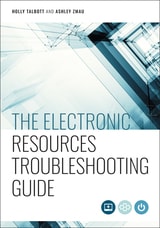
The Electronic Resources Troubleshooting Guide
Holly Talbott
American Library Association, 2020
A library user can’t access an article. Your log in credentials won’t work. In the realm of electronic resources everything runs smoothly—until suddenly, without warning, it doesn’t. Invariably, systems will break down, but a trial and error approach to finding out what’s wrong is highly inefficient. This hands-on guide from two expert ERM librarians walks you through the essentials of troubleshooting. It outlines a methodical process that will help you identify the source of a problem even when it’s not obvious and take steps to reach a resolution. With the goal of developing a library-wide workflow in mind, this guide will teach you how to
- familiarize yourself with the components of electronic resources, using flowchart diagrams of common access chains such as discovery services, knowledge bases, research guides, and library services platforms;
- navigate the complete triage and troubleshooting workflow, illustrated through 14 in-depth examples;
- recognize the symptoms of common access disruptions;
- conduct efficient troubleshooting interviews;
- manage help tickets and design problem reports that capture key information without overburdening the user;
- create publicly available help pages for problems originating with users’ devices or computers;
- communicate with vendors and IT personnel for speedy resolutions, providing dozens of clear definitions of library and technology terms that will help you minimize confusion; and
- customize your own troubleshooting workflow chart for common use across departments and staff hierarchies.
The Frugal Librarian
Carol American Library Association
American Library Association, 2011
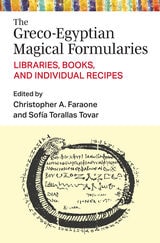
The Greco-Egyptian Magical Formularies
Libraries, Books, and Individual RecipesEdited by Christopher A. Faraone and Sofía Torallas Tovar
University of Michigan Press, 2022
In Greco-Roman Egypt, recipes for magical undertaking, called magical formularies, commonly existed for love potions, curses, attempts to best business rivals—many of the same challenges that modern people might face. In The Greco-Egyptian Magical Formularies: Libraries, Books, and Individual Recipes, volume editors Christopher Faraone and Sofia Torallas Tovar present a series of essays by scholars involved in a multiyear project to reedit and translate the various magical handbooks that were inscribed in the Roman period in the Greek or Egyptian languages. For the first time, the material remains of these papyrus rolls and codices are closely examined, revealing important information about the production of books in Egypt, the scribal culture in which they were produced, and the traffic in single recipes copied from them. Especially important for historians of the book and the Christian Bible are new insights in the historical shift from roll to codex, complicated methods of inscribing the bilingual papyri (in which the Greek script is written left to right and the demotic script right to left), and the new realization that several of the longest extant handbooks are clearly compilations of two or more shorter handbooks, which may have come from different places. The essays also reexamine and rethink the idea that these handbooks came from the personal libraries of practicing magicians or temple scriptoria, in one case going so far as to suggest that two of the handbooks had literary pretensions of a sort and were designed to be read for pleasure rather than for quotidian use in making magical recipes.
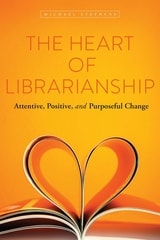
The Heart of Librarianship
Attentive, Positive, and Purposeful ChangeMichael Stephens
American Library Association, 2016
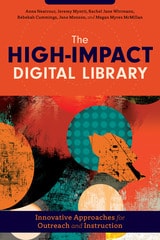
The High-Impact Digital Library
Innovative Approaches for Outreach and InstructionAnna Neatrour, Jeremy Myntti, Rachel Jane Wittmann, Rebekah Cummings, Jane Monson, and Megan Myres McMillan, in collaboration with Core Publishing
American Library Association, 2025
- discusses the results of a unique survey that provides new and structured information on digital library outreach and instruction;
- presents outreach case studies illustrating uses of social media promotion, integration of digital collections into teaching and instruction activities, partnerships with external campus units or community organizations, and other activities;
- explores many types of instruction, from drop-in class sessions and training to course-integrated instruction and ways that digital library practitioners can contribute to the Open Educational Resources (OER) and open pedagogy movements;
- details the digital humanities and digital scholarship programs developed at the University of Utah by many of the authors through cross-departmental collaboration;
- describes the ways in which the pandemic spurred many institutions to use rapid response collecting to practice community engagement; and
- speculates on future directions for outreach and instruction for digital libraries.
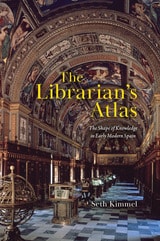
The Librarian's Atlas
The Shape of Knowledge in Early Modern SpainSeth Kimmel
University of Chicago Press, 2024
A history of early modern libraries and the imperial desire for total knowledge—now in paperback.
Medieval scholars imagined the library as a microcosm of the world, but as novel early modern ways of managing information facilitated empire in both the New and Old Worlds, the world became a projection of the library. In The Librarian’s Atlas, Seth Kimmel offers a sweeping material history of how the desire to catalog books coincided in the sixteenth and seventeenth centuries with the aspiration to control territory. Through a careful study of library culture in Spain and Morocco—close readings of catalogs, marginalia, indexes, commentaries, and maps—Kimmel reveals how the booklover’s dream of a comprehensive and well-organized library shaped an expanded sense of the world itself.
The Librarian's Book of Lists
A Librarian's Guide to Helping Job SeekersGeorge M. Eberhart
American Library Association, 2010
The Librarian's Book of Quotes
Tatyana Eckstrand
American Library Association, 2009
The Librarian's Guide to Graphic Novels for Adults
American Library Association, 2010
The Librarian's Nitty-Gritty Guide to Content Marketing
Laura Solomon
American Library Association, 2016
The Librarian’s Guide to Book Programs and Author Events
Brad Hooper
American Library Association, 2016

The Library Assessment Cookbook
Aaron W. Dobbs
Assoc of College & Research Libraries, 2017
The Library Innovation Toolkit
Ideas, Strategies, and ProgramsAnthony Molaro
American Library Association, 2015
The Library Security and Safety Guide to Prevention, Planning, and Response
Miriam B. Kahn
American Library Association, 2008
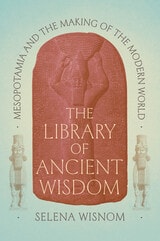
The Library of Ancient Wisdom
Mesopotamia and the Making of the Modern WorldSelena Wisnom
University of Chicago Press, 2025
The library of Ashurbanipal, Assyria’s last great king, held an astonishing collection at the forefront of knowledge in its day, from ancient traditions in religion and literature to the latest developments in magic and medicine. When the Assyrian empire fell, the library burned to the ground, and its contents, clay tablets inscribed with cuneiform writing, lay buried for thousands of years until a team of Victorian archaeologists discovered the remnants in modern-day Iraq. The clay had baked and hardened; the very fire that consumed the library had helped its texts to survive for millennia.
In The Library of Ancient Wisdom, scholar Selena Wisnom, one of only a few hundred experts able to read cuneiform script today, guides us inside this important collection and, through its contents, brings ancient Mesopotamia and its people to life. Introducing us to Ashurbanipal and his family, scribes, astrologers, physicians, and more, Wisnom explores the library’s tablets and the details they divulge about how these ancient people thought about the world. Like us, they had concerns about job security, jealous rivalries, and profound friendships, and questions about the meaning of life. Wisnom ushers us into a world where magic was commonplace, where the gods spoke to you in dreams, and where the secrets of the universe were revealed through puns—taking us to the heart of what it means to be human.
Offering a close look at a major historical landmark as well as a readable account of the world’s earliest civilizations, The Library of Ancient Wisdom lays bare the ideas, hopes, fears, and desires that survive on humble clay.
The Library's Guide to Graphic Novels
John Ballestro
American Library Association, 2020
The circ stats say it all: graphic novels’ popularity among library users keeps growing, with more being published (and acquired by libraries) each year. The unique challenges of developing and managing a graphics novels collection have led the Association of Library Collections and Technical Services (ALCTS) to craft this guide, presented under the expert supervision of editor Ballestro, who has worked with comics for more than 35 years. Examining the ever-changing ways that graphic novels are created, packaged, marketed, and released, this resource gathers a range of voices from the field to explore such topics as
- a cultural history of comics and graphic novels from their World War II origins to today, providing a solid grounding for newbies and fresh insights for all;
- catching up on the Big Two’s reboots: Marvel’s 10 and DC’s 4;
- five questions to ask when evaluating nonfiction graphic novels and 30 picks for a core collection;
- key publishers and cartoonists to consider when adding international titles;
- developing a collection that supports curriculum and faculty outreach to ensure wide usage, with catalogers’ tips for organizing your collection and improving discovery;
- real-world examples of how libraries treat graphic novels, such as an in-depth profile of the development of the Penn Libraries' manga collection;
- how to integrate the emerging field of graphic medicine into the collection; and
- specialized resources like The Cartoonists of Color and Queer Cartoonists databases, the open access scholarly journal Comic Grid, and the No Flying, No Tights website.
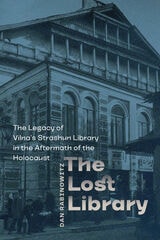
The Lost Library
The Legacy of Vilna's Strashun Library in the Aftermath of the HolocaustDan Rabinowitz
Brandeis University Press, 2018
The Neal-Schuman Library Technology Companion
A Basic Guide for Library StaffJohn J. Burke
American Library Association, 2013
The Power of Play
Designing Early Learning SpacesDorothy Stoltz
American Library Association, 2015
The Purpose-Based Library
Finding Your Path to Survival, Success, and GrowthJohn J. Huber
American Library Association, 2015
The Quality Infrastructure
Measuring, Analyzing, and Improving Library ServicesSarah Anne Murphy
American Library Association, 2013
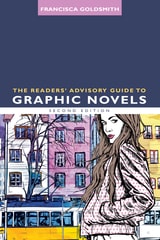
The Readers' Advisory Guide to Graphic Novels
Francisca Goldsmith
American Library Association, 2017
The first edition of this readers' advisory represented a pioneering effort to provide help and encouragement to librarians diving into this exciting format, and since then the popularity of graphic novels has continued apace. Goldsmith has updated her guide to encompass a bounty of new titles, authors, and styles, ensuring its continued usefulness as a tool for both RA and collection development. Suitable for newbies and hardcore fans alike, this book
- sketches in the history of graphic novels, tracing their evolution and showing what makes them unique;
- explores traditional and cutting edge titles most friendly to children, teens, and adults, reflecting the burgeoning and maturing publishing efforts made for each of these audiences;
- discusses common themes, topics, and the place of diversity in graphic novels;
- gives in-depth guidance on ways to connect readers to titles they'll be sure to love;
- offers ideas for media tie-ins, displays, programming, book clubs, and more;
- includes annotated bibliographies, with appeal characteristics noted, and multiple indexes to ensure that locating the right graphic novel is a snap; and
- provides detailed tips for keeping current and aware of new titles and trends.
Spotlighting this expanding body of intellectual, aesthetic, and engaging literature, Goldsmith's guide will entertain as well as inform.
The Readers' Advisory Guide to Historical Fiction
Jennifer S. Baker
American Library Association, 2014
The Readers' Advisory Guide to Horror
Becky Siegel Spratford
American Library Association, 2012
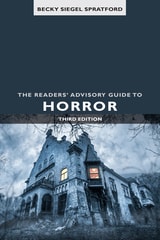
The Readers' Advisory Guide to Horror
Becky Siegel Spratford
American Library Association, 2021
Like the zombies, ghouls, and vampires which inhabit many of its books, the popularity of horror fiction is unstoppable. Even if you don’t happen to be a fan yourself, you won’t be “scared” to advise readers on finding their next great fright thanks to the astute guidance provided by horror expert Spratford in her updated guide. This definitive resource for library workers at any level of experience or familiarity with horror fiction
- details the state of the genre right now, including its appeal factors and key authors, assisting readers in getting up to speed quickly;
- presents ten annotated lists of suggested titles, all published since 2000, each with a short introduction providing historical context;
- delves into horror movies, TV shows, podcasts, and other formats; and
- offers abundant marketing advice, programming options, and pointers on additional resources.
The Readers' Advisory Guide to Mystery
John Charles
American Library Association, 2012
The Readers’ Advisory Guide to Graphic Novels
Francisca Goldsmith
American Library Association, 2011
The Transformed Library
Jeannette Woodward
American Library Association, 2013

The Use of Books and Libraries
Harold Russell
University of Minnesota Press, 1933
The Whole Library Handbook 5
Current Data, Professional Advice, and CuriosaGeorge M. Eberhart
American Library Association, 2013
The Whole School Library Handbook 2
Blanche Woolls
American Library Association, 2013
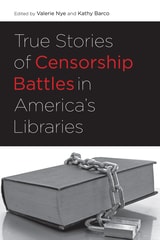
True Stories of Censorship Battles in America's Libraries
Valerie Nye
American Library Association, 2012
Intellectual freedom is a core value of librarianship, but fighting to keep controversial materials on the shelves can sometimes feel like a lonely battle. And not all censorship controversies involve the public objecting to a book in the collection—libraries are venues for displays and meetings, and sometimes library staff themselves are tempted to preemptively censor a work. Those facing censorship challenges can find support and inspiration in this book, which compiles dozens of stories from library front lines. Edifying and enlightening, this collection
- Tells the stories of librarians who withstood difficult circumstances to champion intellectual freedom
- Touches on prickly issues such as age-appropriateness, some librarians' temptation to preemptively censor, sensitive cultural expressions, and criminality in the library
- Presents case studies of defenses that were unsuccessful, so librarians facing similar challenges can learn from these defeats
There are fewer situations more stressful in a librarian's professional life than being personally confronted with a demand to remove a book from the shelves or not knowing how to respond to other kinds of censorship challenges. Reading this book will help fortify and inform those in the fray.
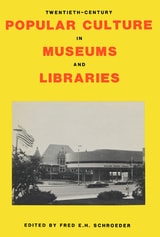
Twentieth-Century Popular Culture in Museums and Libraries
Fred E.H. Schroeder
University of Wisconsin Press, 1981
The essays in this book investigate the reasons for present-day neglect of popular culture materials and chart the various routes by which conscientious and insightful librarians and museum directors can correct this disastrous oversight.