Results by title
1445 books match the query 'Life Sciences' and 386 start with t
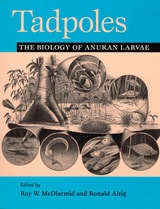
Tadpoles
The Biology of Anuran LarvaeEdited by Roy W. McDiarmid and Ronald Altig
University of Chicago Press, 1999
In this indispensable reference, leading experts on tadpole biology relate what we currently know about tadpoles and what we might learn from them in the future. Tadpoles provides detailed summaries of tadpole morphology, development, behavior, ecology, and environmental physiology; explores the evolutionary consequences of the tadpole stage; synthesizes available information on their biodiversity; and presents a standardized terminology and an exhaustive literature review of tadpole biology.
Taking Flight
A History of Birds and People in the Heart of AmericaMichael Edmonds
Wisconsin Historical Society Press, 2018
Today, more than fifty million Americans traipse through wetlands at dawn, endure clouds of mosquitoes, and brave freezing autumn winds just to catch a glimpse of a bird. The human desire to connect with winged creatures defies age and generation. In the Midwest, humans and birds have lived together for more than twelve thousand years. Taking Flight explores how and why people have worshipped, feared, studied, hunted, eaten, and protected the birds that surrounded them.
Author and birder Michael Edmonds has combed archaeological reports, missionaries’ journals, travelers’ letters, early scientific treatises, the memoirs of American Indian elders, and the folklore of hunters, farmers, and formerly enslaved people throughout the Midwest to reveal how our ancestors thought about the very same birds we see today. Whether you’re a casual bird-watcher, a hard-core life-lister, or simply someone who loves the outdoors, you’ll look at birds differently after reading this book.
Tangled Trees
Phylogeny, Cospeciation, and CoevolutionEdited by Roderic D. M. Page
University of Chicago Press, 2002
Contributors:
Sarah Al-Tamimi, Michael A. Charleston, Dale H. Clayton, James W. Demastes, Russell D. Gray, Mark S. Hafner, John P. Huelsenbeck, J.-P. Hugot, Kevin P. Johnson, Peter Kabat, Bret Larget, Joanne Martin, Yannis Michalakis, Roderic D. M. Page, Ricardo L. Palma, Adrian M. Paterson, Susan L. Perkins, Andy Purvis, Bruce Rannala, David L. Reed, Fredrik Ronquist, Theresa A. Spradling, Jason Taylor, Michael Tristem
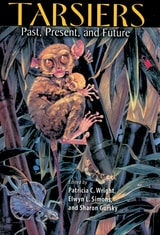
Tarsiers
Past, Present, and FutureWright, Patricia C.
Rutgers University Press, 2003
Tarsiiformes, or tarsiers for short, are a group of living species of special interest to primatologists because their combination of derived and ancient characters make them pivotal to understanding the roots of primate evolution. These small-bodied, nocturnal, solitary creatures resemble lower primates in their behavior but genetically, DNA evidence aligns them more closely with higher primates, such as monkeys, apes, and humans. These astounding creatures exhibit an ability found in no other living mammal¾they can turn their heads 180 degrees in either direction to see both prey and predators. The world’s only exclusive carnivorous primate, they eat live food (primarily insects, but the occasional vertebrate, such as lizards, snakes, or frogs will also do). This unique combination of behavior and anatomy makes the tarsier an especially interesting and controversial animal for study among primate behaviorists, evolutionists, and taxonomists, who view the tarsiers as “living fossils” that link past and present, lower and higher, primates in the long chain of evolutionary history.
This new volume presents alternative and contrasting perspectives on the most debated questions that have arisen in tarsier studies. Top researchers bring together perspectives from anatomical, behavioral, genetic, and conservation studies in this new and exciting addition to the understanding of primate evolution.
This book is a volume in the Rutgers Series on Human Evolution, edited by Robert Trivers, Lee Cronk, Helen Fischer, and Lionel Tiger.
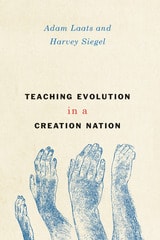
Teaching Evolution in a Creation Nation
Adam Laats and Harvey Siegel
University of Chicago Press, 2016
Laats and Siegel agree with most scientists: creationism is flawed, as science. But, they argue, students who believe it nevertheless need to be accommodated in public school science classes. Scientific or not, creationism maintains an important role in American history and culture as a point of religious dissent, a sustained form of protest that has weathered a century of broad—and often dramatic—social changes. At the same time, evolutionary theory has become a critical building block of modern knowledge. The key to accommodating both viewpoints, they show, is to disentangle belief from knowledge. A student does not need to believe in evolution in order to understand its tenets and evidence, and in this way can be fully literate in modern scientific thought and still maintain contrary religious or cultural views. Altogether, Laats and Siegel offer the kind of level-headed analysis that is crucial to finding a way out of our culture-war deadlock.
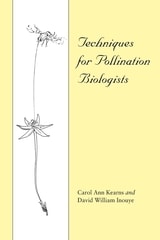
Techniques for Pollination Biologists
Carol A. Kearns
University Press of Colorado, 1993
This book presents techniques such as fluorescence microscopy to examine pollen tubes, high-pressure liquid chromatography for nectar analysis, and using particle counters to count pollen grains and nuclear magnetic resonance for floral odor analysis. In addition to these sophisticated methods, basic techniques are described for labeling plants, manipulating flowers, marking or excluding, and designing simple but elegant experiments with small budgets. The book also examines potential pitfalls for pollination studies and offers cautionary advice about designing and implementing different types of pollination experiments.
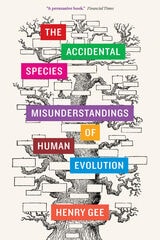
The Accidental Species
Misunderstandings of Human EvolutionHenry Gee
University of Chicago Press, 2013
The Accidental Species combines Gee’s firsthand experience on the editorial side of many incredible paleontological findings with healthy skepticism and humor to create a book that aims to overturn popular thinking on human evolution—the key is not what’s missing, but how we’re linked.
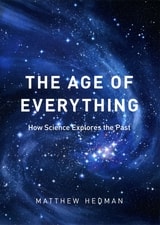
The Age of Everything
How Science Explores the PastMatthew Hedman
University of Chicago Press, 2007
Hedman details, for example, how interdisciplinary studies of the Great Pyramids of Egypt can determine exactly when and how these incredible structures were built. He shows how the remains of humble trees can illuminate how the surface of the sun has changed over the past ten millennia. And he also explores how the origins of the earth, solar system, and universe are being discerned with help from rocks that fall from the sky, the light from distant stars, and even the static seen on television sets.
Covering a wide range of time scales, from the Big Bang to human history, The Age of Everything is a provocative and far-ranging look at how science has determined the age of everything from modern mammals to the oldest stars, and will be indispensable for all armchair time travelers.
“We are used to being told confidently of an enormous, measurable past: that some collection of dusty bones is tens of thousands of years old, or that astronomical bodies have an age of some billions. But how exactly do scientists come to know these things? That is the subject of this quite fascinating book. . . . As told by Hedman, an astronomer, each story is a marvel of compressed exegesis that takes into account some of the most modern and intriguing hypotheses.”—Steven Poole, Guardian
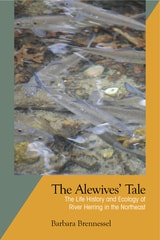
The Alewives' Tale
The Life History and Ecology of River Herring in the NortheastBarbara Brennessel
University of Massachusetts Press, 2014
The Alewives' Tale describes the plight of alewives and blueback herring, two fish species that have similar life histories and are difficult to distinguish by sight. Collectively referred to as river herring, they have been economically important since colonial times as food, fertilizer, and bait. In recent years they have attracted much attention from environmentalists, especially as attempts are being made, on and beyond Cape Cod, to restore the rivers, streams, ponds, lakes, and estuaries that are crucial for their reproduction and survival.
Brennessel provides an overview of the biology of the fish—from fertilized eggs to large schools of adults that migrate in the Atlantic Ocean—while describing the habitats at different stages of their life history. She explores the causes of the dramatic decline of river herring since the mid-twentieth century and the various efforts to restore these iconic fish to the historic populations that treated many onlookers to spectacular inland migrations each spring.
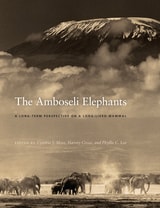
The Amboseli Elephants
A Long-Term Perspective on a Long-Lived MammalEdited by Cynthia J. Moss, Harvey Croze, and Phyllis C. Lee
University of Chicago Press, 2011
Elephants have fascinated humans for millennia. Aristotle wrote of them with awe; Hannibal used them in warfare; and John Donne called the elephant “Nature’s greatest masterpiece. . . . The only harmless great thing.” Their ivory has been sought after and treasured in most cultures, and they have delighted zoo and circus audiences worldwide for centuries. But it wasn’t until the second half of the twentieth century that people started to take an interest in elephants in the wild, and some of the most important studies of these intelligent giants have been conducted at Amboseli National Park in Kenya.
The Amboseli Elephants is the long-awaited summation of what’s been learned from the Amboseli Elephant Research Project (AERP)—the longest continuously running elephant research project in the world. Cynthia J. Moss and Harvey Croze, the founders of the AERP, and Phyllis C. Lee, who has been closely involved with the project since 1982, compile more than three decades of uninterrupted study of over 2,500 individual elephants, from newborn calves to adult bulls to old matriarchs in their 60s. Chapters explore such topics as elephant ecosystems, genetics, communication, social behavior, and reproduction, as well as exciting new developments from the study of elephant minds and cognition. The book closes with a view to the future, making important arguments for the ethical treatment of elephants and suggestions to aid in their conservation.
The most comprehensive account of elephants in their natural environment to date, The Amboseli Elephants will be an invaluable resource for scientists, conservationists, and anyone interested in the lives and loves of these extraordinary creatures.
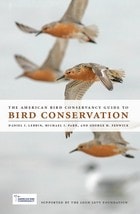
The American Bird Conservancy Guide to Bird Conservation
Daniel J. Lebbin, Michael J. Parr, and George H. Fenwick
University of Chicago Press, 2010
Whether we live in cities, in the suburbs, or in the country, birds are ubiquitous features of daily life, so much so that we often take them for granted. But even the casual observer is aware that birds don’t fill our skies in the number they once did. That awareness has spawned conservation action that has led to notable successes, including the recovery of some of the nation’s most emblematic species, such as the Bald Eagle, Brown Pelican, Whooping Crane, and Peregrine Falcon. Despite this, a third of all American bird species are in trouble—in many cases, they’re in imminent danger of extinction. The most authoritative account ever published of the threats these species face, The American Bird Conservancy Guide to Bird Conservation will be the definitive book on the subject.
The Guide presents for the first time anywhere a classification system and threat analysis for bird habitats in the United States, the most thorough and scientifically credible assessment of threats to birds published to date, as well as a new list of birds of conservation concern. Filled with beautiful color illustrations and original range maps, the Guide is a timely, important, and inspiring reference for birders and anyone else interested in conserving North America’s avian fauna. But this book is far more than another shout of crisis. The Guide also lays out a concrete and achievable plan of long-term action to safeguard our country’s rich bird life. Ultimately, it is an argument for hope. Whether you spend your early weekend mornings crouched in silence with binoculars in hand, hoping to check another species off your list, or you’ve never given much thought to bird conservation, you’ll appreciate the visual power and intellectual scope of these pages.

The American Naturalist, volume 200 number 1 (July 2022)
The University of Chicago Press
University of Chicago Press Journals, 2022
The American Naturalist, volume 200 number 2 (August 2022)
The University of Chicago Press
University of Chicago Press Journals, 2022
The American Naturalist, volume 200 number 3 (September 2022)
The University of Chicago Press
University of Chicago Press Journals, 2022
The American Naturalist, volume 200 number 4 (October 2022)
The University of Chicago Press
University of Chicago Press Journals, 2022
The American Naturalist, volume 200 number 5 (November 2022)
The University of Chicago Press
University of Chicago Press Journals, 2022
The American Naturalist, volume 200 number 6 (December 2022)
The University of Chicago Press
University of Chicago Press Journals, 2022
The American Naturalist, volume 201 number 1 (January 2023)
The University of Chicago Press
University of Chicago Press Journals, 2023
The American Naturalist, volume 201 number 2 (February 2023)
The University of Chicago Press
University of Chicago Press Journals, 2023
The American Naturalist, volume 201 number 3 (March 2023)
The University of Chicago Press
University of Chicago Press Journals, 2023
The American Naturalist, volume 201 number 4 (April 2023)
The University of Chicago Press
University of Chicago Press Journals, 2023
The American Naturalist, volume 201 number 5 (May 2023)
The University of Chicago Press
University of Chicago Press Journals, 2023
The American Naturalist, volume 201 number 6 (June 2023)
The University of Chicago Press
University of Chicago Press Journals, 2023
The American Naturalist, volume 202 number 1 (July 2023)
The University of Chicago Press
University of Chicago Press Journals, 2023
The American Naturalist, volume 202 number 2 (August 2023)
The University of Chicago Press
University of Chicago Press Journals, 2023
The American Naturalist, volume 202 number 3 (September 2023)
The University of Chicago Press
University of Chicago Press Journals, 2023
The American Naturalist, volume 202 number 4 (October 2023)
The University of Chicago Press
University of Chicago Press Journals, 2023
The American Naturalist, volume 202 number 5 (November 2023)
The University of Chicago Press
University of Chicago Press Journals, 2023
The American Naturalist, volume 202 number 6 (December 2023)
The University of Chicago Press
University of Chicago Press Journals, 2023
The American Naturalist, volume 203 number 1 (January 2024)
The University of Chicago Press
University of Chicago Press Journals, 2024
The American Naturalist, volume 203 number 2 (February 2024)
The University of Chicago Press
University of Chicago Press Journals, 2024
The American Naturalist, volume 203 number 3 (March 2024)
The University of Chicago Press
University of Chicago Press Journals, 2024
The American Naturalist, volume 203 number 4 (April 2024)
The University of Chicago Press
University of Chicago Press Journals, 2024
The American Naturalist, volume 203 number 5 (May 2024)
The University of Chicago Press
University of Chicago Press Journals, 2024
The American Naturalist, volume 203 number 6 (June 2024)
The University of Chicago Press
University of Chicago Press Journals, 2024
The American Naturalist, volume 204 number 1 (July 2024)
The University of Chicago Press
University of Chicago Press Journals, 2024
The American Naturalist, volume 204 number 2 (August 2024)
The University of Chicago Press
University of Chicago Press Journals, 2024
The American Naturalist, volume 204 number 3 (September 2024)
The University of Chicago Press
University of Chicago Press Journals, 2024
The American Naturalist, volume 204 number 4 (October 2024)
The University of Chicago Press
University of Chicago Press Journals, 2024
The American Naturalist, volume 204 number 5 (November 2024)
The University of Chicago Press
University of Chicago Press Journals, 2024
The American Naturalist, volume 204 number 6 (December 2024)
The University of Chicago Press
University of Chicago Press Journals, 2024
The American Naturalist, volume 205 number 1 (January 2025)
The University of Chicago Press
University of Chicago Press Journals, 2025
The American Naturalist, volume 205 number 2 (February 2025)
The University of Chicago Press
University of Chicago Press Journals, 2025
The American Naturalist, volume 205 number 3 (March 2025)
The University of Chicago Press
University of Chicago Press Journals, 2025
The American Naturalist, volume 205 number 4 (April 2025)
The University of Chicago Press
University of Chicago Press Journals, 2025
The American Naturalist, volume 205 number 5 (May 2025)
The University of Chicago Press
University of Chicago Press Journals, 2025
The American Naturalist, volume 205 number 6 (June 2025)
The University of Chicago Press
University of Chicago Press Journals, 2025
The American Naturalist, volume 206 number 1 (July 2025)
The University of Chicago Press
University of Chicago Press Journals, 2025
The American Naturalist, volume 206 number 2 (August 2025)
The University of Chicago Press
University of Chicago Press Journals, 2025
The American Naturalist, volume 206 number 3 (September 2025)
The University of Chicago Press
University of Chicago Press Journals, 2025