Results by title
78 books match the query 'Light' and 21 start with t
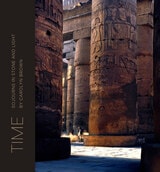
TIME
Sojourns in Stone and LightCarolyn Brown
Bridwell Press, 2026
TIME: Sojourns in Stone and Light continues Carolyn Brown’s lifelong exploration of how light, memory, and architecture converge—revealing places not simply as monuments, but as living witnesses to history.
The Children of Light and the Children of Darkness
A Vindication of Democracy and a Critique of Its Traditional DefenseReinhold Niebuhr
University of Chicago Press, 2011
The Children of Light and the Children of Darkness, first published in 1944, is considered one of the most profound and relevant works by the influential theologian Reinhold Niebuhr, and certainly the fullest statement of his political philosophy. Written and first read during the prolonged, tragic world war between totalitarian and democratic forces, Niebuhr’s book took up the timely question of how democracy as a political system could best be defended.
Most proponents of democracy, Niebuhr claimed, were “children of light,” who had optimistic but naïve ideas about how society could be rid of evil and governed by enlightened reason. They needed, he believed, to absorb some of the wisdom and strength of the “children of darkness,” whose ruthless cynicism and corrupt, anti-democratic politics should otherwise be repudiated. He argued for a prudent, liberal understanding of human society that took the measure of every group’s self-interest and was chastened by a realistic understanding of the limits of power. It is in the foreword to this book that he wrote, “Man’s capacity for justice makes democracy possible; but man’s inclination to injustice makes democracy necessary.”
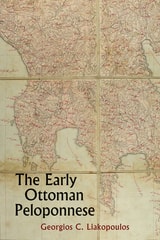
The Early Ottoman Peloponnese
A Study in the Light of an Annotated Editio Princeps of the TT10-1/14662 Ottoman Taxation Cadastre (ca. 1460–1463)Georgios C. Liakopoulos
Gingko, 2019
The book is divided into two parts, with part one covering a range of materials through an introduction and three chapters and part two consisting of a diplomatic edition of the transcribed Ottoman text. The introduction offers an orientation to the scope of the book, surveys previous scholarship conducted on the subject, and provides a historical examination of the late Byzantine Peloponnese and its conquest by the Ottomans. Accompanied by topographic and linguistic notes, Liakopoulos presents the historical geography of the Peloponnese, listing all the place-names mentioned in the sequence they appear in the TT10-1/14662 register. This is followed by a set of thirty-eight digital maps of the early Ottoman Peloponnese using GIS (Geographical Information Systems). This is followed by a discussion of the demography of the Peloponnese, including the settlement patterns, the density of population and its categorisation—urban and rural, sedentary and nomadic—concentrating on the influx and settlement of the second largest ethnic group in the peninsula: the Albanians. Liakopoulos explores the administrative and economic structures of the Peloponnese, and provides a detailed presentation their of agricultural production, fully illustrated with tables and charts.
The Fluency of Light
Coming of Age in a Theater of Black and WhiteAisha Sabatini Sloan
University of Iowa Press, 2013
The Legend of Light
Bob Hicok
University of Wisconsin Press, 1995
The Light and the Dark
(The Life and Times of Artemisia Gentileschi)Kate Hamill, Kristin Leahey
Northwestern University Press, 2026
A play from the inimitable Kate Hamill, based on the true story of the groundbreaking Italian painter Artemisia Gentileschi
During the seventeenth century, Italian artists strove to reshape the very image of humanity. Artemisia Gentileschi—the daughter of a painter—dreams of making her mark at a time when a woman is not thought capable of being an artist, let alone one of the greats. Just as her career begins to gain unexpected momentum, a series of devastating betrayals crack the foundation of her work—and her life. In electrifying verse and gorgeous artwork, The Light and The Dark depicts the deeply moving true story of a young woman who changed the very image of women in society . . . weaving a magnetic and empowering tapestry of ambition, rage, and resilience across the ages.
The Light of Christ
An Introduction to CatholicismThomas Joseph White, OP
Catholic University of America Press, 2017
At the same time, The Light of Christ also addresses topics such as evolution, the modern historical study of Jesus and the Bible, and objections to Catholic moral teaching. Touching on the concerns of contemporary readers, Fr. White examines questions such as whether Christianity is compatible with the findings of the modern sciences, do historical Jesus studies disrupt or confirm the teaching of the faith, and does history confirm the antiquity of Catholic claims.
This book serves as an excellent introduction for young professionals with no specialized background in theology who are interested in learning more about Catholicism, or as an introduction to Catholic theology. It will also serve as a helpful text for theology courses in a university context.
As Fr. White states in the book’s introduction: “This is a book that offers itself as a companion. I do not presume to argue the reader into the truths of the Catholic faith, though I will make arguments. My goal is to make explicit in a few broad strokes the shape of Catholicism. I hope to outline its inherent intelligibility or form as a mystery that is at once visible and invisible, ancient and contemporary, mystical and reasonable.”
The Light of Desire
La Luz del DeseoMarjorie Agosín
Swan Isle Press, 2009
Marjorie Agosín’s intensely personal long poem The Light of Desire is both a secular and sacred meditation on love and its meanings in the land of Israel. Following the tradition of the Song of Songs and the secular poetry of Sepharad, the beloved in The Light of Desire is both physical and metaphorical. The lovers’ bodies are the paths, the geography, leading not only from desire to sensual pleasure, but to memory and illumination. The light on the pink stones of Jerusalem, the sunlight of Galilee, from hills to the sea, the fragrant air and “mantle of stars,” all become one in this tender, rhapsodic expression of longing and desire. This is not unrequited love, but rather a reciprocal passion that brings exquisite pleasure, pain, a sense of fragility, and the hope and belief in that which is eternal.
The poem was written over a four-year span in Jerusalem’s Mishkenot Sha’ananim neighborhood, overlooking the wall of the Second Temple, and these hallowed surroundings imbued Agosín’s poetic voice. Lori Marie Carlson’s sensitive translation maintains the spirit of the original Spanish in this bilingual edition.
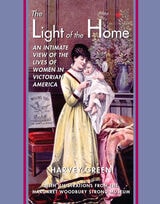
The Light of the Home
An Intimate View of the Lives of Women in Victorian AmericaHarvey Green
University of Arkansas Press, 2003
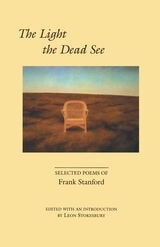
The Light the Dead See
Selected Poems of Frank StanfordFrank Stanford
University of Arkansas Press, 1991
Between 1972, when he published his first book, The Signing Knives, and 1978, when he died at the age of twenty-nine, Frank Stanford published seven volumes of poetry. Within a year of his death, two posthumous collections were published. At the time of this death, as Leon Stokesbury asserts in his introduction, “Stanford was the best poet in America under the age of thirty-five.”
The Light the Dead See collects the best work from those nine volumes and six previously unpublished poems. In the earlier poems, Stanford creates a world where he could keep childhood alive, deny time and mutability, and place a version of himself at the center of great myth and drama.
Later, the denial of time and mutability gives way to an obsessive and familiar confrontation with death. Although Stanford paid an enormous price for his growing familiarity with Death as a presence, the direct address to that presence is a source of much of the striking originality and stunning power in the poetry.

The Motion Of Light In Water
Sex And Science Fiction Writing In The East VillageSamuel R. Delany
University of Minnesota Press, 2004
Winner of the Hugo Award for Non-fiction
The unexpurgated edition of the award-winning autobiography
Born in New York City’s black ghetto Harlem at the start of World War II, Samuel R. Delany married white poet Marilyn Hacker right out of high school. The interracial couple moved into the city’s new bohemian quarter, the Lower East Side, in summer 1961. Through the decade’s opening years, new art, new sexual practices, new music, and new political awareness burgeoned among the crowded streets and cheap railroad apartments. Beautifully, vividly, insightfully, Delany calls up this era of exploration and adventure as he details his development as a black gay writer in an open marriage, with tertiary walk-ons by Bob Dylan, Stokely Carmichael, W. H. Auden, and James Baldwin, and a panoply of brilliantly drawn secondary characters.
The Presence of Light
Divine Radiance and Religious ExperienceEdited by Matthew T. Kapstein
University of Chicago Press, 2004
The essays in this volume make an important contribution to religious studies by proposing that it is misleading to conceive of religious experience in terms of an irreconcilable dichotomy between universality and cultural construction. An esteemed group of contributors, representing the study of Asian and Western religious traditions from a range of disciplinary perspectives, suggests that attention to various forms of divine radiance shows that there is indeed a range of principles that, if not universal, are nevertheless very widely occurring and amenable to fruitful comparative inquiry. What results is a work of enormous scope, demonstrating compelling cross-connections that will be of value to scholars of comparative religions, mysticism, and the relationship between art and the sacred.
Contributors:
* Catherine B. Asher
* Raoul Birnbaum
* Sarah Iles Johnston
* Matthew T. Kapstein
* Andrew Louth
* Paul E. Muller-Ortega
* Elliot R. Wolfson
* Mimi Hall Yiengpruksawan
* Hossein Ziai
The Sound of Light
A History of Gospel MusicDon Cusic
University of Wisconsin Press, 1990
The Story They Told Us of Light
PoemsRodney Jones
University of Alabama Press, 1980
The Trouble with Light
Jeremy Michael Clark
University of Arkansas Press, 2024
The Victorian Eye
A Political History of Light and Vision in Britain, 1800-1910Chris Otter
University of Chicago Press, 2008
The Victorian Eye’s innovative interdisciplinary approach—and generous illustrations—will captivate a range of readers interested in the history of modern Britain, visual culture, technology, and urbanization.
The World Is Gone
Philosophy in Light of the PandemicGregg Lambert
University of Minnesota Press, 2021
Part personal memoir, part philosophical reflection and written in the midst of the pandemic in 2021, The World Is Gone employs the Robinson Crusoe fable to launch an existential investigation of the effects of extreme isolation, profound boredom, nightly insomnia, and the fear of madness associated with the loss of a world populated by others.
Forerunners: Ideas First is a thought-in-process series of breakthrough digital publications. Written between fresh ideas and finished books, Forerunners draws on scholarly work initiated in notable blogs, social media, conference plenaries, journal articles, and the synergy of academic exchange. This is gray literature publishing: where intense thinking, change, and speculation take place in scholarship.
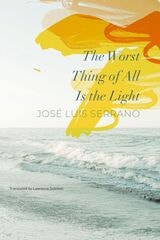
The Worst Thing of All Is the Light
José Luis Serrano
Seagull Books, 2023
The Worst Thing of All Is the Light tells two stories. First, that of the friendship of two heterosexual men, Koldo and Edorta, through the decades of the late twentieth century in Spain’s Basque Country. In the book Edorta writes in order to try and save from oblivion his relationship with Koldo—a bond for which the word “friendship” falls short yet for which he is too afraid to use the word “love.” It is the story of two men who are in love and don’t know it, or don’t want to know it. The second story is that of its author, José Luis Serrano, in the present day as he enjoys his summer holiday in the same Basque Country and talks with his husband at length about many different things, but mostly about how to narrate the relationship of Koldo and Edorta, two men who did not allow themselves to construct the domestic life that their counterparts enjoy today. Together these stories show a love that the lovers hope will outlive them, a love that is the same even if we give it different labels.
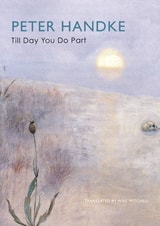
Till Day You Do Part Or A Question of Light
Peter Handke
Seagull Books, 2010
Described as an answer to or at least an echo of Samuel Beckett’s Krapp’s Last Tape?, Till Day You Do Part Or A Question of Light, by esteemed Austrian playwright and novelist Peter Handke, is a monologue delivered by the “she” in Beckett’s play. This unnamed female similarly recalls other significant women protagonists in Handke’s own work such as The Left-handed Woman. Handke prefaces the monologue in Till Day You Do PartOr a Question of Light with a description of two stone figures. While the male figure remains “as dead and gone as anyone can,” the female bursts into life, and her monologue gradually focuses on Krapp’s use of pauses and language to dominate the other characters in the Beckett play. Ultimately, however, her complaints and critique of Krapp become a declaration of her love for Krapp or at least an affirmation of their attachment, as the two of them are ultimately bound together, perhaps even inseparable.
Till Day You Do Part Or a Question of Light is Handke at his best, evidencing the great skill, psychological acumen, and vision for which his work has been celebrated.
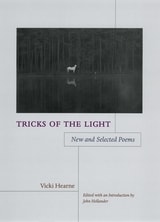
Tricks of the Light
New and Selected PoemsVicki Hearne
University of Chicago Press, 2007
The horse that, trotting with open heart
Against the wind, achieves bend and flow
Will live forever. So far, so good,
But they never do, until too late,
Bend properly and time spreads from
The momentary hesitations
Of their spines, circles their tossing necks,
Falls from their teeth like rejected oats,
Litters the ground like penitence.
This is where we come in, where the drop
Of time congeals the air and someone
Speaks to the discouraged grass . . .
Tricks of the Light explores the often fraught relationships between domestic animals and humans through mythological figurations, vibrant thought, and late-modern lyrics that seem to test their own boundaries. Vicki Hearne (1946–2001), best known and celebrated today as a writer of strikingly original poetry and prose, was a capable dog and horse trainer, and sometimes controversial animal advocate.
This definitive collection of Hearne’s poetry spans the entirety of her illustrious career, from her first book, Nervous Horses (1980), to never-before-published poems composed on her deathbed. But no matter the source, each of her meditative, metaphysical lyrics possesses that rare combination of philosophical speculation, practical knowledge of animals, and an unusually elegant style unlike that of any other poet writing today. Before her untimely death, Hearne entrusted the manuscript to distinguished poet, scholar, and long-time friend John Hollander, whose introduction provides both critical and personal insight into the poet’s magnum opus. Tricks of the Light—acute, vibrant, and deeply informed—is a sensuous reckoning of the connection between humans and the natural world.
Praise for The Parts of Light
“Hearne . . . strives to capture exactly what she knows she can't—the intense immediacy of animal consciousness, a consciousness free of the moral vagaries and intellectual preoccupations that pockmark human experience. Her style, smooth in some places, choppy in others, reflects both the wholeness of animal presence and the jarring, fragmentary nature of human reason and reflection. Hearne's poems demand participation, refuse passive enjoyment; she dares the reader to stay in the saddle.”—Publishers Weekly
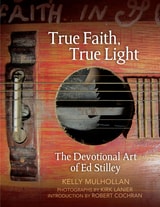
True Faith, True Light
The Devotional Art of Ed StilleyKelly Mulhollan
University of Arkansas Press, 2015
But one day Ed’s life was permanently altered. While plowing his field, he became convinced he was having a heart attack. Ed stopped his work and lay down on the ground. Staring at the sky, he saw himself as a large tortoise struggling to swim across a river. On his back were five small tortoises—his children—clinging to him for survival. And then, as he lay there in the freshly plowed dirt, Ed received a vision from God, telling him that he would be restored to health if he would agree to do one thing: make musical instruments and give them to children.
And so he did. Beginning with a few simple hand tools, Ed worked tirelessly for twenty-five years to create over two hundred instruments, each a crazy quilt of heavy, rough-sawn wood scraps joined with found objects. A rusty door hinge, a steak bone, a stack of dimes, springs, saw blades, pot lids, metal pipes, glass bottles, aerosol cans—Ed used anything he could to build a working guitar, fiddle, or dulcimer. On each instrument Ed inscribed “True Faith, True Light, Have Faith in God.”
True Faith, True Light: The Devotional Art of Ed Stilley documents Ed Stilley’s life and work, giving us a glimpse into a singular life of austere devotion.