Results by title
50 books match the query 'Literature, Medieval' and 14 start with t
Tense and Narrativity
From Medieval Performance to Modern FictionBy Suzanne Fleischman
University of Texas Press, 1990
In this pathfinding study, Suzanne Fleischman brings together theory and methodology from various quarters to shed important new light on the linguistic structure of narrative, a primary and universal device for translating our experiences into language.
Fleischman sees linguistics as laying the foundation for all narratological study, since it offers insight into how narratives are constructed in their most primary context: everyday speech. She uses a linguistic model designed for "natural" narrative to explicate the organizational structure of "artificial" narrative texts, primarily from the Middle Ages and the postmodern period, whose seemingly idiosyncratic use of tenses has long perplexed those who study them. Fleischman develops a functional theory of tense and aspect in narrative that accounts for the wide variety of functions—pragmatic as well as grammatical—that these two categories of grammar are called upon to perform in the linguistic economy of a narration.
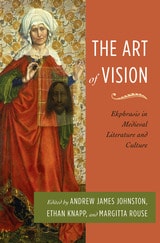
The Art of Vision
Ekphrasis in Medieval Literature and CultureEdited by Ethan Knapp, Andrew James Johnston, and Margitta Rouse
The Ohio State University Press, 2015
The essays in this volume highlight precisely the entanglements that ekphrasis suggests and/or rejects: not merely of word and image, but also of sign and thing, stasis and mobility, medieval and (early) modern, absence and presence, the rhetorical and the visual, thinking and feeling, knowledge and desire, and many more. The Art of Vision furthers our understanding of the complexities of medieval ekphrasis while also complicating later understandings of this device. As such, it offers a more diverse account of medieval ekphrasis than previous studies of medieval text–image relationships, which have normally focused on a single country, language, or even manuscript.
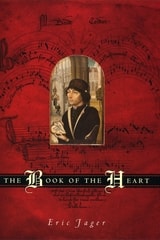
The Book of the Heart
Eric Jager
University of Chicago Press, 2000
Eric Jager traces the history and psychology of the self-as-text concept from antiquity to the modern day. He focuses especially on the Middle Ages, when the metaphor of a "book of the heart" modeled on the manuscript codex attained its most vivid expressions in literature and art. For instance, medieval saints' legends tell of martyrs whose hearts recorded divine inscriptions; lyrics and romances feature lovers whose hearts are inscribed with their passion; paintings depict hearts as books; and medieval scribes even produced manuscript codices shaped like hearts.
"The Book of the Heart provides a fresh perspective on the influence of the book as artifact on our language and culture. Reading this book broadens our appreciation of the relationship between things and ideas."—Henry Petroski, author of The Book on the Bookshelf
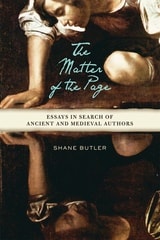
The Matter of the Page
Essays in Search of Ancient and Medieval AuthorsShane Butler
University of Wisconsin Press, 2010
Ancient and medieval literary texts often call attention to their existence as physical objects. Shane Butler helps us to understand why. Arguing that writing has always been as much a material struggle as an intellectual one, The Matter of the Page offers timely lessons for the digital age about how creativity works and why literature moves us.
Butler begins with some considerations about the materiality of the literary text, both as a process (the draft) and a product (the book), and he traces the curious history of “the page” from scroll to manuscript codex to printed book and beyond. He then offers a series of unforgettable portraits of authors at work: Thucydides struggling to describe his own diseased body; Vergil ready to burn an epic poem he could not finish; Lucretius wrestling with words even as he fights the madness that will drive him to suicide; Cicero mesmerized by the thought of erasing his entire career; Seneca plumbing the depths of the soul in the wax of his tablets; and Dhuoda, who sees the book she writes as a door, a tunnel, a womb. Butler reveals how the work of writing transformed each of these authors into his or her own first reader, and he explains what this metamorphosis teaches us about how we too should read.
All Greek and Latin quotations are translated into English and technical matters are carefully explained for general readers, with scholarly details in the notes.
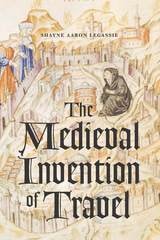
The Medieval Invention of Travel
Shayne Aaron Legassie
University of Chicago Press, 2017
Exploring this phenomenon, The Medieval Invention of Travel draws on an impressive array of sources to develop original readings of canonical figures such as Marco Polo, John Mandeville, and Petrarch, as well as a host of lesser-known travel writers. As Shayne Aaron Legassie demonstrates, the Middle Ages inherited a Greco-Roman model of heroic travel, which viewed the ideal journey as a triumph over temptation and bodily travail. Medieval travel writers revolutionized this ancient paradigm by incorporating practices of reading and writing into the ascetic regime of the heroic voyager, fashioning a bold new conception of travel that would endure into modern times. Engaging methods and insights from a range of disciplines, The Medieval Invention of Travel offers a comprehensive account of how medieval travel writers and their audiences reshaped the intellectual and material culture of Europe for centuries to come.
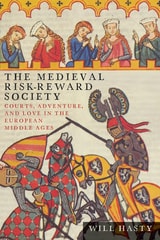
The Medieval Risk-Reward Society
Courts, Adventure, and Love in the European Middle AgesWill Hasty
The Ohio State University Press, 2016
The Medieval Risk-Reward Society: Courts, Adventure, and Love in the European Middle Ages takes a descriptive approach to the competitions in religion, politics, and poetry that are constitutive of medieval culture. Culture is considered always to be happening, and to be happening on the cultural cutting edge as competitions for rewards involving the element of chance. This study finds adventure and love—the principal concerns of medieval European romance poetry—to be cultural game changers, and thereby endeavors to make a humanist contribution to the development of a cultural game theory.
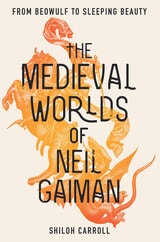
The Medieval Worlds of Neil Gaiman
From Beowulf to Sleeping BeautyShiloh Carroll
University of Iowa Press, 2023
Readers love to sink into Gaiman’s medieval worlds—but what makes them “medieval”? Shiloh Carroll offers an introduction to the idea of medievalism, how the literature and culture of the Middle Ages have been reinterpreted and repurposed over the centuries, and how the layers of interpretation have impacted Gaiman’s own use of medieval material. She examines influences from Norse mythology and Beowulf to medieval romances and fairy tales in order to expand readers’ understanding and appreciation of Gaiman’s work, as well as the rest of the medievalist films, TV shows, and books that are so popular today.
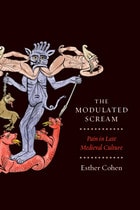
The Modulated Scream
Pain in Late Medieval CultureEsther Cohen
University of Chicago Press, 2010
In the late medieval era, pain could be a symbol of holiness, disease, sin, or truth. It could be encouragement to lead a moral life, a punishment for wrong doing, or a method of healing. Exploring the varied depictions and descriptions of pain—from martyrdom narratives to practices of torture and surgery—The Modulated Scream attempts to decode this culture of suffering in the Middle Ages.
Esther Cohen brings to life the cacophony of howls emerging from the written record of physicians, torturers, theologians, and mystics. In considering how people understood suffering, explained it, and meted it out, Cohen discovers that pain was imbued with multiple meanings. While interpreting pain was the province only of the rarified elite, harnessing pain for religious, moral, legal, and social purposes was a practice that pervaded all classes of Medieval life. In the overlap of these contradicting attitudes about what pain was for—how it was to be understood and who should use it—Cohen reveals the distinct and often conflicting cultural traditions and practices of late medieval Europeans. Ambitious and wide-ranging, The Modulated Scream is intellectual history at its most acute.

The Politics of Ecology
Land, Life, and Law in Medieval BritainEdited by Randy P. Schiff and Joseph Taylor
The Ohio State University Press, 2016
This volume, edited by Randy P. Schiff and Joseph Taylor, presents a diverse and stimulating group of interconnected essays that respond to these questions by infusing biopolitical material and theory into ecocentric studies of medieval life. The Politics of Ecology: Land, Life, and Law in Medieval Britain pursues the political power of sovereign law as it disciplines and manages various forms of natural life, and discloses the literary biopolitics played out in texts that work out the fraught interactions of life and law, in all its forms. Contributors to this volume explore such issues as legal networks and death, Arthurian bare life, Chaucerian medical biopolitics, the biopolitics of fur, ecologies of sainthood, arboreal political theology, conservation and political ecology, and geographical melancholy.
Bringing together both established and rising critical voices, The Politics of Ecology creates a place for cutting-edge medievalist ecocriticism focused on the intersections of land, life, and law in medieval English, French, and Latin literature.
The Rose and Geryon
Gabriella I. Baika
Catholic University of America Press, 2014
The Shock of Medievalism
Kathleen Biddick
Duke University Press, 1998
Biddick describes how the discipline of medieval studies was defined by a process of isolation and exclusion—a process that not only ignored significant political and cultural issues of the nineteenth century but also removed the period from the forces of history itself. Wanting to separate themselves from popular studies of medieval culture, and valuing their own studies as scientific, nineteenth-century academics created an exclusive discipline whose structure is consistently practiced today, despite the denials of most contemporary medieval scholars. Biddick supports her argument by discussing the unavowed melancholy that medieval Christians felt for Jews and by revealing the unintentional irony of nineteenth-century medievalists’ fabrication of sentimental objects of longing (such as the “gothic peasant”). The subsequent historical distortions of this century-old sentimentality, the relevance of worker dislocation during the industrial revolution, and other topics lead to a conclusion in which Biddick considers the impact of an array of factors on current medieval studies.
Simultaneously displacing disciplinary stereotypes and altering an angle of historical inquiry, The Shock of Medievalism challenges accepted thinking even as it produces a new direction for medieval studies. This book will provoke scholars in this field and appeal to readers who are interested in how historicizing processes can affect the development of academic disciplines.
The Stranger in Medieval Society
Frank. R. P. Akehurst and Stephanie Cain Van D’Elden, Editors
University of Minnesota Press, 1998
The Stranger in Medieval Society was first published in 1998. Minnesota Archive Editions uses digital technology to make long-unavailable books once again accessible, and are published unaltered from the original University of Minnesota Press editions.
The Stranger in Medieval Society examines the presence of outsiders in medieval Europe. Whether welcome or unwelcome, voluntary or involuntary, strangers appear in every society; they leave their own communities, venture into new environments, confront differences, and often spark changes. The first collection in medieval studies to concentrate on the notion of the stranger, these essays show how outsiders influenced the culture of Europe in the Middle Ages.
Among the topics explored are Edward III and Sir Gawain and the Green Knight as historical and literary instances of chivalric skill and courage; political conflict in the late French epic Renaut de Montauban; and a group of people who were doubly strangers-some thirty thousand Jews, who after being expelled from France in 1306 returned under an experimental agreement a few years later.
Contributors: William Calin, U of Florida; Susan Crane, Rutgers; Maria Dobozy, U of Utah; Edward R. Haymes, Cleveland State U; William Chester Jordan, Princeton U; Derek Pearsall, Harvard U; William D. Phillips Jr., U of Minnesota; Kathryn L. Reyerson, U of Minnesota; and Janet L. Solberg, Kalamazoo College.
F. R. P. Akehurst is professor of French in the Department of French and Italian at the University of Minnesota. Stephanie Cain Van D'Elden is director of graduate studies for the program in Germanic philology at the University of Minnesota.
This is volume 12 in the Medieval Cultures Series
The Whole Book
Cultural Perspectives on the Medieval MiscellanyStephen G. Nichols and Siegfried Wenzel, Editors
University of Michigan Press, 1996
This group of papers, edited by two well-known scholars of the medieval world, offers both general and particular approaches to the issues surrounding manuscripts produced in the medieval habit of "miscellany," works of seemingly diverse natures bound together into one volume. Julia Boffey investigates how certain poetical miscellanies came to be assembled, for example, while Sylvia Huot suggests that the miscellany had many different sorts of function and significance. Siegfried Wenzel considers a taxonomy of such collections, and A. S. G. Edwards' paper considers Bodleian Selden B.24 as an example of how the notions of canon, authorship, and attribution might come into play. Ann Matter's final chapter offers the notion that what we call "miscellanies" are likely to have an internal logic that we have been trained to miss, but can come to understand. Other contributors are Ralph Hanna III, Georg Knauer, Stephen Nichols, James J. O'Donnell, and Barbara A. Shailor.
Because The Whole Book deals not only with the content of miscellanies but also with contemporary literary principles, this volume will be of interest to a wide circle of literary critics and historians, as well as to students of the survival of literature and of cultural values.
Stephen G. Nichols is James M. Beall Professor of French and Chair of the Department of French, The Johns Hopkins University. Siegfried Wenzel is Professor of English, University of Pennsylvania.
Translation Effects
Language, Time, and Community in Medieval EnglandMary Kate Hurley
The Ohio State University Press, 2021