Results by title
97 books match the query 'Louisiana' and 11 start with t
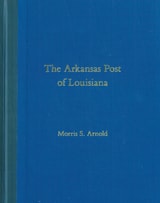
The Arkansas Post of Louisiana
Morris S. Arnold
University of Arkansas Press, 2017
Arkansas Post, the first European settlement in what would become Jefferson’s Louisiana, had an important mission as the only settlement between Natchez and the Illinois Country, a stretch of more than eight hundred miles along the Mississippi River. The Post was a stopping point for shelter and supplies for those travelling by boat or land, and it was of strategic importance as well, as it nurtured and sustained a crucial alliance with the Quapaw Indians, the only tribe that occupied the region.
The Arkansas Post of Louisiana covers the most essential aspects of the Post’s history, including the nature of the European population, their social life, the economy, the architecture, and the political and military events that reflected and shaped the Post’s mission.
Beautifully illustrated with maps, portraits, lithographs, photographs, documents, and superb examples of Quapaw hide paintings, The Arkansas Post of Louisiana is a perfect introduction to this fascinating place at the confluence of the Arkansas and Mississippi Rivers, a place that served as a multicultural gathering spot, and became a seminal part of the history of Arkansas and the nation.
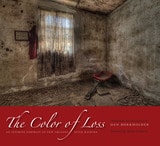
The Color of Loss
An Intimate Portrait of New Orleans after KatrinaPhotographs and introduction by Dan Burkholder
University of Texas Press, 2008
The devastation of New Orleans after Hurricane Katrina has been imprinted in our collective visual memory by thousands of images in the media and books of dramatic photographs by Robert Polidori, Larry Towell, Chris Jordan, Debbie Fleming Caffrey, and others. New Orleanians want the world to see and respond to the destruction of their city and the suffering of its people—and yet so many images of so much destruction threaten a visual and emotional overload that would tempt us to avert our eyes and become numb.
In The Color of Loss, Dan Burkholder presents a powerful new way of seeing the ravaged homes, churches, schools, and businesses of New Orleans. Using an innovative digital photographic technology called high dynamic range (HDR) imaging, in which multiple exposures are artistically blended to bring out details in the shadows and highlights that would be hidden in conventional photographs, he creates images that are almost like paintings in their richness of color and profusion of detail. Far more intense and poetic than purely documentary photographs, Burkholder's images lure viewers to linger over the artifacts of people's lives—a child's red wagon abandoned in a mud-caked room, a molding picture of Jesus—to fully understand the havoc thrust upon the people of New Orleans.
In the deserted, sinisterly beautiful rooms of The Color of Loss, we see how much of the splendor and texture of New Orleans washed away in the flood. This is the hidden truth of Katrina that Dan Burkholder has revealed.
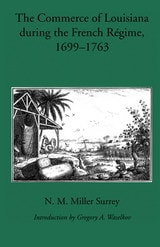
The Commerce of Louisiana During the French Regime, 1699-1763
N. M. Miller Surrey, with an introduction by Gregory A. Waselkov
University of Alabama Press, 2006
By the time French colonists sought a portion of the New World’s riches, much of those resources had already been claimed by Spain and Portugal. Once settled in North America, however, they quickly turned their attentions to commerce, specifically to trade within the Louisiana region. For almost 65 years French explorers, soldiers, administrators, and accountants focused on establishing a string of forts and small villages at key points in the Mississippi and Illinois River valleys, eastward to the Mobile River drainage, and westward toward New Mexico. Despite a long and costly war at home, for a time it looked as though the French would be successful in controlling a vast swath of the middle of North America with routes stretching from Quebec City to New Orleans.
Under the guidance of leaders such as LaSalle, Joliet, Father Marquette, Frontenac, Hennepin, and Bienville, the French made a good start in the lucrative trading business and established working relationships with most of the Indians of the region. But by 1763, with war in Europe and a faltering economy at home, commerce in the New World eroded along with the ability of the French to control the region and to protect their investments from the encroachment of the Spanish and English.

The Confederate Belle
Giselle Roberts
University of Missouri Press, 2003
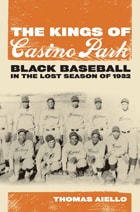
The Kings of Casino Park
Black Baseball in the Lost Season of 1932Thomas Aiello
University of Alabama Press, 2011
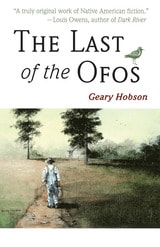
The Last of the Ofos
Geary Hobson
University of Arizona Press, 2000
In this subtle but inventive novel, presented as Thomas's memoirs, Geary Hobson offers us a glimpse into a life filled with simple joys and sorrows. In relating his Louisiana childhood, Thomas recalls not just school-learning but being taught Indian ways by the small Ofo community. He tells of his life as a roustabout in the oil fields, of his courtship of the rambunctious Sally Fachette, and of his career as a bootlegger, which landed him in prison. We share Thomas's wartime stint with the Marines—where "for the first time in my life I was treated like a equal"—and his life as a farm laborer and a Hollywood extra portraying warbonneted Cheyennes. Then in his later years, when he truly has become the last of his kind, we find Thomas recruited by an anthropologist from the Smithsonian Institution to preserve his people's culture. In Washington, he is exposed to the vagaries of Indian policy and the emerging Native American movement.
Throughout Thomas's story, readers are introduced to a wide-ranging cast of characters, from the outlaws Bonnie and Clyde to a fellow Marine who is wary of Indians, to an uppity anthropologist who doesn't consider Thomas "expert" enough to handle an Ofo flute. Always poor in material wealth but rich in heritage, Thomas Darko is a Native American Everyman whose identity is shaped by family and homeland. His "autobiography" paints a realistic portrait of an Indian confronting the obstacles in his life and the dilemmas of his age as his story reveals the painful legacy of being the last of one's kind.
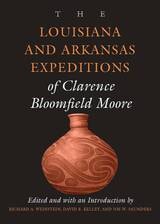
The Louisiana and Arkansas Expeditions of Clarence Bloomfield Moore
Clarence Bloomfield Moore
University of Alabama Press, 2004
A Dan Josselyn Memorial Publication
The ninth and final volume in the C.B. Moore reprint series that covers archaeological discoveries along North American Waterways.
Clarence B. Moore (1852-1936), a wealthy Philadelphia socialite, paper company heir, and photographer, made the archaeology of the Southeast his passion. Beginning in the 1870s, Moore systematically explored prehistoric sites along the major waterways of the region, from the Ohio River south to Florida and as far west as Texas, publishing his findings, at his own expense, with the Academy of Natural Sciences of Philadelphia.
This volume, the final in a series of nine, includes Moore’s investigations along waterways of Arkansas and Louisiana—the Ouachita, Red, Saline, Black, Tensas, and Atchafalaya Rivers—in three complete field sessions ending in 1909, 1912, and 1913. He located and mapped more than 185 mounds and cemeteries. Artifacts recovered in this territory, such as ceramic effigy pots, earthenware pipes, arrowheads, celts, and projectile points, include some of the most important ones discovered by Moore in his 47 years of excavating. Included in this volume is a CD containing the 69 color illustrations from all the original expedition volumes.
The elaborate earthwork of Poverty Point, located in West Carroll Parish, Louisiana, is perhaps the most remarkable archaeological site presented in the volume. In some cases, Moore documented sites along the tributaries that have since been destroyed by river action or looters. In other cases, the National Register of Historic Sites and concerned landowners in Arkansas and Louisiana have preserved the record of aboriginal peoples and their life ways that was first illuminated by Moore's sophisticated study.

The Neoliberal Deluge
Hurricane Katrina, Late Capitalism, and the Remaking of New OrleansCedric Johnson
University of Minnesota Press, 2011
Katrina was not just a hurricane. The death, destruction, and misery wreaked on New Orleans cannot be blamed on nature’s fury alone. This volume of essays locates the root causes of the 2005 disaster squarely in neoliberal restructuring and examines how pro-market reforms are reshaping life, politics, economy, and the built environment in New Orleans.
The authors—a diverse group writing from the disciplines of sociology, political science, education, public policy, and media theory—argue that human agency and public policy choices were more at fault for the devastation and mass suffering experienced along the Gulf Coast than were sheer forces of nature. The harrowing images of flattened homes, citizens stranded on rooftops, patients dying in makeshift hospitals, and dead bodies floating in floodwaters exposed the moral and political contradictions of neoliberalism—the ideological rejection of the planner state and the active promotion of a new order of market rule.
Many of these essays offer critical insights on the saga of postdisaster reconstruction. Challenging triumphal narratives of civic resiliency and universal recovery, the authors bring to the fore pitched battles over labor rights, gender and racial justice, gentrification, the development of city master plans, the demolition of public housing, policing, the privatization of public schools, and roiling tensions between tourism-based economic growth and neighborhood interests. The contributors also expand and deepen more conventional critiques of “disaster capitalism” to consider how the corporate mobilization of philanthropy and public good will are remaking New Orleans in profound and pernicious ways.
Contributors: Barbara L. Allen, Virginia Polytechnic U; John Arena, CUNY College of Staten Island; Adrienne Dixson, Ohio State U; Eric Ishiwata, Colorado State U; Avis Jones-Deweever, National Council of Negro Women; Chad Lavin, Virginia Polytechnic U; Paul Passavant, Hobart and William Smith Colleges; Linda Robertson, Hobart and William Smith Colleges; Chris Russill, Carleton U; Kanchana Ruwanpura, U of Southampton; Nicole Trujillo-Pagán, Wayne State U; Geoffrey Whitehall, Acadia U.

The Parker Sisters
A Border KidnappingLucy Maddox
Temple University Press, 2016
In The Parker Sisters, Lucy Maddox gives an eloquent, urgent account of the tragic kidnapping of these young women. Using archival news and courtroom reports, Maddox tells the larger story of the disastrous effect of the Fugitive Slave Act on the small farming communities of Chester County and the significant, widening consequences for the state and the nation.
The Parker Sisters is also a story about families whose lives and fates were deeply embedded in both the daily rounds of their community and the madness and violence consuming all of antebellum America. Maddox’s account of this horrific and startling crime reveals the strength and vulnerability of the Parker sisters and the African American population.
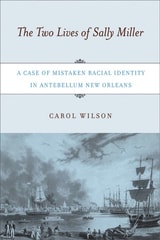
The Two Lives of Sally Miller
A Case of Mistaken Racial Identity in Antebellum New OrleansWilson, Carol
Rutgers University Press, 2007
In 1843, the Louisiana Supreme Court heard the case of a slave named Sally Miller, who claimed to have been born a free white person in Germany. Sally, a very light-skinned slave girl working in a New Orleans caf, might not have known she had a case were it not for a woman who recognized her as Salom Muller, with whom she had emigrated from Germany over twenty years earlier. Sally decided to sue for her freedom, and was ultimately freed, despite strong evidence contrary to her claim.
In The Two Lives of Sally Miller, Carol Wilson explores this fascinating legal case and its reflection on broader questions about race, society, and law in the antebellum South. Why did a court system known for its extreme bias against African Americans help to free a woman who was believed by many to be a black slave? Wilson explains that while the notion of white enslavement was shocking, it was easier for society to acknowledge that possibility than the alternative-an African slave who deceived whites and triumphed over the system.
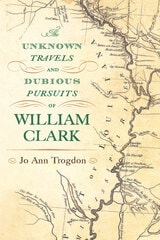
The Unknown Travels and Dubious Pursuits of William Clark
Jo Ann Trogdon
University of Missouri Press, 2023
In this vivid history, Jo Ann Trogdon reveals William Clark’s highly questionable activities during the years before his famous journey west of the Mississippi. Delving into the details of Clark’s diary and ledger entries, Trogdon investigates evidence linking Clark to a series of plots—often called the Spanish Conspiracy—in which corrupt officials sought to line their pockets with Spanish money and to separate Kentucky from the United States. The Unknown Travels and Dubious Pursuits of William Clark gives readers a more complex portrait of the American icon than has been previously written.