Results by title
124 books match the query 'Macroeconomics' and 20 start with t
The Anti-Capitalist Chronicles
David Harvey
Pluto Press, 2020
Amidst waves of economic crises, health crises, class struggle and neo-fascist reaction, few possess the clarity and foresight of world-renowned theorist, David Harvey. Since the publication of his bestselling A Brief History of Neoliberalism, Harvey has been tracking the evolution of the capitalist system as well as tides of radical opposition rising against it. In The Anti-Capitalist Chronicles, Harvey introduces new ways of understanding the crisis of global capitalism and the struggles for a better world.
While accounting for violence and disaster, Harvey also chronicles hope and possibility. By way of conversations about neoliberalism, capitalism, globalization, the environment, technology, social movements and crises like COVID-19, he outlines, with characteristic brilliance, how socialist alternatives are being imagined under very difficult circumstances.
In understanding the economic, political and social dimensions of the crisis, Harvey’s analysis in The Anti-Capitalist Chronicles will be of strategic importance to anyone wanting to both understand and change the world.

The Causes and Consequences of Increasing Inequality
Edited by Finis Welch
University of Chicago Press, 2001
This volume draws together a panel of distinguished scholars who address these issues in terms comprehensible to noneconomists. Their findings are surprising, suggesting that factors such as trade imbalances, immigration rates, and differences in educational resources do not account for recent increases in the inequality of wealth and earnings. Rather, the contributors maintain that these discrepancies can be attributed to workplace demand for high-skilled labor. They also insist that further research must examine the organization of industry in order to better understand the concurrent devaluation of manual labor.
Addressing a topic that is of considerable public interest, this collection helps move the issue of increasing economic inequality in America to the center of the public policy arena.
Contributors: Donald R. Deere, Claudia Goldin, Lawrence F. Katz, James P. Smith, Franco Peracchi, Gary Solon, Eric A. Hanushek, Julie A. Somers, Marvin H. Kosters, William Cline, Finis Welch, Angus Deaton, Charles Murray, Kevin Murphy

The Economics of Transformative AI
Edited by Ajay Agrawal, Erik Brynjolfsson, and Anton Korinek
University of Chicago Press, 2026
A thought-provoking examination of how AI might either spur or harm human economic progress.
What happens to an economy when machines can think as well as, or even better than, humans? The Economics of Transformative AI tackles this issue, which is one of the most consequential economic questions of our time. This book brings together sixteen research studies from top economists that look closely at how transformative AI reshapes everything from innovation and market structure to employment, inequality, and human purpose. They explore both opportunities, such as personalized algorithmic assistance, accelerated scientific discovery, and new forms of organization, and profound challenges, including potential labor displacement, rising concentration of power, changes in the information ecosystem, and even possible existential risks to humanity.
The studies in this volume develop economic frameworks for understanding the conditions under which AI might enhance or undermine human flourishing. They offer policymakers, researchers, and business leaders the analytical tools needed to prepare for the potential economic transformations ahead.
The Great Depression
An International Disaster of Perverse Economic PoliciesThomas E. Hall and J. David Ferguson
University of Michigan Press, 1998
The Great Inflation
The Rebirth of Modern Central BankingEdited by Michael D. Bordo and Athanasios Orphanides
University of Chicago Press, 2013
The Lost Forms of Economic Knowledge
On the Balance of Living BeingsArnaud Orain
University of Chicago Press, 2026
Traces the early history of economic knowledge developed by thinkers between the sixteenth and eighteenth centuries.
Starting with the sixteenth century, The Lost Forms of Economic Knowledge investigates the origins and prehistory of economic thought before the emergence of political economy as an autonomous discipline in the late eighteenth century. In this book, the celebrated French historian Arnaud Orain argues that these “lost forms” of economic knowledge represent an important alternative to our modern system of numerical abstraction and market manipulation.
As Orain shows, older approaches to the economy defined it as a relationship between humans and their specific environment. These earlier mindsets sought to advance vernacular knowledge by turning to a variety of figures—naturalists, artisans, farmers, and merchants—to learn how to take advantage of the environment without depleting it. The goal of these inquiries was not to maximize profit but to determine how to allow humans to satisfy basic needs and live in harmony with nature. Now, at a time in which natural resources are fast depleting, Orain argues that we could do worse than consider the alternative approaches to “economics” that lie in our past, and that might still be available in the future.
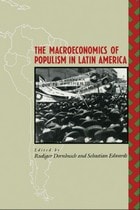
The Macroeconomics of Populism in Latin America
Edited by Rudiger Dornbusch and Sebastian Edwards
University of Chicago Press, 1991
Economists and political scientists from the United States and Latin America detail in this volume how and why such programs go wrong and what leads policymakers to repeatedly adopt these policies despite a history of failure. Authors examine this pattern in Argentina, Brazil, Chile, Mexico, Nicaragua, and Peru—and show how Colombia managed to avoid it. Despite differences in how each country implemented its policies, the macroeconomic consequences were remarkably similar.
Scholars of Latin America will find this work a valuable resource, offering a distinctive macroeconomic perspective on the continuing controversy over the dynamics of populism.
The Measure of Economies
Measuring Productivity in an Age of Technological ChangeEdited by Marshall B. Reinsdorf and Louise Sheiner
University of Chicago Press, 2024
Innovative new approaches for improving GDP measurement to better gauge economic productivity.
Official measures of gross domestic product (GDP) indicate that productivity growth has declined in the United States over the last two decades. This has led to calls for policy changes from pro-business tax reform to stronger antitrust measures. But are our twentieth-century economic methods actually measuring our twenty-first-century productivity?
The Measure of Economies offers a synthesis of the state of knowledge in productivity measurement at a time when many question the accuracy and scope of GDP. With chapters authored by leading economic experts on topics such as the digital economy, health care, and the environment, it highlights the inadequacies of current practices and discusses cutting-edge alternatives.
Pragmatic and forward-facing, The Measure of Economies is an essential resource not only for social scientists, but also for policymakers and business leaders seeking to understand the complexities of economic growth in a time of rapidly evolving technology.
The Measurement of Saving, Investment, and Wealth
Edited by Robert E. Lipsey and Helen Stone Tice
University of Chicago Press, 1989
Contributors to this volume investigate ways to improve aggregate and sectoral saving and investment estimates and analyze microdata from recent household wealth surveys. They provide analyses of National Income and Product Account (NIPA) and Flow-of-Funds measures and of saving and survey-based wealth estimates. Conceptual and methodological questions are discussed regarding long-term trends in the U.S. wealth inequality, age-wealth profiles, pensions and wealth distribution, and biases in inferences about life-cycle changes in saving and wealth. Some new assessments are offered for investment in human and nonhuman capital, the government contribution to national wealth, NIPA personal and corporate saving, and banking imputation.
The Money Illusion
Market Monetarism, the Great Recession, and the Future of Monetary PolicyScott Sumner
University of Chicago Press, 2021
Is it possible that the consensus around what caused the 2008 Great Recession is almost entirely wrong? It’s happened before. Just as Milton Friedman and Anna Schwartz led the economics community in the 1960s to reevaluate its view of what caused the Great Depression, the same may be happening now to our understanding of the first economic crisis of the 21st century.
Forgoing the usual relitigating of problems such as housing markets and banking crises, renowned monetary economist Scott Sumner argues that the Great Recession came down to one thing: nominal GDP, the sum of all nominal spending in the economy, which the Federal Reserve erred in allowing to plummet. The Money Illusion is an end-to-end case for this school of thought, known as market monetarism, written by its leading voice in economics. Based almost entirely on standard macroeconomic concepts, this highly accessible text lays the groundwork for a simple yet fundamentally radical understanding of how monetary policy can work best: providing a stable environment for a market economy to flourish.
The Money Problem
Rethinking Financial RegulationMorgan Ricks
University of Chicago Press, 2016
In The Money Problem, Morgan Ricks addresses all of these questions and more, offering a practical yet elegant blueprint for a modernized system of money and banking—one that, crucially, can be accomplished through incremental changes to the United States’ current system. He brings a critical, missing dimension to the ongoing debates over financial stability policy, arguing that the issue is primarily one of monetary system design. The Money Problem offers a way to mitigate the risk of catastrophic panic in the future, and it will expand the financial reform conversation in the United States and abroad.
The National Balance Sheet of the United States, 1953-1980
Raymond W. Goldsmith
University of Chicago Press, 1982
The most comprehensive and extensive study of national wealth ever attempted, The National Balance Sheet will be a rich resource for researchers and users of national accounts.
The Power to Destroy
How Bad Economics Drove America’s DeclineJames K. Galbraith
University of Chicago Press, 2026
Acclaimed economist James K. Galbraith sounds an urgent alarm: how conventional economic ideas and policies are unequipped to account for the most daunting challenges of our geopolitical moment.
Amid a mounting sense of American decline, Americans live with a new kind of dissonance: economists announcing that everything is fundamentally fine. Where growth is steady, unemployment is low, prices are (somewhat) stable, and stocks are high—what’s there to worry about?
The Power to Destroy shows that this dissonance reflects a failure to evolve. James K. Galbraith’s incisive history of economic policy in this century is grounded in the fundamental problem that today’s experts are still deploying tools from all yesterday’s wars: obsolete economic ideas, measures, and doctrines focused on market functioning and crude economic indicators like output and prices. These methods, many of them honed a century ago against a vastly different social landscape, offer little hope in the face of today’s more existential threats.
Such conventional policies, Galbraith argues, are increasingly ill-equipped to counter the daunting challenges of our moment—from inflation to trade sanctions, industrial cold wars, and climate change—and, left unacknowledged, are accelerating the end of the US economy as we know it. Shortcomings include the weak responses to the inflation of 2021-2022; the sanctions war against Russia; the rise of China; the weak and ineffective attempt at industrial revival; and the impending demographic crisis. All have roots in a flawed body of outdated economic thought that has been sustained for ideological rather than practical reasons. They now promise to hinder the United States in the emerging multipolar world.
As Galbraith makes plain, for all the virtues of the market system, governments and their policies make markets possible. The ideas behind the policies—for better or worse—will determine the fate of the US economy—and new and better ideas are urgently needed. The alternative—sticking with economic ideas and policies we know and currently use—brings the power to destroy us all.
The Pure Theory of Capital
F. A. Hayek
University of Chicago Press, 2007
The Pure Theory of Capital, F. A. Hayek’s long-overlooked, little-understood volume, was his most detailed work in economic theory. Originally published in 1941 when fashionable economic thought had shifted to John Maynard Keynes, Hayek’s manifesto of capital theory is now available again for today’s students and economists to discover.
With a new introduction by Hayek expert Lawrence H. White, who firmly situates the book not only in historical and theoretical context but within Hayek’s own life and his struggle to complete the manuscript, this edition commemorates the celebrated scholar’s last major work in economics. Offering a detailed account of the equilibrium relationships between inputs and outputs in an economy, Hayek’s stated objective was to make capital theory—which had previously been devoted almost entirely to the explanation of interest rates—“useful for the analysis of the monetary phenomena of the real world.” His ambitious goal was nothing less than to develop a capital theory that could be fully integrated into the business cycle theory.
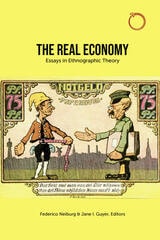
The Real Economy
Essays in Ethnographic TheoryEdited by Federico Neiburg and Jane I. Guyer
HAU, 2020
An ambitious anthropology of economy, this volume questions how assemblages of vernacular and scientific realizations and enactments of the economy are linked to ideas of truth and moral value; how these multiple and shifting realities become present and entangle with historically and socially situated lives; and how the formal realizations of the concept of the “real” in the governance of economies engage with the experiential lives of ordinary people. Featuring essays from some of the world’s most prominent economic anthropologists, The Real Economy is a milestone collection in economic anthropology that crosses disciplinary boundaries and adds new life to social studies of the economy.
The Technology of Transition
Science and Technology Policies for Transition CountriesDavid A. Dyker
Central European University Press, 1997

The Total Incomes System of Accounts
Robert Eisner
University of Chicago Press, 1989
Eisner counts nonmarket as well as market production, including vast amounts of services produced by housewives and others in the home, capital formation by government and households as well as business, human and intangible capital invested in education, R&D, and health care, as well as tangible capital. He offers measures of net revaluations of tangible assets, redefines the critical boundaries between final and intermediate outputs, and presents separate sector accounts for business, nonprofit institutions, government, government enterprises and households, which make clear the major contributions of nonbusiness sectors to our total national income.
For these and other extensions, Eisner's TISA offers detailed and comprehensive income and product accounts in current dollars and product accounts in constant dollars for all of the years from 1946 to 1981, along with measures of capital stocks. Estimates of consumption, investment, and production functions with the new data sets, a review of other sets of extended accounts, and a detailed description of sources and methods are also provided.
The U.S. National Income and Product Accounts
Selected TopicsMurray F. Foss
University of Chicago Press, 1983
The United States in the World Economy
Edited by Martin Feldstein
University of Chicago Press, 1988
Tyranny of the Market
A Critique of Theoretical FoundationsDouglas Vickers
University of Michigan Press, 1995