Results by title
133 books match the query 'Mammals' and 27 start with t
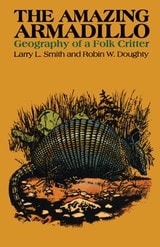
The Amazing Armadillo
Geography of a Folk CritterBy Larry L. Smith and Robin W. Doughty
University of Texas Press, 1984
Perhaps no creature has so fired the imagination of a populace as the armadillo—that most ungainly, awkward, and timid little animal. Its detractors call it a varmint and wish it good speed from the Lone Star State and its other natural territories. But its supporters claim that it is the animal kingdom's representative of all that's truly Texan: tough, pioneering, adaptable, and generous in sharing its habitation with others. What is it that sets this quizzical little creature apart from the rest of the animal kingdom?
Larry L. Smith and Robin W. Doughty ably answer this question in The Amazing Armadillo: Geography of a Folk Critter. This informative book traces the spread of the nine-banded armadillo from its first notice in South Texas late in the 1840s to its current range east to Florida and north to Missouri. The authors look at the armadillo's natural history and habitat as well as the role of humans in promoting its spread, projecting that the animal is increasing in both range and number, continuing its ecological success in areas where habitat and climate are favorable.
The book also contributes to a long-standing research theme in geography—the relationship between humans and wildlife. It explores the armadillo's value to the medical community in current research in Hansen's Disease (leprosy) as well as commercial uses, and abuses, of the armadillo in recent times. Of particular note is the author's engaging look at the armadillo as a symbol of popular culture, the efforts now underway to make it a "totem animal" symbolizing the easy-going lifestyles of some Sunbelt cities, and the spread of the craze for armadilliana to other urban centers.
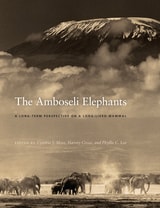
The Amboseli Elephants
A Long-Term Perspective on a Long-Lived MammalEdited by Cynthia J. Moss, Harvey Croze, and Phyllis C. Lee
University of Chicago Press, 2011
Elephants have fascinated humans for millennia. Aristotle wrote of them with awe; Hannibal used them in warfare; and John Donne called the elephant “Nature’s greatest masterpiece. . . . The only harmless great thing.” Their ivory has been sought after and treasured in most cultures, and they have delighted zoo and circus audiences worldwide for centuries. But it wasn’t until the second half of the twentieth century that people started to take an interest in elephants in the wild, and some of the most important studies of these intelligent giants have been conducted at Amboseli National Park in Kenya.
The Amboseli Elephants is the long-awaited summation of what’s been learned from the Amboseli Elephant Research Project (AERP)—the longest continuously running elephant research project in the world. Cynthia J. Moss and Harvey Croze, the founders of the AERP, and Phyllis C. Lee, who has been closely involved with the project since 1982, compile more than three decades of uninterrupted study of over 2,500 individual elephants, from newborn calves to adult bulls to old matriarchs in their 60s. Chapters explore such topics as elephant ecosystems, genetics, communication, social behavior, and reproduction, as well as exciting new developments from the study of elephant minds and cognition. The book closes with a view to the future, making important arguments for the ethical treatment of elephants and suggestions to aid in their conservation.
The most comprehensive account of elephants in their natural environment to date, The Amboseli Elephants will be an invaluable resource for scientists, conservationists, and anyone interested in the lives and loves of these extraordinary creatures.

The Black-Tailed Prairie Dog
Social Life of a Burrowing MammalJohn L. Hoogland
University of Chicago Press, 1995
Hoogland documents interactions within and among families of prairie dogs to examine the advantages and disadvantages of coloniality. By addressing such topics as male and female reproductive success, inbreeding, kin recognition, and infanticide, Hoogland offers a broad view of conflict and cooperation. Among his surprising findings is that prairie dog females sometimes suckle, and at other times kill, the offspring of close kin.
Enhanced by more than 100 photographs, this book illuminates the social organization of a burrowing mammal and raises fundamental questions about current theory. As the most detailed long-term study of any social rodent, The Black-Tailed Prairie Dog will interest not only mammalogists and other vertebrate biologists, but also students of behavioral and evolutionary ecology.
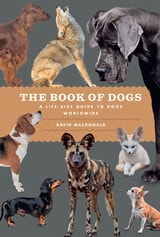
The Book of Dogs
A Life-Size Guide to Canids WorldwideDavid W. Macdonald
University of Chicago Press, 2026
For all dog lovers, a stunningly illustrated and scientifically informed global guide to our beloved canine companions and their wild kin.
Dogs are spectacularly diverse. From the world’s smallest wild canid, the diminutive fennec fox, to the majestic grey wolf, and from the towering great Dane to the tiny Chihuahua, The Book of Dogs celebrates the connections between humans’ best friends, their ancestors, and their wild cousins, offering insights into both wild and domestic canines and profiling every related species in the dog family Canidae as well as the vast variety of domestic dog breeds.
No other book so comprehensively and globally covers the most widespread family of carnivore species, helping to show that humans’ companions are part of a much larger animal world. Leading canid expert and award-winning author David W. Macdonald accessibly explains developments in the study of genetics to reveal the ancestry of modern canids and the astonishing hybridization among them. In addition to showcasing the diversity of our planet’s dogs, the book presents the latest research on the ecology, behavior, and society of wild dog species. These compelling descriptions with beautiful photographs—including life-size snout images of each of the thirty-seven wild canid species and over two hundred global breeds—offer readers of The Book of Dogs a chance to meet and understand our companions and their kin like never before.
The Buffalo Book
The Full Saga Of The American AnimalDavid A. Dary
Ohio University Press, 1989
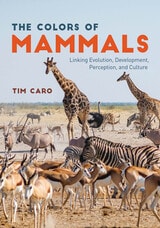
The Colors of Mammals
Linking Evolution, Development, Perception, and CultureTim Caro
University of Chicago Press, 2026
A principal coloration scientist offers a comprehensive and beautifully illustrated synthesis of coloration in mammals, weaving together contemporary research on evolution, underlying genetics, visual systems, and relevance to humans.
Why are giant pandas black and white, mandrills red and blue, but mice brown? How do mammalian colors and patterns develop? And why do we see in three colors, but deer do not? A cadre of evolutionary scientists, including geneticists, behavioral ecologists, visual ecologists, and anthropologists has worked for over a century to answer these and other questions about the origin and functions of mammal coloration in nature. One of them is celebrated biologist Tim Caro, who has studied animal coloration for over three decades. In this landmark book, he presents a synthesis of experimental and observational studies to explain how and why animal coloration has evolved for three primary reasons: protection against predators, communication, and to respond to environmental factors. Furthermore, Caro provides accessible descriptions of the various genetic and visual mechanisms that have shaped mammals’ extraordinarily diverse colors and patterns.
Victorian naturalists were the first to recognize that coloration influences individuals’ survival and reproduction, and this led to an explosion of research on its adaptive significance a century later. Then, at the beginning of the twentieth century, biologists began to work on the genomic and developmental basis of coloration. Since then, genetic studies on model organisms, particularly mice, have led to a deep understanding of the genes regulating the production of melanin pigments and lately, pattern formation. Simultaneously, scientists have studied organisms’ color perception. However, these functional, molecular, and mechanistic approaches rarely overlap, as they historically emanate from different areas of science. In this book, Caro ties these areas of research together for the first time. Caro outlines perception and production of color; teases apart different aspects of protective coloration; discusses social and sexual signaling; explores environmental drivers of coloration in nonhuman mammals, including domesticated species; and discusses human biology and our use of color in clothing. The resulting volume offers readers both a holistic view of today’s science and an honest assessment of the remaining questions for future research.
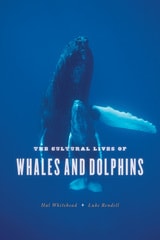
The Cultural Lives of Whales and Dolphins
Hal Whitehead and Luke Rendell
University of Chicago Press, 2014
Unequivocally: yes. In The Cultural Lives of Whales and Dolphins, cetacean biologists Hal Whitehead, who has spent much of his life on the ocean trying to understand whales, and Luke Rendell, whose research focuses on the evolution of social learning, open an astounding porthole onto the fascinating culture beneath the waves. As Whitehead and Rendell show, cetacean culture and its transmission are shaped by a blend of adaptations, innate sociality, and the unique environment in which whales and dolphins live: a watery world in which a hundred-and-fifty-ton blue whale can move with utter grace, and where the vertical expanse is as vital, and almost as vast, as the horizontal.
Drawing on their own research as well as a scientific literature as immense as the sea—including evolutionary biology, animal behavior, ecology, anthropology, psychology, and neuroscience—Whitehead and Rendell dive into realms both humbling and enlightening as they seek to define what cetacean culture is, why it exists, and what it means for the future of whales and dolphins. And, ultimately, what it means for our future, as well.
The Deer and the Tiger
George B. Schaller
University of Chicago Press, 1984
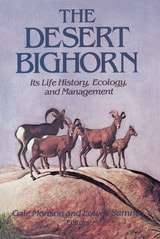
The Desert Bighorn
Its Life History, Ecology, and ManagementGale Monson
University of Arizona Press, 1980
"An intelligently researched and fully documented analysis of this noble rock-climber's life history, and ecology, and the human management of this nearly impossible-to-manage wilderness species." —American Field
"An outstanding and comprehensive work." —Books of the Southwest
"There is quite simply nothing else around that can tell you anywhere near as much about desert sheep, by anywhere near so distinguished a crew of authors." —Safari
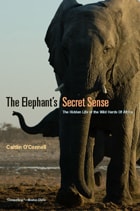
The Elephant's Secret Sense
The Hidden Life of the Wild Herds of AfricaCaitlin O'Connell
University of Chicago Press, 2008
This compelling odyssey of scientific discovery is also a frank account of fieldwork in a poverty-stricken, war-ravaged country. In her attempts to study an elephant community, O’Connell encounters corrupt government bureaucrats, deadly lions and rhinos, poachers, farmers fighting for arable land, and profoundly ineffective approaches to wildlife conservation. The Elephant’s Secret Sense is ultimately a story of intellectual courage in the face of seemingly insurmountable obstacles.
“I was transported by the author’s superbly sensuous descriptions of her years spent studying the animals. . . . Conjures a high-class nature documentary film in prose.”—Steven Poole, Guardian
“A ride as rough and astonishing as the roads of the African floodplain.”—Joan Keener, Entertainment Weekly
“A successful combination of science and soulfulness, explaining her groundbreaking theory of how elephants use seismic communication. . . . O’Connell’s account is studded with sympathetic insights and well-turned phrases.”—Publishers Weekly
“This fascinating book reads like a fast-paced detective story of a scientific discovery and adventure set in contemporary Africa. . . . By the end, O’Connell takes her rightful place among the leading biographers of the African elephant.”—Iain Douglas-Hamilton, author of Among the Elephants
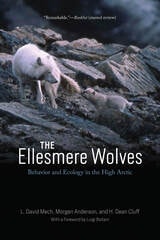
The Ellesmere Wolves
Behavior and Ecology in the High ArcticL. David Mech, Morgan Anderson, and H. Dean Cluff
University of Chicago Press, 2025
For parts of twenty-four summers, wolf biologist L. David Mech lived with a group of wolves on Ellesmere Island, some six hundred miles from the North Pole. Elsewhere, most wolves flee from even the scent of humans, but these animals, evolving relatively free from human persecution, are unafraid. Having already spent twenty-eight years studying other populations of wolves more remotely by aircraft, snow-tracking, live-trapping, and radio-tracking, Mech was primed to join their activities up close and record their interactions with each other. This book tells the remarkable story of what Mech—and the researchers who followed him—have learned while living among the wolves.
The Ellesmere wolves were so unconcerned with Mech’s presence that they allowed him to camp near their den and to sit on his all-terrain vehicle as he observed them, watching packs as large as seven adults and six pups go about their normal activities. In these extraordinarily close quarters, a pup untying his bootlace or an adult sniffing his gloved hand was just part of daily life. Mech accompanied the wolves on their travels and watched as they hunted muskoxen and arctic hares. By achieving the same kind of intimacy with his wild hosts’ every action that we might experience living with domesticated dogs, Mech gained new insights into common but rarely studied behaviors like pup feeding, food caching, howling, and scent-marking. After Mech’s time at Ellesmere ended, his coauthors and fellow wolf researchers Morgan Anderson and H. Dean Cluff spent parts of four summers studying the wolves via radio collars, further illuminating the creatures’ movements and ecology. This book synthesizes their findings, offering both a compelling scientific overview of the animals’ behavior—from hunting to living in packs to rearing pups—and a tale of adventure and survival in the Arctic.
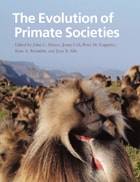
The Evolution of Primate Societies
Edited by John C. Mitani, Josep Call, Peter M. Kappeler, Ryne A. Palombit, and Joan B. Silk
University of Chicago Press, 2012
In 1987, the University of Chicago Press published Primate Societies, the standard reference in the field of primate behavior for an entire generation of students and scientists. But in the twenty-five years since its publication, new theories and research techniques for studying the Primate order have been developed, debated, and tested, forcing scientists to revise their understanding of our closest living relatives.
Intended as a sequel to Primate Societies, The Evolution of Primate Societies compiles thirty-one chapters that review the current state of knowledge regarding the behavior of nonhuman primates. Chapters are written by the leading authorities in the field and organized around four major adaptive problems primates face as they strive to grow, maintain themselves, and reproduce in the wild. The inclusion of chapters on the behavior of humans at the end of each major section represents one particularly novel aspect of the book, and it will remind readers what we can learn about ourselves through research on nonhuman primates. The final section highlights some of the innovative and cutting-edge research designed to reveal the similarities and differences between nonhuman and human primate cognition. The Evolution of Primate Societies will be every bit the landmark publication its predecessor has been.
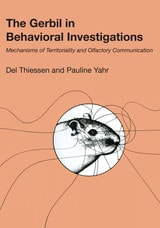
The Gerbil in Behavioral Investigations
Mechanisms of Territoriality and Olfactory CommunicationBy Del Thiessen and Pauline Yahr
University of Texas Press, 1977
In this comprehensive account of olfactory communication and territorial behavior in the Mongolian gerbil, Del Thiessen and PaulineYahr provide the first detailed study of the neurological and physiological mechanisms that control these basic functions. In addition to explaining the links between hormones, genes, olfactory cues, and territorial acts, they also offer a more general picture of gerbil behavior, as well as a brief look at other mammalian species that communicate social status by way of olfactory messages.
Territorial behavior, as defined by the authors, includes all acts that are restricted to a particular area and are crucial for successful reproduction. In the Mongolian gerbil, and probably in other mammals as well, territoriality is controlled by sex hormones acting on specific areas of the central nervous system. Hormones from the gonads apparently act in the brain by altering the genetic apparatus controlling biochemicals used in neural communication. Without these hormones, the animal is socially inert and unable to transmit genes to the next generation. The authors conclude from the results of over ten years of investigation that the most complex social interactions depend on the integrity of the hormone system and its constant tuning by olfactory stimuli.
The book incorporates a review of all previously known studies of gerbil behavior and representative data for many other scent-marking species. A stereotaxic brain atlas for the gerbil is a feature that will be especially helpful to other researchers. The book's eclectic nature should make it valuable to anyone concerned with territorial behavior, hormones and behavior, or brain processes, as well as to those who are specifically interested in the Mongolian gerbil.

The Giant Pandas of Wolong
George B. Schaller, Hu Jinchu, Pan Wenshi, and Zhu Jing
University of Chicago Press, 1985
Although giant pandas have few natural enemies, the periodic die-off of bamboo, their main food, threatens their survival. In order to understand the panda's vital link to bamboo, the research team has explored many aspects of the animal's life, collecting information on both wild and captive pandas. Though a herbivore, the panda retains the simple digestive tract of a carnivore. Unable to digest cellulose in plants, it receives relatively little nutrition from the bamboo it eats. As a result, it must eat many kilograms of bamboo each day, foraging for fourteen hours or more throughout a day and night.
Known to the Chinese for several thousand years as daxiongmao, "large bear-cat," the giant panda has defied easy classification. The authors review anatomical, biochemical, behavioral, and paleontological evidence, concluding that the animal is neither bear nor raccoon but belongs in a separate family, perhaps with the small red panda.
The giant panda has captured the imagination of the public more than any other animal. By presenting their groundbreaking and crucial research to the public, the authors of The Giant Pandas of Wolong hope to spur further research and action that will help this precious animal survive.
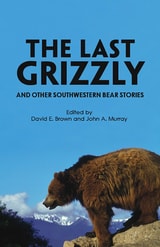
The Last Grizzly and Other Southwestern Bear Stories
Edited by David E. Brown and John A. Murray
University of Arizona Press, 1988
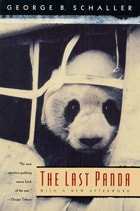
The Last Panda
George B. Schaller
University of Chicago Press, 1993
"No scientist is better at letting the rest of us in on just how the natural world works; no poet sees the world with greater clarity or writes about it with more grace. . . . Anyone who genuinely cares for wildlife cannot help being grateful to Schaller—both for his efforts to understand the panda and for the candor with which he reports what has gone so badly wrong in the struggle to save it from extinction."—Geoffrey C. Ward, New York Times Book Review
"Schaller's book is a unique mix of natural history and the politics of conservation, and it makes for compelling reading. . . . Having been in giant panda country myself, I found some of the descriptions of the animals and habitats breathtaking. Schaller describes the daily routines and personalities of the giant pandas he studied (as well as their fates thereafter) as though they were his blood relatives. . . . Schaller's brilliant presentation of the complexities of conservation makes his book a milestone for the conservation movement."—Devra G. Kleiman, Washington Post Book World
"George Schaller's most soulful work, written in journal style with many asides about a creature who evolved only two to three million years ago (about the same time as humans). . . . Here, conservation biology confronts an evil that grinds against hope and shatters the planet's diversity. Written with hope."—Whole Earth Catalog
"A nicely crafted blend of wildlife observation and political-cultural analysis. . . . The Last Panda is a sad chronicle of our failure, so far, to stem the decline of the animal that may be the most beloved on the planet."—Donald Dale Jackson, Smithsonian

The Last Refuge of the Mt. Graham Red Squirrel
Ecology of EndangermentH. Reed Sanderson and John L. Koprowski
University of Arizona Press, 2009
This book is derived from a symposium on the Mt. Graham red squirrel and offers a comprehensive picture of the ecology of this red squirrel and the impacts on its mountain home. Forty contributors detail studies conducted to understand the natural history of the creature and the challenges and changing ecological conditions on Mt. Graham.
Each chapter tells a unique story that contributes to the mosaic of natural history knowledge about the endangered Mt. Graham red squirrel. They reflect diverse viewpoints on the problems of conserving the habitats and populations of the squirrel, showing how it was complicated by perspectives ranging from Native Americans’ concern over traditional lands to astronomers’ hope for a better view of space, and by issues ranging from forestry practices to climate change. Studies of such factors as squirrel middens, seed hoarding, and nest sites provide definitive research on the animal.
Ongoing censuses continue to track the squirrel’s population trends, and both Forest Service and Arizona Department of Transportation activities continue to be scrutinized by interested parties to determine their impact. This book represents an authoritative overview of this still-endangered species and its habitat.
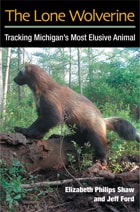
The Lone Wolverine
Tracking Michigan's Most Elusive AnimalElizabeth Philips Shaw and Jeff Ford
University of Michigan Press, 2012
It began in late winter of 2004. Almost 100 years had passed since the last spotting of a wild wolverine in Michigan when coyote hunters caught a glimpse of one of the animals in a frozen farm field in the northern thumb region. For the next six years, Jeff Ford, a local science teacher and amateur naturalist, devoted himself to locating and filming the wolverine that had unexpectedly and inexplicably appeared in the Wolverine State. By the time hikers found the animal dead in early 2010, Ford had taken hundreds of rare live action photos and shot numerous hours of video, with the story of the "Wolverine Guy" attracting national attention through countless newspaper and magazine articles and appearances on Animal Planet and PBS Nature.
This is the tale of Ford's quest as he uncovered answers to mysteries surrounding the animal's territory and movement patterns, while sparking a flurry of controversy surrounding the elusive predator's origin, much of which remains unresolved today. It's an intimate look at research in the raw, from DNA samples stuck on barbed wire to a sophisticated, motion-sensing infrared camera unit strategically placed to observe nocturnal behavior.
The Lone Wolverine brings to vivid life this unforgettable piece of American wildlife lore, using candid interviews, public records, and Ford's own vast storehouse of notes, personal writings, correspondence, and images, offering an extraordinary chronicle of a wild wolverine in its natural habitat, at play and in fierce competition for food and survival. This is a wildlife detective story, recounting years of study and fierce debate as researchers pondered the riddles of Michigan's last wolverine---her origins, habits, and ultimately the cause of her untimely death.
The Mammals of Minnesota
Harvey L. Gunderson and James R. Beer
University of Minnesota Press, 1953
The Mammals of Minnesota was first published in 1953. Minnesota Archive Editions uses digital technology to make long-unavailable books once again accessible, and are published unaltered from the original University of Minnesota Press editions.
For the many Minnesotans interested in the wildlife of their state and for anyone with a special interest in the fur or game animals or in the control of harmful species, this is a practical source of information. Schools will find the book useful in teaching natural history. All the mammal species identified within Minnesota are described, and keys to the classification are given, with careful instructions on how to use the keys. Step- by step directions include photographs of animals, diagrams of the methods described, and 70 maps showing the geographical distribution of species. The material is based primarily on the collections in the Museum of Natural history and the Division of Entomology and Economic Zoology at the University of Minnesota.
The Mammals of Texas
By David J. Schmidly and Robert D. Bradley
University of Texas Press, 2016
From reviews of previous editions:
“This is the standard reference about Texas mammals.” —Wildlife Activist
“A must for anyone seriously interested in the wildlife of Texas.” —Texas Outdoor Writers Association News
“[This book] easily fills the role of both a field guide and a desk reference, and is written in a style that appeals to the professional biologist and amateur naturalist alike. . . . [It] should prove useful to anyone with an interest in the mammal fauna of Texas or the southern Great Plains.” —Prairie Naturalist
The Mammals of Texas has been the standard reference since the first edition was coauthored by William B. Davis and Walter P. Taylor in 1947. Revised several times over the succeeding decades, it remains the most authoritative source of information on the mammalian wildlife of Texas, with physical descriptions and life histories for 202 species, abundant photographs and drawings, and distribution maps.
In this new edition, David J. Schmidly is joined by one of the most active researchers on Texas mammals, Robert D. Bradley, to provide a thorough update of the taxonomy, distribution, and natural history of all species of wild mammals that inhabit Texas today. Using the most recent advances in molecular biology and in wildlife ecology and management, the authors include the most current information about the scientific nomenclature, taxonomy, and identification of species, while also covering significant advances in natural history and conservation.
The Okapi
Mysterious Animal of Congo-ZaireBy Susan Lyndaker Lindsey, Mary Neel Green, and Cynthia L. Bennett
University of Texas Press, 1999
Congo-Zaire contains Africa's largest remaining tracts of intact rain forest, making it one of the most important regions for biodiversity conservation. Its Ituri Forest is home to plants and animals native to nowhere else on earth, including the elusive and little-known okapi.
In this popularly written book, three long-time observers of the okapi present a complete, contemporary natural history of this appealing relative of the giraffe. They recount its discovery by European explorers and describe its appearance and life cycle. They also discuss current efforts to preserve the species, both in the wild and at zoos around the world.
Illustrated with charming line drawings, The Okapi will be a valuable resource for conservationists and zoo visitors alike-indeed anyone fascinated by the mysterious animal of Congo-Zaire.
The Ornaments of Life
Coevolution and Conservation in the TropicsTheodore H. Fleming and W. John Kress
University of Chicago Press, 2013
The Serengeti Lion
A Study of Predator-Prey RelationsGeorge B. Schaller
University of Chicago Press, 1976
Based on three years of study in the Serengeti National Park, George B. Schaller’s The Serengeti Lion describes the vast impact of the lion and other predators on the vast herds of wildebeest, zebra, and gazelle for which the area is famous. The most comprehensive book available on the lion, this classic work includes the author’s findings on all aspects of lion behavior, including its social system, population dynamics, hunting behavior, and predation patterns.
“If you have only enough time to read one book about field biology, this is the one I recommend.”—Edward O. Wilson, Science
“This book conveys not only the fascination of its particular study of lion behavior but the drama and wonder and beauty of the intimate interdependence of all living things.”—Saturday Review
“This is an important book, not just for its valuable information on lions, but for its broad, open, and intelligent approach to problems that cut across the fields of behavior, populations, ecology, wildlife management, evolution, anthropology, and comparative biology.”—Richard G. Van Gelder, Bioscience
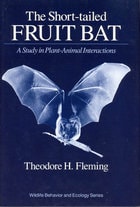
The Short-Tailed Fruit Bat
A Study in Plant-Animal InteractionsTheodore H. Fleming
University of Chicago Press, 1988
In The Short-tailed Fruit Bat, Theodore Fleming examines Carollia's role in the ecology of tropical forests. Based on more than ten years' research, this study provides the most detailed ecological and evolutionary account to date of the life history of a Neotropical mammal and includes striking photographs of the bats in flight.
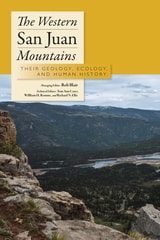
The Western San Juan Mountains
Their Geology, Ecology, and Human HistoryRob Blair
University Press of Colorado, 1996
The most complete work published on the natural history of southwest Colorado's majestic mountain system, The Western San Juan Mountains: Their Geology, Ecology, and Human History is designed to be used while exploring the scenic 235-mile paved San Juan Skyway, which passes through Durango, Silverton, Ouray, Telluride, Dolores, and Cortez.
The Western San Juan Mountains covers the physical environment, the biological communities, the human history, and points of interest represented on milepost signs along the highway. Some of the many topics covered include: how the San Juan Mountains were formed; why the landscape is so rugged and picturesque; why the vegetation changes from the lowlands to the alpine heights; energy and mineral resources of the area; why these mountains intrigued early explorers; factors that influence the unpredictable weather; and the first-known inhabitants.
The contributions to this guide include Fort Lewis College geologists, biologists, archaeologists, historians, and other specialists. Together they have amassed more than one hundred years of study based not only on previous work but on their own research.
This generously illustrated guidebook is aimed at all those who wish to understand this intricate mountain system in much greater detail than provided by most picture books.
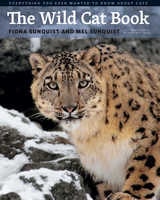
The Wild Cat Book
Everything You Ever Wanted to Know about CatsFiona Sunquist and Mel Sunquist
University of Chicago Press, 2014
Illustrated throughout with Terry Whittaker’s spectacular color photographs as well as unique photos from biologists in the field—some the highest quality images ever captured of exceptionally rare species—The Wild Cat Book not only tantalizes with the beauty of cats, but also serves as a valuable and accessible reference on cat behavior and conservation. Comprehensive entries for each of the thirty-seven cat species include color distribution maps and up-to-date information related to the species’ IUCN conservation and management statuses, while informative sidebars reveal why male lions have manes (and why dark manes are sexiest), how cats see with their whiskers, the truth behind our obsession with white lions and tigers, and why cats can’t be vegetarians. The Wild Cat Book also highlights the grave threats faced by the world’s wild cats—from habitat destruction to human persecution.
From the extraordinary acrobatics of the arboreal margay—able to cling to a tree branch by a single paw thanks to its unusually flexible ankles—to modern declines in African lion populations, The Wild Cat Book is an instructive and revealing ode to felines of every size and color. Combining science, behavioral observations, and stunning photography, this book will captivate cat fanciers the world over.
Tiger Moon
Tracking the Great Cats in NepalFiona Sunquist and Mel Sunquist
University of Chicago Press, 2003