Results by title
164 books match the query 'Medical care' and 18 start with t

Technology Bureaucracy Healing
A Postmodern ParadigmRoger J. Bulger
University of Iowa Press, 1988
The City and the Hospital
The Paradox of Medically Overserved CommunitiesDaniel Skinner, Jonathan R. Wynn, and Berkeley Franz
University of Chicago Press, 2023
An enduring paradox of urban public health is that many communities around hospitals are economically distressed and, counterintuitively, medically underserved. In The City and the Hospital two sociologists, Jonathan R. Wynn and Berkeley Franz, and a political scientist, Daniel Skinner, track the multiple causes of this problem and offer policy solutions.
Focusing on three urban hospitals—Connecticut’s Hartford Hospital, the flagship of the Hartford Healthcare system; the Cleveland Clinic, which coordinates with other providers for routine care while its main campus provides specialty care; and the University of Colorado Hospital, a rare example of an urban institution that relocated to a new community—the authors analyze the complicated relationship between a hospital and its neighborhoods. On the one hand, hospitals anchor the communities that surround them, often staying in a neighborhood for decades. Hospitals also craft strategies to engage with the surrounding community, many of those focused on buying locally and hiring staff from their surrounding area. On the other hand, hospitals will often only provide care to the neighboring community through emergency departments, reserving advanced medical care and long-term treatment for those who can pay a premium for it. In addition, the authors show, hospitals frequently buy neighborhood real estate and advocate for development programs that drive gentrification and displacement.
To understand how urban healthcare institutions work with their communities, the authors address power, history, race, and urbanity as much as the workings of the medical industry. These varied initiatives and effects mean that understanding urban hospitals requires seeing them in a new light—not only as medical centers but as complicated urban forces.

The Coming Health Crisis
Who Will Pay for Care for the Aged in the 21st Century?John R. Wolfe
University of Chicago Press, 1993
In previous decades, when younger Americans far outnumbered older ones, retirees could depend on financial support through taxes from the population at large. But as "Boomers" retire and the work force begins to shrink, there will be a disproportionately large population of retirees to workers. With such a big jump in the percentage of older Americans in the population, fewer workers will be able to to transfer funds, through taxes, to retirees. Moreover, other traditionally reliable sources of financial assistance—Social Security, Medicare, and Medicaid—have faced serious financial difficulties in recent years. Who will the aged turn to for assistance?
The Coming Health Crisis suggests that as funds from all quarters dwindle, older Americans will have to look to alternative programs for financial assistance. Wolfe urges immediate action to develop new saving programs and increase existing transfer schemes to head off an imminent crisis. Although tax increases might provide some resources, he demonstrates that it is more important to accumulate capital to create solid reserves for the future. Wolfe also explores two roles for government: prefunding new or existing social insurance programs and promoting private insurance options. By exempting insurance fund income from corporate taxation and permitting people at all income levels to defer income tax on accounts earmarked for long-term care, he shows how government could greatly encourage and expand personal saving.
Finally, this work assesses the value of other recent health and long-term-care innovations: social/health maintenance organizations, long-term-care individual retirement accounts, and reverse annuity mortgages, in addition to vouchers, care rationing, mandatory public insurance, and expanded private coverage. Through this wide-ranging survey, Wolfe demonstrates that, through a combination of these programs, we can care for the aging "Baby Boom" generation by anticipating their needs and saving now.
The Compensations of War
The Diary of an Ambulance Driver during the Great WarBy Guy Emerson Bowerman
University of Texas Press, 1983
In 1917, shortly after the United States’ declaration of war on Germany, Guy Emerson Bowerman, Jr., enlisted in the American army’s ambulance service. Like other young ambulance drivers—Hemingway, Dos Passos, Cummings, Cowley—Bowerman longed to “see the show.” He was glad to learn that the ambulance units were leaving for France right away.
For seventeen months, until the armistice of November 1918, Bowerman kept an almost daily diary of the war. To read his words today is to live the war with an immediacy and vividness of detail that is astonishing.
Only twenty when he enlisted, Bowerman was an idealistic, if snobbish, young man who exulted that his section was made up mostly of young “Yalies” like himself. But he expected the war to change him, and it did. In the end he writes that he and his compatriots scarcely remember a world at peace. "The old life was gone forever. . ."
Guy Bowerman’s unit was attached to a French infantry division stationed near Verdun. Sent to halt the German drive to Paris in 1918, the division participated in the decisive counterattack of July and tracked the routed Germans through Belgium. Then, “unwarned,” Bowerman and his comrades were “plunged into … a life of peace.” Into this life, he writes, they walked “bewildered,” like “men fearing ambush.”
This remarkable chronicle of one young man’s rite of passage is destined to become a classic in the literature of the Great War.
The Cultivation of Whiteness
Science, Health, and Racial Destiny in AustraliaWarwick Anderson
Duke University Press, 2006
“[Anderson] writes with passion, wit, and panache, and the principal virtues of The Cultivation of Whiteness are the old-fashioned ones of thoroughness, accuracy, and impeccable documentation. . . . [His] sensitive study is a model of how contentious historical issues can be confronted.”—W. F. Bynum, Times Literary Supplement
“One of the virtues of The Cultivation of Whiteness is that it brings together aspects of Australian life and history that are now more often separated—race and environment, blood and soil, medicine and geography, tropical science and urban health, biological thought and national policy, Aboriginality and immigration, the body and the mind. The result is a rich and subtle history of ideas that is both intellectual and organic, and that vividly evokes past states of mind and their lingering, haunting power.”—Tom Griffiths, Sydney Morning Herald
The Echoes of Trauma
An Oral Historical Study on the Impact of the World War II Mass Incarceration on the Health of Japanese AmericansGwenn M. Jensen
University Press of Colorado, 2026
In Echoes of Trauma, medical anthropologist Gwenn Jensen traces the longitudinal ramifications of racism, the chronic stress of imprisonment in concentration camps, and widespread healthcare inadequacies on the well-being of Japanese American Nisei during WWII and beyond.
Based on ninety oral history interviews conducted between 1995 and 2005, Jensen’s work uncovers long-term health impacts on former incarcerees, relating personal stories of Japanese Americans with archival corroboration of their traumatic experiences of having been made prisoners in their own land. These memories illuminate the betrayal and lifelong consequences of imprisonment not only on physical and psychological health but also including intergenerational trauma passed on to subsequent generations. Echoes of Trauma details these short- and long-term health effects and records the stories of these Americans for posterity.
In the wake of the current political climate, with echoes of this past reverberating, the reexamination of Japanese American incarceration undertaken here underscores the importance of comprehending the fallout from incomprehensible injustice visited upon innocent and law-abiding citizens.
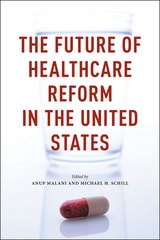
The Future of Healthcare Reform in the United States
Edited by Anup Malani and Michael H. Schill
University of Chicago Press, 2015
In the years since the passage of the Patient Protection and Affordable Care Act (PPACA, or, colloquially, Obamacare), most of the discussion about it has been political. But as the politics fade and the law's many complex provisions take effect, a much more interesting question begins to emerge: How will the law affect the American health care regime in the coming years and decades?
This book brings together fourteen leading scholars from the fields of law, economics, medicine, and public health to answer that question. Taking discipline-specific views, they offer their analyses and predictions for the future of health care reform. By turns thought-provoking, counterintuitive, and even contradictory, the essays together cover the landscape of positions on the PPACA's prospects. Some see efficiency growth and moderating prices; others fear a strangling bureaucracy and spiraling costs. The result is a deeply informed, richly substantive discussion that will trouble settled positions and lay the groundwork for analysis and assessment as the law's effects begin to become clear.
The Gold Standard
The Challenge Of Evidence-Based MedicineStefan Timmermans and Marc Berg
Temple University Press, 2003
The New Plagues
Pandemics and Poverty in a Globalized WorldStefan Kaufmann
Haus Publishing, 2009
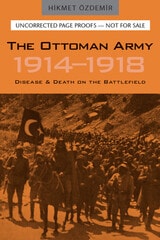
The Ottoman Army 1914 - 1918
Disease and Death on the BattlefieldHikmet Ozdemir
University of Utah Press, 2008
What kind of relationship exists between wars and epidemics? It is widely held that epidemics affected the outcomes of many wars and, until World War II, more victims of war died of disease than of battle wounds. Many disease vectors are present in times of conflict, including mass movements of people across borders and increased contact between persons of different geographic regions, yet disease is rarely treated in depth in histories of war.
Hikmet Özdemir’s The Ottoman Army, 1914–1918 provides extensive documentation of disease and death across the Ottoman Empire during World War I, when epidemic diseases annihilated armies and caused civilians to perish en masse. Drawing on hospital records and information on regional disease prevalence, Özdemir examines the effects that disease and epidemic had on the outcome of the war.
The information on disease mortality explains much that has never been properly understood about wartime events and government actions, events that only begin to make sense when the disease factor is considered. Rich in detail, this is an extremely valuable book that illuminates a facet of the war that has not been adequately considered until now.
The Political Economy of Health in Africa
Mis Af#60Toyin Falola
Ohio University Press, 1992
The Product of Medicine
How Efficiency Made American Health CareCaitjan Gainty
Duke University Press, 2025
The Walking Wounded
Festering and Ricocheting Trauma After Gun ViolenceJooyoung Lee
University of Chicago Press, 2026
Gun violence is a plague in the United States; even survivors experience suffering that wreaks havoc on their lives and our communities. Although excellent emergency trauma care means that 80 percent of shooting victims do not die from their injuries, surviving is only the first step. Most survivors then find themselves trapped in health care and judicial systems that only amplify their pain, trauma, and uncertainty.
In The Walking Wounded, Jooyoung Lee invites readers into the hospitals, courtrooms, and homes where gunshot victims struggle to rebuild their lives. Drawing from years of fieldwork in Philadelphia, Lee shows how victims’ injuries fester into new problems over time in the absence of meaningful follow-up care. Attempting routine tasks with a wounded body reminds survivors that they are no longer who they used to be—both physically and socially. Lee shows how trauma ricochets through victims’ worlds as their injuries also affect their family and friends. To make matters worse, Lee argues, existing government safety nets place victims into ever more precarious circumstances that compound their suffering.
In the face of health care and judicial systems that fail wounded people, Lee urges a sensible and sensitive rehabilitative process aimed at equipping the walking wounded with ongoing care that aspires for more than mere survival: the regaining of independent lives.
The Wounded River
The Civil War Letters of John Vance Lauderdale, M.D.Peter Josyph
Michigan State University Press, 1993
The Wounded River takes the reader back more than 130 years to reveal a marvelous, first-hand account of nineteenth-century warfare. In the process, the work cuts the legends and mythology that have come to frame and define accounts of America's bloodiest war. Of equal significance, Peter Josyph's editorial work on this superb collection of letters from the Western Americana Division of Yale University's Beinecke Rare Book and Manuscripts Library enhances and clarifies Lauderdale's experinces as a surgeon aboard the U.S. Army hospital ship D. A. January.
The reader looks on while Lauderdale, a New York civilian contract surgeon, operates on hundreds of Confederate and Union wounded. The young doctor's clear writing style and his great compassion for these unfortunate men whose bodies were ripped apart by bullets, shell fragments, and bayonets permits us to catch a disturbiing glimpse of what modern warfare does to humanity. Finally, we learn of Lauderdale's motives for volunteering, his impressions of the "hospital ship" D. A. January, Confederate morale, the Abolitionist cause, and black slavery. The Wounded River is a must read for anyone interested in the real American Civil War.

To Live and Die in America
Class, Power, Health and HealthcareRobert Chernomas and Ian Hudson
Pluto Press, 2013
To Live and Die in America details how the United States has among the worst indicators of health in the industrialised world and at the same time spends significantly more on its health care system than any other industrial nation.
Robert Chernomas and Ian Hudson explain this contradictory phenomenon as the product of the unique brand of capitalism that has developed in the US. It is this particular form of capitalism that created both the social and economic conditions that largely influence health outcomes and the inefficient, unpopular and inaccessible health care system that is incapable of dealing with them.
The authors argue that improving health in America requires a change in the conditions in which people live and work as well as a restructured health care system.
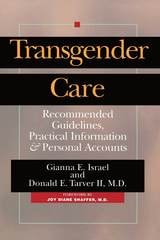
Transgender Care
Recom Guidelines, Practical InfoGianna Israel
Temple University Press, 2001
By empowering clients to be well-informed medical consumers and by delivering care providers from the straitjacket of inadequate diagnostic standards and stereotypes, this book sets out to transform the nature of transgender care.
In an accessible style, the authors discuss the key mental health issues, with much attention to the vexed relationship between professionals and clients. They propose a new professional role; that of "Gender Specialist."
Chapters 3, 4, and 5 provide definitive information (in the context of consulting health professionals) on hormone administration, aesthetic surgery, and genital reassignment surgery. Chapter 6 takes up the little-examined issue of HIV and AIDS among transgender people. There is also a chapter devoted to issues of transgender people of color, as well as a chapter on transgender adolescents.
The book contains a wealth of practical information and accounts of people's experiences about coming out to one's employer or to one's friends or spouse. Several essays spell out the legal rights of transgender people with regard to insurance, work, marriage, and the use of rest rooms.
The second part of the book consists of thirteen essays on a range of controversial topics. They include three personal stories of transgender life, one essay on the new academic field of Transgender Studies, two essays on legal rights, three essays on medical issues, and two essays on the origins and possible resolution of the conflicts between therapist and client. The authors have also provided useful listings of organizations, centers, and Web sites.
The book has been reviewed by a national committee of professionals and consumers, some of whose members have contributed the essays in the second part of the book.
Transplanting Care
Shifting Commitments in Health and Care in the United StatesHeinemann, Laura L.
Rutgers University Press, 2016
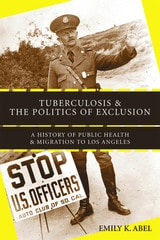
Tuberculosis and the Politics of Exclusion
A History of Public Health and Migration to Los AngelesAbel, Emily K.
Rutgers University Press, 2007
Winner of the 2008 Arthur J. Viseltear Prize from the American Public Health Association and Nominated for the 2008 William H. Welch Medal, AAHM
Though notorious for its polluted air today, the city of Los Angeles once touted itself as a health resort. After the arrival of the transcontinental railroad in 1876, publicists launched a campaign to portray the city as the promised land, circulating countless stories of miraculous cures for the sick and debilitated. As more and more migrants poured in, however, a gap emerged between the city’s glittering image and its dark reality.
Emily K. Abel shows how the association of the disease with “tramps” during the 1880s and 1890s and Dust Bowl refugees during the 1930s provoked exclusionary measures against both groups. In addition, public health officials sought not only to restrict the entry of Mexicans (the majority of immigrants) during the 1920s but also to expel them during the 1930s.
Abel’s revealing account provides a critical lens through which to view both the contemporary debate about immigration and the U.S. response to the emergent global tuberculosis epidemic.