Results by title
140 books match the query 'Mental Health' and 28 start with t
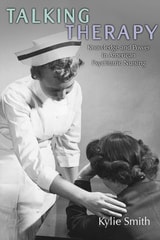
Talking Therapy
Knowledge and Power in American Psychiatric NursingKylie Smith
Rutgers University Press, 2020
Winner of the 2020 Lavinia L. Dock Award from the American Association for the History of Nursing
Talking Therapy traces the rise of modern psychiatric nursing in the United States from the 1930s to the 1970s. Through an analysis of the relationship between nurses and other mental health professions, with an emphasis on nursing scholarship, this book demonstrates the inherently social construction of ‘mental health’, and highlights the role of nurses in challenging, and complying with, modern approaches to psychiatry. After WWII, heightened cultural and political emphasis on mental health for social stability enabled the development of psychiatric nursing as a distinct knowledge project through which nurses aimed to transform institutional approaches to patient care, and to contribute to health and social science beyond the bedside. Nurses now take for granted the ideas that underpin their relationships with patients, but this book demonstrates that these were ideas not easily won, and that nurses in the past fought hard to make mental health nursing what it is today.
Telling is Risky Business
Mental Health Consumers Confront StigmaWahl, Otto F
Rutgers University Press, 1999
Individuals with a mental illnesses—such as schizophrenia, bipolar disorder, and depression—have a double burden, Otto Wahl writes. Not only must they cope with disabling disorders, but they also must contend with the negative attitudes of the public toward those disorders. To truly understand the full extent of this stigma, we need to hear from the consumers (the term used in this book for people with mental illness) themselves. Telling is Risky Business is the first book to examine what these people have to say about their own experiences of stigma.
The center of Wahl’s research was a nationwide survey in which mental health consumers across the United States were asked, both through questionnaires and interviews, to tell about their experiences of stigma and discrimination. The research comes to life as many of the over 1,300 respondents’ acute observations are reported directly, in their own words.
Telling is Risky Business vividly covers topics such as isolation, rejection, discouragement, and discrimination. Consumers also offer perceptive observations of how our society depicts people with mental illness. The book ends with suggestions for strategies and coping; an invaluable section on resources available for fighting stigma guarantees its place on many bookshelves. As Laura Lee Hall writes, “This book will likely open your eyes to a topic that you probably did not understand.”
Tension
Mental Distress and Embodied Inequality in the Western HimalayasNikita Kaur Simpson
Duke University Press, 2026

Testimony after Catastrophe
Narrating the Traumas of Political ViolenceStevan Weine
Northwestern University Press, 2006
A deeply involving, compassionate, occasionally confrontational blend of practical hands-on experience and dialogic theory, emerging from the author's decade-long work in Europe and Chicago with survivors of the Balkan wars, this book is committed to the proposition that efforts to use testimony to address the consequences of political violence can be strengthened--though by no means guaranteed--if they are based on a fuller acknowledgment of the personal and ethical elements embodied in the narrative essence of testimony. These elements are what Testimony after Catastrophe seeks to reveal.
The Body in Late-Capitalist USA
Donald M. Lowe
Duke University Press, 1995
Moving beyond studies of representations and images of the body, Lowe focuses on the intersection of body practices, language, and the Social to describe concretely the reality of a lived body. His strongly synthetic work brings together Marxist critique, semiotics, Foucaultian discourse analysis, and systems and communications theory to examine those practices that construct the body under late capitalism: habits of work and consumption, the ways we give birth and raise children, socialization, mental and physical healing, reconstructions and contestations of sexuality and gender. Lowe draws upon a wide range of sources, including government and labor studies and statistics, diagnostic and statistical manuals on mental illness, computer manuals, self-help books, and guides to work-related stress disorders, to illustrate the transformation of the body into a nexus of exchange value in postmodern society.

The Burnout-Belonging Connection
Why Burnout is Not Our Fault and How Community Can Fortify Us Against ItLisa M. Nunn
Rutgers University Press, 2027
For over a decade now, we’ve been hearing the wrong messages about burnout: we are told that we have to fix ourselves in order to fix burnout. This misguided wisdom says that better time management, stronger boundaries, and more yoga-mindfulness-gratitude-exercise-vacation are the solution. Nope. Stronger, healthier communities are the solution. Lisa M. Nunn shows us that the same dynamics that create the social bonds of belonging, when absent, become the drivers of burnout. Greedy communities drive burnout; respectful communities foster belonging. Unfair communities drive burnout; trustworthy communities foster belonging. Negligent communities drive burnout; attentive communities foster belonging. The book offers 35 strategies to cultivate strong belonging—and in doing so minimize burnout—in our workplaces, families, friendship circles, volunteer organizations, athletic clubs, and every other community in our lives.
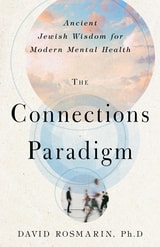
The Connections Paradigm
Ancient Jewish Wisdom for Modern Mental HealthDavid H. Rosmarin
Templeton Press, 2021
The idea behind the paradigm is that at any given moment, human beings are either “connected” or “disconnected” across three key relationships. To be “connected” means to be in a loving, harmonious, and fulfilling relationship; to be “disconnected” means, of course, the opposite. The three relationships are those between our souls and our bodies, ourselves and others, and ourselves and God.
These relationships are hierarchal; each depends on the one that precedes it. This means that we can only connect with God to the extent that we associate with others, and we cannot connect with others if we don’t connect with ourselves. The author, Dr. David H. Rosmarin, devotes a section to each relationship and describes techniques and practices to become a more connected individual. He also brings in compelling stories from his clinical practice to show the process in action.
Whether you’re a clinician working with clients, or a person seeking the healing balm of wisdom; whether you’re a member of the Jewish faith, or a person open to new spiritual perspectives, you will find this book sensible, practical, and timely because, for all of us, connection leads to mental health.
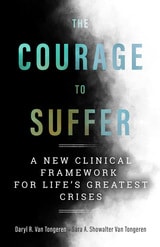
The Courage to Suffer
A New Clinical Framework for Life's Greatest CrisesDaryl R. Van Tongeren
Templeton Press, 2020
Suffering is an inescapable part of life. Some suffering is so profound, so violating, or so dogged that it fundamentally changes people in indelible ways. Many existing therapeutic approaches, from a medical model, treat suffering as mental illness and seek a curative solution. However, such approaches often fail to examine the deep questions that suffering elicits (e.g., existential themes of death, isolation, freedom, identity, and meaninglessness) and the far-reaching ways in which suffering affects the lived experience of each individual.
In The Courage to Suffer, Daryl and Sara Van Tongeren introduce a new therapeutic framework that helps people flourish in the midst of suffering by cultivating meaning.
Drawing from scientific research, clinical examples, existential and positive psychology, and their own personal stories of loss and sorrow, Daryl and Sara’s integrative model blends the rich depth of existential clinical approaches with the growth focus of strengths-based approaches.Through cutting edge-research and clinical case examples, they detail five “phases of suffering” and how to work with a client's existential concerns at each phase to develop meaning. They also discuss how current research suggests to build a flourishing life, especially for those who have endured, and are enduring, suffering.
Daryl and Sara show how those afflicted with suffering, while acknowledging the reality of their pain, can still choose to live with hope.

The Dark Days of Abraham Lincoln's Widow, as Revealed by Her Own Letters
Myra Helmer Pritchard, edited and annotated by Jason Emerson
Southern Illinois University Press, 2011
Written in 1927 but barred from timely publication by the Lincoln family, The Dark Days of Abraham Lincoln's Widow, as Revealed by Her Own Letters is based on nearly two dozen intimate letters written between Mary Lincoln and her close friend Myra Bradwell mainly during the former's 1875 incarceration in an insane asylum. By the 1920s most accounts of Mrs. Lincoln focused on her negative qualities and dismissed her as "crazy." Bradwell's granddaughter Myra Helmer Pritchard wrote this distinctly sympathetic manuscript at the behest of her mother, who wished to vindicate Mary Lincoln in the public eye by printing the private correspondence. Pritchard fervently defends Mrs. Lincoln's conduct and sanity, arguing that she was not insane but rather the victim of an overzealous son who had his mother committed.
The manuscript and letters were thought to have been destroyed, but fortunately the Lincolns' family lawyer stored copies in a trunk, where historian Jason Emerson discovered them in 2005. While leaving the manuscript intact, Emerson has enhanced it with an introduction and detailed annotations. He fills in factual gaps; provides background on names, places, and dates; and analyzes Pritchard's interpretations, making clear where she was right and where her passion to protect Mrs. Lincoln led to less than meticulous research and incorrect conclusions. This volume features an easy-to-follow format that showcases Pritchard's text on the left-hand pages and Emerson's insightful annotations on the right-hand pages.
Following one of the most revered and reviled, famous and infamous of the First Ladies, this book provides a unique perspective of Mrs. Lincoln's post-White House years, with an emphasis on her commitment to a sanitarium. Emerson's contributions make this volume a valuable addition to the study of the Lincoln family. This fascinating work gives today's Lincoln enthusiasts the chance to read this intriguing interpretation of the former First Lady that predates nearly every other book written about her.

The Diary of Vaslav Nijinsky
Vaslav Nijinsky
University of Illinois Press, 2006
A uniquely personal record of a great artist’s experience of mental illness
In his prime, Vaslav Nijinsky (1889-1950) was the most celebrated man in Western ballet--a virtuoso and a dramatic dancer such as European and American audiences had never seen before. After his triumphs in such works as The Specter of the Rose and Petrouchka, he set out to make ballets of his own, and with his Afternoon of a Faun and The Rite of Spring, created within a year of each other, he became ballet’s first modernist choreographer.
For six weeks in early 1919, as his tie to reality was giving way, Nijinsky kept a diary--the only sustained daily record we have, by a major artist, of the experience of entering psychosis. In some entries he is filled with hope. He is God; he will save the world. In other entries, he falls into a black despair. He is dogged by sexual obsessions and grief over World War I. Furthermore, he is afraid that he is going insane.
The diary was first published in 1936, in a version heavily bowdlerized by Nijinsky’s wife. The new edition, translated by Kyril FitzLyon, is the first complete and accurate English rendering of this searing document. In her introduction, noted dance critic Joan Acocella tells Nijinsky’s story and places it in the context of early European modernism.
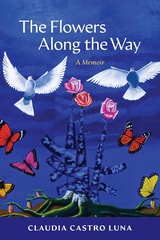
The Flowers Along the Way
A MemoirClaudia Castro Luna
Northwestern University Press, 2026
Passionately demonstrating the dormant trauma of political violence and the redemption waiting beyond it
From El Salvador’s lush countryside to the streets of Oakland, California, a young mother wrestles with the intersecting forces of memory, history, and language in order to chart a new path for herself and her growing family. Fleeing political unrest and civil war violence in El Salvador, fourteen-year-old Claudia Castro Luna arrived in the United States with her family in 1981. Two decades later, holding her two-year-old and pregnant with her second child, she survives a public shooting by hiding behind shrubs in front of her house in Oakland. This event unleashes disorienting and traumatic memories, plunging her into a journey of discovery as she grapples with PTSD, recovers family stories, and begins to make sense of all that was torn asunder within her by the experiences of war and emigration. Beauty, longing, fear, and joy entwine in this powerful story of love, self-determination, and the search for home.
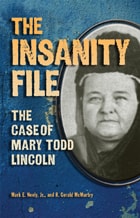
The Insanity File
The Case of Mary Todd LincolnMark E. Neely Jr. and R. Gerald McMurtry
Southern Illinois University Press, 1993
In 1875 Robert Todd Lincoln caused his mother, Mary Todd Lincoln, to be committed to an insane asylum. Based on newly discovered manuscript materials, this book seeks to explain how and why.
In these documents—marked by Robert Todd Lincoln as the "MTL Insanity File"—exists the only definitive record of the tragic story of Mary Todd Lincoln’s insanity trial. The book that results from these letters and documents addresses several areas of controversy in the life of the widow of Abraham Lincoln: the extent of her illness, the fairness of her trial, and the motives of those who had her committed for treatment. Related issues include the status of women under the law as well as the legal and medical treatment of insanity.
Speculating on the reasons for her mental condition, the authors note that Mrs. Lincoln suffered an extraordinary amount of tragedy in a relatively few years. Three of her four sons died very young, and Abraham Lincoln was assassinated. After the death of her son Willie she maintained a darkly rigorous mourning for nearly three years, prompting the president to warn her that excessive woe might force him to send her to "that large white house on the hill yonder," the government hospital for the insane.
Mrs. Lincoln also suffered anxiety about money, charting an exceptionally erratic financial course. She had spent lavishly during her husband’s presidency and at his death found herself deeply in debt. She had purchased trunkfuls of drapes to hang over phantom windows. 84 pairs of kid gloves in less than a month, and $3,200 worth of jewelry in the three months preceding Lincoln’s assassination. She followed the same erratic course for the rest of her life, creating in herself a tremendous anxiety. She occasionally feared that people were trying to kill her, and in 1873 she told her doctor that an Indian spirit was removing wires from her eyes and bones from her cheeks.
Her son assembled an army of lawyers and medical experts who would swear in court that Mrs. Lincoln was insane. The jury found her insane and in need of treatment in an asylum. Whether the verdict was correct or not, the trial made Mary Lincoln desperate. Within hours of the verdict she would attempt suicide. In a few months she would contemplate murder. Since then every aspect of the trial has been criticized—from the defense attorney to the laws in force at the time. Neely and McMurtry deal with the trial, the commitment of Mary Todd Lincoln, her release, and her second trial. An appendix features letters and fragments by Mrs. Lincoln from the "Insanity File." The book is illustrated by 25 photographs.
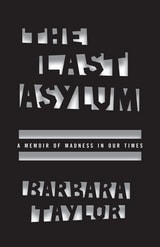
The Last Asylum
A Memoir of Madness in Our TimesBarbara Taylor
University of Chicago Press, 2015
The Last Asylum is Taylor’s breathtakingly blunt and brave account of those years. In it, Taylor draws not only on her experience as a historian, but also, more importantly, on her own lived history at Friern— once known as the Colney Hatch Lunatic Asylum and today the site of a luxury apartment complex. Taylor was admitted to Friern in July 1988, not long before England’s asylum system began to undergo dramatic change: in a development that was mirrored in America, the 1990s saw the old asylums shuttered, their patients left to plot courses through a perpetually overcrowded and underfunded system of community care. But Taylor contends that the emptying of the asylums also marked a bigger loss, a loss of community. She credits her own recovery to the help of a steadfast psychoanalyst and a loyal circle of friends— from Magda, Taylor’s manic-depressive roommate, to Fiona, who shares tips for navigating the system and stories of her boyfriend, the “Spaceman,” and his regular journeys to Saturn. The forging of that network of support and trust was crucial to Taylor’s recovery, offering a respite from the “stranded, homeless feelings” she and others found in the outside world.
A vivid picture of mental health treatment at a moment of epochal change, The Last Asylum is also a moving meditation on Taylor’s own experience, as well as that of millions of others who struggle with mental illness.
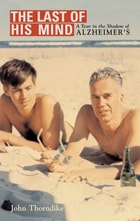
The Last of His Mind
A Year in the Shadow of Alzheimer’sJohn Thorndike
Ohio University Press, 2011
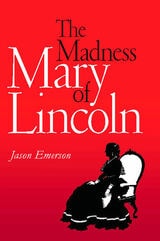
The Madness of Mary Lincoln
Jason Emerson
Southern Illinois University Press, 2007
WINNER, Russell P. Strange Memorial Book of the Year Award from the Illinois State Historical Society, 2007!
University Press Books for Public and Secondary Schools 2013 edition
In 2005, historian Jason Emerson discovered a steamer trunk formerly owned by Robert Todd Lincoln's lawyer and stowed in an attic for forty years. The trunk contained a rare find: twenty-five letters pertaining to Mary Todd Lincoln's life and insanity case, letters assumed long destroyed by the Lincoln family. Mary wrote twenty of the letters herself, more than half from the insane asylum to which her son Robert had her committed, and many in the months and years after.
The Madness of Mary Lincoln is the first examination of Mary Lincoln’s mental illness based on the lost letters, and the first new interpretation of the insanity case in twenty years. This compelling story of the purported insanity of one of America’s most tragic first ladies provides new and previously unpublished materials, including the psychiatric diagnosis of Mary’s mental illness and her lost will.
Emerson charts Mary Lincoln’s mental illness throughout her life and describes how a predisposition to psychiatric illness and a life of mental and emotional trauma led to her commitment to the asylum. The first to state unequivocally that Mary Lincoln suffered from bipolar disorder, Emerson offers a psychiatric perspective on the insanity case based on consultations with psychiatrist experts.
This book reveals Abraham Lincoln’s understanding of his wife’s mental illness and the degree to which he helped keep her stable. It also traces Mary’s life after her husband’s assassination, including her severe depression and physical ailments, the harsh public criticism she endured, the Old Clothes Scandal, and the death of her son Tad.
The Madness of Mary Lincoln is the story not only of Mary, but also of Robert. It details how he dealt with his mother’s increasing irrationality and why it embarrassed his Victorian sensibilities; it explains the reasons he had his mother committed, his response to her suicide attempt, and her plot to murder him. It also shows why and how he ultimately agreed to her release from the asylum eight months early, and what their relationship was like until Mary’s death.
This historical page-turner provides readers for the first time with the lost letters that historians had been in search of for eighty years.

The Memory Sessions
Suzanne Farrell Smith
Bucknell University Press, 2019
Published by Bucknell University Press. Distributed worldwide by Rutgers University Press.
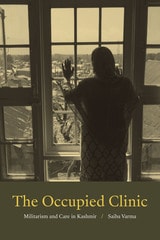
The Occupied Clinic
Militarism and Care in KashmirSaiba Varma
Duke University Press, 2020
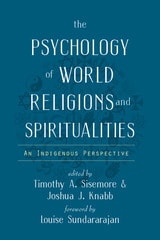
The Psychology of World Religions and Spiritualities
An Indigenous PerspectiveTimothy A. Sisemore
Templeton Press, 2020
With this goal in mind, editors Timothy Sisemore and Joshua Knabb have made one of the world’s major religions the subject of a separate chapter. In addition, they have arranged for each chapter to be written by a psychologist who practices—or is culturally connected with—that religion. This marks the book’s unique contribution to the field: it is the product of people who have lived the world’s religions, not merely studied them. By taking such a respectful approach, the book promotes an appreciation for the ways that religious belief animates, inspires, and instructs its adherents. Moreover, the indigenous point-of-view of these essays will help scholars identify their own biases when researching religious groups, allowing them to produce more accurate and holistic analyses.
Psychologists understand that religion and spirituality provide meaning and purpose to billions of people around the globe. But the actual experience of these beliefs eludes the grasp of the reductionistic methods of science. With this resource at their side, psychologists in academic and clinical settings will be equipped to understand religious experience from the bottom-up, and honor the beliefs and practices of the people they are trying to help.
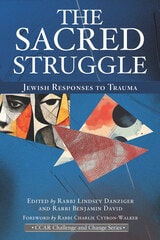
The Sacred Struggle
Jewish Responses to TraumaRabbi Lindsey Danziger and Rabbi Benjamin David
Central Conference of American Rabbis, 2025
much more.
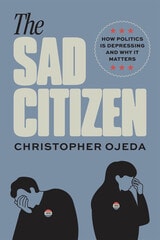
The Sad Citizen
How Politics Is Depressing and Why It MattersChristopher Ojeda
University of Chicago Press, 2025
For many citizens, politics is depressing. How has this come to be the norm? And, how is it influencing democracy?
From rising polarization to climate change, today’s politics are leaving many Western democracies in the throes of malaise. While anger, anxiety, and fear are loud emotions that powerfully activate voters, depression is quiet, demobilizing, and less visible as a result. Yet its pervasiveness is cause for concern: after all, democracy should empower citizens.
In The Sad Citizen, Christopher Ojeda draws on wide-ranging data from the United States and beyond to explain how politics is depressing, why this matters, and what we can do about it. Integrating insights from political science, sociology, psychology, and other fields, The Sad Citizen exposes the unhappy underbelly of contemporary politics and offers fresh ideas to strengthen democracy and help citizens cope with the stress of politics.
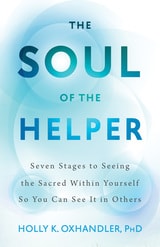
The Soul of the Helper
Seven Stages to Seeing the Sacred within Yourself So You Can See It in OthersHolly K. Oxhandler
Templeton Press, 2025
In their devotion to the well-being of others, caregivers routinely put their own well-being last and can unintentionally burn themselves out physically, emotionally, and spiritually. Their self-neglect, paired alongside a deep desire to help others, has the potential to stir up feelings of anger and resentment, leading to a sense of guilt and shame. They often believe that if they were to grant themselves any rest or grace, they would be at risk of failing in their duty.
In The Soul of the Helper, Dr. Holly K. Oxhandler shows caregivers and fellow helpers a more self-compassionate way to cope with their overwhelming responsibilities and to attend to their own needs, particularly when it comes to their mental health and spiritual journey. She invites them to pause and realize that if they let their personal resources run dry, they cannot possibly care for others as fully as they wish. In fact, their efforts are likely to cause more harm than good.
With a background in spiritually-integrated mental health, Dr. Oxhandler teaches helpers a seven-step process to slow down and reconnect with the stillness within themselves. It is in this space of stillness that Oxhandler guides helpers to reconnect with the “sacred spark” within their soul. By allowing themselves to enter that stillness, caregivers will recognize that they, too, are worthy of care. And with that realization, they will see anew the sacred spark that dwells inside everyone else, especially within those they’re helping.
As a social worker, researcher, and person of faith, Dr. Oxhandler writes in a warm and welcoming style, shares many relatable stories, and widens her scope to include believers of all faiths and spiritual traditions. Her book is for caregivers everywhere who sense the sacred spark within them saying, in effect: “Come to me, all you who are weary and burdened, and I will give you rest.”

The War in Their Minds
German Soldiers and Their Violent Pasts in West GermanySvenja Goltermann
University of Michigan Press, 2017
Originally published in German as Die Gesellschaft der Uberlebenden, The War in Their Minds examines hitherto unused source material—psychiatric medical files of soldiers—to make clear how difficult it was for the soldiers and their families to readjust to normal, everyday life. Goltermann allows these testimonies of violence, guilt, justification, and helplessness speak for themselves and sensitively explores how the pension claims of returning soldiers were to compete with the claims of the Holocaust victims to compensation.
Therapy Tech
The Digital Transformation of Mental HealthcareEmma Bedor Hiland
University of Minnesota Press, 2021
A pointed look at the state of tech-based mental healthcare and what we must do to change it
Proponents of technology trumpet it as the solution to the massive increase in the mental distress that confronts our nation. They herald the arrival of algorithms, intelligent chatbots, smartphone applications, telemental healthcare services, and more—but are these technological fixes really as good as they seem? In Therapy Tech, Emma Bedor Hiland presents the first comprehensive study of how technology has transformed mental healthcare, showing that this revolution can’t deliver what it promises.
Far from providing a solution, technological mental healthcare perpetuates preexisting disparities while relying on the same failed focus on personal responsibility that has let us down before. Through vivid, in-depth case studies, Therapy Tech reveals these problems, covering issues including psychosurveillance on websites like Facebook and 7 Cups of Tea, shortcomings of popular AI “doctors on demand” like Woebot, Wysa, and Joy, and even how therapists are being conscripted into the gig economy.
Featuring a vital coda that brings Therapy Tech up to date for the COVID era, this book is the first to give readers a large-scale analysis of mental health technologies and the cultural changes they have enabled. Both a sobering dissection of the current state of mental health and a necessary warning of where things are headed, Therapy Tech makes an important assertion about how to help those in need of mental health services today.
Ties That Enable
Community Solidarity for People Living with Serious Mental Health ProblemsTeresa L. Scheid
Rutgers University Press, 2021
Transforming Therapy
Mental Health Practice and Cultural Change in MexicoWhitney L. Duncan
Vanderbilt University Press, 2018
How does one explain the recent growth of Euroamerican-style therapies in the region? Author Whitney L. Duncan analyzes this phenomenon of "psy-globalization" and develops a rich ethnography of its effects on Oaxacans' understandings of themselves and their emotions, ultimately showing how globalizing forms of care are transformative for and transformed by the local context. She also delves into the mental health impacts of migration from Mexico to the United States, both for migrants who return and for the family members they leave behind.
This book is a recipient of the Norman L. and Roselea J. Goldberg Prize from Vanderbilt University Press for the best book in the area of medicine.
Trauma and Recovery on War's Border
A Guide for Global Health WorkersEdited by Kathleen Allden and Nancy Murakami
Dartmouth College Press, 2015
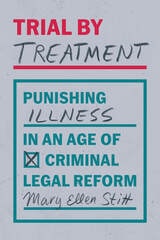
Trial by Treatment
Punishing Illness in an Age of Criminal Legal ReformMary Ellen Stitt
University of Chicago Press, 2025
A troubling account of the unexpected impacts of treatment-based alternatives to criminal punishment.
Every year, courts send hundreds of thousands of people to treatment-based programs as alternatives to traditional punishment. These alternatives—known as ‘diversion programs’—are widely celebrated as reforms that reduce the punishment of the mentally ill. But in Trial by Treatment, Mary Ellen Stitt shows that they have, in fact, expanded the reach of the criminal legal system and its power over the lives of the most vulnerable.
The inner workings of diversion programs are obscure, partially by design, and data on outcomes is hard to come by. Stitt draws on two years of fieldwork in criminal courtrooms and court-mandated treatment sessions, as well as an original national dataset, in-depth interviews, and experimental survey data, to document the hidden impacts of diversion. She shows that placing mental healthcare under the control of the courts has helped to legitimize the criminalization of illness, warped treatment environments, and amplified inequalities in punishment. In vivid and humanizing detail, Trial by Treatment shows how reforms that keep power and discretion in the same hands can entrench the very problems they promised to solve.

Trial by Treatment
Punishing Illness in an Age of Criminal Legal ReformMary Ellen Stitt
University of Chicago Press, 2025
This is an auto-narrated audiobook version of this book.
A troubling account of the unexpected impacts of treatment-based alternatives to criminal punishment.
Every year, courts send hundreds of thousands of people to treatment-based programs as alternatives to traditional punishment. These alternatives—known as ‘diversion programs’—are widely celebrated as reforms that reduce the punishment of the mentally ill. But in Trial by Treatment, Mary Ellen Stitt shows that they have, in fact, expanded the reach of the criminal legal system and its power over the lives of the most vulnerable.
The inner workings of diversion programs are obscure, partially by design, and data on outcomes is hard to come by. Stitt draws on two years of fieldwork in criminal courtrooms and court-mandated treatment sessions, as well as an original national dataset, in-depth interviews, and experimental survey data, to document the hidden impacts of diversion. She shows that placing mental healthcare under the control of the courts has helped to legitimize the criminalization of illness, warped treatment environments, and amplified inequalities in punishment. In vivid and humanizing detail, Trial by Treatment shows how reforms that keep power and discretion in the same hands can entrench the very problems they promised to solve.