Results by title
67 books match the query 'Mexican American women' and 9 start with t
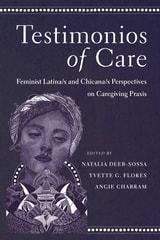
Testimonios of Care
Feminist Latina/x and Chicana/x Perspectives on Caregiving PraxisEdited by Natalia Deeb-Sossa, Yvette G. Flores, Angie Chabram
University of Arizona Press, 2024
The book opens with an introductory chapter by the three co-editors, and then is divided into three sections exploring the caregiver voice, community caregiving, and reflections that outline a Caregiver Bill of Rights and present a call to action. Throughout, contributors discuss kinship care, including formal and informal adoptions, community care, caregiving in professional health contexts, and the implicit caregiving inherent in teaching BIPOC students, which largely falls upon faculty of color.
Testimonios of Care gives voice to those who often are voiceless in histories of caregiving and is guided by Chicana and Latina feminist principles, which include solidarity between women of color, empathy, willingness to challenge the patriarchal medical health-care systems, questioning traditional gender roles and idealization of familia, and caring for self while caring for loved ones and community.
Contributors
yvonne hurtado allen
Angie Chabram
Natalia Deeb-Sossa
Yvette G. Flores
Inés Hernández-Ávila
ire’ne lara silva
Josie Méndez-Negrete
Maria R. Palacios
Hector Rivera-Lopez
Maria Angelina Soldatenko
Anita Tijerina Revilla
Mónica Torreiro-Casal
Enriqueta Valdez-Curiel
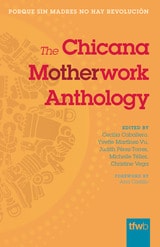
The Chicana Motherwork Anthology
Edited by Cecilia Caballero, Yvette Martínez-Vu, Judith Pérez-Torres, Michelle Téllez, Christine Vega; Foreword by Ana Castillo
University of Arizona Press, 2019
The volume is organized in four parts: (1) separation, migration, state violence, and detention; (2) Chicana/Latina/WOC mother-activists; (3) intergenerational mothering; and (4) loss, reproductive justice, and holistic pregnancy. Contributors offer a just framework for Chicana and Women of Color mother-scholars, activists, and allies to thrive within and outside of the academy. They describe a new interpretation of motherwork that addresses the layers of care work needed for collective resistance to structural oppression and inequality.
This anthology is a call to action for justice. Contributions are both theoretical and epistemological, and they offer an understanding of motherwork through Chicana and Women of Color experiences.
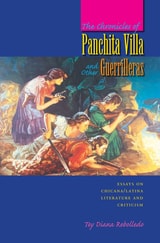
The Chronicles of Panchita Villa and Other Guerrilleras
Essays on Chicana/Latina Literature and CriticismBy Tey Diana Rebolledo
University of Texas Press, 2006
Although there have been substantial contributions to Chicana literature and criticism over the past few decades, Chicanas are still underrepresented and underappreciated in the mainstream literary world and virtually nonexistent in the canon. Writers like Sandra Cisneros, Ana Castillo, and Gloria Anzaldúa have managed to find larger audiences and critical respect, but there are legions of Chicana writers and artists who have been marginalized and ignored despite their talent. Even in Chicano anthologies, the focus has tended to be more on male writers. Chicanas have often found themselves without a real home in the academic world.
Tey Diana Rebolledo has been writing about Chicana/Latina identity, literature, discrimination, and feminism for more than two decades. In this collection of essays, she brings together both old and new works to give a state-of-the-moment look at the still largely unanswered questions raised by vigilant women of color throughout the last half of the twentieth century. An intimate introductory essay about Rebolledo's personal experiences as the daughter of a Mexican mother and a Peruvian father serves to lay the groundwork for the rest of the volume. The essays delve into the historical development of Chicana writing and its early narratives, the representation of Chicanas as seen on book covers, Chicana feminism, being a Chicana critic in the academy, Chicana art history, and Chicana creativity. Rebolledo encourages "guerrillera" warfare against academia in order to open up the literary canon to Chicana/Latina writers who deserve validation.

The Panza Monologues
Written, Compiled, and Collected by Virginia Grise and Irma Mayorga
University of Texas Press, 2014
The Panza Monologues is an original solo performance piece based on women's stories about their panzas—tú sabes—that roll of belly we all try to hide. Written, compiled, and collected by Virginia Grise and Irma Mayorga and fashioned into a tour-de-force solo performance, The Panza Monologues features the words of Chicanas speaking with humor and candor. Their stories boldly place the panza front and center as a symbol that reveals the lurking truths about women's thoughts, lives, loves, abuses, and living conditions.
This second edition of The Panza Monologues presents the performance script in its entirety, as well as a rich supporting cast of dramaturgical and pedagogical materials. These include a narrative history of the play’s development by the playwrights; critical materials that enhance and expand upon the script’s themes and ideas (a short introduction to San Antonio, where the play was developed; playwright autogeographies; and a manifesto on women of color making theater); and a selection of pedagogical and creative ideas, including guidelines and advice for staging a production of the play and for teaching it in the classroom, community-making activities (screenings, hosting “Panza Parties,” community/group discussions), and creative writing activities connected to the play.
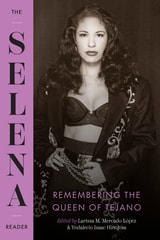
The Selena Reader
Remembering the Queen of TejanoEdited by Larissa M. Mercado-López and Yndalecio Isaac Hinojosa
University of Texas Press, 2026
A literary collection honoring and memorializing Selena, the Queen of Tejano.
Thirty years after her death, Selena Quintanilla-Pérez remains a cherished figure of Mexican American popular culture, her music and celebrity resounding across the decades. This unique collection of creative and scholarly works traces Selena’s lasting impact as an entertainer and focal point of community and identity.
Assembling essays, memoir, short stories, and poems, The Selena Reader memorializes a beloved singer while also exploring the politics and personal meaning of what we remember. Selena’s devoted admirers tell us what they took from her lyrics and stage presence, the official and fan tributes, and the media and products she inspired. In one essay, Tejana coming-of-age is sharply refracted through the prism of Selena’s art and social status. Another piece considers how Selena’s body and distinctive clothing have shaped the author’s sense of queer self. Honey Avila (aka Honey Andrews), the renowned Selena impersonator, shares vivid recollections of her hero. A father and daughter describe how their conversations about Selena changed their relationship and contributed to Chicana feminist consciousness in their lives. All told, this anthology amplifies the gratitude of generations who have loved, and learned from, Selena.
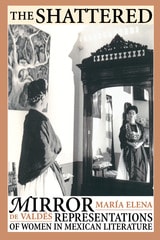
The Shattered Mirror
Representations of Women in Mexican LiteratureBy María Elena de Valdés
University of Texas Press, 1998
Popular images of women in Mexico—conveyed through literature and, more recently, film and television—were long restricted to either the stereotypically submissive wife and mother or the demonized fallen woman. But new representations of women and their roles in Mexican society have shattered the ideological mirrors that reflected these images. This book explores this major change in the literary representation of women in Mexico.
María Elena de Valdés enters into a selective and hard-hitting examination of literary representation in its social context and a contestatory engagement of both the literary text and its place in the social reality of Mexico. Some of the topics she considers are Carlos Fuentes and the subversion of the social codes for women; the poetic ties between Sor Juana Inés de la Cruz and Octavio Paz; questions of female identity in the writings of Rosario Castellanos, Luisa Josefina Hernández, María Luisa Puga, and Elena Poniatowska; the Chicana writing of Sandra Cisneros; and the postmodern celebration—without reprobation—of being a woman in Laura Esquivel's Like Water for Chocolate.
The Truth about Alicia
and Other StoriesAna Consuela Matiella
University of Arizona Press, 2002
Alicia is not the only woman with problems. In these stories about contemporary and traditional Latinas, Ana Consuelo Matiella uses sensitivity and wit to address issues faced by women of color and women everywhere—issues largely having to do with love: between men and women, mothers and daughters, women and friends. In engaging stories about family myths, gossip, and lies, comadres converse over afternoon café con leche. "I'm sure that I was the only wife whose husband was teaching their daughter to do Cheech Marin imitations," remarks one of Matiella's characters. Another sings the praises of the chocolate milkshake diet: "That’s one advantage of living on the border. You get to try all the latest gringo inventions as soon as they hit the streets." Through encounters with angels, conversations with dogs, and relationships with men overly concerned with the dimensions of their manhood, Matiella offers a new exploration of the human condition—one showing us that if we cannot laugh at life, no matter how tragic the circumstances, we are surely doomed.
With humor and insight that come only through close observation of her fellow human beings, this gifted writer brings new twists to familiar scenes. The Truth about Alicia and Other Stories is an authentic portrayal of the world of contemporary Chicanas that will delight everyone who enters it.
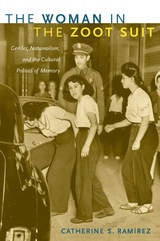
The Woman in the Zoot Suit
Gender, Nationalism, and the Cultural Politics of MemoryCatherine S. Ramírez
Duke University Press, 2009
Two events in wartime Los Angeles thrust young Mexican American zoot suiters into the media spotlight. In the Sleepy Lagoon incident, a man was murdered during a mass brawl in August 1942. Twenty-two young men, all but one of Mexican descent, were tried and convicted of the crime. In the Zoot Suit Riots of June 1943, white servicemen attacked young zoot suiters, particularly Mexican Americans, throughout Los Angeles. The Chicano movement of the 1960s–1980s cast these events as key moments in the political awakening of Mexican Americans and pachucos as exemplars of Chicano identity, resistance, and style. While pachucas and other Mexican American women figured in the two incidents, they were barely acknowledged in later Chicano movement narratives. Catherine S. Ramírez draws on interviews she conducted with Mexican American women who came of age in Los Angeles in the late 1930s, 1940s, and 1950s as she recovers the neglected stories of pachucas. Investigating their relative absence in scholarly and artistic works, she argues that both wartime U.S. culture and the Chicano movement rejected pachucas because they threatened traditional gender roles. Ramírez reveals how pachucas challenged dominant notions of Mexican American and Chicano identity, how feminists have reinterpreted la pachuca, and how attention to an overlooked figure can disclose much about history making, nationalism, and resistant identities.

Three Decades of Engendering History
Linda Heidenreich
University of North Texas Press, 2014