Results by title
157 books match the query 'Mexican-American Border Region' and 23 start with t
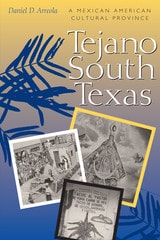
Tejano South Texas
A Mexican American Cultural ProvinceBy Daniel D. Arreola
University of Texas Press, 2002
Winner, John Brinckerhoff Jackson Prize, Association of American Geographers
On the plains between the San Antonio River and the Rio Grande lies the heartland of what is perhaps the largest ethnic region in the United States, Tejano South Texas. In this cultural geography, Daniel Arreola charts the many ways in which Texans of Mexican ancestry have established a cultural province in this Texas-Mexico borderland that is unlike any other Mexican American region.
Arreola begins by delineating South Texas as an environmental and cultural region. He then explores who the Tejanos are, where in Mexico they originated, and how and where they settled historically in South Texas. Moving into the present, he examines many factors that make Tejano South Texas distinctive from other Mexican American regions—the physical spaces of ranchos, plazas, barrios, and colonias; the cultural life of the small towns and the cities of San Antonio and Laredo; and the foods, public celebrations, and political attitudes that characterize the region. Arreola's findings thus offer a new appreciation for the great cultural diversity that exists within the Mexican American borderlands.
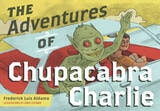
The Adventures of Chupacabra Charlie
Written by Frederick Luis AldamaIllustrated by Chris Escobar
The Ohio State University Press, 2020
With magical realism, allegory, and gentle humor, Aldama and Escobar have created a story that will resonate with young and old readers alike as it incorporates folklore into its subtle take on the current humanitarian crisis at the border.
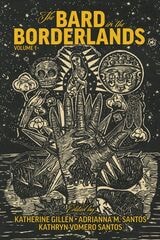
The Bard in the Borderlands
An Anthology of Shakespeare Appropriations en La Frontera, Volume 1Edited by Katherine Gillen, Adrianna M. Santos, and Kathryn Vomero Santos
Arizona Center for Medieval and Renaissance Studies, 2023
For several decades, Chicanx and Indigenous theatermakers have been repurposing Shakespeare’s plays to reflect the histories and lived realities of the US–Mexico Borderlands and to create space to tell stories of and for La Frontera. Celebrating this rich tradition, The Bard in the Borderlands: An Anthology of Shakespeare Appropriations en La Frontera brings a wide range of Borderlands Shakespeare plays together for the first time in a multi-volume open-access scholarly edition.
This anthology celebrates the dynamic, multilingual reworking of canon and place that defines Borderlands Shakespeare, and it situates these geographically and temporally diverse plays within the robust study of Shakespeare’s global afterlives. The editors offer a critical framework for understanding the artistic and political traditions that shape these plays and the place of Shakespeare within the multilayered colonial histories of the region. Borderlands Shakespeare plays, they contend, do not simply reproduce Shakespeare in new contexts but rather use his work in innovative ways to negotiate colonial power and to envision socially just futures.
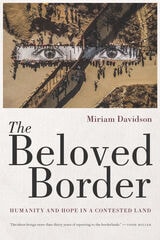
The Beloved Border
Humanity and Hope in a Contested LandMiriam Davidson
University of Arizona Press, 2021
The book draws on a variety of sources to explain how border issues intersect and how the current situation, while made worse under the Trump administration, is in fact the result of decades of prohibition, crackdowns, and wall building on the border. Davidson addresses subjects such as violence in Mexico, particularly against the press; cross-border gun smuggling and legal gun sales; the rise in migrant detentions, deportations, and deaths since the crackdown began; controversy over humanitarian aid in the desert; border patrol crimes and abuses; and the legal, ethical, and moral issues raised by increased police presence and militarization on the border. The book also looks at the environmental impact of wall building and construction of a planned copper mine near Tucson, especially on the jaguar and other endangered species.
Davidson shares the history of sanctuary and argues that this social movement and others that have originated on the border are vanguards of larger global movements against the mistreatment of migrant workers and refugees, police brutality, and other abuses of human and natural rights. She gives concrete examples of positive ways in which border people are promoting local culture and cross-border solidarity through health care, commerce, food, art, and music. While death and suffering continue to occur, The Beloved Border shows us how the U.S.-Mexico border could be, and in many ways already is, a model for peaceful coexistence worldwide.
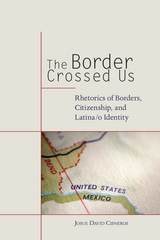
The Border Crossed Us
Rhetorics of Borders, Citizenship, and Latina/o IdentityJosue David Cisneros
University of Alabama Press, 2013
Explores efforts to restrict and expand notions of US citizenship as they relate specifically to the US-Mexico border and Latina/o identity.
Borders and citizenship go hand in hand. Borders define a nation as a territorial entity and create the parameters for national belonging. But the relationship between borders and citizenship breeds perpetual anxiety over the purported sanctity of the border, the security of a nation, and the integrity of civic identity.
In The Border Crossed Us, Josue David Cisneros addresses these themes as they relate to the US-Mexico border, arguing that issues ranging from the Mexican-American War of 1846–1848 to contemporary debates about Latina/o immigration and border security are negotiated rhetorically through public discourse. He explores these rhetorical battles through case studies of specific Latina/o struggles for civil rights and citizenship, including debates about Mexican American citizenship in the 1849 California Constitutional Convention, 1960s Chicana/o civil rights movements, and modern-day immigrant activism.
Cisneros posits that borders—both geographic and civic—have crossed and recrossed Latina/o communities throughout history (the book’s title derives from the popular activist chant, “We didn’t cross the border; the border crossed us!”) and that Latina/os in the United States have long contributed to, struggled with, and sought to cross or challenge the borders of belonging, including race, culture, language, and gender.
The Border Crossed Us illuminates the enduring significance and evolution of US borders and citizenship, and provides programmatic and theoretical suggestions for the continued study of these critical issues.
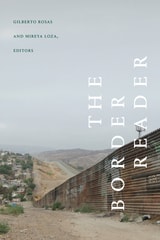
The Border Reader
Gilberto Rosas and Mireya Loza, editors
Duke University Press, 2023
Contributors. Leisy J. Abrego, Gloria E. Anzaldúa, Martha Balaguera, Lionel Cantú, Leo R. Chavez, Raúl Fernández, Rosa-Linda Fregoso, Roberto G. Gonzales, Gilbert G. González, Ramón Gutiérrez, Kelly Lytle Hernández, José E. Limón, Mireya Loza, Alejandro Lugo, Eithne Luibhéid, Martha Menchaca, Cecilia Menjívar, Natalia Molina, Fiamma Montezemolo, Américo Paredes, Néstor Rodríguez, Renato Rosaldo, Gilberto Rosas, María Josefina Saldaña-Portillo, Sonia Saldívar-Hull, Alicia Schmidt Camacho, Sayak Valencia Triana, Carlos G. Vélez-Ibáñez, Patricia Zavella
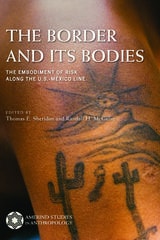
The Border and Its Bodies
The Embodiment of Risk Along the U.S.-México LineEdited by Thomas E. Sheridan and Randall H. McGuire
University of Arizona Press, 2019
The increasingly militarized U.S.-México border is an intensely physical place, affecting the bodies of all who encounter it. The essays in this volume explore how crossing becomes embodied in individuals, how that embodiment transcends the crossing of the line, and how it varies depending on subject positions and identity categories, especially race, class, and citizenship.
Timely and wide-ranging, this book brings into focus the traumatic and real impact the border can have on those who attempt to cross it, and it offers new perspectives on the effects for rural communities and ranchers. An intimate and profoundly human look at migration, The Border and Its Bodies reminds us of the elemental fact that the border touches us all.
Contributors
Bruce E. Anderson
Jared Beatrice
Rebecca Crocker
Jason De León
Linda Green
Randall H. McGuire
Shaylih Muehlmann
Robin Reineke
Olivia T. Ruiz Marrujo
David Seibert
Thomas E. Sheridan
Angela Soler
Ruth M. Van Dyke
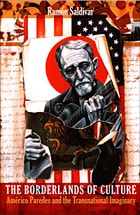
The Borderlands of Culture
Americo Paredes and the Transnational ImaginaryRamón Saldívar
Duke University Press, 2006
Saldívar demonstrates how Paredes’s poetry, prose, and journalism prefigured his later work as a folklorist and ethnographer. In song, story, and poetry, Paredes first developed the themes and issues that would be central to his celebrated later work on the “border studies” or “anthropology of the borderlands.” Saldívar describes how Paredes’s experiences as an American soldier, journalist, and humanitarian aid worker in Asia shaped his understanding of the relations between Anglos and Mexicans in the borderlands of south Texas and of national and ethnic identities more broadly. Saldívar was a friend of Paredes, and part of The Borderlands of Culture is told in Paredes’s own words. By explaining how Paredes’s work engaged with issues central to contemporary scholarship, Saldívar extends Paredes’s intellectual project and shows how it contributes to the remapping of the field of American studies from a transnational perspective.
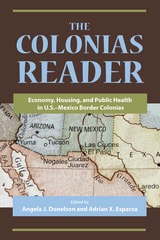
The Colonias Reader
Economy, Housing and Public Health in U.S.-Mexico Border ColoniasEdited by Angela J. Donelson and Adrian X. Esparza
University of Arizona Press, 2010
The Colonias Reader is the first book to present such a broad overview of these communities, offering a glimpse into life in the colonias and the circumstances that allow them to continue to exist—and even grow—in persistent poverty. The contributors document the depth of existing problems in each state and describe how government agencies, nongovernmental organizations, and community activists have mobilized resources to overcome obstacles to progress.
More than reporting problems and documenting programs, the book provides conceptual frameworks that tie poverty to institutional and class-based conflicts, and even challenges the very basis of colonia designations. Most of these contributions move beyond portraying border residents as hapless victims of discrimination and racism, showing instead their devotion to improving their own living conditions through grassroots organizing and community leadership.
These contributions show that, despite varying degrees of success, all colonia residents aspire to a livable wage, safe and decent housing, and basic health care. The Colonias Reader showcases many situations in which these people have organized to fulfill these ambitions and provides new insight into life along the border.
The Informal and Underground Economy of the South Texas Border
By Chad Richardson and Michael J. Pisani
University of Texas Press, 2012
Much has been debated about the presence of undocumented workers along the South Texas border, but these debates often overlook the more complete dimension: the region’s longstanding, undocumented economies as a whole. Borderlands commerce that evades government scrutiny can be categorized into informal economies (the unreported exchange of legal goods and services) or underground economies (criminal economic activities that, obviously, occur without government oversight). Examining long-term study, observation, and participation in the border region, with the assistance of hundreds of locally embedded informants, The Informal and Underground Economy of the South Texas Border presents unique insights into the causes and ramifications of these economic channels.
The third volume in UT–Pan American’s Borderlife Project, this eye-opening investigation draws on vivid ethnographic interviews, bolstered by decades of supplemental data, to reveal a culture where divided loyalties, paired with a lack of access to protection under the law and other forms of state-sponsored recourse, have given rise to social spectra that often defy stereotypes. A cornerstone of the authors’ findings is that these economic activities increase when citizens perceive the state’s intervention as illegitimate, whether in the form of fees, taxes, or regulation. From living conditions in the impoverished colonias to President Felipe Calderón’s futile attempts to eradicate police corruption in Mexico, this book is a riveting portrait of benefit versus risk in the wake of a “no-man’s-land” legacy.
The Keepsake Storm
Gina Franco
University of Arizona Press, 2004
Kathryn is near the end of her life and is losing her memories: travels, husbands, a storm of keepsakes. As Gina Franco unleashes that storm and as Kathryn's flood of memories washes over us, we know at once that we are in the hands of a truly gifted poet. "The Keepsake Storm" is the culmination of a verse cycle that probes the depths of the heart—a meditation on the meaning of life in a difficult world. Drawing on a rich tradition of storytelling in Latino literature, Franco explores the transformative power of compassion as she addresses themes of cultural alienation, lost family roots, and the uncertain resiliency of the self. In writing that blends rapture, vision, and mystery, Franco calls on a multiplicity of voices and a prodigious command of forms to explore the underlying rhythms of life, finding poetry even in the imperfect transmissions of e-mail:
"I was happy to get your letter. I had a rough day.
My step-mom had a breakdown and is in a hospitol.
I don't understand all the why's of it. She has paranoia
scetsafrinia. (and I know that is spelled totally
wrong). I don't blame myself I just didn't see it coming."
By reaffirming the power of self-awareness, history, and place, Franco reaches out to all who struggle to find meaning in times of trouble or self-doubt. The Keepsake Storm is a personal journey through many lives that is nothing less than a celebration—and a reassessment—of American consciousness.
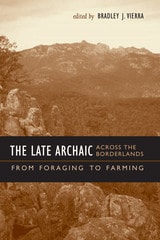
The Late Archaic across the Borderlands
From Foraging to FarmingEdited by Bradley J. Vierra
University of Texas Press, 2005
Why and when human societies shifted from nomadic hunting and gathering to settled agriculture engages the interest of scholars around the world. One of the most fruitful areas in which to study this issue is the North American Southwest, where Late Archaic inhabitants of the Sonoran and Chihuahuan Deserts of Mexico, Arizona, and New Mexico turned to farming while their counterparts in Trans-Pecos and South Texas continued to forage. By investigating the environmental, biological, and cultural factors that led to these differing patterns of development, we can identify some of the necessary conditions for the rise of agriculture and the corresponding evolution of village life.
The twelve papers in this volume synthesize previous and ongoing research and offer new theoretical models to provide the most up-to-date picture of life during the Late Archaic (from 3,000 to 1,500 years ago) across the entire North American Borderlands. Some of the papers focus on specific research topics such as stone tool technology and mobility patterns. Others study the development of agriculture across whole regions within the Borderlands. The two concluding papers trace pan-regional patterns in the adoption of farming and also link them to the growth of agriculture in other parts of the world.
The Law Into Their Own Hands
Immigration and the Politics of ExceptionalismRoxanne Lynn Doty
University of Arizona Press, 2009
Doty examines the social and political contexts that have enabled these civilian groups to flourish and gain legitimacy amongst policy makers and the public. The sentiments underlying the vigilante movement both draw upon and are channeled through a diverse range of organizations whose messages are often reinforced by the media. Taking action when they believe official policy is lacking, groups ranging from elements of the religious right to anti-immigrant groups to white supremacists have created a social movement.
Doty seeks to alert us to the consequences related to this growing movement and to the restructuring of our society. She maintains that with immigrants being considered as enemies and denied basic human rights, it is irresponsible of both citizens and policy makers to treat this complicated issue as a simple black or white reality.
In this solid and theoretically grounded look at contemporary, post-9/11 border vigilantism, the author observes the dangerous and unproductive manner in which private citizens seek to draw firm and uncompromising lines between who is worthy of inclusion in our society and who is not.
The Making of the Mexican Border
The State, Capitalism, and Society in Nuevo León, 1848-1910By Juan Mora-Torres
University of Texas Press, 2001
The issues that dominate U.S.-Mexico border relations today—integration of economies, policing of boundaries, and the flow of workers from south to north and of capital from north to south—are not recent developments. In this insightful history of the state of Nuevo León, Juan Mora-Torres explores how these processes transformed northern Mexico into a region with distinct economic, political, social, and cultural features that set it apart from the interior of Mexico.
Mora-Torres argues that the years between the establishment of the U.S.-Mexico boundary in 1848 and the outbreak of the Mexican Revolution in 1910 constitute a critical period in Mexican history. The processes of state-building, emergent capitalism, and growing linkages to the United States transformed localities and identities and shaped class formations and struggles in Nuevo León. Monterrey emerged as the leading industrial center and home of the most powerful business elite, while the countryside deteriorated economically, politically, and demographically. By 1910, Mora-Torres concludes, the border states had already assumed much of their modern character: an advanced capitalist economy, some of Mexico's most powerful business groups, and a labor market dependent on massive migrations from central Mexico.
The Rise of Necro/Narco Citizenship
Belonging and Dying in the Southwest North American RegionCarlos G. Vélez-Ibáñez
University of Arizona Press, 2025
Carlos G. Vélez-Ibáñez’s latest work, The Rise of Necro/Narco Citizenship investigates the intricate and often harrowing dynamics that define the borderlands between the United States, Mexico, and beyond. This groundbreaking book provides a comprehensive cultural, economic, social, and political-ecological analysis, illustrating how various forms of violence and militarization have reshaped the daily lives and identities of the region’s inhabitants. Through meticulous ethnographic fieldwork, extensive archival research, and rigorous statistical data, Vélez-Ibáñez exposes the deeply entrenched networks of exploitation and conflict that have emerged in response to global capitalism’s pressures.
Vélez-Ibáñez builds on theorization about necrocitizenship to introduce the concept of necro/narco citizenship, which argues that pervasive violence and socioeconomic disruptions create a unique form of existence on both sides of the border. The author examines the dislocation of thousands, the persistent threat of violence, and the ways in which these forces compel individuals to navigate a reality steeped in addiction, self-destruction, and civil deterioration. This book reveals the transnational networks and the morally compromised political economies that sustain them, offering readers an unflinching look at the cost of survival in this tumultuous region.
This essential volume is not only a critical addition to the field of anthropology but also an invaluable resource for those interested in the sociopolitical landscape of the U.S.-Mexico border. Vélez-Ibáñez’s insights will resonate with scholars, students, and policymakers alike. The Rise of Necro/Narco Citizenship challenges us to rethink the narratives of violence, militarization, and resistance that define our understanding of the Southwest North American Region.
The River Has Never Divided Us
A Border History of La Junta de los RiosBy Jefferson Morgenthaler
University of Texas Press, 2004
Winner, William P. Clements Prize, Best Non-Fiction Book on Southwestern America, 2004
Not quite the United States and not quite Mexico, La Junta de los Rios straddles the border between Texas and Chihuahua, occupying the basin formed by the conjunction of the Rio Grande and the Rio Conchos. It is one of the oldest continuously inhabited settlements in the Chihuahuan Desert, ranking in age and dignity with the Anasazi pueblos of New Mexico.
In the first comprehensive history of the region, Jefferson Morgenthaler traces the history of La Junta de los Rios from the formation of the Mexico-Texas border in the mid-19th century to the 1997 ambush shooting of teenage goatherd Esquiel Hernandez by U.S. Marines performing drug interdiction in El Polvo, Texas. "Though it is scores of miles from a major highway, I found natives, soldiers, rebels, bandidos, heroes, scoundrels, drug lords, scalp hunters, medal winners, and mystics," writes Morgenthaler. "I found love, tragedy, struggle, and stories that have never been told." In telling the turbulent history of this remote valley oasis, he examines the consequences of a national border running through a community older than the invisible line that divides it.
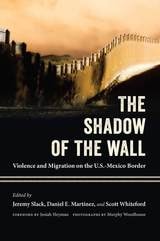
The Shadow of the Wall
Violence and Migration on the U.S.-Mexico BorderEdited by Jeremy Slack, Daniel E. Martínez, and Scott Whiteford; Foreword by Josiah Heyman; Photographs by Murphy Woodhouse
University of Arizona Press, 2018
The authors analyze data from the Migrant Border Crossing Study (MBCS), a mixed-methods, binational research project that offers socially relevant, rigorous social science about migration, immigration enforcement, and violence on the border. Using information gathered from more than 1,600 post-deportation surveys, this volume examines the different faces of violence and migration along the Arizona-Sonora border and shows that deportees are highly connected to the United States and will stop at nothing to return to their families. The Shadow of the Wall underscores the unintended social consequences of increased border enforcement, immigrant criminalization, and deportation along the U.S.-Mexico border.
Contributors
Howard Campbell
Josiah Heyman
Alison Elizabeth Lee
Daniel E. Martínez
Ricardo Martínez-Schuldt
Emily Peiffer
Jeremy Slack
Prescott L. Vandervoet
Matthew Ward
Scott Whiteford
Murphy Woodhouse
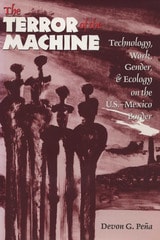
The Terror of the Machine
Technology, Work, Gender, and Ecology on the U.S.-Mexico BorderBy Devon G. Peña
University of Texas Press, 1995
Born of thirteen years of field research, this interdisciplinary work explores the complex intersections of technology, class, gender, and ecology in the transnational milieu of Mexico's maquiladoras, foreign-owned assembly plants located along the U.S. border.
Devon Peña examines workplace and community struggles from the perspective of the women who work in the maquiladoras. He describes the workers' struggles for workplace democracy, social justice, and sustainable development. He also observes the circulation of struggle from the factory to the community, highlighting the efforts to establish worker-owned cooperatives in the border region during the 1970s and 1980s.
Female maquila workers are typically portrayed as passive, apolitical, and easily exploited. This book, however, presents an opposing view, investigating the "subaltern life of the shop floor"—the workers' informal methods of resistance to hazardous conditions, sexual harassment, and managerial tyranny. Using survey research, oral history, discourse analysis, and site ethnography, the author develops a cogent critique of labor-process theory, a critique grounded on his extensive study of actual workplace politics in the maquiladoras.
The Terror of the Machine is a trenchant analysis of the political, cultural, and environmental effects of maquila industrialization and an eloquent and persuasive call for alternatives in the direction of ecologically sustainable and culturally appropriate modes of development.
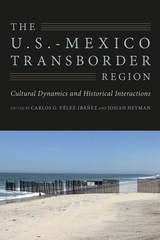
The U.S.-Mexico Transborder Region
Cultural Dynamics and Historical InteractionsEdited by Carlos G. Vélez-Ibáñez and Josiah Heyman
University of Arizona Press, 2017
The U.S.-Mexico Transborder Region presents advanced anthropological theorizing of culture in an important regional setting. Not a static entity, the transborder region is peopled by ever-changing groups who face the challenges of social inequality: political enforcement of privilege, economic subordination of indigenous communities, and organized resistance to domination.
The book, influenced by the work of Eric Wolf and senior editor Carlos G. Vélez-Ibáñez, centers on the greater Mexican North/U.S. Southwest, although the geographic range extends farther. This tradition, like other transborder approaches, attends to complex and fluid cultural and linguistic processes, going beyond the classical modern anthropological vision of one people, one culture, one language. With respect to recent approaches, however, it is more deeply social, focusing on vertical relations of power and horizontal bonds of mutuality.
Vélez-Ibáñez and Heyman envision this region as involving diverse and unequal social groups in dynamic motion over thousands of years. Thus the historical interaction of the U.S.-Mexico border, however massively unequal and powerful, is only the most recent manifestation of this longer history and common ecology. Contributors emphasize the dynamic “transborder” quality—conflicts, resistance, slanting, displacements, and persistence—in order to combine a critical perspective on unequal power relations with a questioning perspective on claims to bounded simplicity and perfection.
The book is notable for its high degree of connection across the various chapters, strengthened by internal syntheses from notable border scholars, including Robert R. Alvarez and Alejandro Lugo. In the final section, Judith Freidenberg draws general lessons from particular case studies, summarizing that “access to valued scarce resources prompts the erection of human differences that get solidified into borders,” dividing and limiting, engendering vulnerabilities and marginalizing some people.
At a time when understanding the U.S.-Mexico border is more important than ever, this volume offers a critical anthropological and historical approach to working in transborder regions.
Contributors:
Amado Alarcón
Robert R. Álvarez
Miguel Díaz-Barriga
Margaret E. Dorsey
Judith Freidenberg
Ruth Gomberg-Muñoz
James Greenberg
Josiah Heyman
Jane H. Hill
Sarah Horton
Alejandro Lugo
Luminiţa-Anda Mandache
Corina Marrufo
Guillermina Gina Núñez-Mchiri
Anna Ochoa O’Leary
Luis F. B. Plascencia
Lucero Radonic
Diana Riviera
Thomas E. Sheridan
Kathleen Staudt
Carlos G. Vélez-Ibáñez

The Verging Cities
Natalie Scenters-Zapico
University Press of Colorado, 2015
The border in Scenters-Zapico’s The Verging Cities exists in a visceral place where the real is (sur)real. In these poems mouths speak suspended from ceilings, numbered metal poles mark the border and lovers’ spines, and cities scream to each other at night through fences that “ooze only silt.” This bold new vision of border life between what has been named the safest city in the United States and the murder capital of the world is in deep conversation with other border poets—Benjamin Alire Saenz, Gloria Anzaldúa, Alberto Ríos, and Luis Alberto Urrea—while establishing itself as a new and haunting interpretation of the border as a verge, the beginning of one thing and the end of another in constant cycle.
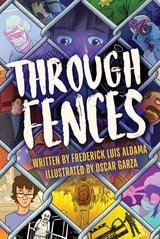
Through Fences
Written by Frederick Luis Aldama and Illustrated by Oscar Garza
The Ohio State University Press, 2024
Honor-winner, 2025 Texas Institute of Letters Jean Flynn Award for Best Young Adult Book
Longlisted, REFORMA National Book Award 2024
Through Fences follows the ups and downs of Latino kids and young adults in the US–Mexico borderlands: San Ysidro, Calexico, McAllen, and back and forth across the border. A young girl's journey north goes wrong, and now she is in a forbidding new place, away from her parents and brother, where she doesn't understand what the adults in green are saying even as she tries to obey their rules. Rocky, one of the few white kids in town, stands by and watches as Miguel is jumped by two of his friends. Maggie and her parents are separated at the border in a tragic accident. Alberto's son doesn't understand his Mexican father's hatred for illegals or his work as a border patrol agent. Alicia is a TikTok influencer who doesn't want to grow up to be a hospital cleaning lady like her mother, but COVID complicates things. Whatever their challenges, the kids, teens, tweens, and adults in these pages are just trying to survive their everyday lives. Vibrantly illustrated by Oscar Garza, each of these short stories brings a different perspective on the perils of living on the border while brown.
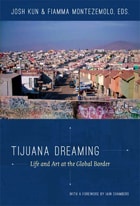
Tijuana Dreaming
Life and Art at the Global BorderJosh Kun and Fiamma Montezemolo, eds.
Duke University Press, 2012
Contributors. Tito Alegría, Humberto Félix Berumen, Roberto Castillo Udiarte, Iain Chambers, Luis Humberto Crosthwaite, Teddy Cruz, Ejival, Tarek Elhaik, Guillermo Fadanelli, Néstor García Canclini, Ingrid Hernández, Jennifer Insley-Pruitt, Kathryn Kopinak, Josh Kun, Jesse Lerner, Fiamma Montezemolo, Rene Peralta, Rafa Saavedra, Lucía Sanromán, Santiago Vaquera-Vásquez, Heriberto Yépez
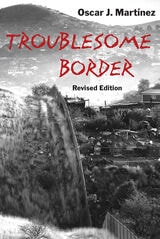
Troublesome Border, Revised Edition
Oscar J. Martínez
University of Arizona Press, 2006
Oscar Martínez’s words may come as a surprise to those who associate the U.S. southern border with banditry, racial strife, illegal migration, drug smuggling, and official corruption—all attributed to Mexico. In Troublesome Border, now revised to reflect the dramatic changes over the last two decades, a distinguished scholar and long-time resident of the border area addresses these and other problems that have caused increasing concern to federal governments on both sides of the border.
This second edition of Troublesome Border has been updated and revised to cover dramatic developments since the book’s first publication in 1988 that have once again transformed the region in fundamental ways. Martinez includes new information on migration and drugs, including the extraordinary rise of violence traced largely to the rampant illegal drug trade; the devastating effects of U.S. Border Patrol “blockades” that have resulted in thousands of deaths; and the impact of the North American Free Trade Agreement (NAFTA).