Results by title
64 books match the query 'Military policy' and 14 start with t

Talking to North Korea
Ending the Nuclear StandoffGlyn Ford
Pluto Press, 2018
This provocative insider’s account blasts apart the myths which paint North Korea as a rogue state run by a mad leader. Informed by extraordinary access to the country's leadership, Glyn Ford investigates the regime from the inside, providing game-changing insights. Acknowledging that North Korea is a deeply flawed and barbaric state, he nonetheless shows that sections of the leadership are desperate to modernize and end their isolation.
With chapters on recent developments including the Trump / Kim summit, Ford supports a dialogue between East and West and provides a road map to avert the looming threat of a war that would threaten the lives of millions.
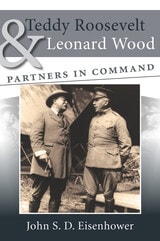
Teddy Roosevelt and Leonard Wood
Partners in CommandJohn S. D. Eisenhower
University of Missouri Press, 2013
Theodore Roosevelt was a man of wide interests, strong opinions, and intense ambition for both himself and his country. When he met Leonard Wood in 1897, he recognized a kindred spirit. Moreover, the two men shared a zeal for making the United States an imperial power that would challenge Great Britain as world leader. For the remainder of their lives, their careers would intertwine in ways that shaped the American nation.
When the Spanish American War came, both men seized the opportunity to promote the goals of American empire. Roosevelt resigned as assistant secretary of the navy in William McKinley’s administration to serve as a lieutenant colonel of the Rough Riders, a newly organized volunteer cavalry. Wood, then a captain in the medical corps and physician to McKinley, was promoted to colonel and given charge of the unit.
Roosevelt later took over command of the Rough Riders. In the Battle of San Juan Hill, he led it in a charge up Kettle Hill that would end in victory for the American troops and make their daring commander a household name, a war hero, and, eventually, president of the United States.
At the Treaty of Paris in 1898, Spain ceded Cuba, Puerto Rico, Guam, and the Philippines to the United States. The next year, Wood became military governor of Cuba. He remained in the post until 1902. By that time Roosevelt was president. One of the major accomplishments of his administration was reorganization of the War Department, which the war with Spain had proved disastrously outdated. In 1909, when William Howard Taft needed a strong army chief of staff to enforce the new rules, he appointed Leonard Wood.
Both Wood and Roosevelt were strong proponents of preparedness, and when war broke out in Europe in August 1914, Wood, retired as chief of staff and backed by Roosevelt, established the “Plattsburg camps,” a system of basic training camps. When America entered the Great War, the two men’s foresight was justified, but their earlier push for mobilization had angered Woodrow Wilson, and both were denied the command positions they sought in Europe.
Roosevelt died in 1919 while preparing for another presidential campaign. Wood made a run in his place but was never taken seriously as a candidate. He retired from the army and spent the last seven years of his life as civilian governor of the Philippines.
It was a quiet end for two men who had been giants of their time. While their modernization of the army is widely admired, they were not without their critics. Roosevelt and Wood saw themselves as bold leaders but were regarded by some as ruthless strivers. And while their shared ambitions for the United States were tempered by a strong sense of duty, they could, in their certainty and determination, trample those who stood in their path. Teddy Roosevelt and Leonard Wood: Partners in Command is a revealing and long overdue look at the dynamic partnership of this fascinating pair and will be welcomed by scholars and military history enthusiasts alike.
The Capture Chain
US Military Detainment from Truman to TrumpRichard Nisa
University of Minnesota Press, 2027
A penetrating look into the hidden networks of wartime capture, circulation, and detainment by United States military personnel
The Capture Chain offers a detailed history of the United States’ detention practices and the evolving infrastructure designed for the apprehension, control, and transportation of people during times of war. Spanning eight decades and several major conflicts, this work examines the hidden spaces and logistical networks connecting the front lines and prisoner-of-war camps—sites that exist at the fraught intersection of life maintenance and death distribution.
Detailing the routes, protocols, research methods, and technical systems that constitute what Richard Nisa terms the global capture chain, this book underscores how such military architectures have become increasingly sophisticated and technologically advanced since the dawn of the Cold War. Drawing on declassified military documents, diplomatic records from the Geneva Conventions, and memoirs written by soldiers and prisoners, The Capture Chain offers unprecedented insight into this shifting geography of psychological and physical violence.
Using archival research to draw links between behavioral science studies during the Korean War, Vietnam-era computation, and post-9/11 rendition networks and digital biometrics, The Capture Chain introduces new ways of understanding urgent contemporary debates around autonomous warfare, mass surveillance, and detainment. By introducing the capture chain as both a historical object and a methodological lens, Nisa highlights the legal and moral grey area that constitutes the ongoing militarized maintenance of human life.
Retail e-book files for this title are screen-reader friendly with images accompanied by short alt text and/or extended descriptions.
The Clinton Wars
The Constitution, Congress, and War PowersRyan C. Hendrickson
Vanderbilt University Press, 2002
Ryan Hendrickson examines the behavior of the Clinton administration and Congress in dealing with the range of American military operations that occurred during the Clinton presidency. He uses a case-study approach, laying out the foreign background and domestic political controversies in separate chapters on Somalia, Haiti, Bosnia, Kosovo, and Iraq. Of special interest after the World Trade Center attacks is the chapter "Terrorism: Usama Bin Laden."
The author analyzes a number of factors that influence the domestic decision-making process. We see the president relying on congressional consultation and approval during periods of political or personal weakness, and, conversely, in better times we see a president with a freer hand. Also influential is the ability of the public to comprehend and support the reasons for a particular action, with troops in Bosnia requiring more explanation than cruise missiles over Baghdad. Consideration is given to the relevance and effectiveness of the War Powers Resolution of 1973, a Watergate-era attempt by Congress to restore what it perceived to be its legitimate constitutional role in the decision to use force abroad.
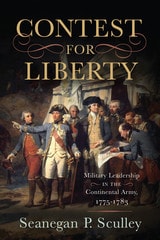
The Contest for Liberty
Military Leadership in the Continental Army, 1775–1783Seanegan P. Sculley
Westholme Publishing, 2019
How American Colonial Ideals Shaped Command, Discipline, and Honor in the U.S. Armed Forces
In the summer of 1775, a Virginia gentleman-planter was given command of a New England army laying siege to British-occupied Boston. With his appointment, the Continental Army was born. Yet the cultural differences between those serving in the army and their new commander-in-chief led to conflicts from the very beginning that threatened to end the Revolution before it could start. The key challenge for General George Washington was establishing the standards by which the soldiers would be led by their officers. What kind of man deserved to be an officer? Under what conditions would soldiers agree to serve? And how far could the army and its leaders go to discipline soldiers who violated those enlistment conditions? As historian Seanegan P. Sculley reveals in Contest for Liberty: Military Leadership in the Continental Army, 1775–1783, these questions could not be determined by Washington alone. His junior officers and soldiers believed that they too had a part to play in determining how and to what degree their superior officers exercised military authority and how the army would operate during the war. A cultural negotiation concerning the use of and limits to military authority was worked out between the officers and soldiers of the Continental Army; although an unknown concept at the time, it is what we call leadership today. How this army was led and how the interactions between officers and soldiers from the various states of the new nation changed their understandings of the proper exercise of military authority was finally codified in General Friedrich Wilhelm von Steuben’s The Regulations for the Order and Discipline of the Troops of the United States, first published in 1779. The result was a form of military leadership that recognized the autonomy of the individual soldiers, a changing concept of honor, and a new American tradition of military service.
The Foreign and Domestic Dimensions of Modern Warfare
Vietnam, Central America, and Nuclear StrategyHoward Mumford Jones
University of Alabama Press, 1988
An exploration of the nuclear arms race and the dangers arising with the advent of “limited warfare”
After the development of the atomic bomb in 1945, Americans became engaged in a "new kind of war" against totalitarianism. Enemies and objectives slipped out of focus, causing political and military aims to mesh as a struggle to contain communism both at home and abroad encompassed civilians as well as soldiers. In matters relating to Vietnam, Central America, and the nuclear arms race, the domestic and foreign dimensions of each issue became inseparable. Policymakers in Washington had to formulate strategies dictated by "limited war" in their search for peace.
Contributors to this volume demonstrate the multifaceted nature of modern warfare. Robert H. Ferrell establishes the importance of studying military history in understanding the post-World War II era. On Vietnam, Colonel Harry G. Summers, Jr., gives an intriguing argument regarding the U. S. Army; George C. Herring examines how America's decisions in 1954 assured deepened involvement; and Captain Mark Clodfelter uncovers new evidence concerning "Linebacker I." On the home front, Robert F. Burk analyzes the impact of the Cold War on the battle for racial justice; Charles DeBenedetti puts forth a challenging interpretation of the antiwar movement; and James C. Schneider provides perspective on the relationship between the Vietnam War and the Great Society. On Central America, two writers downplay communism in explaining the region's troubles. Ralph Lee Woodward, Jr., fits the Nicaraguan revolution in the long span of history, and Thomas M. Leonard shows how the Reagan administration forced Costa Rica to side with the United States's anti-Sandinista policy. Finally, on nuclear strategy, Donald M. Snow offers a thought-provoking assessment of the "star wars" program, and Daniel S. Papp recommends measures to promote understanding among the superpowers.
These essays demonstrate that the making of foreign policy is immensely complicated, not subject to easy solution or to simple explanation. Despite these complexities, the central objective of policymakers remained clear: to safeguard what was perceived as the national interest.

The Gaither Committee, Eisenhower, and the Cold War
EISENHOWER & COLD WARDavid L. Snead
The Ohio State University Press, 1998
The Hidden Perspective
The Military Conversations 1906-1914David Owen
Haus Publishing, 2014
Using contemporary historical documents, David Owen, himself a former foreign secretary, shows how the foreign office’s underlying belief in Britain’s moral obligation to send troops to the Continent influenced political decision-making and helped create the impression that war was inevitable. Had Britain’s diplomatic and naval strategy been handled more skillfully during these years, Owen contends, the carnage of World War I might have been prevented altogether.
The Military and Politics in Postauthoritarian Chile
Gregory Weeks
University of Alabama Press, 2003
"The Military and Politics in Post-Authoritarian Chile should be read by everyone concerned with the relation between democracy and the armed forces. It is a well-researched, well-written volume that should prove both interesting and useful to scholars and students alike." —Perspectives on Politics
Why have political leaders of developing and authoritarian nations run into so many obstacles as they attempt to establish civilian supremacy over armed forces in the democratization of their countries? This is the question Gregory Weeks poses in his study of Chile from 1990 onward. He explains how the Chilean military has maintained a high level of political influence in the tumultuous aftermath of dictatorial rule by Army General Augusto Pinochet, thus confounding a smooth transition to civilian authority.
Even after the reins of power were officially handed over in 1990, Pinochet continued as commander in chief of the army until 1998, when he took a lifetime seat in the Senate and led the military’s efforts to retain its legal and constitutional prerogatives while limiting civilian oversight of military affairs. This assertion of guardianship by the military has produced a political tug-of-war between it and civilian authorities the two contenders for political primacy in Chile. In addition to recounting the historical background of this situation, Weeks’s study examines where conflict between these two contenders has been most productive and accord has been highest. His findings suggest that formal contacts, conducted through formal institutions, have been the most conducive to civil supremacy and, therefore, the consolidation of democracy.
Based on interviews, government documents, military journals, newspapers, and other archival sources, The Military and Politics in Postauthoritarian Chile describes how presidents, military officers, members of Congress, and judges have interacted since the end of the military regime. With implications for conflict resolution studies, this book will be valuable for Chileanists and policymakers and analysts of Latin American regimes, as well as academic libraries, military historians, social scientists, and students and scholars of Latin American history and politics.
The Politics of Military Force
Antimilitarism, Ideational Change, and Post-Cold War German Security DiscourseFrank A. Stengel
University of Michigan Press, 2020
The Privatisation of Israeli Security
Shir Hever
Pluto Press, 2017

The Vital Realities for 2020 and Beyond
Writings on Water Wars, Nuclear Devastation, Endless War, Economic Revolution, and Surveillance Versus FreedomRoger Armbrust
Parkhurst Brothers, Inc., 2019
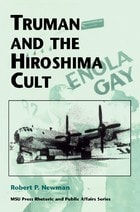
Truman and the Hiroshima Cult
Robert P. Newman
Michigan State University Press, 1995
The United States dropped atomic bombs on Japan in 1945 to end World War II as quickly and with as few casualties as possible. That is the compelling and elegantly simple argument Newman puts forward in his new study of World War II's end, Truman and the Hiroshima Cult. According to Newman: (1) The U.S. Strategic Bombing Survey conclusions that Japan was ready to surrender without "the Bomb" are fraudulent; (2) America’s "unconditional surrender" doctrine did not significantly prolong the war; and (3) President Harry S. Truman’s decision to use atomic weapons on Japanese cities was not a "racist act," nor was it a calculated political maneuver to threaten Joseph Stalin’s Eastern hegemony. Simply stated, Newman argues that Truman made a sensible military decision. As commander in chief, he was concerned with ending a devastating and costly war as quickly as possible and with saving millions of lives.
Yet, Newman goes further in his discussion, seeking the reasons why so much hostility has been generated by what happened in the skies over Hiroshima and Nagasaki in early August, 1945. The source of discontent, he concludes, is a "cult" that has grown up in the United States since the 1960s. It was weaned on the disillusionment spawned by concerns about a military industrial complex, American duplicity and failure in the Vietnam War, and a mistrust of government following Watergate. The cult has a shrine, a holy day, a distinctive rhetoric of victimization, various items of scripture, and, in Japan, support from a powerful Marxist constituency. "As with other cults, it is ahistorical," Newman declares. "Its devotees elevate fugitive and unrepresentative events to cosmic status. And most of all, they believe." Newman’s analysis goes to the heart of the process by which scholars interpret historical events and raises disturbing issues about the way historians select and distort evidence about the past to suit special political agendas.
Twenty-First Century Military Innovation
Technological, Organizational, and Strategic Change beyond Conventional WarMarcus Schulzke
University of Michigan Press, 2022
Contemporary war is as much a quest for decisive technological, organizational, and doctrinal superiority before the fighting starts as it is an effort to destroy enemy militaries during battle. Armed forces that are not actively fighting are instead actively reengineering themselves for success in the next fight and imagining what that next fight may look like. Twenty-First Century Military Innovation outlines the most theoretically important themes in contemporary warfare, especially as these appear in distinctive innovations that signal changes in states’ warfighting capacities and their political goals.
Marcus Schulzke examines eight case studies that illustrate the overall direction of military innovation and important underlying themes. He devotes three chapters to new weapons technologies (drones, cyberweapons, and nonlethal weapons), two chapters to changes in the composition of state military forces (private military contractors and special operations forces), and three chapters to strategic and tactical changes (targeted killing, population-centric counterinsurgency, and degradation). Each case study includes an accessible introduction to the topic area, an overview of the ongoing scholarly debates surrounding that topic, and the most important theoretical implications. This book can be read as an overview of the themes that run throughout innovations of varying types or it can be used by readers who are interested in particular topic areas.