Results by title
129 books match the query 'Mind, Body, Spirit' and 27 start with t
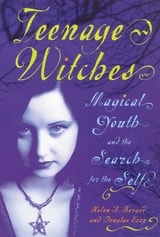
Teenage Witches
Magical Youth and the Search for the SelfBerger, Helen
Rutgers University Press, 2007
Yet, as Helen A. Berger and Douglas Ezzy show in this in-depth look into the lives of teenage Witches, the reality of their practices, beliefs, values, and motivations is very different from the sensational depictions we see in popular culture. Drawing on extensive research across three countries--the United States, England, and Australia--and interviews with young people from diverse backgrounds, what they find are highly spiritual and self-reflective young men and women attempting to make sense of a postmodern world via a religion that celebrates the earth and emphasizes self-development.
The authors trace the development of Neo-Paganism (an umbrella term used to distinguish earth-based religions from the pagan religions of ancient cultures) from its start in England during the 1940s, through its growing popularity in the decades that followed, up through its contemporary presence on the Internet. Though dispersed and disorganized, Neo-Pagan communities, virtual and real, are shown to be an important part of religious identity particularly for those seeking affirmation during the difficult years between childhood and adulthood.
Tendings
Feminist Esoterisms and the Abolition of ManNathan Snaza
Duke University Press, 2024
The Aesthetic Astronaut
sonnets by Roger ArmbrustRoger Armbrust
Parkhurst Brothers, Inc., 2009
One hundred twenty-two sonnets that touch on contemporary American popular culture, social trends, and personalities. Poet Roger Armbrust is described by some as a mystic, by others as a spiritualist, and by yet others as a guy who toys with really big thoughts, making them objects both of serious study and of humor. His sonnets will push you to laughter and meditation: a satisfying literary ride.
In The Aesthetic Astronaut, Roger Armbrust escorts readers on an insightful journey throughout Earth and beyond. We experience the loneliness and instpiration of "the Aesthetic Astronaut"; cold-blooded calculations of "The Armchair Assassin"; passion and sense of the romantic lover; reflective memories of a gentle heart growing older; ironic vision of an observer to history, and subtle--and sometimes not so subtle--humor of a fellow human involved in our day-to-day challenge of living a worthwhile life. The poet's imagery and attitude. . . may fascinate, thrill, sadden, anger, or push you to laughter or meditation. But you'll find the trip a fascinating literary ride.

The Analysis of Ideology
Raymond Boudon
University of Chicago Press, 1989
Boudon begins by providing an exhaustive and subtle critique of sociological explanations of ideology from early conceptions to its current usage in the works of Barthes, Foucault, Habermas, Sartre, and others. He then offers his own interpretation of the origins and emergence of ideological beliefs. In opposition to those views which associate ideology with irrationalism, Boudon shows that ideologies are a natural ingredient of social life; he develops a rationalist theory that helps to explain why certain ideas are believed by individuals and thereby effective in the social world. Finally, he examines case studies of two modern-day ideologies—developmentalism and Third Worldism.
Moving easily across disciplinary boundaries, Boudon's provocative contribution to a subject of growing significance will be of great interest to scholars in sociology and social theory, as well as philosophy, political science, and development studies.

The Anti-Witch
Jeanne Favret-Saada
HAU, 2015
Jeanne Favret-Saada is arguably one of France’s most brilliant anthropologists, and The Anti-Witch is nothing less than a masterpiece. A synthesis of ethnographic theory and psychoanalytic revelation, where the line between researcher and subject is blurred—if not erased—The Anti-Witch develops the contours of an anthropology of therapy, while deeply engaging with what it means to be caught in the logic of witchcraft. Through an intimate and provocative sharing of the ethnographic voice with Madame Flora, a “dewitcher,” Favret-Saada delivers a critical challenge to some of anthropology’s fundamental concepts.
Sure to be of interest to practitioners of psychoanalysis as well as to anthropologists, The Anti-Witch will bring a new generation of scholars into conversation with the work of a truly innovative thinker.
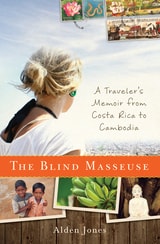
The Blind Masseuse
A Traveler's Memoir from Costa Rica to CambodiaAlden Jones
University of Wisconsin Press, 2013
Gold Winner for Travel Essays, Foreword Books of the Year
Gold Medal for Travel Essays, Independent Publisher Book Awards
Winner, Bisexual Book Awards, Bisexual Biography/Memoir Category
Finalist, Housatonic Book Awards
Longlist of eight, PEN/Diamonstein Spielvogel Award for the Art of the Essay
Finalist, Travel Book or Guide Award, North American Travel Journalists Association
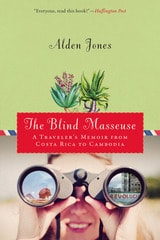
The Blind Masseuse
A Traveler's Memoir from Costa Rica to CambodiaAlden Jones
University of Wisconsin Press, 2017
By way of explorations to Costa Rica, Bolivia, Nicaragua, Cuba, Burma, Cambodia, Egypt, and around the world on a ship, Jones chronicles her experience as a young American traveler while pondering her role as an outsider in the cultures she temporarily inhabits. Her wanderlust fuels a strong, high-adventure story and, much in the vein of classic travel literature, Jones's picaresque tale of personal evolution informs her own transitions, rites of passage, and understandings of her place as a citizen of the world. With sharp insight and stylish prose, Jones asks: Is there a right or wrong way to travel? The Blind Masseuse concludes that there is, but that it's not always black and white.
The Cult of the Goddess Pattini
Gananath Obeyesekere
University of Chicago Press, 1984
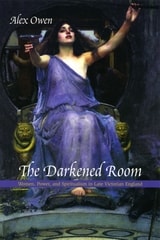
The Darkened Room
Women, Power, and Spiritualism in Late Victorian EnglandAlex Owen
University of Chicago Press, 2004
The hugely popular spiritualist movement, which maintained that women were uniquely qualified to commune with spirits of the dead, offered female mediums a new independence, authority, and potential to undermine conventional class and gender relations in the home and in society.
Using previously unexamined sources and an innovative approach, Alex Owen invokes the Victorian world of darkened séance rooms, theatrical apparitions, and moving episodes of happiness lost and regained. She charts the struggles between spiritualists and the medical and legal establishments over the issue of female mediumship, and provides new insights into the gendered dynamics of Victorian society.
The Essential Worldwide Laws of Life
Sir John Templeton
Templeton Press, 2012
What does it mean to live a good life?
The major scriptures of the world, various schools of philosophical thought, storytellers, scientists, artists, and historians have all offered answers to this question. Surprisingly, these answers are common among nearly all sources. Famed investor and philanthropist Sir John Templeton called these commonalities the “laws of life.”
Templeton gathers the best of these teachings in The Essential Worldwide Laws of Life. This handsome volume shows readers of all ages, from all parts of the world, how to make their lives more joyous and useful by learning the universal truths that transcend time and culture.
Each law is presented in an essay format, with stories, commentary, and quotations to illustrate its importance. The material is designed to inspire the reader to put these laws into practice and to enjoy the rewarding life that will result.
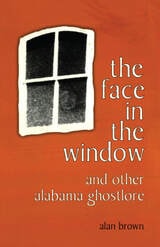
The Face in the Window and Other Alabama Ghostlore
Alan Brown
University of Alabama Press, 1996
True voices, real places, and unforgettable chills: Alabama’s ghost stories, gathered with scholarly care, reveal how memory, history, and belief linger—whispering from bridges, homes, cemeteries, and courthouses statewide today still.
The Face in the Window and Other Alabama Ghostlore is a landmark collection that preserves and brings to life Alabama’s rich tradition of supernatural storytelling. Rather than offering fictional retellings, this book presents ghost stories as they are told—by neighbors, families, students, and elders—rooted firmly in real places and lived experience. Alan Brown captures the voices of Alabamians across generations, revealing how belief, memory, humor, and fear continue to shape the state’s cultural landscape.
The collection is organized by geographic region, spiraling across the state so readers can explore local lore county by county and town by town. Many stories were gathered directly through fieldwork, lectures, and interviews, while others draw on previously unpublished Works Progress Administration materials from the 1930s. Dialect and storytelling style are preserved to maintain authenticity, and scholarly notes are placed at the back to keep the narratives accessible. Brown, a folklorist and former lecturer for the Alabama Humanities Foundation, brings both academic rigor and deep respect for oral tradition to the collection.
This collection will delight readers interested in folklore, Southern history, oral culture, and the supernatural. It is invaluable for scholars and students, irresistible to ghost-story enthusiasts, and especially meaningful for Alabamians eager to see their communities and traditions thoughtfully recorded and remembered.
The Gaia Hypothesis
Science on a Pagan PlanetMichael Ruse
University of Chicago Press, 2013
The Gospel of Sustainability
Media, Market and LOHASMonica M. Emerich
University of Illinois Press, 2014
The Greek Magical Papyri in Translation, Including the Demotic Spells, Volume 1
TextsEdited by Hans Dieter Betz
University of Chicago Press, 1992
"The Greek magical papyri" is a collection of magical spells and formulas, hymns, and rituals from Greco-Roman Egypt, dating from the second century B.C. to the fifth century A.D. Containing a fresh translation of the Greek papyri, as well as Coptic and Demotic texts, this new translation has been brought up to date and is now the most comprehensive collection of this literature, and the first ever in English.
The Greek Magical Papyri in Transition is an invaluable resource for scholars in a wide variety of fields, from the history of religions to the classical languages and literatures, and it will fascinate those with a general interest in the occult and the history of magic.
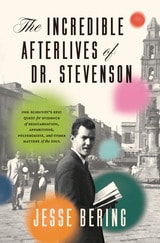
The Incredible Afterlives of Dr. Stevenson
One Scientist's Epic Quest for Evidence of Reincarnation, Apparitions, Poltergeists, and Other Matters of the SoulJesse Bering
University of Chicago Press, 2026
While Ian Stevenson (1918–2007) was an academic psychiatrist with a serious demeanor, right down to his three-piece suits and wingtip shoes, he made his name researching an unusual topic for a behavioral scientist: the afterlife. For over four decades, Stevenson traveled the globe investigating cases of reincarnation, apparitions, possessions, and near-death experiences. At the time of his death, Stevenson was widely regarded as one of the most influential figures in parapsychology, a field devoted to psychic phenomena and paranormal experiences.
Set against the colorful backdrop of parapsychology’s rise and fall, from Victorian séances to modern media spectacles, The Incredible Afterlives of Dr. Stevenson captures Stevenson’s relentless quest for evidence of consciousness beyond the grave. Jesse Bering, himself a psychologist, interweaves Stevenson’s research with vivid stories of the larger-than-life characters who shaped his path—from Eileen Garrett, the fearless medium, to Chester Carlson, the inventor of Xerox photocopying and Stevenson’s unlikely patron. Through never-before-seen letters and candid interviews with Stevenson’s surviving family members, readers glimpse the inner turmoil of a scientist struggling to balance his revolutionary ideas with the skepticism of his academic peers as well as those closest to him. Along the way, Bering, a researcher whose own trailblazing work on the psychology of afterlife beliefs had led him to believe it was all just an illusion, is forced to rethink his own worldview. Are psychic phenomena examples of our living brains giving credence to the absurd? Or tantalizing glimmers of life after death?
Equal parts scientific detective story and intimate biography, The Incredible Afterlives of Dr. Stevenson shines a light on a significant figure whose life and work have not yet been fully explored. Bering boldly confronts readers with the complicated legacy of a man who many see as a Galileo-like rebel with groundbreaking ideas, ones that still have the power to upend everything we know about what it means to be human.
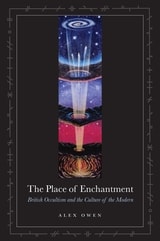
The Place of Enchantment
British Occultism and the Culture of the ModernAlex Owen
University of Chicago Press, 2004
In answering this question for the first time, The Place of Enchantment breaks new ground in its consideration of the role of occultism in British culture prior to World War I. Rescuing occultism from its status as an "irrational indulgence" and situating it at the center of British intellectual life, Owen argues that an involvement with the occult was a leitmotif of the intellectual avant-garde. Carefully placing a serious engagement with esotericism squarely alongside revolutionary understandings of rationality and consciousness, Owen demonstrates how a newly psychologized magic operated in conjunction with the developing patterns of modern life. She details such fascinating examples of occult practice as the sex magic of Aleister Crowley, the pharmacological experimentation of W. B. Yeats, and complex forms of astral clairvoyance as taught in secret and hierarchical magical societies like the Hermetic Order of the Golden Dawn.
Through a remarkable blend of theoretical discussion and intellectual history, Owen has produced a work that moves far beyond a consideration of occultists and their world. Bearing directly on our understanding of modernity, her conclusions will force us to rethink the place of the irrational in modern culture.

The Posthuman Condition
Consciousness Beyond the BrainRobert Pepperell
Intellect Books, 2009
Synthetic creativity, organic computers, genetic modification, intelligent machines--such ideas are deeply challenging to many of our traditional assumptions about human uniqueness and superiority. But, ironically, it is our very capacity for technological invention that has secured us so dominant a position in the world which may lead ultimately to (as some have put it) 'The End of Man'. If we are really capable of creating entities that exceed our own skills and intellect then the consequences for humanity are almost inconceivable. Nevertheless, we must now face up to the possibility that attributes like intelligence and consciousness may be synthesised in non-human entities--perhaps within our lifetime. Would such entities have human-like emotions; would they have a sense of their own being?
The Posthuman Condition argues that such questions are difficult to tackle given the concepts of human existence that we have inherited from humanism, many of which can no longer be sustained. New theories about nature and the operation of the universe arising from sophisticated computer modelling are starting to demonstrate the profound interconnections between all things in reality where previously we had seen only separations. This has implications for traditional views of the human condition, consciousness, the way we look at art, and for some of the oldest problems in philosophy.
First published in the 1990s, this important text has been completely revised by the author with the addition of new sections and illustrations.
For further information see: www.post-human.net
The Science of Near-Death Experiences
Edited by John C. Hagan III
University of Missouri Press, 2017
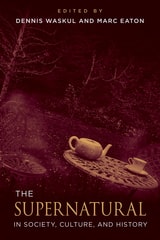
The Supernatural in Society, Culture, and History
Dennis Waskul and Marc Eaton
Temple University Press, 2018
In the twenty-first century, as in centuries past, stories of the supernatural thrill and terrify us. But despite their popularity, scholars often dismiss such beliefs in the uncanny as inconsequential, or even embarrassing. The editors and contributors to The Supernatural in Society, Culture, and History have made a concerted effort to understand encounters with ghosts and the supernatural that have remain present and flourished. Featuring folkloric researchers examining the cultural value of such beliefs and practices, sociologists who acknowledge the social and historical value of the supernatural, and enthusiasts of the mystical and uncanny, this volume includes a variety of experts and interested observers using first-hand ethnographic experiences and historical records.
The Supernatural in Society, Culture, and History seeks to understand the socio-cultural and socio-historical contexts of the supernatural. This volume takes the supernatural as real because belief in it has fundamentally shaped human history. It continues to inform people’s interpretations, actions, and identities on a daily basis. The supernatural is an indelible part of our social world that deserves sincere scholarly attention.
Contributors include: Janet Baldwin, I'Nasah Crockett, William Ryan Force, Rachael Ironside, Tea Krulos, Joseph Laycock, Stephen L. Muzzatti, Scott Scribner, Emma Smith, Jeannie Banks Thomas, and the editors
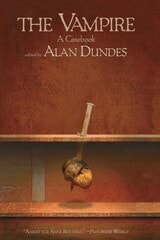
The Vampire
A CasebookEdited by Alan Dundes
University of Wisconsin Press, 1998
Vampires are the most fearsome and fascinating of all creatures of folklore. For the first time, detailed accounts of the vampire and how its tradition developed in different cultures are gathered in one volume by eminent folklorist Alan Dundes. Eleven leading scholars from the fields of Slavic studies, history, anthropology, and psychiatry unearth the true nature of the vampire from its birth in graveyard lore to the modern-day psychiatric patient with a penchant for drinking blood.
The Vampire: A Casebook takes this legend out of the realm of literature and film and back to its dark beginnings in folk traditions. The essays examine the history of the word “vampire;” Romanian vampires; Greek vampires; Serbian vampires; the physical attributes of vampires; the killing of vampires; and the possible psychoanalytic underpinnings of vampires. Much more than simply a scary creature of the human imagination, the vampire has been and continues to haunt the lives of all those who encounter it—in reality or in fiction.
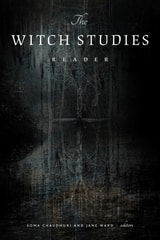
The Witch Studies Reader
Soma Chaudhuri and Jane Ward, editors
Duke University Press, 2025
Contributors. Maria Amir, Ruth Asiimwe, Bernadette Barton, Ethel Brooks, Shelina Brown, Ruth Charnock, Soma Chaudhuri, Carolyn Chernoff, Saira Chhibber, Simon Clay, Krystal Cleary, Adrianna L. Ernstberger, Tina Escaja, Laurie Essig, Marcelitte Failla, D Ferrett, Marion Goldman, Jaime Hartless, Margaretha Haughwout, Patricia Humura, Apoorvaa Joshi, Govind Kelkar, Oliver Kellhammer, Ayça Kurtoğlu, Helen Macdonald, Isabel Machado, Brandy Renee McCann, Dev Nathan, Mary Jo Neitz, Amy Nichols-Belo, Allison (or AP) Pierce, Emma Quilty, Anna Rogel, Karen Schaller, Jacquelyn Marie Shannon, Shashank Shekhar Sinha, Gabriella V. Smith, Nathan Snaza, Shannon Hughes Spence, Eric Steinhart, Morena Tartari, Nicole Trigg, Katie Von Wald, Tushabe wa Tushabe, Jane Ward
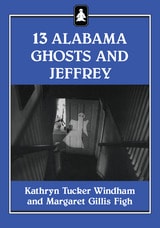
Thirteen Alabama Ghosts and Jeffrey
Kathryn Tucker Windham
University of Alabama Press, 1987
Jeffrey is the mischievous "something" that has headquarters in the Windham home in Selma, Alabama. He first made his presence known in October 1966, and since then he has continued, at irregular and infrequent intervals, to clump down the hall, slam doors, rock in a chair, frighten the family cat (now deceased, through no fault of Jeffrey), move heavy pieces of furniture, cause electronic equipment to malfunction, and hide objects. He frequently accompanies Mrs. Windham on her travels, and tales of Jeffrey's antics are widely recounted.
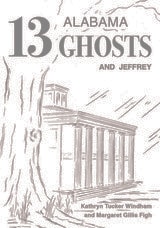
Thirteen Alabama Ghosts and Jeffrey
Commemorative EditionKathryn Tucker Windham
University of Alabama Press, 1969
Step into Alabama’s haunted history—one story at a time.
One of the best-known and widely shared books about the South, Thirteen Alabama Ghosts and Jeffrey has haunted the imaginations of generations of delighted young readers since it was first published in 1969. Written by nationally acclaimed folklorists Kathryn Tucker Windham and Margaret Gillis Figh, the book recounts Alabama’s thirteen most ghoulish and eerie ghost legends.
Curated with loving expertise, these thirteen tales showcase both Windham and Figh’s masterful selection of stories and their artful and suspenseful writing style. In crafting stories treasured by children and adults alike, the authors tell much more than ghost tales. Embedded in each is a wealth of fact and folklore about Alabama history and the old South. “I don’t care whether you believe in ghosts,” Windham was fond of saying. “The good ghost stories do not require that you believe in ghosts.”
Millions of readers cherish memories of being chilled as teachers and parents read them unforgettable stories like “The Unquiet Ghost at Gaineswood,” about the ghost of Evelyn Carter, who fills this Demopolis antebellum mansion with midnight musical lamentations because her body wasn’t returned to her native Virginia, and “The Phantom Steamboat of the Tombigbee,” about the wreck of the steamboat Eliza Battle, which caught fire on the way to Mobile and sank one February night in 1858. People who live along the river say the flaming steamboat wreck still rises on cold nights, its cotton cargo blazing across the waves while its terrified survivors cry for help from the icy water.
The title’s “Jeffrey” refers to a friendly ghost who resides in the Windham home and who served as Windham’s unofficial collaborator in this work and the subsequent books in this popular series, all of which are now available in high-quality reproductions of their spooky originals.
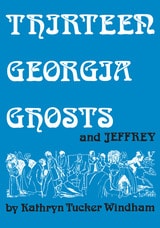
Thirteen Georgia Ghosts and Jeffrey
Commemorative EditionKathryn Tucker Windham
University of Alabama Press, 1987
Haunting tales from Georgia—where history lingers in every shadow.
Petrifying the Peach State, hosts of haints have beset the state of Georgia throughout its storied history. In Thirteen Georgia Ghosts and Jeffrey, best-selling folklorist Kathryn Tucker Windham, along with her trusty spectral companion Jeffrey, introduce thirteen of Georgia’s most famous ghost stories.
Windham won hearts across the nation in her regular radio broadcasts and many public appearances. The South’s most prolific raconteur of revenants, Windham, giving new meaning to the phrase “ghost-writer,” does more than tell ghost stories—she captures the true spirit of the place.
Evoking Georgia’s colonial era, “The Eternal Dinner Party” explains why the sounds of an elegant dinner soirée still waft from the grove of Savannah’s Bonaventure estate. At the onset of the Revolution, the Tattnall family abandoned Bonaventure and slipped away to England. Young Josiah Tattnall eventually returned to fight in the Revolution, restored Bonaventure, and later became Georgia’s governor. One holiday eve, when the mansion was bedecked with magnolia and holly and crowded with visitors, a fire too large to control swept through the old house. Tattnall, exhibiting his cool head and impeccable manners, ordered the massive dinner table carried out to the garden where he enjoined his holiday revelers to continue their stately meal. The melancholy strains of Tattnall’s dinner guests still echo through Bonaventure’s ancient oaks on moonlight nights.
In “The Ghost of Andersonville,” Windham takes visitors near the woebegone Confederate prisoner-of-war camp. A plaque there still recounts the tale of Swiss immigrant and Confederate captain Henry Wirz. Convicted—many thought wrongly—of war crimes, Wirz’s restless ghost still perambulates the highways of south Georgia. Writing for the Georgia Historical Commission, Miss Bessie Lewis quips in her preface to this beloved collection, “Who should be better able to tell of happenings long past than the ghosts of those who had a part in them?”
A perennial favorite, this commemorative edition restores Thirteen Georgia Ghosts and Jeffrey to the ghastly grandeur of its original 1973 edition.
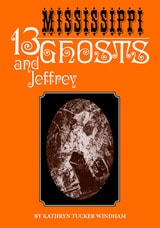
Thirteen Mississippi Ghosts and Jeffrey
Commemorative EditionKathryn Tucker Windham
University of Alabama Press, 2015
A deluxe, commemorative edition of famed southern author and folklorist Kathryn Tucker Windham’s introduction to Mississippi’s thirteen most famous haunted houses and ghostly visitations.
For as long as Mississippi has existed (and then some), flocks of phantoms have haunted the mortal inhabitants of the Magnolia State. In Thirteen Mississippi Ghosts and Jeffrey, best-selling folklorist Kathryn Tucker Windham, along with her trusty spectral companion Jeffrey, introduces thirteen of the state’s most famous ghost stories.
Although stories about Mississippi’s spirits seemingly outnumber the ghosts themselves, Windham observes that “Southern ghost tales are disappearing because people no longer sit around on the porch on summer nights and tell stories. The old folks who grew up with these stories are dying now, and the stories are dying with them.”
Fortunately for us, Windham was a writer dedicated to preserving these tales in print. The veteran author spent many years tracking down these stories and chronicling the best ones. From the ghost of Mrs. McEwen still wearing her beloved cameo pin and keeping a watchful eye over Featherston Place, her home in Holly Springs, where, she swore, she would stay forever, to the ghostly visage fixed permanently on the bedroom window pane of Catherine McGehee, who searched the horizon ardently for her unrequited love to come to her as promised at Cold Spring Plantation in Pinckneyville, Windham’s stories cover the breadth and depth of Mississippi—at times more moonlight than magnolia.
An enduring classic, this commemorative edition restores Thirteen Mississippi Ghosts and Jeffrey to the ghastly grandeur of its original 1974 edition.
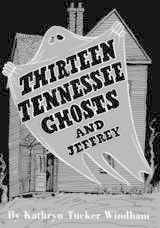
Thirteen Tennessee Ghosts and Jeffrey
Commemorative EditionKathryn Tucker Windham
University of Alabama Press, 2016
A deluxe, commemorative edition of famed southern author and folklorist Kathryn Tucker Windham’s introduction to the Volunteer State’s most enduring ghost stories.
In Thirteen Tennessee Ghosts and Jeffrey, beloved and best-selling folklorist Kathryn Tucker Windham presents a spine-tingling collection of Tennessee’s eeriest ghost tales. Accompanied by her faithful companion, Jeffrey, a friendly spirit who resided in her home, Windham traveled from the mysterious muds of Memphis to the haunted hollow’s of east Tennessee to collect the spookiest collection of Volunteer State revenants ever written.
In these perennial favorites, Windham captures the gentle folk humor of native Tennesseans as well as fascinating facts about the state’s rich history. In “The Dark Legend,” Windham recounts the story of explorer Merriwether Lewis, who met an untimely end on the Natchez Trace 1809 and whose spirit, it is said, still treads through Tennessee’s forests. Windham also visits central Tennessee’s Chapel Hill, where people who know the town say those who stand on the train tracks on dark, lonely nights can often see a disembodied light floating along the tracks. Neighbors say it’s the ghost of a headless flagman who returns to cavort with night-time guests.
High in Tennessee’s Appalachian mountains, Windham encounters Martin, the phantom fiddler of Johnson County. Legend has it that in life Martin’s musical skills so mesmerized the snakes of the Stone Mountains that they would slither from their dens to listen tamely to his fiddling. Intrepid visitors to the rocky tops of northeast Tennessee’s mountains say you can still hear Martin’s ghost fiddling in the hollows.
This handsome, new commemorative hardback edition returns Windham’s suspenseful classic to its original keepsake quality and includes a new afterword by the author’s children.
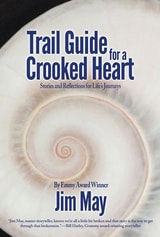
Trail Guide for a Crooked Heart
Stories and Reflections for Life's JourneyJim May
Parkhurst Brothers, Inc., 2016
"A brilliant mixture of story, philosophy, humor and wisdom, this book reminds us that---if we are open to story, dreams, imagination, and myth---we can open doors within our soul."
—Jay O’Callahan, author, storyteller, and NPR commentator
A lifetime collection of stories, wise words, assembled musings and quotations about overcoming hurdles, elusive enlightenment, personal evolution, persistence in the face of discouragement, this pastiche is designed to encourage the downhearted, lift up the strivers, and add wings to the heels of spiritual seekers.