Results by title
159 books match the query 'Minnesota' and 30 start with t
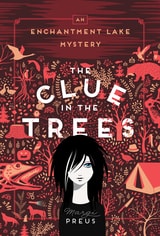
The Clue in the Trees
An Enchantment Lake MysteryMargi Preus
University of Minnesota Press, 2019
Francie returns to Enchantment Lake looking for answers, only to get dragged into a murder mystery she might not survive
Francie’s brother Theo has secrets—secrets Francie thinks she wants to know. But what if one of those secrets is that Theo is a murderer? To avoid considering that possibility, Francie plunges into her senior year at a small-town high school near Enchantment Lake in northern Minnesota. It’s a radical change from her private school in New York, but she hopes to keep an eye on her great aunts and maybe finally learn more about the mother she never knew. A small silver box seems to hold the answers, and she is determined to get her hands on it.
But when her long-lost brother turns up, so does a dead body, and once again Francie is drawn into a mystery. A long list of suspects, with Theo at the top, keeps her head spinning. When Francie herself becomes a suspect she starts to feel like she is walking on thin ice, but it isn’t until she is literally walking on thin ice that the pieces start to come together—and by then it may be too late.
In her previous adventure Enchantment Lake, Francie was thrown into northern Minnesota lake living: fishing, berry picking, lost kayaks and scary boat rides, poisoned hotdishes, exploding bulldozers, a forest fire . . . and murder. But if she thinks things have settled down, she’s in for a surprise. A new school with new friends (and a few enemies), a lead role in a play, an encounter with a giant muskie, archaeological twists, secret tunnels, thin ice, and a strangely sticky murder are all coming her way in The Clue in the Trees.

The Ferns and Fern Allies of Minnesota
Carl Otto Rosendahl and Frederic K. Butters
University of Minnesota Press, 1954
The Ferns and Fern Allies of Minnesota was first published in 1954. Minnesota Archive Editions uses digital technology to make long-unavailable books once again accessible, and are published unaltered from the original University of Minnesota Press editions.
Ferns are the most abundant plants in many areas of Minnesota, and the beauty and variety of their leaf patterns make them a rewarding form of plant life for study. This handbook identifies and describes the 92 different kinds of ferns and fern allies that are native to the state. In addition, ten other ferns that grow in adjacent states and may be expected to be found in Minnesota are described. An introductory section tells how to collect and preserve specimens. Advice is given on how to transplant ferns to a garden and which species are best for different kinds of plantings or locations. An illustrated glossary consisting of four plates graphically defines the technical terms used in this book. Distribution maps and figures are placed closed to the text to which they pertain. Many of the plates are full sized so that a specimen may be placed on the page for identification.
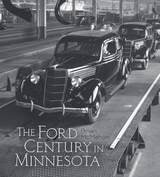
The Ford Century in Minnesota
Brian McMahon
University of Minnesota Press, 2016
In 1903, before the Ford Motor Company was even incorporated, Stephen Tenvoorde signed a contract to sell “Fordmobiles” at his bicycle shop in St. Cloud, Minnesota. Four generations later, the Tenvoorde family still operates what is now the oldest Ford dealership in the world. Brian McMahon chronicles how the fortunes of the company and the state became intertwined during that century.
Ford assembled Model T cars in the world’s tallest automobile plant in Minneapolis and a three-story structure in St. Paul—both still standing. These factories quickly became functionally obsolete after the development of the moveable assembly line. The hunt for a new site to build a modern, single-story plant stirred intense rivalry between Minneapolis and St. Paul. Henry Ford took a rare personal interest in the search and selected a 125-acre parcel in St. Paul overlooking the recently built High Dam on the Mississippi River, which allowed for navigation and hydroelectric power. The Twin Cities Assembly Plant would go on to manufacture millions of cars, trucks, tractors, and military vehicles until its closure in 2011.
Henry Ford’s large-scale experiments with every aspect of the industrial economy sent ripples and shockwaves through the lives of Minnesotans—management and assembly line workers, dealers and customers, families and communities. First-person accounts of more than forty retired auto workers share what it was like to work at Ford—from the early years of the Minneapolis plant to the final hours of the Twin Cities Assembly Plant in St. Paul. McMahon documents the company’s transformation—through the Depression, the rise of the United Auto Workers Union, World War II, women joining the workforce, competition from imported cars, globalization, outsourcing, and the closing of the plant.
This publication was made possible in part by the people of Minnesota through a grant funded by an appropriation to the Minnesota Historical Society from the Minnesota Arts and Cultural Heritage Fund. Any views, findings, opinions, conclusions or recommendations expressed in this publication are those of the authors and do not necessarily represent those of the State of Minnesota, the Minnesota Historical Society, or the Minnesota Historic Resources Advisory Committee.

The Great Minnesota Cookie Book
Award-Winning Recipes from the Star Tribune's Holiday Cookie ContestLee Svitak Dean
University of Minnesota Press, 2018
Eighty delicious, imaginative recipes from the Star Tribune’s beloved annual cookie contest, with mouth-watering pictures and bakers’ stories
It’s cold in Minnesota, especially around the holidays, and there’s nothing like baking a batch of cookies to warm the kitchen and the heart. A celebration of the rich traditions, creativity, and taste of the region, The Great Minnesota Cookie Book collects the best-loved recipes and baking lore from fifteen years of the Star Tribune’s popular holiday cookie contest.
Drop cookies and cutouts, refrigerator cookies and bars; Swedish shortbread, Viennese wafers, and French–Swiss butter cookies; almond palmiers; chai crescents and taffy treats; snowball clippers, cherry pinwheels, lime coolers, and chocolate-drizzled churros: a dizzying array and all delightful, the recipes in this book recall memories of holidays past and inspire the promise of happy gatherings to come.
These are winning cookies in every sense, the best of the best chosen by the contest’s judges, accompanied by beautiful photographs as instructive as they are enticing. A treat for any occasion, whether party, bake sale, or after-school snack, each time- and taste-tested recipe is perfect for starting a tradition of one’s own.
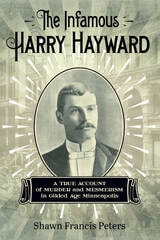
The Infamous Harry Hayward
A True Account of Murder and Mesmerism in Gilded Age MinneapolisShawn Francis Peters
University of Minnesota Press, 2018
A fascinating tale of seduction, murder, fraud, coercion—and the trial of the “Minneapolis Monster”
On a winter night in 1894, a young woman’s body was found in the middle of a road near Lake Calhoun on the outskirts of Minneapolis. She had been shot through the head. The murder of Kittie Ging, a twenty-nine-year-old dressmaker, was the final act in a melodrama of seduction and betrayal, petty crimes and monstrous deeds that would obsess reporters and their readers across the nation when the man who likely arranged her killing came to trial the following spring. Shawn Francis Peters unravels that sordid, spellbinding story in his account of the trial of Harry Hayward, a serial seducer and schemer whom some deemed a “Svengali,” others a “Machiavelli,” and others a “lunatic” and “man without a soul.”
Dubbed “one of the greatest criminals the world has ever seen” by the famed detective William Pinkerton, Harry Hayward was an inveterate and cunning plotter of crimes large and small, dabbling in arson, insurance fraud, counterfeiting, and illegal gambling. His life story, told in full for the first time here, takes us into shadowy corners of the nineteenth century, including mesmerism, psychopathy, spiritualism, yellow journalism, and capital punishment. From the horrible fate of an independent young businesswoman who challenged Victorian mores to the shocking confession of Hayward on the eve of his execution (which, if true, would have made him a serial killer), The Infamous Harry Hayward unfolds a transfixing tale of one of the most notorious criminals in America during the Gilded Age.
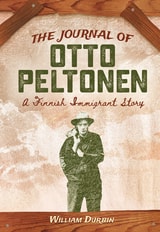
The Journal of Otto Peltonen
A Finnish Immigrant StoryWilliam Durbin
University of Minnesota Press, 2020
A portrait of the Finnish immigrant experience in Minnesota during the early twentieth century—now in paperback
After journeying across the Atlantic with his mother and two sisters, young Otto Peltonen joins his father in the iron ore mines of northern Minnesota, experiencing the harsh labor conditions that were common at the time, as mining companies cared more about making a profit than for their workers’ safety. Writing in his journal about his family’s struggles and the hard life Finnish immigrants endured in the early twentieth century, Otto ultimately strengthens his resolve to find the freedom his family had first sought in America.
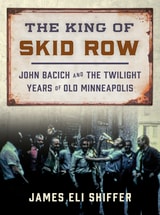
The King of Skid Row
John Bacich and the Twilight Years of Old MinneapolisJames Eli Shiffer
University of Minnesota Press, 2023
The story of a much different Minneapolis, through the words and photographs of one of its most colorful characters—now in paperback
City blue laws drove the liquor trade and its customers—hard-drinking lumberjacks, pensioners, farmhands, and railroad workers—into the oldest quarter of Minneapolis. In the fifty-cent-a-night flophouses of the city’s Gateway District, they slept in cubicles with ceilings of chicken wire. In rescue missions, preachers and nuns tried to save their souls. Sociology researchers posing as vagrants studied them. And in their midst John Bacich, aka Johnny Rex, who owned a bar, a liquor store, and a cage hotel, documented the gritty neighborhood’s last days through photographs and film of his clientele.
The King of Skid Row follows Johnny Rex into this vanished world that once thrived in the heart of Minneapolis. Drawing on hours of interviews conducted in the three years before Bacich’s death in 2012, James Eli Shiffer brings to life the eccentric characters and strange events of an American skid row. Supplemented with archival and newspaper research and his own photographs, Bacich’s stories recreate the violent, alcohol-soaked history of a city best known for its clean, progressive self-image. His life captures the seamy, richly colorful side of the city swept away by a massive urban renewal project in the early 1960s and gives us, in a glimpse of those bygone days, one of Minneapolis’s most intriguing figures—spinning some of its most enduring and enthralling tales.
The Last Bookseller
A Life in the Rare Book TradeGary Goodman
University of Minnesota Press, 2023
A wry, unvarnished chronicle of a career in the rare book trade—now in paperback
When Gary Goodman wandered into a run-down, used-book shop that was going out of business in East St. Paul in 1982, he had no idea the visit would change his life. He walked in as a psychiatric counselor and walked out as the store’s new owner. In The Last Bookseller Goodman describes his sometimes desperate, sometimes hilarious career as a used and rare book dealer in Minnesota—the early struggles, the travels to estate sales and book fairs, the remarkable finds, and the bibliophiles, forgers, book thieves, and book hoarders he met along the way.
Here we meet the infamous St. Paul Book Bandit, Stephen Blumberg, who stole 24,000 rare books worth more than fifty million dollars; John Jenkins, the Texas rare book dealer who (probably) was murdered while standing in the middle of the Colorado River; and the eccentric Melvin McCosh, who filled his dilapidated Lake Minnetonka mansion with half a million books. In 1990, with a couple of partners, Goodman opened St. Croix Antiquarian Books in Stillwater, one of the Twin Cities region’s most venerable bookshops until it closed in 2017. This store became so successful and inspired so many other booksellers to move to town that Richard Booth, founder of the “book town” movement in Hay-on-Wye in Wales, declared Stillwater the First Book Town in North America.
The internet changed the book business forever, and Goodman details how, after 2000, the internet made stores like his obsolete. In the 1990s, the Twin Cities had nearly fifty secondhand bookshops; today, there are fewer than ten. As both a memoir and a history of booksellers and book scouts, criminals and collectors, The Last Bookseller offers an ultimately poignant account of the used and rare book business during its final Golden Age.
The Light People
A NovelGordon Henry
Michigan State University Press, 1994
The Light People is a multi-genre novel that includes a series of nested stories about a tribal community in Northern Minnesota. Major themes include Oskinaway’s search for his parents and the legal wrangling over the possession of a leg that has been removed from a tribal elder. Each story is linked to previous and successive stories to form a discourse on identity and cultural appropriation, all told with humor and wisdom.
Taking inspiration from traditional Anishinabe stories and drawing from his own family's storytelling tradition, Gordon Henry, Jr., has woven a tapestry of interlocking narratives in The Light People, a novel of surpassing emotional strength. His characters tell of their experiences, dreams, and visions in a multitude of literary styles and genres. Poetry, drama, legal testimony, letters, and essays combine with more conventional narrative techniques to create a multifaceted, deeply rooted, and vibrant portrait of the author's own tribal culture. Keenly aware of Eurocentric views of that culture, Henry offers a "corrective history" where humor and wisdom transcend the political.
In the contemporary Minnesota village of Four Bears, on the mythical Fineday Reservation, a young Chippewa boy named Oskinaway is trying to learn the whereabouts of his parents. His grandparents turn for help to a tribal elder, one of the light people, Jake Seed. Seed's assistant, a magician who performs at children's birthday parties, tells Oskinaway's family his story, which gives way to the stories of those he encounters. Narratives unfold into earlier narratives, spinning back in time and encompassing the intertwined lives of the Fineday Chippewas, eventually revealing the place of Oskinaway and his parents in a complex web of human relationships.
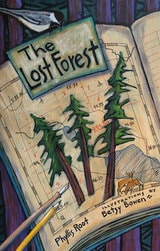
The Lost Forest
Phyllis Root
University of Minnesota Press, 2019
The story of a forest “lost” by a surveying error—and all the flora and fauna to be found there
A forest, of course, doesn’t need a map to know where to grow. But people need a map to find it. And in 1882 when surveyors set out to map a part of Minnesota, they got confused, or tired and cold (it was November), and somehow mapped a great swath of ancient trees as a lake. For more than seventy-five years, the mistake stayed on the map, and the forest remained safe from logging—no lumber baron expects to find timber in a lake, after all.
The Lost Forest tells the story of this lucky error and of the 144 acres of old-growth red and white pine it preserved. With gentle humor, Phyllis Root introduces readers to the men at their daunting task, trekking across Minnesota, measuring and marking the vast land into townships and sections and quarters. She takes us deep into a stand of virgin pine, one of the last and largest in the state, where U.S. history and natural history meet. With the help of Betsy Bowen’s finely observed and beautiful illustrations, she shows us all the life that can be found in the Lost Forest.
Accompanying the story is a wealth of information about the Cadastral Survey and about the plants and animals that inhabit forests—making the book a valuable guide for readers who might want to look even deeper into the history of Minnesota, the flora and fauna of old-growth forests, and the apportioning of land in America.
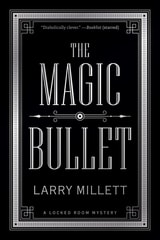
The Magic Bullet
A Locked Room MysteryLarry Millett
University of Minnesota Press, 2020
Enter Shadwell Rafferty: Irishman, St. Paul saloonkeeper, sometime detective, and old friend of the celebrated sleuth Sherlock Holmes. Summoned by Louis B. Hill—son of railroad magnate James J. Hill—to investigate, Rafferty descends into a world dominated by greedy tycoons and awash in political intrigue and wartime fearmongering. Suspects lurk in every corner of the city—including Dodge’s beautiful young widow, his slippery assistant, and a shadowy anarchist—and Rafferty pursues them from the streets of Ramsey Hill and the rooms of the Ryan Hotel to the labyrinthine caves under the Schmidt brewery. Matching wits with his foes at the police department and his unsavory rival, the St. Paul detective Mordecai Jones, Rafferty knows that in order to bring a killer to justice he must first unravel the riddle of a single bullet fired in a locked room, three hundred feet above the streets of St. Paul.
Set during a bitter streetcar strike and amid the clandestine activities of a ruthless commission charged with enforcing wartime patriotism, Larry Millett has created a classic and perfectly executed locked-room mystery in the great tradition of John Dickson Carr. From locked rooms and civil unrest to murder and wartime paranoia, The Magic Bullet presents Rafferty’s most challenging case, and its gripping conclusion—with a timely assist from Sherlock Holmes—finds both Rafferty and Millett at the top of their games.
The Mammals of Minnesota
Harvey L. Gunderson and James R. Beer
University of Minnesota Press, 1953
The Mammals of Minnesota was first published in 1953. Minnesota Archive Editions uses digital technology to make long-unavailable books once again accessible, and are published unaltered from the original University of Minnesota Press editions.
For the many Minnesotans interested in the wildlife of their state and for anyone with a special interest in the fur or game animals or in the control of harmful species, this is a practical source of information. Schools will find the book useful in teaching natural history. All the mammal species identified within Minnesota are described, and keys to the classification are given, with careful instructions on how to use the keys. Step- by step directions include photographs of animals, diagrams of the methods described, and 70 maps showing the geographical distribution of species. The material is based primarily on the collections in the Museum of Natural history and the Division of Entomology and Economic Zoology at the University of Minnesota.
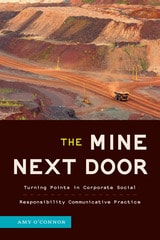
The Mine Next Door
Turning Points in Corporate Social Responsibility Communicative PracticeAmy O'Connor
University of Michigan Press, 2026
The Mine Next Door peels back the veneer of corporate public relations to expose the jagged edges that define the boundaries of corporate social responsibility (CSR) in Minnesota’s Iron Range. With five years of ethnographic and archival research, Amy O’Connor was able to interview over seventy people, including miners, retired miners, community members, elected officials, and representatives from Cleveland-Cliffs Inc. In addition to illuminating the everyday lives of Minnesota’s taconite miners and community members, she compares the corporate narratives of CSR with these lived experiences to reveal how CSR boundaries are co-constructed, contested, and consequential.
In this rare ethnographic account of iron ore mining in the United States, O’Connor shows how turning points—whether macrolevel (e.g., capitalism, governmental policy, and regulation) or microlevel (e.g., miner experiences, local culture, company proclivities)—create CSR communicative practice boundaries that are influenced by culture, history, and geography. The permanence and precariousness of the mining industry offers a unique opportunity to show how corporations, workers, and communities both collaborate and clash. The Mine Next Door argues that to understand CSR communicative practices, we must move beyond the staid, homogeneous CSR reports and glossy public relations documents to reveal the messy and contradictory moments of decision wherein corporations and communities determine where a company has power and responsibility.
The New Politics of Pornography
Donald Alexander Downs
University of Chicago Press, 1989
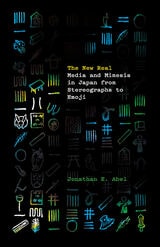
The New Real
Media and Mimesis in Japan from Stereographs to EmojiJonathan E. Abel
University of Minnesota Press, 2022
Unlocking a vital understanding of how literary studies and media studies overlap and are bound together
A synthetic history of new media reception in modern and contemporary Japan, The New Real positions mimesis at the heart of the media concept. Considering both mimicry and representation as the core functions of mediation and remediation, Jonathan E. Abel offers a new model for media studies while explaining the deep and ongoing imbrication of Japan in the history of new media.
From stereoscopy in the late nineteenth century to emoji at the dawn of the twenty-first, Abel presents a pioneering history of new media reception in Japan across the analog and digital divide. He argues that there are two realities created by new media: one marketed to us through advertising that proclaims better, faster, and higher-resolution connections to the real; and the other experienced by users whose daily lives and behaviors are subtly transformed by the presence and penetration of the content carried through new media. Intervening in contemporary conversations about virtuality, copyright, copycat violence, and social media, each chapter unfolds with a focus on a single medium or technology, including 3D photographs, the phonograph, television, videogames, and emoji.
By highlighting the tendency of the mediated to copy the world and the world to copy the mediated, The New Real provides a new path for analysis of media, culture, and their function in the world.
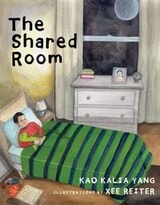
The Shared Room
Kao Kalia Yang
University of Minnesota Press, 2020
A family gradually moves forward after the loss of a child—a story for readers of all ages
When someone you love dies, you know what doesn’t die? Love. On the hot beach, among colorful umbrellas blooming beneath a bright sun, no one saw a little girl walk into the water. Now, many months later, her bedroom remains empty, her drawers hold her clothes, her pillows and sheets still have her scent, and her mother and father, brothers and sister carry her in their hearts, along with their grief, which takes up so much space. Then one snowy day, the mother and father ask the girl’s older brother, “Would you like a room of your own?” He wants to know, “Whose?” They say, “Your sister’s.”
Tenderly, and with refreshing authenticity, beloved Minnesota writer Kao Kalia Yang tells the story of a Hmong American family living with loss and tremendous love. Her direct and poignant words are accompanied by the evocative and expressive drawings of Hmong American artist Xee Reiter. The Shared Room brings a message of comfort and hope to readers young and old.

The Steger Homestead Kitchen
Simple Recipes for an Abundant LifeWill Steger
University of Minnesota Press, 2021
Personal and simple, earthy and warm—recipes and stories from the Steger Wilderness Center in Minnesota’s north woods
The Steger Homestead Kitchen is an inspiring and down-to-earth collection of meals and memories gathered at the Homestead, the home of the Arctic explorer and environmental activist Will Steger, located in the north woods near Ely, Minnesota. Founded in 1988, the Steger Wilderness Center was established to model viable carbon-neutral solutions, teach ecological stewardship, and address climate change. In her role as the Homestead’s chef, Will’s niece Rita Mae creates delicious and hearty meals that become a cornerstone experience for visitors from all over the world, nourishing them as they learn and share their visions for a healthy and abundant future.
Now, with this new book, home chefs can make Rita Mae’s simple, hearty meals to share around their own homestead tables. Interwoven with dozens of mouth-watering recipes—for generous breakfasts (Almond Berry Griddlecakes), warming lunches (Northwoods Mushroom Wild Rice Soup), elegant dinners (Spatchcock Chicken with Blueberry Maple Glaze), desserts (Very Carrot Cake), and snacks (Steger Wilderness Bars)—are Will Steger’s exhilarating stories of epic adventures exploring the Earth’s most remote and endangered regions.
The Steger Homestead Kitchen opens up the Wilderness Center’s hospitality, its heart and hearth, providing the practical advice and inspiration to cook up a good life in harmony with nature.
The Swindle of Innovative Educational Finance
Kenneth J. Saltman
University of Minnesota Press, 2018
How “innovative” finance schemes skim public wealth while hijacking public governance
Charter school expansion. Vouchers. Scholarship tax credit programs. The Swindle of Innovative Educational Finance offers a new social theory to explain why these and other privatization policies and programs win support despite being unsupported by empirical evidence. Kenneth J. Saltman details how, under the guise of innovation, cost savings, and corporate social responsibility, new and massive neoliberal educational privatization schemes have been widely adopted in the United States. From a trillion-dollar charter school bubble to the Chan Zuckerberg Initiative to celebrities branding private schools, Saltman ultimately connects such schemes to the country’s current crisis of truth and offers advice for resistance.
Forerunners is a thought-in-process series of breakthrough digital works. Written between fresh ideas and finished books, Forerunners draws on scholarly work initiated in notable blogs, social media, conference plenaries, journal articles, and the synergy of academic exchange. This is gray literature publishing: where intense thinking, change, and speculation take place in scholarship.
The Twenty-First Ballot
A Political Party Struggle in MinnesotaDavid Lebedoff
University of Minnesota Press, 1969
The Twenty-First Ballot was first published in 1969. Minnesota Archive Editions uses digital technology to make long-unavailable books once again accessible, and are published unaltered from the original University of Minnesota Press editions.
This account of a bitter struggle with in the Democratic-Farmer-Labor (DFL) party in Minnesota is an interesting story in its own right, and, viewed from a wider perspective, is a valuable documentary on the American political process.
The author recounts the events leading up to and climaxing in the party's deep split over the nomination of a candidate for the 1966 gubernatorial election. The nomination was accomplished only after twenty ballots were taken at the party's convention. The twenty first ballot of the book's title derives from a campaign slogan which urged that the voters, not the party, would make the final decision.
The intraparty battle was waged between a faction which backed the nomination of the incumbent governor, Karl F. Rolvaag, for a second term and a group favoring the nomination of the incumbent lieutenant governor, A. M. "Sandy" Keith, as the gubernatorial candidate. Basic to the struggle was the conviction among supporters of Mr. Keith that a new "image' was needed to win the election of a party's obligation to an incumbent. Mr. Keith was nominated. However, Mr. Rolvaag challenged the nomination by entering the primary election. He defeated the party nominee and won a place on the general election ballot, only to be defeated, in the end, by his Republican opponent.
The book is illustrated with eight pages of news photographs of the principals and events of the story.
The details of this unusual sequence of events reveal much about the workings of party politics at the important state level. The book will, therefore, be of interest not only to the general readers but to students and teachers in political science courses.
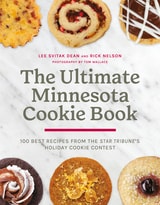
The Ultimate Minnesota Cookie Book
100 Best Recipes from the Star Tribune's Holiday Cookie ContestLee Svitak Dean
University of Minnesota Press, 2024
A fresh batch of deliciously distinctive recipes from the Star Tribune’s beloved annual cookie contest—with even more recipes, enticing photographs, and bakers’ stories
Cold winters call for warm kitchens and cookie baking, especially around the holidays. The Ultimate Minnesota Cookie Book, a compendium of Minnesota’s rich baking traditions and innovative recipes, stirs up winning treats from twenty years of the Star Tribune’s popular holiday cookie contest.
Significantly expanding and updating its 2018 predecessor, The Great Minnesota Cookie Book, this collection features thirty-five new recipes, including Grasshoppers and Dark Chocolate Fig Rolls, Tiramisu Twists and Cardamom Cherry Buttons, Diablo Snowballs, Spumoni Squares, and Maple-Roasted Walnut Delights. This sweet-tooth treasure trove of cookie recipes will inspire bakers to discover how many ways flour, sugar, butter, and eggs (plus several unexpected ingredients) can be combined to create new favorites for the holidays—or any time of year.
The best of the best, these contest-winning cookies are accompanied by beautiful photographs and baking tips, insights, and essays. Indulge in these delightful, mouth-watering recipes while Minnesota’s best bakers share stories of cherished holiday traditions, recall memorable cookie moments, and celebrate how baking brings us together.
The Wages of History
Emotional Labor on Public History's Front LinesAmy M. Tyson
University of Massachusetts Press, 2013
Although many who are drawn to such work initially see it as a privilege—an opportunity to connect with the public in meaningful ways through the medium of history—the realities of the job almost inevitably alter that view. Not only do interpreters make considerable sacrifices, both emotional and financial, in order to pursue their work, but their sense of special status can lead them to avoid confronting troubling conditions on the job, at times fueling tensions in the workplace.
This case study also offers insights—many drawn from the author's seven years of working as an interpreter at Fort Snelling—into the way gendered roles and behaviors from the past play out among the workers, the importance of creative autonomy to historical interpreters, and the ways those on public history's front lines both resist and embrace the site's more difficult and painful histories relating to slavery and American Indian genocide.

The War Against The Beavers
Learning to Be Wild in the North WoodsVerena Andermatt Conley
University of Minnesota Press, 2005

The Wedding Heard 'Round the World
America's First Gay MarriageMichael McConnell
University of Minnesota Press, 2016
At the dawn of the modern gay movement (while New York’s Stonewall riots and San Francisco’s emerging political activism bloomed), these two young men insisted on making their commitment a legal reality. They were already crusaders for gay rights: Jack had twice been elected the University of Minnesota’s student president—the first openly gay university student president in the country, an election reported by Walter Cronkite on network TV news. They were featured in Look magazine’s special issue about the American family and received letters of support from around the world.
The couple navigated complex procedures to obtain a state-issued marriage license. Their ceremony was conducted by a Methodist minister in a friend’s tiny Minneapolis apartment. Wearing matching white pantsuits, exchanging custom-designed rings, and sharing a tiered wedding cake, Michael and Jack celebrated their historic marriage. After reciting their vows, they sealed their promise to love and honor each other with a kiss and a signed marriage certificate.
Repercussions were immediate: Michael’s job offer at the University of Minnesota was rescinded, leading him to wage a battle against job discrimination with the help of the Minnesota Civil Liberties Union. The couple eventually reached the U.S. Supreme Court with two precedent-setting cases.
Michael and Jack have retired from the public spotlight, but after four decades their marriage is still their joy and comfort. Living quietly in a Minneapolis bungalow, they exemplify a contemporary version of the American dream. Only now, with marriage equality in the headlines and the Supreme Court decision to make love the law of the land, are they willing to tell the entire story of their groundbreaking experiences. TIME magazine listed the twenty-five most influential marriages of all time and included Michael and Jack, and they were recently profiled in a cover story in the Sunday New York Times. Their long campaign for marriage equality and insistence on equal rights for all citizens is a model for advocates of social justice and an inspiration for everyone who struggles for acceptance in a less-than-equal world.

The Western Disease
Contesting Autism in the Somali DiasporaClaire Laurier Decoteau
University of Chicago Press, 2021
Because autism is an increasingly common diagnosis, North Americans are familiar with its symptoms and treatments. But what we know and think about autism is shaped by our social relationship to health, disease, and the medical system. In The Western Disease Claire Laurier Decoteau explores the ways that recent immigrants from Somalia to Canada and the US make sense of their children’s diagnosis of autism. Having never heard of autism before migrating to North America, they often determine that it must be a Western disease. Given its apparent absence in Somalia, they view it as Western in nature, caused by environmental and health conditions unique to life in North America.
Following Somali parents as they struggle to make sense of their children's illness and advocate for alternative care, Decoteau unfolds how complex interacting factors of immigration, race, and class affect Somalis’ relationship to the disease. Somalis’ engagement with autism challenges the prevailing presumption among Western doctors that their approach to healing is universal. Decoteau argues that centering an analysis on autism within the Somali diaspora exposes how autism has been defined and institutionalized as a white, middle-class disorder, leading to health disparities based on race, class, age, and ability. The Western Disease asks us to consider the social causes of disease and the role environmental changes and structural inequalities play in health vulnerability.
The White Pine Industry in Minnesota
A HistoryAgnes M. Larson
University of Minnesota Press, 2007
“From the first logging operation to the closing of the last mill this book is so thorough, so comprehensive, so well organized, and so useful that it must take its place with the outstanding monographs of economic and western history.” —Journal of Economic History
The old-growth forests of Minnesota, at one time covering 70 percent of the state, played a major role in the development of the Upper Mississippi Valley. Telling the complete history of the white pine industry, Agnes Larson brings us back to a time when Minnesota’s lumber business was thriving. Larson recounts the development of the region with a wealth of information, including the building of the railroads and bustling mill towns; the daily lives of lumberjacks, loggers, river-drivers, and jam-breakers; and the final devastation of the forests.
“An excellent contribution to the regional history and historical geography of the Upper Great Lakes area and the upper Mississippi Valley.” —Geographical Review
Agnes M. Larson (1892–1967) was professor of history at St. Olaf College.
Bradley J. Gills is adjunct professor of history at Grand Valley State University.
This Is Not Florida
How Al Franken Won the Minnesota Senate RecountJay Weiner
University of Minnesota Press, 2010
This Is Not Florida is the behind-the-scenes saga of the largest, longest, and most expensive election recount in American history. Reporter Jay Weiner covered the entire recount process-for which he was honored with Minnesota's most prestigious journalism award-following every bizarre twist and turn and its many colorful personalities. Based on daily reporting as well as interviews with more than forty campaign staffers and other participants in the recount, This Is Not Florida dives into the motivations of key players in the drama, including the exploits of Franken's lead attorney Marc Elias, some of the mistakes made by Coleman advisers, and how the Franken team's devotion to data collection helped Franken win the recount by a mere 312 votes.
In a fascinating, blow-by-blow account of the historic recount that captivated people nationwide, Jay Weiner gets inside campaign war rooms and judges' chambers and takes the reader from the uncertainties of Election Night 2008, through the controversial State Canvassing Board and a grueling eight-week trial, to an appeal to Minnesota's Supreme Court, and finally to Al Franken's long-awaited and emotional swearing-in.
This Is Not Florida presents an important and unforgettable moment in political history that proved that it's never really over until it's actually over
Those Who Belong
Identity, Family, Blood, and Citizenship among the White Earth AnishinaabegJill Doerfler
Michigan State University Press, 2015

Three Plays
Melissa Arctic, Orange Flower Water, and The PavilionCraig Wright
Northwestern University Press, 2012
Craig Wright is one of the most widely produced, consistently entertaining playwrights of his generation. The three plays gathered in this volume—Melissa Arctic (winner of the 2005 Helen Hayes Award), Orange Flower Water, and The Pavilion—are all set in the fictional town of Pine City, Minnesota. The plays share a focus on love and relationships and feature a consistent undercurrent of observation and speculation about the nature of time. Melissa Arctic brings Shakespeare’s The Winter’s Tale into the present, retaining the original’s captivating mix of the comic and tragic. A brutally frank exploration of marriage, Orange Flower Water examines the irresistible lure and poisonous effects of unrealistic expectations within love, and portrays the inescapably compromised contours of relationships founded on adultery. The Pavilion, a lyrical and rueful homage to Our Town, is a meditation on dashed dreams and unquenchable hopes, set at a twenty-year high school reunion. In all three plays, Wright shows himself to be one of the most perceptive and engaging playwrights working today.
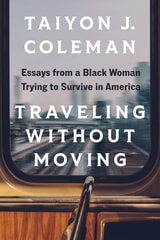
Traveling without Moving
Essays from a Black Woman Trying to Survive in AmericaTaiyon J. Coleman
University of Minnesota Press, 2024
A stunning lyrical commentary on the constructions of race, gender, and class in the fraught nexus of a Black woman’s personal experience and cultural history
The Fair Housing Act passed in 1968, and more than fifty years later, yours seems to be the only Black family on your block in Minneapolis. You and your Black African husband, both college graduates, make less money than some White people with a felony record and no high school diploma. You’re the only Black student in your graduate program. You just aren’t working hard enough. You’re too sensitive. Sandra Bland? George Floyd? Don't take everything so personally. Amid the White smiles of Minnesota Nice and the Minnesota Paradox—the insidious racism of an ostensibly inclusive place to live—what do you do? If you’re Taiyon J. Coleman, you write.
In Traveling without Moving, Coleman shares intimate essays from her life: her childhood in Chicago—growing up in poverty with four siblings and a single mother—and the empowering decision to leave her first marriage. She writes about being the only Black student in a prestigious and predominantly White creative writing program, about institutional racism and implicit bias in writing instruction, about the violent legacies of racism in the U.S. housing market, about the maternal health disparities seen across the country and their implication in her own miscarriage. She explores what it means to write her story and that of her family—an act at once a responsibility and a privilege—bringing forth the inherent contradictions between American ideals and Black reality.
Using a powerful blend of perspectives that move between a first-person lens of lived experience and a wider-ranging critique of U.S. culture, policy, and academia, Coleman’s writing evinces how a Black woman in America is always on the run, always Harriet Tubman, traveling with her babies in tow, seeking safety, desperate to survive, thrive, and finally find freedom.
Retail e-book files for this title are screen-reader friendly.
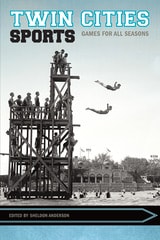
Twin Cities Sports
Games for All SeasonsSheldon Anderson
University of Arkansas Press, 2020