187 books match the query 'Minorities' and 39 start with t
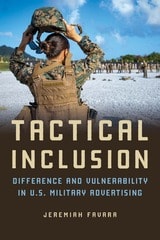
cover of Tactical Inclusion: Difference and Vulnerability in U.S. Military Advertising

Tactical Inclusion

Difference and Vulnerability in U.S. Military Advertising

Jeremiah Favara

University of Illinois Press, 2024

The revolution in military recruitment advertising to people of color and women played an essential role in making the US military one of the most diverse institutions in the United States. Starting at the dawn of the all-volunteer era, Jeremiah Favara illuminates the challenges at the heart of military inclusion by analyzing recruitment ads published in three commercial magazines: Sports Illustrated, Cosmopolitan, and Ebony. Favara draws on Black feminism, critical race theory, and queer of color critique to reveal how the military and advertisers affected change by deploying a set of strategies and practices called tactical inclusion. As Favara shows, tactical inclusion used representations of servicemembers in the new military to connect with people susceptible to recruiting efforts and rendered these new audiences vulnerable to, valuable to, and subject to state violence.

Compelling and eye-opening, Tactical Inclusion combines original analysis with personal experience to chart advertising’s role in building the all-volunteer military.
[more]
cover of The Archive and the Repertoire: Performing Cultural Memory in the Americas

The Archive and the Repertoire

Performing Cultural Memory in the Americas

Diana Taylor

Duke University Press, 2003

In The Archive and the Repertoire preeminent performance studies scholar Diana Taylor provides a new understanding of the vital role of performance in the Americas. From plays to official events to grassroots protests, performance, she argues, must be taken seriously as a means of storing and transmitting knowledge. Taylor reveals how the repertoire of embodied memory—conveyed in gestures, the spoken word, movement, dance, song, and other performances—offers alternative perspectives to those derived from the written archive and is particularly useful to a reconsideration of historical processes of transnational contact. The Archive and the Repertoire invites a remapping of the Americas based on traditions of embodied practice.

Examining various genres of performance including demonstrations by the children of the disappeared in Argentina, the Peruvian theatre group Yuyachkani, and televised astrological readings by Univision personality Walter Mercado, Taylor explores how the archive and the repertoire work together to make political claims, transmit traumatic memory, and forge a new sense of cultural identity. Through her consideration of performances such as Coco Fusco and Guillermo Gómez-Peña’s show Two Undiscovered Amerindians Visit . . . , Taylor illuminates how scenarios of discovery and conquest haunt the Americas, trapping even those who attempt to dismantle them. Meditating on events like those of September 11, 2001 and media representations of them, she examines both the crucial role of performance in contemporary culture and her own role as witness to and participant in hemispheric dramas. The Archive and the Repertoire is a compelling demonstration of the many ways that the study of performance enables a deeper understanding of the past and present, of ourselves and others.
[more]
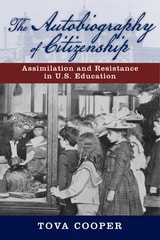
cover of The Autobiography of Citizenship: Assimilation and Resistance in U.S. Education

The Autobiography of Citizenship

Assimilation and Resistance in U.S. Education

Cooper, Tova

Rutgers University Press, 0
At the turn of the twentieth century, the United States was faced with a new and radically mixed population, one that included freed African Americans, former reservation Indians, and a burgeoning immigrant population.  In The Autobiography of Citizenship, Tova Cooper looks at how educators tried to impose unity on this divergent population, and how the new citizens in turn often resisted these efforts, reshaping mainstream U.S. culture and embracing their own view of what it means to be an American. 

The Autobiography of Citizenship traces how citizenship education programs began popping up all over the country, influenced by the progressive approach to hands-on learning popularized by John Dewey and his followers. Cooper offers an insightful account of these programs, enlivened with compelling readings of archival materials such as photos of students in the process of learning; autobiographical writing by both teachers and new citizens; and memoirs, photos, poems, and novels by authors such as W.E.B. Du Bois, Jane Addams, Charles Reznikoff, and Emma Goldman. Indeed, Cooper provides the first comparative, inside look at these citizenship programs, revealing that they varied wildly: at one end, assimilationist boarding schools required American Indian children to transform their dress, language, and beliefs, while at the other end the libertarian Modern School encouraged immigrant children to frolic naked in the countryside and learn about the world by walking, hiking, and following their whims. 

Here then is an engaging portrait of what it was like to be, and become, a U.S. citizen one hundred years ago, showing that what it means to be “American” is never static.
[more]
cover of The Changing Terrain of Race and Ethnicity

The Changing Terrain of Race and Ethnicity

Maria Krysan

Russell Sage Foundation, 2004
The legal institutions of overt racism in the United States have been eliminated, but social surveys and investigations of social institutions confirm the continuing significance of race and the enduring presence of negative racial attitudes. This shift from codified and explicit racism to more subtle forms comes at a time when the very boundaries of race and ethnicity are being reshaped by immigration and a rising recognition that old systems of racial classification inadequately capture a diverse America. In The Changing Terrain of Race and Ethnicity, editors Maria Krysan and Amanda Lewis bring together leading scholars of racial dynamics to study the evolution of America's racial problem and its consequences for race relations in the future. The Changing Terrain of Race and Ethnicity opens by attempting to answer a puzzling question: how is it that so many whites think racism is no longer a problem but so many nonwhites disagree? Sociologist Lawrence Bobo contends that whites exhibit what he calls "laissez faire racism," which ignores historical and structural contributions to racial inequality and does nothing to remedy the injustices of the status quo. Tyrone Forman makes a similar case in his chapter, contending that an emphasis on "color blindness" allows whites to be comforted by the idea that all races are on a level playing field, while not recognizing the advantages they themselves have reaped from years of inequality. The book then moves to a discussion of the new ways that Americans view race. Eduardo Bonilla-Silva and Karen Glover argue that the United States is moving from a black-white divide to a tripartite system, where certain light-skinned, non-threatening minority groups are considered "honorary whites." The book's final section reexamines the theoretical underpinnings of scholarship on race and ethnicity. Joe Feagin argues that research on racism focuses too heavily on how racial boundaries are formed and needs to concentrate more on how those boundaries are used to maintain privileges for certain groups at the expense of others. Manning Marable contends that racism should be addressed at an institutional level to see the prevalence of "structural racism"—deeply entrenched patterns of inequality that are coded by race and justified by stereotypes. The Changing Terrain of Race and Ethnicity provides an in-depth view of racism in modern America, which may be less conspicuous but not necessarily less destructive than its predecessor, Jim Crow. The book's rich analysis and theoretical insight shed light on how, despite many efforts to end America's historic racial problem, it has evolved and persisted into the 21st century.
[more]
cover of The Cincinnati Human Relations Commission: A History, 1943–2013

The Cincinnati Human Relations Commission

A History, 1943–2013

Phillip J. Obermiller

Ohio University Press, 2018

In the summer of 1943, as World War II raged overseas, the United States also faced internal strife. Earlier that year, Detroit had erupted in a series of race riots that killed dozens and destroyed entire neighborhoods. Across the country, mayors and city councils sought to defuse racial tensions and promote nonviolent solutions to social and economic injustices. In Cincinnati, the result of those efforts was the Mayor’s Friendly Relations Committee, later renamed the Cincinnati Human Relations Commission (CHRC).

The Cincinnati Human Relations Commission: A History, 1943–2013, is a decade-by-decade chronicle of the agency: its accomplishments, challenges, and failures. The purpose of municipal human relations agencies like the CHRC was to give minority groups access to local government through internal advocacy, education, mediation, and persuasion—in clear contrast to the tactics of lawsuits, sit-ins, boycotts, and marches adopted by many external, nongovernmental organizations.

In compiling this history, Phillip J. Obermiller and Thomas E. Wagner have drawn on an extensive base of archival records, reports, speeches, and media sources. In addition, archival and contemporary interviews provide first-person insight into the events and personalities that shaped the agency and the history of civil rights in this midwestern city.
[more]
cover of The Color of Opportunity: Pathways to Family, Welfare, and Work

The Color of Opportunity

Pathways to Family, Welfare, and Work

Haya Stier and Marta Tienda

University of Chicago Press, 2000

In The Color of Opportunity, Haya Stier and Marta Tienda ask: How do race and ethnicity limit opportunity in post-civil rights Chicago? In the 1960s, Chicago was a focal point of civil rights activities. But in the 1980s it served as the laboratory for ideas about the emergence and social consequences of concentrated urban poverty; many experts such as William J. Wilson downplayed the significance of race as a cause of concentrated poverty, emphasizing instead structural causes that called for change in employment policy. But in this new study, Stier and Tienda ask about the pervasive poverty, unemployment, and reliance on welfare among blacks and Hispanics in Chicago, wondering if and how the inner city poor differ from the poor in general.

The culmination of a six-year collaboration analyzing the Urban Poverty and Family Life Survey of Chicago, The Color of Opportunity is the first major work to compare Chicago's inner city minorities with national populations of like race and ethnicity from a life course perspective. The authors find that blacks, whites, Mexicans, and Puerto Ricans living in poor neighborhoods differ in their experiences with early material deprivation and the lifetime disadvantages that accumulate—but they do not differ much from the urban poor in their family formation, welfare participation, or labor force attachment. Stier and Tienda find little evidence for ghetto-specific behavior, but they document the myriad ways color still restricts economic opportunity.

The Color of Opportunity stands as a much-needed corrective to increasingly negative views of poor people of color, especially the poor who live in deprived neighborhoods. It makes a key and lasting contribution to ongoing debates about the origins and nature of urban poverty.
[more]
cover of The Colors of Poverty: Why Racial and Ethnic Disparities Persist

The Colors of Poverty

Why Racial and Ethnic Disparities Persist

Ann Chih Lin

Russell Sage Foundation, 2008
Given the increasing diversity of the nation—particularly with respect to its growing Hispanic and Asian populations—why does racial and ethnic difference so often lead to disadvantage? In The Colors of Poverty, a multidisciplinary group of experts provides a breakthrough analysis of the complex mechanisms that connect poverty and race. The Colors of Poverty reframes the debate over the causes of minority poverty by emphasizing the cumulative effects of disadvantage in perpetuating poverty across generations. The contributors consider a kaleidoscope of factors that contribute to widening racial gaps, including education, racial discrimination, social capital, immigration, and incarceration. Michèle Lamont and Mario Small grapple with the theoretical ambiguities of existing cultural explanations for poverty disparities.  They argue that culture and structure are not competing explanations for poverty, but rather collaborate to produce disparities. Looking at how attitudes and beliefs exacerbate racial stratification, social psychologist Heather Bullock links the rise of inequality in the United States to an increase in public tolerance for disparity. She suggests that the American ethos of rugged individualism and meritocracy erodes support for antipoverty programs and reinforces the belief that people are responsible for their own poverty. Sociologists Darren Wheelock and Christopher Uggen focus on the collateral consequences of incarceration in exacerbating racial disparities and are the first to propose a link between legislation that blocks former drug felons from obtaining federal aid for higher education and the black/white educational attainment gap. Joe Soss and Sanford Schram argue that the increasingly decentralized and discretionary nature of state welfare programs allows for different treatment of racial groups, even when such policies are touted as "race-neutral." They find that states with more blacks and Hispanics on welfare rolls are consistently more likely to impose lifetime limits, caps on benefits for mothers with children, and stricter sanctions. The Colors of Poverty is a comprehensive and evocative introduction to the dynamics of race and inequality. The research in this landmark volume moves scholarship on inequality beyond a simple black-white paradigm, beyond the search for a single cause of poverty, and beyond the promise of one "magic bullet" solution. A Volume in the National Poverty Center Series on Poverty and Public Policy
[more]
cover of The Congressional Black Caucus, Minority Voting Rights, and the U.S. Supreme Court

The Congressional Black Caucus, Minority Voting Rights, and the U.S. Supreme Court

Christina R. Rivers

University of Michigan Press, 2014

Both the U.S. Supreme Court and the Congressional Black Caucus (CBC) claim to advocate minority political interests, yet they disagree over the intent and scope of the Voting Rights Act (VRA), as well as the interpretation of the equal protection clause of the 14th Amendment. Whereas the Court promotes color-blind policies, the CBC advocates race-based remedies. Setting this debate in the context of the history of black political thought, Rivers examines a series of high-profile districting cases, from Rodgers v. Lodge (1982) through NAMUDNO v. Holder (2009). She evaluates the competing approaches to racial equality and concludes, surprisingly, that an originalist, race-conscious interpretation of the 14th Amendment, along with a revised states' rights position regarding electoral districting, may better serve minority political interests.
[more]
cover of The Construction of Minorities: Cases for Comparison Across Time and Around the World

The Construction of Minorities

Cases for Comparison Across Time and Around the World

Andre Burguiere and Raymond Grew, Editors

University of Michigan Press, 2001

How does a minority come to be? In an unusual project, a notable group of French and American scholars take the view that minorities are socially constructed. Their original studies of specific historical examples produce a series of stimulating and provocative essays useful and enjoyable for specialists and the general reader alike.Spawned from a conference organized by the journals Annales and Comparative Studies in Society and History in concert with the Center for Historical Research at l'EHESS in Paris and the Department of History at the University of Michigan, this collection contrasts studies of Afro-Americans in the United States, French Protestants, notables in Renaissance Florence, religious minorities in the Ottoman Empire, Muslim and Chinese traders in Southeast Asia, the native peoples of Spanish America, lower-caste Indians, ethnic minorities in the Soviet Union, Australian aborigines, and American and French responses to AIDS to reveal valuable information about how minorities come to be constructed within societies. Some of the minorities considered are identified primarily in terms of their ethnicity, some by social class, and some by religion (Protestant, Jewish, and Muslim); a final essay asks whether the victims of AIDS constitute a minority at all.With its cross-cultural emphasis, this book will be a valuable addition to courses on diversity, ethnicity, and cultural comparison. It is destined to be a useful reference for undergraduate and research libraries and a much-consulted work for specialists on each of the societies considered.André Burguière is Research Director, l'Ecole des Hautes Etudes en Sciences Sociales (l'EHESS) in Paris. Raymond Grew is Professor of History Emeritus, University of Michigan.
[more]
cover of The Crisis of Meaning: In Culture and Education

The Crisis of Meaning

In Culture and Education

David Trend

University of Minnesota Press, 1995

The Crisis of Meaning was first published in 1995. Minnesota Archive Editions uses digital technology to make long-unavailable books once again accessible, and are published unaltered from the original University of Minnesota Press editions.

Pick up any newspaper and it is clear that the United States is facing a democratic crisis. Recent culture wars and debates about political correctness and culture have illustrated how conventional definitions of citizenship and national identity have been thrown into question.

Investigating what he views as an inseparable link between culture and politics, David Trend analyzes how notions of patriotism, citizenship, community, and family are communicated within specific public and private institutions. He extends the meaning and purpose of pedagogy as a cultural practice outside the classroom, focusing on political activism in education, the mass media, and the art world.

The Crisis of Meaning supplies a crucial theoretical understanding of the ways in which the pedagogical and political intersect at a variety of cultural sites, as it points us toward a "democratic" process of national identity formation. It is indispensable reading for anyone interested in the connections between education and politics.

David Trend is executive director of the Center for Social Research and Education in San Francisco and also executive editor of the Socialist Review. He is the author of Cultural Pedagogy: Art/Education/Politics (1992).
[more]
cover of The Diversity Bargain: And Other Dilemmas of Race, Admissions, and Meritocracy at Elite Universities

The Diversity Bargain

And Other Dilemmas of Race, Admissions, and Meritocracy at Elite Universities

Natasha Warikoo

University of Chicago Press, 2016

We’ve heard plenty from politicians and experts on affirmative action and higher education, about how universities should intervene—if at all—to ensure a diverse but deserving student population. But what about those for whom these issues matter the most? In this book, Natasha K. Warikoo deeply explores how students themselves think about merit and race at a uniquely pivotal moment: after they have just won the most competitive game of their lives and gained admittance to one of the world’s top universities.
           
What Warikoo uncovers—talking with both white students and students of color at Harvard, Brown, and Oxford—is absolutely illuminating; and some of it is positively shocking. As she shows, many elite white students understand the value of diversity abstractly, but they ignore the real problems that racial inequality causes and that diversity programs are meant to solve. They stand in fear of being labeled a racist, but they are quick to call foul should a diversity program appear at all to hamper their own chances for advancement. The most troubling result of this ambivalence is what she calls the “diversity bargain,” in which white students reluctantly agree with affirmative action as long as it benefits them by providing a diverse learning environment—racial diversity, in this way, is a commodity, a selling point on a brochure. And as Warikoo shows, universities play a big part in creating these situations. The way they talk about race on campus and the kinds of diversity programs they offer have a huge impact on student attitudes, shaping them either toward ambivalence or, in better cases, toward more productive and considerate understandings of racial difference.
           
Ultimately, this book demonstrates just how slippery the notions of race, merit, and privilege can be. In doing so, it asks important questions not just about college admissions but what the elite students who have succeeded at it—who will be the world’s future leaders—will do with the social inequalities of the wider world.  
 
[more]
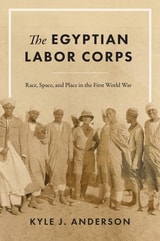
cover of The Egyptian Labor Corps: Race, Space, and Place in the First World War

The Egyptian Labor Corps

Race, Space, and Place in the First World War

Kyle J. Anderson

University of Texas Press, 2021

During World War I, the British Empire enlisted half a million young men, predominantly from the countryside of Egypt, in the Egyptian Labor Corps (ELC) and put them to work handling military logistics in Europe and the Middle East. British authorities reneged on their promise not to draw Egyptians into the war, and, as Kyle Anderson shows, the ELC was seen by many in Egypt as a form of slavery. The Egyptian Labor Corps tells the forgotten story of these young men, culminating in the essential part they came to play in the 1919 Egyptian Revolution.

Combining sources from archives in four countries, Anderson explores Britain’s role in Egypt during this period and how the ELC came to be, as well as the experiences and hardships these men endured. As he examines the ways they coped—through music, theater, drugs, religion, strikes, and mutiny—he illustrates how Egyptian nationalists, seeing their countrymen in a state akin to slavery, began to grasp that they had been racialized as “people of color.” Documenting the history of the ELC and its work during the First World War, The Egyptian Labor Corps also provides a fascinating reinterpretation of the 1919 revolution through the lens of critical race theory.
[more]
cover of The Elsewhere Is Black: Ecological Violence and Improvised Life

The Elsewhere Is Black

Ecological Violence and Improvised Life

Marisa Solomon

Duke University Press, 2025
In The Elsewhere Is Black, Marisa Solomon examines how waste is a mundane part of poor Black survival and a condition of settler colonial racial capitalism. Tracing the flow of trash and waste across Black spaces, from Brooklyn’s historically Black Bedford-Stuyvesant to the post-plantation towns of Virginia’s Tidewater, Solomon contends that waste infrastructures concentrate environmental risk in an elsewhere that is routinely Black. Solomon emphasizes that ecological violence is a form of racialized heteropatriarchal environmental control that upholds whiteness as a propertied way of life and criminalizes Black survival. As she points to acute sites of toxicity, Solomon theorizes the relationship between the devaluation of land and Black and more-than-human life to reveal how the risks of poisoning, police violence, dispossession, and poverty hold Black life captive. Locating Black survival as a site from which alternative eco-political imaginations spring, she foregrounds how people live and dream amidst waste’s daily accumulation. Solomon opens new ecological horizons to ask: What forms of environmentalism emerge when Black un/freedom has never been distant from waste?
[more]
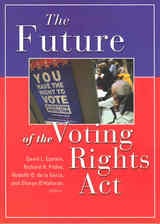
cover of The Future of the Voting Rights Act

The Future of the Voting Rights Act

David Epstein

Russell Sage Foundation, 2006
The Voting Rights Act (VRA) stands among the great achievements of American democracy. Originally adopted in 1965, the Act extended full political citizenship to African-American voters in the United States nearly 100 years after the Fifteenth Amendment first gave them the vote. While Section 2 of the VRA is a nationwide, permanent ban on discriminatory election practices, Section 5, which is set to expire in 2007, targets only certain parts of the country, requiring that legislative bodies in these areas—mostly southern states with a history of discriminatory practices—get permission from the federal government before they can implement any change that affects voting. In The Future of the Voting Rights Act, David Epstein, Rodolfo de la Garza, Sharyn O'Halloran, and Richard Pildes bring together leading historians, political scientists, and legal scholars to assess the role Section 5 should play in America's future. The contributors offer varied perspectives on the debate. Samuel Issacharoff questions whether Section 5 remains necessary, citing the now substantial presence of blacks in legislative positions and the increasingly partisan enforcement of the law by the Department of Justice (DOJ). While David Epstein and Sharyn O'Halloran are concerned about political misuse of Section 5, they argue that it can only improve minority voting power—even with a partisan DOJ—and therefore continues to serve a valuable purpose. Other contributors argue that the achievements of Section 5 with respect to blacks should not obscure shortcomings in the protection of other groups. Laughlin McDonald argues that widespread and systematic voting discrimination against Native Americans requires that Section 5 protections be expanded to more counties in the west. Rodolfo de la Garza and Louis DeSipio point out that the growth of the Latino population in previously homogenous areas and the continued under-representation of Latinos in government call for an expanded Section 5 that accounts for changing demographics. As its expiration date approaches, it is vital to examine the role that Section 5 still plays in maintaining a healthy democracy. Combining historical perspective, legal scholarship, and the insight of the social sciences, The Future of the Voting Rights Act is a crucial read for anyone interested in one of this year's most important policy debates and in the future of civil rights in America.
[more]
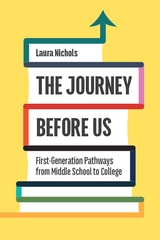
cover of The Journey Before Us: First-Generation Pathways from Middle School to College

The Journey Before Us

First-Generation Pathways from Middle School to College

Laura Nichols

Rutgers University Press, 2020
More students are enrolling in college than ever before in U.S. history. Yet, many never graduate. In The Journey Before Us, Laura Nichols examines why this is by sharing the experiences of aspiring first-generation college students as they move from middle-school to young adulthood. By following the educational trajectories and transitions of Latinx, mainly second-generation immigrant students and analyzing national data, Nichols explores the different paths that students take and the factors that make a difference. The interconnected role of schools, neighborhoods, policy, employment, advocates, identity, social class, and family reveal what must change to address the “college completion crisis.” Appropriate for anyone wanting to understand their own educational journey as well as students, teachers, counselors, school administrators, scholars, and policymakers, The Journey Before Us outlines what is needed so that education can once again be a means of social mobility for those who would be the first in their families to graduate from college.
[more]
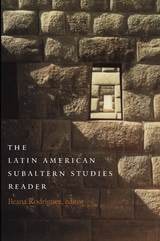
cover of The Latin American Subaltern Studies Reader

The Latin American Subaltern Studies Reader

Ileana Rodríguez, ed.

Duke University Press, 2001

Sharing a postrevolutionary sympathy with the struggles of the poor, the contributors to this first comprehensive collection of writing on subalternity in Latin America work to actively link politics, culture, and literature. Emerging from a decade of work and debates generated by a collective known as the Latin American Studies Group, the volume privileges the category of the subaltern over that of class, as contributors focus on the possibilities of investigating history from below.
In addition to an overview by Ranajit Guha, essay topics include nineteenth-century hygiene in Latin American countries, Rigoberta Menchú after the Nobel, commentaries on Haitian and Argentinian issues, the relationship between gender and race in Bolivia, and ungovernability and tragedy in Peru. Providing a radical critique of elite culture and of liberal, bourgeois, and modern epistemologies and projects, the essays included here prove that Latin American Subaltern Studies is much more than the mere translation of subaltern studies from South Asia to Latin America.

Contributors. Marcelo Bergman, John Beverley, Robert Carr, Sara Castro-Klarén, Michael Clark, Beatriz González Stephan, Ranajit Guha, María Milagros López , Walter Mignolo, Alberto Moreiras, Abdul-Karim Mustapha, José Rabasa, Ileana Rodríguez, Josefina Saldaña-Portillo, Javier Sanjinés, C. Patricia Seed, Doris Sommer, Marcia Stephenson, Mónica Szurmuk, Gareth Williams, Marc Zimmerman
[more]
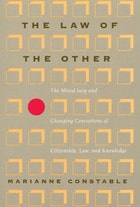
cover of The Law of the Other: The Mixed Jury and Changing Conceptions of Citizenship, Law, and Knowledge

The Law of the Other

The Mixed Jury and Changing Conceptions of Citizenship, Law, and Knowledge

Marianne Constable

University of Chicago Press, 1994

The Law of the Other is an account of the English doctrine of the "mixed jury". Constable's excavation of the historical, rhetorical, and theoretical foundations of modern law recasts our legal and sociological understandings of the American jury and our contemporary conceptions of law, citizenship, and truth.

The "mixed jury" doctrine allowed resident foreigners to have law suits against English natives tried before juries composed half of natives and half of aliens like themselves. As she traces the transformations in this doctrine from the Middle Ages to its abolition in 1870, Constable also reveals the emergence of a world where law rooted in actual practices and customs of communities is replaced by law determined by officials, where juries no longer strive to speak the truth but to ascertain the facts.
[more]
cover of The Magic Key: The Educational Journey of Mexican Americans from K-12 to College and Beyond

The Magic Key

The Educational Journey of Mexican Americans from K-12 to College and Beyond

Edited by Ruth Enid Zambrana and Sylvia Hurtado

University of Texas Press, 2015

Mexican Americans comprise the largest subgroup of Latina/os, and their path to education can be a difficult one. Yet just as this group is often marginalized, so are their stories, and relatively few studies have chronicled the educational trajectory of Mexican American men and women. In this interdisciplinary collection, editors Zambrana and Hurtado have brought together research studies that reveal new ways to understand how and why members of this subgroup have succeeded and how the facilitators of success in higher education have changed or remained the same.

The Magic Key’s four sections explain the context of Mexican American higher education issues, provide conceptual understandings, explore contemporary college experiences, and offer implications for educational policy and future practices. Using historical and contemporary data as well as new conceptual apparatuses, the authors in this collection create a comparative, nuanced approach that brings Mexican Americans’ lived experiences into the dominant discourse of social science and education. This diverse set of studies presents both quantitative and qualitative data by gender to examine trends of generations of Mexican American college students, provides information on perceptions of welcoming university climates, and proffers insights on emergent issues in the field of higher education for this population. Professors and students across disciplines will find this volume indispensable for its insights on the Mexican American educational experience, both past and present.
[more]
cover of The Making of the New Deal Democrats: Voting Behavior and Realignment in Boston, 1920-1940

The Making of the New Deal Democrats

Voting Behavior and Realignment in Boston, 1920-1940

Gerald H. Gamm

University of Chicago Press, 1990

"Why is The Making of New Deal Democrats so significant? One of the major controversies in the study of American elections has to do with the nature of electoral realignments. One school argues that a realignment involves a major shift of voters from one party to another, while another school argues that the process consists largely of mobilization of previously inactive voters. The debate is crucial for understanding the nature of the New Deal realignment.

Almost all previous work on the subject has dealt with large-scale national patterns which make it difficult to pin down the precise processes by which the alignment took place. Gamm's work is most remarkable in that it is a close analysis of shifting voter alignments on the precinct and block level in the city of Boston. His extremely detailed and painstaking work of isolating homogeneous ethnic units over a twenty-year period allows one to trace the voting behavior of the particular ethnic groups that ultimately formed the core of the New Deal realignment."—Sidney Verba, Harvard University
[more]
cover of The New Race Question: How the Census Counts Multiracial Individuals

The New Race Question

How the Census Counts Multiracial Individuals

Joel Perlmann

Russell Sage Foundation, 2002
The change in the way the federal government asked for information about race in the 2000 census marked an important turning point in the way Americans measure race. By allowing respondents to choose more than one racial category for the first time, the Census Bureau challenged strongly held beliefs about the nature and definition of race in our society. The New Race Question is a wide-ranging examination of what we know about racial enumeration, the likely effects of the census change, and possible policy implications for the future. The growing incidence of interracial marriage and childrearing led to the change in the census race question. Yet this reality conflicts with the need for clear racial categories required by anti-discrimination and voting rights laws and affirmative action policies. How will racial combinations be aggregated under the Census's new race question? Who will decide how a respondent who lists more than one race will be counted? How will the change affect established policies for documenting and redressing discrimination? The New Race Question opens with an exploration of what the attempt to count multiracials has shown in previous censuses and other large surveys. Contributor Reynolds Farley reviews the way in which the census has traditionally measured race, and shows that although the numbers of people choosing more than one race are not high at the national level, they can make a real difference in population totals at the county level. The book then takes up the debate over how the change in measurement will affect national policy in areas that rely on race counts, especially in civil rights law, but also in health, education, and income reporting. How do we relate data on poverty, graduation rates, and disease collected in 2000 to the rates calculated under the old race question? A technical appendix provides a useful manual for bridging old census data to new. The book concludes with a discussion of the politics of racial enumeration. Hugh Davis Graham examines recent history to ask why some groups were determined to be worthy of special government protections and programs, while others were not. Posing the volume's ultimate question, Jennifer Hochschild asks whether the official recognition of multiracials marks the beginning of the end of federal use of race data, and whether that is a good or a bad thing for society? The New Race Question brings to light the many ways in which a seemingly small change in surveying and categorizing race can have far reaching effects and expose deep fissures in our society. A Volume in the Russell Sage Foundation Census Series Copublished with the Levy Economics Institute of Bard College
[more]
cover of The Obligation Mosaic: Race and Social Norms in US Political Participation

The Obligation Mosaic

Race and Social Norms in US Political Participation

Allison P. Anoll

University of Chicago Press, 2022

Many argue that “civic duty” explains why Americans engage in politics, but what does civic duty mean, and does it mean the same thing across communities? Why are people from marginalized social groups often more likely than their more privileged counterparts to participate in high-cost political activities? 
 
In The Obligation Mosaic, Allison P. Anoll shows that the obligations that bring people into the political world—or encourage them to stay away—vary systematically by race in the United States, with broad consequences for representation. Drawing on a rich mix of interviews, surveys, and experiments with Asian, Black, Latino, and White Americans, the book uncovers two common norms that centrally define concepts of obligation: honoring ancestors and helping those in need. Whether these norms lead different groups to politics depends on distinct racial histories and continued patterns of segregation. 
 
Anoll’s findings not only help to explain patterns of participation but also provide a window into opportunities for change, suggesting how activists and parties might better mobilize marginalized citizens. 
[more]
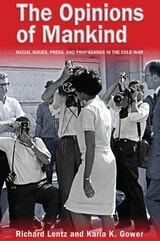
cover of The Opinions of Mankind: Racial Issues, Press, and Propaganda in the Cold War

The Opinions of Mankind

Racial Issues, Press, and Propaganda in the Cold War

Richard Lentz and Karla K. Gower

University of Missouri Press, 2011

During the Cold War, the Soviets were quick to publicize any incident of racial hostility in the United States. Since violence by white Americans against minorities was the perfect foil to America’s claim to be defenders of freedom, news of these occurrences was exploited to full advantage by the Russians. But how did the Soviets gain primary knowledge of race riots in small American towns? Certainly, the Soviets had reporters stationed stateside, in big cities like New York, but research reveals that the majority of their information came directly from U.S. media sources.

Throughout this period, the American press provided the foreign media with information about racially charged events in the United States. Such news coverage sometimes put Washington at a disadvantage, making it difficult for government officials to assuage foreign reactions to the injustices occurring on U.S. soil. Yet in other instances, the domestic press helped to promote favorable opinions abroad by articulating themes of racial progress. While still acknowledging racial abuses, these press spokesmen asserted that the situation in America was improving. Such paradoxical messages, both aiding and thwarting the efforts of the U.S. government, are the subject of The Opinions of Mankind: Racial Issues, Press, and Propaganda in the Cold War.

The study, by scholars Richard Lentz and Karla K. Gower, describes and analyzes the news discourse regarding U.S. racial issues from 1946 to 1965. The Opinions of Mankindnot only delves into the dissemination of race-related news to foreign outlets but also explores the impact foreign perceptions of domestic racism had on the U.S. government and its handling of foreign relations during the period. What emerges is an original, insightful contribution to Cold War studies. While other books examine race and foreign affairs during this period of American history, The Opinions of Mankind is the first to approach the subject from the standpoint of press coverage and its impact on world public opinion.

This exhaustively researched and compellingly written volume will appeal to media scholars, political historians, and general readers alike. By taking a unique approach to the study of this period, The Opinions of Mankind presents the workings behind the battles for public opinion that took place between 1946 and 1965.
[more]
cover of The Paradoxes of Integration: Race, Neighborhood, and Civic Life in Multiethnic America

The Paradoxes of Integration

Race, Neighborhood, and Civic Life in Multiethnic America

J. Eric Oliver

University of Chicago Press, 2010

The United States is rapidly changing from a country monochromatically divided between black and white into a multiethnic society. The Paradoxes of Integration helps us to understand America’s racial future by revealing the complex relationships among integration, racial attitudes, and neighborhood life.

J. Eric Oliver demonstrates that the effects of integration differ tremendously, depending on which geographical level one is examining. Living among people of other races in a larger metropolitan area corresponds with greater racial intolerance, particularly for America’s white majority. But when whites, blacks, Latinos, and Asian Americans actually live in integrated neighborhoods, they feel less racial resentment. Paradoxically, this racial tolerance is usually also accompanied by feeling less connected to their community; it is no longer "theirs." Basing its findings on our most advanced means of gauging the impact of social environments on racial attitudes, The Paradoxes of Integration sensitively explores the benefits and at times, heavily borne, costs of integration.
[more]
cover of The People, in Parts: The Majoritarian Work of the Minority Form

The People, in Parts

The Majoritarian Work of the Minority Form

Natasha S. Raheja

University of Chicago Press, 2027

Offers a new theory of the minority as a political form and shows how majoritarian projects are built through its appropriation.

Around the world, national majorities are telling themselves a potent story: that they are the ones in danger. In the United States and Serbia, Christian and white nationalists warn of “replacement.” In Turkey and Pakistan, Muslim nationalists cast religious “others” as existential threats. In India, Hindu nationalists claim that Hindus are becoming minorities in “their own” land. These movements, and the migration and citizenship policies that accompany them, are not aberrations, but rather expressions of a logic embedded in the modern nation-state—a logic that turns people into numbers, numbers into votes, and difference into enmity.

In The People, in Parts, anthropologist Natasha S. Raheja homes in on a paradox visible along the India-Pakistan border. When Hindus cross into India from Pakistan seeking refuge, they are admitted as minorities in need of protection. Yet in India, their welcome into the putative majority is selective and conditional. How does majority-minority status shift by crossing a border? Drawing on long-term research in the Thar Desert region, across Sindh and Rajasthan, Raheja traces how caste and religion shape people's encounters with the state and argues that this bureaucratic confusion is political machinery. Where liberal democracy treats the minority as a shifting, procedural category, nation-state governance fixes it as a substantive identity. The suffering of minoritized populations becomes raw material for majoritarian projects, converted into demographic justification, electoral arithmetic, and nationalist grievance. The minority form, in other words, does majoritarian work.

The People, in Parts offers not only a searing diagnosis of minority-majority politics and the governance of migration but a reframing: the problem is not simply about who belongs and who does not, but how nationalist belonging crosses state borders, pointing to strains within liberal democracy and the nation-state order.
[more]
cover of The Politics of Preference: Democratic Institutions and Affirmative Action in the United States and India

The Politics of Preference

Democratic Institutions and Affirmative Action in the United States and India

Sunita Parikh

University of Michigan Press, 1997
Sunita Parikh examines the history and fate of affirmative action programs in two ethnically heterogeneous democracies, the United States and India. Affirmative action programs in the United States represent a controversial policy about which the American public feel at best ambivalence and at worst hostility, while in India the expansion of reservation policies in recent years has led to riots and contributed to the fall of governments. And yet these policies were not particularly controversial when they were introduced. How the policy traveled from these auspicious beginnings to its current predicament can best be understood, according to Parikh, by exploring the changing political conditions under which it was introduced, expanded, and then challenged.
Although they are in many respects very different countries, India and the United States are important countries in which to study the implementation of ascriptive policies like affirmative action, according to Parikh. They are both large, heterogeneous societies with democratic political systems in which previously excluded groups were granted benefits by the majorities that had historically oppressed them. Parikh argues that these policies were the product of democratic politics--which required political parties to mobilize existing groups as voters--and the ethnically heterogeneous nature of Indian and U.S. society--where ethnic markers are particularly salient sources of identification as groups. Affirmative action in both countries was introduced because it could be used to solidify and expand electoral coalitions by giving benefits to defined minority groups, according to Parikh. As the policy became better known, it became more disliked by non-targeted groups, and it was no longer an appeal which was cost free for politicians.
This book will be of interest to social scientists concerned with race and ethnic relations and with the comparative study of political and social systems.
Sunita Parikh is Assistant Professor of Political Science, Columbia University.
[more]
cover of The Price of Nice: How Good Intentions Maintain Educational Inequity

The Price of Nice

How Good Intentions Maintain Educational Inequity

Angelina E. Castagno

University of Minnesota Press, 2019

How being “nice” in school and university settings works to reinforce racialized, gendered, and (dis)ability-related inequities in education and society


Being nice is difficult to critique. Niceness is almost always portrayed and felt as a positive quality. In schools, nice teachers are popular among students, parents, and administrators. And yet Niceness, as a distinct set of practices and discourses, is not actually good for individuals, institutions, or communities because of the way it maintains and reinforces educational inequity. 

In The Price of Nice, an interdisciplinary group of scholars explores Niceness in educational spaces from elementary schools through higher education to highlight how this seemingly benign quality reinforces structural inequalities. Grounded in data, personal narrative, and theory, the chapters show that Niceness, as a raced, gendered, and classed set of behaviors, functions both as a shield to save educators from having to do the hard work of dismantling inequity and as a disciplining agent for those who attempt or even consider disrupting structures and ideologies of dominance. 

Contributors: Sarah Abuwandi, Arizona State U; Colin Ben, U of Utah; Nicholas Bustamante, Arizona State U; Aidan/Amanda J. Charles, Northern Arizona U; Jeremiah Chin, Arizona State U; Sally Campbell Galman, U of Massachusetts; Frederick Gooding Jr., Texas Christian U; Deirdre Judge, Tufts U; Katie A. Lazdowski; Román Liera, U of Southern California; Sylvia Mac, U of La Verne; Lindsey Malcolm-Piqueux, California Institute of Technology; Giselle Martinez Negrette, U of Wisconsin–Madison; Amber Poleviyuma, Arizona State U; Alexus Richmond, Arizona State U; Frances J. Riemer, Northern Arizona U; Jessica Sierk, St. Lawrence U; Bailey B. Smolarek, U of Wisconsin–Madison; Jessica Solyom, Arizona State U; Megan Tom, Arizona State U; Sabina Vaught, U of Oklahoma; Cynthia Diana Villarreal, U of Southern California; Kristine T. Weatherston, Temple U; Joseph C. Wegwert, Northern Arizona U; Marguerite Anne Fillion Wilson, Binghamton U; Jia-Hui Stefanie Wong, Trinity College; Denise Gray Yull, Binghamton U.
[more]
cover of The Quality of Divided Democracies: Minority Inclusion, Exclusion, and Representation in the New Europe

The Quality of Divided Democracies

Minority Inclusion, Exclusion, and Representation in the New Europe

Licia Cianetti

University of Michigan Press, 2019

The Quality of Divided Democracies contemplates how democracy works, or fails to work, in ethnoculturally divided societies. It advances a new theoretical approach to assessing quality of democracy in divided societies, and puts it into practice with the focused comparison of two divided democracies—Estonia and Latvia. The book uses rich comparative data to tackle the vital questions of what determines a democracy’s level of inclusiveness and the ways in which minorities can gain access to the policy-making process. It uncovers a “presence–polarization dilemma” for minorities’ inclusion in the democratic process, which has implications for academic debates on minority representation and ethnic politics, as well as practical implications for international and national institutions’ promotion of minority rights.
[more]
cover of The Reorder of Things: The University and Its Pedagogies of Minority Difference

The Reorder of Things

The University and Its Pedagogies of Minority Difference

Roderick A. Ferguson

University of Minnesota Press, 2012

In the 1960s and 1970s, minority and women students at colleges and universities across the United States organized protest movements to end racial and gender inequality on campus. African American, Chicano, Asia American, American Indian, women, and queer activists demanded the creation of departments that reflected their histories and experiences, resulting in the formation of interdisciplinary studies programs that hoped to transform both the university and the wider society beyond the campus.

In The Reorder of Things, however, Roderick A. Ferguson traces and assesses the ways in which the rise of interdisciplines—departments of race, gender, and ethnicity; fields such as queer studies—were not simply a challenge to contemporary power as manifest in academia, the state, and global capitalism but were, rather, constitutive of it. Ferguson delineates precisely how minority culture and difference as affirmed by legacies of the student movements were appropriated and institutionalized by established networks of power.

Critically examining liberationist social movements and the cultural products that have been informed by them, including works by Adrian Piper, Toni Cade Bambara, Jhumpa Lahiri, and Zadie Smith, The Reorder of Things argues for the need to recognize the vulnerabilities of cultural studies to co-option by state power and to develop modes of debate and analysis that may be in the institution but are, unequivocally, not of it.
[more]
cover of The Revolution Will Be Improvised: The Intimacy of Cultural Activism

The Revolution Will Be Improvised

The Intimacy of Cultural Activism

Elizabeth Rodriguez Fielder

University of Michigan Press, 2024

The Revolution Will Be Improvised: The Intimacy of Cultural Activism traces intimate encounters between activists and local people of the civil rights movement through an archive of Black and Brown avant-gardism.  In the 1960s, Student Nonviolent Coordinating Committee (SNCC) activists engaged with people of color working in poor communities to experiment with creative approaches to liberation through theater, media, storytelling, and craft making. With a dearth of resources and an abundance of urgency, SNCC activists improvised new methods of engaging with communities that created possibilities for unexpected encounters through programs such as The Free Southern Theater, El Teatro Campesino, and the Poor People’s Corporation. 

Reading the output of these programs, Elizabeth Rodriguez Fielder argues that intimacy-making became an extension of participatory democracy. In doing so, Rodriguez Fielder supplants the success-failure binary for understanding social movements, focusing instead on how care work aligns with creative production. The Revolution Will Be Improvised returns to improvisation’s roots in economic and social necessity and locates it as a core tenet of the aesthetics of obligation, where a commitment to others drives the production and result of creative work. Thus, this book puts forward a methodology to explore the improvised, often ephemeral, works of art activism.
[more]
cover of The Romance of Race: Incest, Miscegenation, and Multiculturalism in the United States, 1880-1930

The Romance of Race

Incest, Miscegenation, and Multiculturalism in the United States, 1880-1930

Sheffer, Jolie A.

Rutgers University Press, 2013

In the United States miscegenation is not merely a subject of literature and popular culture. It is in many ways the foundation of contemporary imaginary community. The Romance of Race examines the role of minority women writers and reformers in the creation of our modern American multiculturalism.

The national identity of the United States was transformed between 1880 and 1930 due to mass immigration, imperial expansion, the rise of Jim Crow, and the beginning of the suffrage movement. A generation of women writers and reformers—particularly women of color—contributed to these debates by imagining new national narratives that put minorities at the center of American identity. Jane Addams, Pauline Hopkins, Onoto Watanna (Winnifred Eaton), María Cristina Mena, and Mourning Dove (Christine Quintasket) embraced the images of the United States—and increasingly the world—as an interracial nuclear family. They also reframed public debates through narratives depicting interracial encounters as longstanding, unacknowledged liaisons between white men and racialized women that produced an incestuous, mixed-race nation.

By mobilizing the sexual taboos of incest and miscegenation, these women writers created political allegories of kinship and community. Through their criticisms of the nation’s history of exploitation and colonization, they also imagined a more inclusive future. As Jolie A. Sheffer identifies the contemporary template for American multiculturalism in the works of turn-of-the century minority writers, she uncovers a much more radical history than has previously been considered.

[more]
cover of The Tsar, The Empire, and The Nation: Dilemmas of Nationalization in Russia's Western Borderlands, 1905-1915

The Tsar, The Empire, and The Nation

Dilemmas of Nationalization in Russia's Western Borderlands, 1905-1915

Darius Staliunas

Central European University Press, 2021

This collection of essays addresses the challenge of modern nationalism to the tsarist Russian Empire. First appearing on the empire’s western periphery this challenge, was most prevalent in twelve provinces extending from Ukrainian lands in the south to the Baltic provinces in the north, as well as to the Kingdom of Poland.
At issue is whether the late Russian Empire entered World War I as a multiethnic state with many of its age-old mechanisms run by a multiethnic elite, or as a Russian state predominantly managed by ethnic Russians. The tsarist vision of prioritizing loyalty among all subjects over privileging ethnic Russians and discriminating against non-Russians faced a fundamental problem: as soon as the opportunity presented itself, non-Russians would increase their demands and become increasingly separatist.
The authors found that although the imperial government did not really identify with popular Russian nationalism, it sometimes ended up implementing policies promoted by Russian nationalist proponents. Matters addressed include native language education, interconfessional rivalry, the “Jewish question,” the origins of mass tourism in the western provinces, as well as the emergence of Russian nationalist attitudes in the aftermath of the first Russian revolution.
[more]
cover of Third World Studies: Theorizing Liberation

Third World Studies

Theorizing Liberation

Gary Y. Okihiro

Duke University Press, 2016
In 1968 the Third World Liberation Front at San Francisco State College demanded the creation of a Third World studies program to counter the existing curricula that ignored issues of power—notably, imperialism and oppression. The administration responded by institutionalizing an ethnic studies program; Third World studies was over before it began. Detailing the field's genesis and premature death, Gary Y. Okihiro presents an intellectual history of ethnic studies and Third World studies and shows where they converged and departed by identifying some of their core ideas, concepts, methods, and theories. In so doing, he establishes the contours of a unified field of study—Third World studies—that pursues a decolonial politics by examining the human condition broadly, especially in regard to oppression, and critically analyzing the locations and articulations of power as manifested in the social formation. Okihiro's framing of Third World studies moves away from ethnic studies' liberalism and its U.S.-centrism to emphasize the need for complex thinking and political action in the drive for self-determination. 
[more]
cover of Third World Studies: Theorizing Liberation

Third World Studies

Theorizing Liberation

Gary Y. Okihiro

Duke University Press, 2024
In this revised and expanded second edition of Third World Studies, Gary Y. Okihiro considers the methods and theories that might constitute the formation of Third World studies. Proposed in 1968 at San Francisco State College by the Third World Liberation Front but replaced by faculty and administrators with ethnic studies, Third World studies was over before it began. As opposed to ethnic studies, which Okihiro critiques for its liberalism and US-centrism, Third World studies begins with the colonized world and the anti-imperial, anticolonial, and antiracist projects located therein as described by W. E. B. Du Bois in 1900. Third World studies analyzes the locations and articulations of power around the axes of race, gender, sexuality, (dis)ability, class, and nation. In this new edition, Okihiro emphasizes the work of Third World intellectuals such as M. N. Roy, José Carlos Mariátegui, and Oliver Cromwell Cox; foregrounds the importance of Bandung and the Tricontinental; and adds discussions of eugenics, feminist epistemologies, and religion. With this work, Okihiro establishes Third World studies as a theoretical formation and a liberatory practice.
[more]
cover of Through the Archival Looking Glass: A Reader on Diversity and Inclusion

Through the Archival Looking Glass

A Reader on Diversity and Inclusion

Mary A. Caldera

Society of American Archivists, 2014
Realizing Diversity and Inclusion in Archives and the Archival Profession The impulse to create archives is rooted in the very human need to leave one’s mark on the world. Whether through letters, diaries, reports, photographs, films, or a teenager’s simple need to scrawl “I was here” on a subway wall, there’s a deep desire in individuals to tell their stories, to be seen literally and figuratively in archives. With this desire also comes the need to ensure that archives are as diverse as the world we live in and to preserve the individuals and cultures that have been consciously or unconsciously underserved in the archives. Through the Archival Looking Glass: A Reader on Diversity and Inclusion, edited by Mary A. Caldera and Kathryn M. Neal, features ten essays that explore prominent themes related to diversity, including: • Creating a diverse record • Recruiting diversity to the profession and retaining a diverse workforce • Questioning the archive itself, on representation, authority, neutrality, objectivity, and power Through the Archival Looking Glass illustrates a multitude of perspectives and issues so that fresh voices can emerge alongside more familiar ones, and new concepts can be examined with new treatments of established ideas. Diversity is an ever-evolving concept; the term itself is increasingly rephrased as inclusion. By stimulating further ideas and conversation, we can come closer to a common understanding of what diversity and inclusion are or can be and, perhaps most importantly, how they may be realized in archives and the archival profession.
[more]
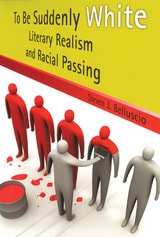
cover of To Be Suddenly White: Literary Realism and Racial Passing

To Be Suddenly White

Literary Realism and Racial Passing

Steven J. Belluscio

University of Missouri Press, 2006

To Be Suddenly White explores the troubled relationship between literary passing and literary realism, the dominant aesthetic motivation behind the late-nineteenth and early-twentieth-century ethnic texts considered in this study. Steven J. Belluscio uses the passing narrative to provide insight into how the representation of ethnic and racial subjectivity served, in part, to counter dominant narratives of difference.  

To Be Suddenly White offers new readings of traditional passing narratives from the African American literary tradition, such as James Weldon Johnson’s The Autobiography of an Ex-Coloured Man, Nella Larsen’s Passing, and George Schuyler’s Black No More. It is also the first full-length work to consider a number of Jewish American and Italian American prose texts, such as Mary Antin’s The Promised Land, Anzia Yezierska’s Bread Givers, and Guido d’Agostino’s Olives on the Apple Tree, as racial passing narratives in their own right. Belluscio also demonstrates the contradictions that result from the passing narrative’s exploration of racial subjectivity, racial difference, and race itself.

When they are seen in comparison, ideological differences begin to emerge between African American passing narratives and “white ethnic” (Jewish American and Italian American) passing narratives. According to Belluscio, the former are more likely to engage in a direct critique of ideas of race, while the latter have a tendency to become more simplistic acculturation narratives in which a character moves from a position of ethnic difference to one of full American identity.

The desire “to be suddenly white” serves as a continual point of reference for Belluscio, enabling him to analyze how writers, even when overtly aware of the problematic nature of race (especially African American writers), are also aware of the conditions it creates, the transformations it provokes, and the consequences of both. Byexamining the content and context of these works, Belluscio elucidates their engagement with discourses of racial and ethnic differences, assimilation, passing, and identity, an approach that has profound implications for the understanding of American literary history.
[more]
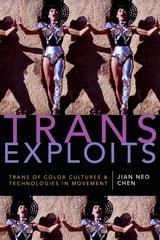
cover of Trans Exploits: Trans of Color Cultures and Technologies in Movement

Trans Exploits

Trans of Color Cultures and Technologies in Movement

Jian Neo Chen

Duke University Press, 2019
In Trans Exploits Jian Neo Chen explores the cultural practices created by trans and gender-nonconforming artists and activists of color. They argue for a radical rethinking of the policies and technologies of racial gendering and assimilative social programming that have divided LGBT communities and communities of color along the lines of gender, sexuality, class, immigration status, and ability. Focusing on performance, film/video, literature, digital media, and other forms of cultural expression and activism that track the displaced emergences of trans people of color, Chen highlights the complex and varied responses by trans communities to their social dispossession. Through these responses, trans of color cultural workers such as performance artist Yozmit, writer Janet Mock, and organizer Jennicet Gutiérrez challenge dominating perceptions and institutions that kill, confine, police, and discipline trans people.
[more]
cover of Transforming the Academy: Faculty Perspectives on Diversity and Pedagogy

Transforming the Academy

Faculty Perspectives on Diversity and Pedagogy

Willie-LeBreton, Sarah

Rutgers University Press, 2016
In recent decades, American universities have begun to tout the “diversity” of their faculty and student bodies. But what kinds of diversity are being championed in their admissions and hiring practices, and what kinds are being neglected? Is diversity enough to solve the structural inequalities that plague our universities? And how might we articulate the value of diversity in the first place? 
 
Transforming the Academy begins to answer these questions by bringing together a mix of faculty—male and female, cisgender and queer, immigrant and native-born, tenured and contingent, white, black, multiracial, and other—from public and private universities across the United States. Whether describing contentious power dynamics within their classrooms or recounting protests that occurred on their campuses, the book’s contributors offer bracingly honest inside accounts of both the conflicts and the learning experiences that can emerge from being a representative of diversity. 
 
The collection’s authors are united by their commitment to an ideal of the American university as an inclusive and transformative space, one where students from all backgrounds can simultaneously feel intellectually challenged and personally supported. Yet Transforming the Academy also offers a wide range of perspectives on how to best achieve these goals, a diversity of opinion that is sure to inspire lively debate. 
 
[more]
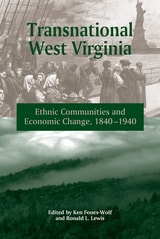
cover of Transnational West Virginia: Ethnic Communities and Economic Change, 1840 - 1940

Transnational West Virginia

Ethnic Communities and Economic Change, 1840 - 1940

KEN FONES-WOLF

West Virginia University Press, 2002

West Virginia is one of the most homogeneous states in the nation, with among the lowest ratios of foreign-born and minority populations among the states. But as this collection of historical studies demonstrates, this state was built by successive waves of immigrant labors, from the antebellum railroad builders to the twentieth-century coal miners. Transnational West Virginia offers a new understanding of how laborers and their communities shape a region's history. Transnational West Virginia includes essays and studies on immigrant networks, such as Irish workers along the B&O Railroad, Wheeling Germans in the Civil War era, Swiss immigration to West Virginia, and European Jews in Southern West Virginia. This work also covers Belgian glassworkers in West Virginia, black migration to Southern West Virginia, Italians in the Upper Kanawha Valley, Italian immigration to Marion County, Wheeling Iron and the Welsh, West Virginia and immigrant labor to 1920, Monongalia miners between the World Wars, and West Virginia rubber workers in Akron. Transnational West Virginia is the first volume in the West Virginia and Appalachia series, which is under the general editorship of West Virginia University Stuart and Joyce Robbins Chair of History Ronald L. Lewis. Kenneth Fones-Wolf, Associate Professor of History at WVU, also helped edit this collection of essays by ten distinguished scholars.
[more]
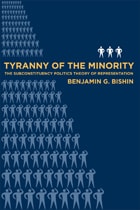
cover of Tyranny of the Minority: The Subconstituency Politics Theory of Representation

Tyranny of the Minority

The Subconstituency Politics Theory of Representation

Benjamin G. Bishin

Temple University Press, 2009

Why do politicians frequently heed the preferences of small groups of citizens over those of the majority? Breaking new theoretical ground, Benjamin Bishin explains how the desires of small groups, which he calls “subconstituencies,” often trump the preferences of much larger groups.

Tyranny of the Minority provides a “unified theory of representation,” based in social psychology and identity theory, to explain how citizens’ intensity fosters knowledge and participation and drives candidates’ behavior in campaigns and legislators' behavior in Congress. Demonstrating the wide applicability of the theory, Bishin traces politicians' behavior in connection with a wide range of issues, including the Cuban trade embargo, the extension of hate-crimes legislation to protect gay men and lesbians, the renewal of the assault-weapons ban, abortion politics, and Congress's attempt to recognize the Armenian genocide. He offers a unique explanation of when, why, and how special interests dominate American national politics.

[more]