Results by title
54 books match the query 'Money & Monetary Policy' and 8 start with t

The Bank War
Andrew Jackson, Nicholas Biddle, and the Fight for American FinancePaul Kahan
Westholme Publishing, 2022
Late one night in July 1832,Martin Van Buren rushed to the White House where he found an ailing President Andrew Jackson weakened but resolute. Thundering against his political antagonists, Jackson bellowed: “The Bank, Mr. Van Buren, is trying to kill me, but I shall kill it!”With those famous words, Jackson formally declared “war” against the Second Bank of the United States and its president Nicholas Biddle. The Bank of the United States, which held the majority of Federal monies, had been established as a means of centralizing and stabilizing American currency and the economy, particularly during the country’s vulnerable early years. Jackson and his allies viewed the bank as both elitist and a threat to states’ rights. Throughout his first term, Jackson had attacked the bank viciously but failed to take action against the institution. Congress’ decision to recharter the bank forced Jackson to either make good on his rhetoric and veto the recharter or sign the recharter bill and be condemned as a hypocrite.
In The Bank War: Andrew Jackson, Nicholas Biddle, and the Fight for American Finance, historian Paul Kahan explores one of the most important and dramatic events in American political and economic history, from the idea of centralized banking and the First Bank of the United States to Jackson’s triumph, the era of “free banking,” and the creation of the Federal Reserve System. Relying on a range of primary and secondary source material, the book also shows how the Bank War was a manifestation of the debates that were sparked at the Constitutional Convention—the role of the executive branch and the role of the federal government in American society—debates that endure to this day as philosophical differences that often divide the United States.
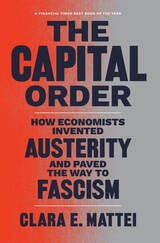
The Capital Order
How Economists Invented Austerity and Paved the Way to FascismClara E. Mattei
University of Chicago Press, 2022
"A must-read, with key lessons for the future."—Thomas Piketty
A groundbreaking examination of austerity’s dark intellectual origins.
For more than a century, governments facing financial crisis have resorted to the economic policies of austerity—cuts to wages, fiscal spending, and public benefits—as a path to solvency. While these policies have been successful in appeasing creditors, they’ve had devastating effects on social and economic welfare in countries all over the world. Today, as austerity remains a favored policy among troubled states, an important question remains: What if solvency was never really the goal?
In The Capital Order, political economist Clara E. Mattei explores the intellectual origins of austerity to uncover its originating motives: the protection of capital—and indeed capitalism—in times of social upheaval from below.
Mattei traces modern austerity to its origins in interwar Britain and Italy, revealing how the threat of working-class power in the years after World War I animated a set of top-down economic policies that elevated owners, smothered workers, and imposed a rigid economic hierarchy across their societies. Where these policies “succeeded,” relatively speaking, was in their enrichment of certain parties, including employers and foreign trade interests, who accumulated power and capital at the expense of labor. Here, Mattei argues, is where the true value of austerity can be observed: its insulation of entrenched privilege and its elimination of all alternatives to capitalism.
Drawing on newly uncovered archival material from Britain and Italy, much of it translated for the first time, The Capital Order offers a damning and essential new account of the rise of austerity—and of modern economics—at the levers of contemporary political power.
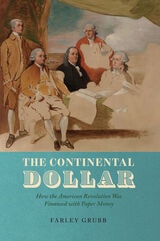
The Continental Dollar
How the American Revolution Was Financed with Paper MoneyFarley Grubb
University of Chicago Press, 2023
The Continental Dollar is a revelatory history of how the fledgling United States paid for its first war. Farley Grubb upends the common telling of this story, in which the United States printed cross-colony money, called Continentals, to serve as an early fiat currency—a currency that is not tied to a commodity like gold, but rather to a legal authority. As Grubb details, the Continental was not a fiat currency, but a “zero-coupon bond”—a wholly different species of money. As bond payoffs were pushed into the future, the money’s value declined, killing the Continentals’ viability years before the Revolutionary War would officially end.
Drawing on decades of exhaustive mining of eighteenth-century records, The Continental Dollar is an essential origin story of the early American monetary system, promising to serve as the benchmark for critical work for decades to come.
The Federal Reserve
A New HistoryRobert L. Hetzel
University of Chicago Press, 2022
In The Federal Reserve: A New History, Robert L. Hetzel draws on more than forty years of experience as an economist in the central bank to trace the influences of the Fed on the American economy. Comparing periods in which the Fed stabilized the economy to those when it did the opposite, Hetzel tells the story of a century-long pursuit of monetary rules capable of providing for economic stability.
Recast through this lens and enriched with archival materials, Hetzel’s sweeping history offers a new understanding of the bank’s watershed moments since 1913. This includes critical accounts of the Great Depression, the Great Inflation, and the Great Recession—including how these disastrous events could have been avoided.
A critical volume for a critical moment in financial history, The Federal Reserve is an expert, sweeping account that promises to recast our understanding of the central bank in its second century.
The Fiscal Fed
How the US Central Bank Funds GovernmentWill Bateman
University of Chicago Press, 2026
A revelatory history of how the Federal Reserve finances American power.
Central banks, we are told, are economic superpowers that must remain independent of modern democratic governments. The US Federal Reserve’s presumed insulation from politics affords it autonomy and credibility to control inflation and promote economic stability—or so the story goes.
In The Fiscal Fed, Will Bateman offers a deeply sourced, empirical history that shows the Fed’s primary function is actually, and has always been, fiscal—sustaining the market for Treasury borrowing that makes up the difference between federal spending and federal revenue. Bateman combs Fed meeting transcripts, staff notes, financial accounts, and legal documents to trace loans and public-debt purchases since the central bank’s founding. The result is a milestone work that reveals how, for most of the Fed’s history, its transactions were aimed at government financing—either by providing cheap credit to close budget gaps or by manipulating yields on government debt. The Fed’s support for government finance is a feature, not a bug, of American economic institutions.
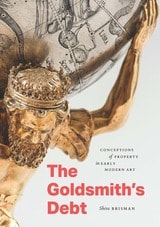
The Goldsmith's Debt
Conceptions of Property in Early Modern ArtShira Brisman
University of Chicago Press, 2026
In the sixteenth century, German goldsmiths played a unique role in articulating property claims and social values. These artisans shaped precious metals into visible expressions of domination, subordination, and obligation. The objects they crafted played a major role in the practices of exchange and inheritance that were reconfiguring a tumultuous economic landscape. Cities commissioned goldsmiths to transform revenue into goblets that could be given as diplomatic gifts or reconverted into currency in times of war, and courts used serving implements as promises of credit.
With The Goldsmith’s Debt, art historian Shira Brisman offers the first book-length study of the Nuremberg goldsmith Christoph Jamnitzer (1563–1618), who created elaborate gilded silver drinking cups that he crafted into unexpected forms, with designs ranging from racialized heads to mining scenes. Considering how works of art can shape a social order, Brisman explores what Jamnitzer’s etchings and goblets reveal about how goldsmiths shared ideas and how their patrons used commissioned works to legitimize their claims over land and the rights of others. Drawing on a range of textual and material evidence—including commentaries on Roman and customary laws, wills and civic statutes, printed designs, and firsthand study of lidded cups in dozens of major European institutions—this unprecedented study places the goldsmith at the heart of the era’s arguments about how people and lands should be subjugated. Brisman reveals the insidious side of these objects that were often used to advance socially conservative agendas, and she presents radical proposals for addressing inequity in the world of ornament prints.
The New International Money Game
Robert Z. Aliber
University of Chicago Press, 2002
With expert knowledge and a wry sense of humor, Aliber demystifies international finance by breaking through the jargon barrier and presenting technical issues in a clear and concise manner. Aliber takes the reader on a tour of a multiplicity of international finance issues, included fixed and floating exchange rates, devaluations, money markets, monetary policy, and the concepts that lie behind the esoteric language of financial economists.
This sixth edition tracks the changes that have taken place in the world economy since the previous editions by exploring financial globalization, postcommunist transition, European integration, and the Asian economic crisis. It is an indispensable and highly readable guide to the complex and increasingly fragile system through which the world's business is financed.
Trimming the Sails
The Comparative Political Economy of Expansionary Fiscal ConsolidationsIstvan Benczes
Central European University Press, 2008