Results by title
72 books match the query 'Museums' and 12 start with t
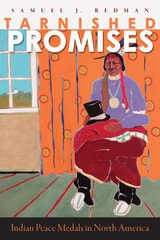
Tarnished Promises
Indian Peace Medals in North AmericaSamuel J. Redman
University Press of Colorado, 2026
Using a collection of medals held at the Denver Museum of Nature & Science, Tarnished Promises presents an updated overview of the history and story of peace medals through an examination of their legacy in the modern world. Accompanying the history and analysis are images of thirteen exemplar peace medals from the DMNS collections and their accompanying object biographies.
Peace medals paradoxically worked as tools of colonialism and also Native American agency, sovereignty, power, resistance, and change in response to growing challenges. Their widespread adoption by Native people in North America both prefigured and coincided with the many ways in which Native Americans and First Nations peoples worked to adapt to the unwelcome and undesirable changes wrought by expanding western colonialism. The unique individual histories behind the medals and the larger peace medal story suggest how material objects can hold several, sometimes contradictory, meanings and be influenced by varied strands of culture and historical memory. Tarnished Promises tells this complex story in two parts, with the first detailing the history of Indian peace medals from 1670 to the present day and the second part exploring their meaning at different points in time and to different peoples.
The first book-length treatment of peace medals using an anticolonialist perspective, Tarnished Promises is significant to scholars and the general public interested in numismatics, American history, Indigenous studies, and museum collections.
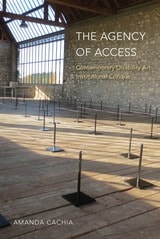
The Agency of Access
Contemporary Disability Art & Institutional CritiqueAmanda Cachia
Temple University Press, 2025
Showcasing artwork by contemporary disabled artists Corban Walker, Christine Sun Kim, and Carmen Papalia, among others, The Agency of Access inscribes contemporary disability art in the broad canon of contemporary art, where the artistic past is regarded differently.
Cachia is an outspoken advocate for artists living with sensory disabilities. She understands disabled artists’ experiences in both the world and the gallery. The artists she has curated make bold, astonishing, and compelling statements about interdependency, care, and the ways in which our environment affects disabled, ill, and immunocompromised bodies.

The Culture of Property
The Crisis of Liberalism in Modern BritainJordanna Bailkin
University of Chicago Press, 2004
Drawing on court transcripts, gallery archives, exhibition reviews, private correspondence—and a striking series of cartoons and photographs—The Culture of Property traverses the history of gender, material culture, urban life, colonialism, Irish and Scottish nationalism, and British citizenship. This fascinating book challenges recent scholarship in museum studies in light of ongoing culture wars. It should be required reading for cultural policy makers, museum professionals, and anyone interested in the history of art and Britain.
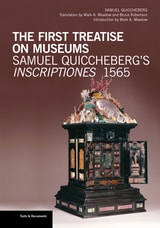
The First Treatise on Museums
Samuel Quiccheberg’s Inscriptiones, 1565Samuel Quiccheberg
J. Paul Getty Trust, The, 2014
Samuel Quiccheberg’s Inscriptiones, first published in Latin in 1565, is an ambitious effort to demonstrate the pragmatic value of curiosity cabinets, or Wunderkammern, to princely collectors in sixteenth-century Europe and, by so doing, inspire them to develop their own such collections. Quiccheberg shows how the assembly and display of physical objects offered nobles a powerful means to expand visual knowledge, allowing them to incorporate empirical and artisanal expertise into the realm of the written word. But in mapping out the collectability of the material world, Quiccheberg did far more than create a taxonomy. Rather, he demonstrated how organizing objects made their knowledge more accessible; how objects, when juxtaposed or grouped, could tell a story; and how such strategies could enhance the value of any single object.
Quiccheberg’s descriptions of early modern collections provide both a point of origin for today’s museums and an implicit critique of their aims, asserting the fundamental research and scholarly value of collections: collections are to be used, not merely viewed. The First Treatise on Museums makes Quiccheberg’s now rare publication available in an English translation. Complementing the translation are a critical introduction by Mark A. Meadow and a preface by Bruce Robertson.
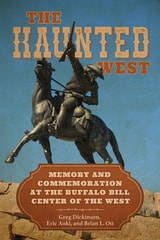
The Haunted West
Memory and Commemoration at the Buffalo Bill Center of the WestGreg Dickinson, Eric Aoki, and Brian L. Ott
University of Alabama Press, 2024
Through incisive analysis of the museum’s five institutions, Greg Dickinson and his coauthors reveal how narratives of Native American heritage, violent colonial settlement, Western art, natural history, and ever‑present gun culture collide to shape a haunted sense of American identity. By tracing the tensions between what is memorialized, what is mythologized, and what is suppressed, the authors expose the ghosts that linger in contemporary understandings of the West and offer a compelling rethinking of how memory and commemoration continue to influence the nation’s cultural imagination.
The Idea of a Human Rights Museum
Karen Busby
University of Manitoba Press, 2015
The Museum in the Cultural Sciences
Collecting, Displaying, and Interpreting Material Culture in the Twentieth CenturyEdited by Peter N. Miller
Bard Graduate Center, 2021
The Museum in the Cultural Sciences offers the first full English translations of these articles, which remain influential in conversations about the implications of art, historical, and ethnographic museums. They show how sophisticated the discussion of museums and museum display was in the early twentieth century and how much could be gained from revisiting these reflections today. Accompanied by short commentaries from museum professionals, these articles offer an intervention into and intensification of the current debate about the function and purpose of museums.
The Museum on the Roof of the World
Art, Politics, and the Representation of TibetClare E. Harris
University of Chicago Press, 2012
The Politics of Collecting
Race and the Aestheticization of PropertyEunsong Kim
Duke University Press, 2024
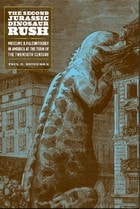
The Second Jurassic Dinosaur Rush
Museums and Paleontology in America at the Turn of the Twentieth CenturyPaul D. Brinkman
University of Chicago Press, 2010
The so-called “Bone Wars” of the 1880s, which pitted Edward Drinker Cope against Othniel Charles Marsh in a frenzy of fossil collection and discovery, may have marked the introduction of dinosaurs to the American public, but the second Jurassic dinosaur rush, which took place around the turn of the twentieth century, brought the prehistoric beasts back to life. These later expeditions—which involved new competitors hailing from leading natural history museums in New York, Chicago, and Pittsburgh—yielded specimens that would be reconstructed into the colossal skeletons that thrill visitors today in museum halls across the country.
Reconsidering the fossil speculation, the museum displays, and the media frenzy that ushered dinosaurs into the American public consciousness, Paul Brinkman takes us back to the birth of dinomania, the modern obsession with all things Jurassic. Featuring engaging and colorful personalities and motivations both altruistic and ignoble, The Second Jurassic Dinosaur Rush shows that these later expeditions were just as foundational—if not more so—to the establishment of paleontology and the budding collections of museums than the more famous Cope and Marsh treks. With adventure, intrigue, and rivalry, this is science at its most swashbuckling.
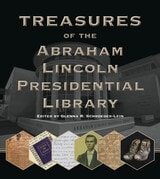
Treasures of the Abraham Lincoln Presidential Library
Edited by Glenna R. Schroeder-Lein
Southern Illinois University Press, 2014
Illinois State Historical Society Superior Achievement Award 2015
The Abraham Lincoln Presidential Library in Springfield, Illinois, houses a trove of invaluable historical resources concerning all aspects of the Prairie State’s past. Treasures of the Abraham Lincoln Presidential Library commemorates the institution’s 125-year history, as well as its contributions to scholarship and education by highlighting a selection of eighty-five treasures from among more than twelve million items in the library’s collections.
After opening with a historical overview and extensive chronology of the Library, the volume organizes the treasures by various topics, including items that illustrate various locations and materials relating to business, the mid-nineteenth century and the Civil War, World Wars I and II, the oldest items, unusual treasures, ethnicity, and art. From the Gettysburg Address, Abraham and Mary Lincoln’s letters, and Governor Dan Walker’s boots to a Deering Harvester Company catalog, WPA publications, and an Adlai Stevenson I campaign hat, each entry includes a thorough description of the item, one or more images, and a discussion of its history and how the library acquired it, if known. Other treasures include the Thomas Yates General Store daybook, Dubin Pullman car materials, Civil War newspapers, a Lincoln coffin photograph, the Mary Lincoln insanity verdict, the Directory of Sangamon County’s Colored Citizens, andLincoln’s stovepipe hat.
To highlight the academic importance of the Library, nineteen researchers share how study in the Library’s collections proved essential to their projects. Although these treasures only scrape the surface of the vast holdings of the Abraham Lincoln Presidential Library, together they epitomize the rich, varied, and sometimes quirky resources available to both serious scholars and curious tourists alike at this valuable cultural institution.
Twentieth-Century Popular Culture in Museums and Libraries
Fred E.H. Schroeder
University of Wisconsin Press, 1981
The essays in this book investigate the reasons for present-day neglect of popular culture materials and chart the various routes by which conscientious and insightful librarians and museum directors can correct this disastrous oversight.