Results by title
50 books match the query 'Music and race' and 13 start with t
Teaching Difficult Topics
Reflections from the Undergraduate Music ClassroomOlivia R. Lucas and Laura Moore Pruett
University of Michigan Press, 2024
The teaching reflections in Teaching Difficult Topics examine difficult themes that fall into three primary categories: subjects that instructors sense to be controversial or emotionally challenging to discuss, those that derive from or intersect with real-world events that are difficult to process, and bigger-picture discussions of how music studies often focuses on dominant narratives while overlooking other perspectives. Some chapters offer practical guidance, lesson plans, and teaching materials to enable instructors to build discussions of race, gender, sexuality, and traumatic histories into their own classrooms; others take a more global view, reflecting on the importance and relevance of teaching these difficult topics and on how to respond in the music classroom when external events disrupt daily life.
Tear Down the Walls
White Radicalism and Black Power in 1960s RockPatrick Burke
University of Chicago Press, 2021
The Black Musician and the White City
Race and Music in Chicago, 1900-1967Amy Absher
University of Michigan Press, 2014
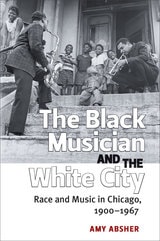
Absher’s work diverges from existing studies in three ways: First, she takes the history beyond the study of jazz and blues by examining the significant role that classically trained black musicians played in building the Chicago South Side community. By acknowledging the presence and importance of classical musicians, Absher argues that black migrants in Chicago had diverse education and economic backgrounds but found common cause in the city’s music community. Second, Absher brings numerous maps to the history, illustrating the relationship between Chicago’s physical lines of segregation and the geography of black music in the city over the years. Third, Absher’s use of archival sources is both extensive and original, drawing on manuscript and oral history collections at the Center for Black Music Research in Chicago, Columbia University, Rutgers’s Institute of Jazz Studies, and Tulane’s Hogan Jazz Archive. By approaching the Chicago black musical community from these previously untapped angles, Absher offers a history that goes beyond the retelling of the achievements of the famous musicians by discussing musicians as a group. In The Black Musician and the White City, black musicians are the leading actors, thinkers, organizers, and critics of their own story.
The Disturbing Profane
Hip Hop, Blackness, and the SacredJoseph R. Winters
Duke University Press, 2025
The Great White Way
Race and the Broadway MusicalHoffman, Warren
Rutgers University Press, 2014
Broadway musicals are one of America’s most beloved art forms and play to millions of people each year. But what do these shows, which are often thought to be just frothy entertainment, really have to say about our country and who we are as a nation?
The Great White Way is the first book to reveal the racial politics, content, and subtexts that have haunted musicals for almost one hundred years from Show Boat (1927) to The Scottsboro Boys (2011). Musicals mirror their time periods and reflect the political and social issues of their day. Warren Hoffman investigates the thematic content of the Broadway musical and considers how musicals work on a structural level, allowing them to simultaneously present and hide their racial agendas in plain view of their audiences. While the musical is informed by the cultural contributions of African Americans and Jewish immigrants, Hoffman argues that ultimately the history of the American musical is the history of white identity in the United States.
Presented chronologically, The Great White Way shows how perceptions of race altered over time and how musicals dealt with those changes. Hoffman focuses first on shows leading up to and comprising the Golden Age of Broadway (1927–1960s), then turns his attention to the revivals and nostalgic vehicles that defined the final quarter of the twentieth century. He offers entirely new and surprising takes on shows from the American musical canon—Show Boat (1927), Oklahoma! (1943), Annie Get YourGun (1946), The Music Man (1957), West Side Story (1957), A Chorus Line (1975), and 42nd Street (1980), among others.
New archival research on the creators who produced and wrote these shows, including Leonard Bernstein, Jerome Robbins, Stephen Sondheim, and Edward Kleban, will have theater fans and scholars rethinking forever how they view this popular American entertainment.
The Great White Way
Race and the Broadway MusicalWarren Hoffman
Rutgers University Press, 2020
Now in a new second edition, The Great White Way is the first book to reveal the racial politics, content, and subtexts that have haunted musicals for almost one hundred years from Show Boat (1927) to Hamilton (2015). This revised edition includes a new introduction and conclusion, updated chapters, as well as a brand-new chapter that looks at the blockbuster musicals The Book of Mormon and Hamilton.
Musicals mirror their time periods and reflect the political and social issues of their day. Warren Hoffman investigates the thematic content of the Broadway musical and considers how musicals work on a structural level, allowing them to simultaneously present and hide their racial agendas in plain view of their audiences. While the musical is informed by the cultural contributions of African Americans and Jewish immigrants, Hoffman argues that ultimately the history of the American musical is the history of white identity in the United States.
Presented chronologically, The Great White Way shows how perceptions of race altered over time and how musicals dealt with those changes. Hoffman focuses first on shows leading up to and comprising the Golden Age of Broadway (1927–1960s), then turns his attention to the revivals and nostalgic vehicles that defined the final quarter of the twentieth century. He offers entirely new and surprising takes on shows from the American musical canon—Show Boat (1927), Oklahoma! (1943), Annie Get Your Gun (1946), The Music Man (1957), West Side Story (1957), A Chorus Line (1975), and 42nd Street (1980), among others. In addition to a new chapter on Hamilton and The Book of Mormon, this revised edition brings The Great White Way fully into the twenty-first century with an examination of jukebox musicals and the role of off-Broadway and regional theaters in the development of the American musical.
New archival research on the creators who produced and wrote these shows, including Leonard Bernstein, Jerome Robbins, Stephen Sondheim, and Edward Kleban, will have theater fans and scholars rethinking forever how they view this popular American entertainment.
The Jazz Barn
Music Inn, the Berkshires, and the Place of Jazz in American LifeJohn Gennari
Brandeis University Press, 2025
This is a book about what happened in the 1950s in a barn, an icehouse, and a greenhouse in the verdant Berkshire Hills of western Massachusetts. Against the backdrop of McCarthyism, the civil rights movement, the expansion of the Afro-Caribbean diaspora, and postwar cultural tourism, two New Yorkers bought part of a sprawling estate in Lenox, where they converted an old barn and other outbuildings into an inn that could host musical performances and seminars. The Berkshire Music Barn went on to host jazz greats like Duke Ellington, Dave Brubeck, and Billie Holiday, as well as jazz roundtables grounded in folkloric approaches to the music.
The Jazz Barn explores the cultural significance of venues like the Berkshire Music Barn and later the Lenox School of Jazz to tell a surprising story about race, culture, and place. John Gennari explores how a predominantly white New England town became a haven for African American musicians, and reveals the Berkshires as an important incubator not just of American literature and classical music but also of the Modern Jazz Quartet and Ornette Coleman’s “new thing.” The Berkshire Music Barn became a crucial space for the mainstreaming of jazz. By the late 1950s, the School of Jazz was an epicenter of the genre’s avant-garde.
Richly illustrated with the photographs of Clemens Kalischer among others, The Jazz Barn demonstrates that the locations where jazz is played and heard indelibly shape the music and its meanings.
The Jazz Republic
Music, Race, and American Culture in Weimar GermanyJonathan O. Wipplinger
University of Michigan Press, 2017
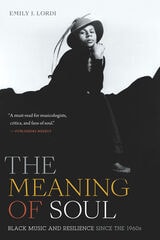
The Meaning of Soul
Black Music and Resilience since the 1960sEmily J. Lordi
Duke University Press, 2020
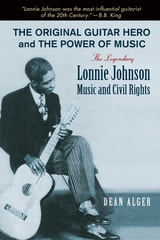
The Original Guitar Hero and the Power of Music
The Legendary Lonnie Johnson, Music, and Civil RightsDean Alger
University of North Texas Press, 2014
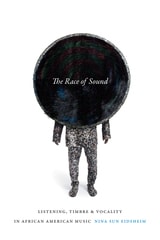
The Race of Sound
Listening, Timbre, and Vocality in African American MusicNina Sun Eidsheim
Duke University Press, 2018
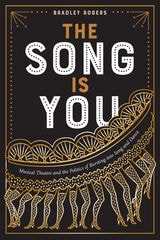
The Song Is You
Musical Theatre and the Politics of Bursting into Song and DanceBradley Rogers
University of Iowa Press, 2020
Musicals, it is often said, burst into song and dance when mere words can no longer convey the emotion. This book argues that musicals burst into song and dance when one body can no longer convey the emotion. Rogers shows how the musical’s episodes of burlesque and minstrelsy model the kinds of radical relationships that the genre works to create across the different bodies of its performers, spectators, and creators every time the musical bursts into song. These radical relationships—borne of the musical’s obsessions with “bad” performances of gender and race—are the root of the genre’s progressive play with identity, and thus the source of its subcultural power. However, this leads to an ethical dilemma: Are the musical’s progressive politics thus rooted in its embrace of regressive entertainments like burlesque and minstrelsy?
The Song Is You shows how musicals return again and again to this question, and grapple with a guilt that its joyous pleasures are based on exploiting the laboring bodies of its performers. Rogers argues that the discourse of “integration”—which claims that songs should advance the plot—has functioned to deny the radical work that the musical undertakes every time it transitions into song and dance. Looking at musicals from The Black Crook to Hamilton, Rogers confronts the gendered and racial dynamics that have always under-girded the genre, and asks how we move forward.
Tracks on the Trail
Popular Music, Race, and the US PresidencyDana Gorzelany-Mostak
University of Michigan Press, 2023
From Bill Clinton playing his saxophone on The Arsenio Hall Show to Barack Obama referencing Jay-Z’s song “Dirt Off Your Shoulder,” politicians have used music not only to construct their personal presidential identities but to create the broader identity of the American presidency. Through music, candidates can appear relatable, show cultural competency, communicate values and ideas, or connect with a specific constituency. On a less explicit level, episodes such as Clinton’s sax-playing and Obama’s shoulder brush operate as aural and visual articulations of race and racial identity. But why do candidates choose to engage with race in this manner? And why do supporters and detractors on YouTube and the Twittersphere similarly engage with race when they create music videos or remixes in homage to their favorite candidates?
With Barack Obama, Ben Carson, Kamala Harris, and Donald Trump as case studies, Tracks on the Trail: Popular Music, Race, and the US Presidency sheds light on the factors that motivate candidates and constituents alike to articulate race through music on the campaign trail and shows how the racialization of sound intersects with other markers of difference and ultimately shapes the public discourse surrounding candidates, popular music, and the meanings attached to race in the 21st century. Gorzelany-Mostak explores musical engagement broadly, including official music in the form of candidate playlists and launch event setlists, as well as unofficial music in the form of newly composed campaign songs, mashups, parodies, and remixes.