50 books match the query 'Mysticism' and 13 start with t
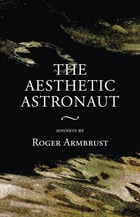
cover of The Aesthetic Astronaut: sonnets by Roger Armbrust

The Aesthetic Astronaut

sonnets by Roger Armbrust

Roger Armbrust

Parkhurst Brothers, Inc., 2009

One hundred twenty-two sonnets that touch on contemporary American popular culture, social trends, and personalities. Poet Roger Armbrust is described by some as a mystic, by others as a spiritualist, and by yet others as a guy who toys with really big thoughts, making them objects both of serious study and of humor.  His sonnets will push you to laughter and meditation: a satisfying literary ride. 

In The Aesthetic Astronaut, Roger Armbrust escorts readers on an insightful journey throughout Earth and beyond. We experience the loneliness and instpiration of "the Aesthetic Astronaut"; cold-blooded calculations of "The Armchair Assassin"; passion and sense of the romantic lover; reflective memories of a gentle heart growing older; ironic vision of an observer to history, and subtle--and sometimes not so subtle--humor of a fellow human involved in our day-to-day challenge of living a worthwhile life. The poet's imagery and attitude. . . may fascinate, thrill, sadden, anger, or push you to laughter or meditation. But you'll find the trip a fascinating literary ride.
[more]
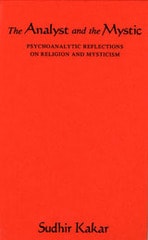
cover of The Analyst and the Mystic: Psychoanalytic Reflections on Religion and Mysticism

The Analyst and the Mystic

Psychoanalytic Reflections on Religion and Mysticism

Sudhir Kakar

University of Chicago Press, 1992
"This work is of importance for psychoanalysts and scholars of the psychology of religion. Kakar makes a scholarly and significant contribution to the objectification of what psychoanalysis and Hindu mystical tradition have in common."—Ana Maria Rizzuto, Tufts University
[more]
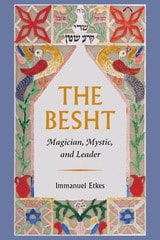
cover of The Besht: Magician, Mystic, and Leader

The Besht

Magician, Mystic, and Leader

Immanuel Etkes

Brandeis University Press, 2012
Founded in Eastern Europe in the eighteenth century, the Hasidic movement and its religious thinking have dramatically transformed modern Judaism. The figure of the Ba’al Shem Tov (known in acronym form as the BeSHT)—the purported founder of the Hasidic movement—has fascinated scholars, Jewish philosophers, and laypeople interested in popular Jewish mysticism in general and the contemporary Hasidic movement in all its variety. In this volume, Etkes enters a rich and heated debate over the origins of the movement, as well as the historicity of its mythic founder, Rabbi Israel Ba’al Shem Tov, who lived much of his life as a miracle worker. The eighteenth century, as Etkes vividly portrays, was the heyday of the kabbalists, who dabbled in the magical power of letters and words to solve personal and communal problems—and to earn a living. Etkes sheds light on the personality of the Besht, on his mysticism, and on his close circle of followers. But equally important, he challenges the popular myth of the Besht as a childlike mystic, wandering the fields in prayer, seeing visions and engaging in acts of godliness and piety. Although Etkes shows great empathy for his subject, the Besht who emerges in these pages is much more down to earth, much more a man of his times. Indeed, according to Etkes, it was never the intention of the Besht to found a religious movement. Etkes looks at the Besht’s mystical roots, examining him not only from the vantage point of a social historian, but as a religious figure. Moshe Rosman, author of Founder of Hasidism, a biography of the Besht, claims that In Praise of the Besht—a volume published about the Besht in 1814, many years after his death, which portrayed his character by means of stories told by his close followers—could not be a reliable source. Etkes, disputing this claim, shows definitively that this well-known text (translated and interpreted by, among others, Martin Buber) may indeed offer trustworthy accounts of the Besht’s life and thinking.
[more]
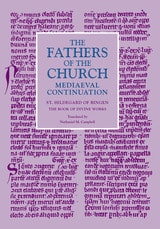
cover of The Book of Divine Works

The Book of Divine Works

Nathaniel M. St. Hildegard of Bingen

Catholic University of America Press, 2018
Completed in 1173, The Book of Divine Works (Liber Divinorum Operum) is the culmination of the Visionary’s Doctor’s theological project, offered here for the first time in a complete and scholarly English translation. The first part explores the intricate physical and spiritual relationships between the cosmos and the human person, with the famous image of the universal Man standing astride the cosmic spheres. The second part examines the rewards for virtue and the punishments for vice, mapped onto a geography of purgatory, hellmouth, and the road to the heavenly city. At the end of each Hildegard writes extensive commentaries on the Prologue to John’s Gospel (Part 1) and the first chapter of Genesis (Part 2)—the only premodern woman to have done so. Finally, the third part tells the history of salvation, imagined as the City of God standing next to the mountain of God’s foreknowledge, with Divine Love reigning over all.
[more]
cover of The Glance of the Medusa: The Physiognomy of Mysticism

The Glance of the Medusa

The Physiognomy of Mysticism

László F. Földényi

Seagull Books, 2018

In The Glance of the Medusa, Lászó F. Földényi offers a mesmerizing examination of the rich history of European culture through the lens of mythology and philosophy. Embracing the best traditions of essay writing, this volume invites readers on a spiritual and intellectual adventure. The seven essays bear testimony to Földényi’s encyclopedic knowledge and ask whether it is possible to overcome our fear of passing away. In doing so, they illuminate moments of mystical experience viewed in a historical perspective while inviting readers to engage with such moments in the present by immersing themselves into the process of reading and thinking.
 
Rather than providing firm answers to burning questions, The Glance of the Medusa highlights the limits of definition, conjuring up situations in which Man partakes of unutterable experiences—such as passion, pleasure, fear, poetry, or disgust—suggesting that moments of ecstasy cannot be pinned down or captured, only drawn a little closer.

 
[more]
cover of The Lonely Letters

The Lonely Letters

Ashon T. Crawley

Duke University Press, 2020
In The Lonely Letters, A tells Moth: “Writing about and thinking with joy is what sustains me, daily. It nourishes me. I do not write about joy primarily because I always have it. I write about joy, Black joy, because I want to generate it, I want it to emerge, I want to participate in its constant unfolding.” But alongside joy, A admits to Moth, come loneliness, exclusion, and unfulfilled desire. The Lonely Letters is an epistolary blackqueer critique of the normative world in which Ashon T. Crawley—writing as A—meditates on the interrelation of blackqueer life, sounds of the Black church, theology, mysticism, and love. Throughout his letters, A explores blackness and queerness in the musical and embodied experience of Blackpentecostal spaces and the potential for platonic and erotic connection in a world that conspires against blackqueer life. Both a rigorous study and a performance, The Lonely Letters gestures toward understanding the capacity for what we study to work on us, to transform us, and to change how we inhabit the world.
[more]
cover of The Modernist as Philosopher: Selected Writings of Marcel Hebert

The Modernist as Philosopher

Selected Writings of Marcel Hebert

C. J. T. Talar

Catholic University of America Press, 2011
This volume, the first to be published in English about Hébert, is essential for a full understanding of Catholic Modernism.
[more]
cover of The Mystic Fable, Volume One: The Sixteenth and Seventeenth Centuries

The Mystic Fable, Volume One

The Sixteenth and Seventeenth Centuries

Michel de Certeau

University of Chicago Press, 1992
The culmination of de Certeau's lifelong engagement with the human sciences, this volume is both an analysis of Christian mysticism during the sixteenth and seventeenth centuries and an application of this influential scholar's transdisciplinary historiography.
[more]
cover of The Mystic Fable, Volume Two: The Sixteenth And Seventeenth Centuries

The Mystic Fable, Volume Two

The Sixteenth And Seventeenth Centuries

Michel de Certeau

University of Chicago Press, 2015

More than two decades have passed since Chicago published the first volume of this groundbreaking work in the Religion and Postmodernism series. It quickly became influential across a wide range of disciplines and helped to make the tools of poststructuralist thought available to religious studies and theology, especially in the areas of late medieval and early modern mysticism.
 
Though the second volume remained in fragments at the time of his death, Michel de Certeau had the foresight to leave his literary executor detailed instructions for its completion, which formed the basis for the present work. Together, both volumes solidify Certeau’s place as a touchstone of twentieth-century literature and philosophy, and continue his exploration of the paradoxes of historiography; the construction of social reality through practice, testimony, and belief; the theorization of speech in angelology and glossolalia; and the interplay of prose and poetry in discourses of the ineffable. This book will be of vital interest to scholars in religious studies, theology, philosophy, history, and literature.
[more]
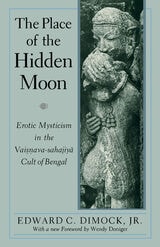
cover of The Place of the Hidden Moon: Erotic Mysticism in the Vaisnava-Sahajiya Cult of Bengal

The Place of the Hidden Moon

Erotic Mysticism in the Vaisnava-Sahajiya Cult of Bengal

Edward C. Dimock Jr.

University of Chicago Press, 1989

The Vaisnava-sahajiya cult that arose in Bengal in the sixteenth century was an intensely emotional attempt to reconcile the sensual and the ascetic. Exploring the history and doctrine of this cult, Edward C. Dimock, Jr., examines the works of numerous poets who are the source of knowledge about this sect. Dimock examines the life of the saint Caitanya, the mad Baul singers, the doctrines of Tantrism, the origins of the figure of Radha, and the worship of Krishna. His study will appeal to students of the history of religion as well as of Indian culture. This edition includes a new Foreword by Wendy Doniger.

"This is a magnificent book—painstakingly researched and gracefully written. . . . Professor Dimock's book is one of the most rewarding and stimulating studies to appear in recent years."—G. Richard Weldon, Journal of Asian Studies
[more]
cover of The Presence of Light: Divine Radiance and Religious Experience

The Presence of Light

Divine Radiance and Religious Experience

Edited by Matthew T. Kapstein

University of Chicago Press, 2004

There is perhaps no greater constant in religious intuition and experience than the presence of light. In spiritual traditions East and West, light is not only ubiquitous but something that assumes strikingly similar forms in altogether different historical and cultural settings. This study examines light as an aspect of religiously valued experiences and its entailments for mystical theology, philosophy, politics, and religious art.

The essays in this volume make an important contribution to religious studies by proposing that it is misleading to conceive of religious experience in terms of an irreconcilable dichotomy between universality and cultural construction. An esteemed group of contributors, representing the study of Asian and Western religious traditions from a range of disciplinary perspectives, suggests that attention to various forms of divine radiance shows that there is indeed a range of principles that, if not universal, are nevertheless very widely occurring and amenable to fruitful comparative inquiry. What results is a work of enormous scope, demonstrating compelling cross-connections that will be of value to scholars of comparative religions, mysticism, and the relationship between art and the sacred.

Contributors:
* Catherine B. Asher
* Raoul Birnbaum
* Sarah Iles Johnston
* Matthew T. Kapstein
* Andrew Louth
* Paul E. Muller-Ortega
* Elliot R. Wolfson
* Mimi Hall Yiengpruksawan
* Hossein Ziai
[more]
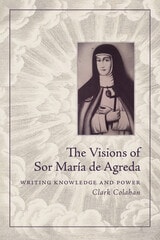
cover of The Visions of Sor María de Agreda: Writing Knowledge and Power

The Visions of Sor María de Agreda

Writing Knowledge and Power

Clark Colahan

University of Arizona Press, 1994

Sor María de Agreda (1602-65) was a Spanish nun and visionary who is best known as the author of the widely read biography of the Virgin Mary, The Mystical City of God, and as the missionary who "bilocated" to the American Southwest, reportedly appearing to Indians there without ever leaving Spain. Her role as advisor to King Philip IV contributed further to her legend. Clark Colahan now offers the first major study of Sor María's writings, including translations of two previously unpublished works: Face of the Earth and Map of the Spheres and the first half of her Report to Father Manero, in which she reflects on her bilocation.
[more]
cover of The Word and the Spiritual Realities (the I and the Thou)

The Word and the Spiritual Realities (the I and the Thou)

Ferdinand Ebner

Catholic University of America Press, 2021

This volume will constitute the first published English translation of Ferdinand Ebner’s seminal 1921 work, Das Wort und die geistigen realitäten – long available in major languages but never in English. It is frequently compared with Martin Buber’s, I and Thou, published in 1923, which actually draws its central I-Thou insight from Ebner. In recent centuries, Philosophy reflects a turn toward the autonomous subject vs. a biblical sense of person. The limits/failures of science manifest in the horrors of World War I led to the emergence of a “Dialogical Personalist Philosophy” in reaction to the universal doubt of Cartesian thought and to German Idealism, which engages the idea or representation but not the reality of “things-in-themselves.” The core of Ebner: human speech is constitutive of human existence: humans are given the "word." "Having the word" is a miraculous gift from God. It is only in the word, in language, that an "I" meets a "Thou," that relationship and self-identity can occur, and this word is given in Jesus Christ, the Word made flesh: “In the beginning was the Word”; Jesus, the Logos of St. John's Gospel, mediates between God and man and “stands” between I and Thou. It is through Jesus that it is possible to address God in the human thou. The key to life’s meaning, to the centrality of relationship, and to God's continuous action in His creation, is found in the I-Thou question: why the I can never be found in itself, and so must look in the thou, while the false I will try to possess the thou as an object of power. This is Ebner's critique of idealist thought: reality, truth, and personal identity are neither ideas, nor found in ideas, therefore, Descartes' cogito must be rejected, for the existence of the I can't be founded or proved by solitary thinking, but only in relation with a thou.
[more]