Results by title
57 books match the query 'National characteristics, American' and 16 start with t
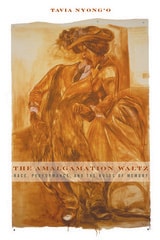
The Amalgamation Waltz
Race, Performance, and the Ruses of MemoryTavia Nyong’o
University of Minnesota Press, 2009
Does racial hybridity offer a future beyond racial difference?
At a time when the idea of a postracial society has entered public discourse, The Amalgamation Waltz investigates the practices that conjoined blackness and whiteness in the nineteenth and twentieth centuries. Scrutinizing widely diverse texts—archival, musical, visual, and theatrical—Tavia Nyong’o traces the genealogy of racial hybridity, analyzing how key events in the nineteenth century spawned a debate about interracialism that lives on today.
Deeply interested in how discussions of racial hybridity have portrayed the hybrid as the recurring hope for a distant raceless future, Nyong’o is concerned with the ways this discourse deploys the figure of the racial hybrid as an alibi for a nationalism that reinvents the racist logics it claims to have broken with. As Nyong’o demonstrates, the rise of a pervasive image of racially anomalous bodies responded to the appearance of an independent black public sphere and organized politics of black uplift. This newfound mobility was apprehended in the political imaginary as a bodily and sexual scandal, and the resultant amalgamation discourse, he argues, must be recognized as one of the earliest and most enduring national dialogues on sex and sexuality. Nyong’o tracks the emergence of the concept of the racial hybrid as an ideological modernization of the older concept of the mongrel and shows how this revision brought race-thinking in line with new understandings of sex and gender, providing a racial context for the shift toward modern heterosexuality, the discourse on which postracial metaphors so frequently rely. A timely rebuttal to our contemporary fascination with racial hybridity, The Amalgamation Waltz questions the vision of a national future without racial difference or conflict.
The American Historical Imaginary
Contested Narratives of the PastCaroline Guthrie
Rutgers University Press, 2023
The American West
The Invention Of A MythDavid Hamilton Murdoch
University of Nevada Press, 2001
The Borders Within
Encounters Between Mexico and the U.S.Douglas Monroy
University of Arizona Press, 2008
Douglas Monroy, a noted Mexican American historian, has for many years pondered the historical and cultural intertwinings of the two nations. Here, in beautifully crafted essays, he reflects on some of the many ways in which the citizens of the two countries have misunderstood each other.
Putting himself— and his own quest for understanding—directly into his work, he contemplates the missions of California; the differences between “liberal” and “traditional” societies; the meanings of words like Mexican, Chicano, and Latino; and even the significance of avocados and bathing suits. In thought-provoking chapters, he considers why Native Americans didn’t embrace Catholicism, why NAFTA isn’t working the way it was supposed to, and why Mexicans and their neighbors to the north tell themselves different versions of the same historical events.
In his own thoughtful way, Monroy is an explorer. Rather than trying to conquer new lands, however, his goal is to gain new insights. He wants to comprehend two cultures that are bound to each other without fully recognizing their bonds. Along with Monroy, readers will discover that borders, when we stop and really think about it, are drawn more deeply in our minds than on any maps.
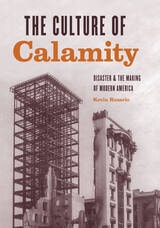
The Culture of Calamity
Disaster and the Making of Modern AmericaKevin Rozario
University of Chicago Press, 2007
Turn on the news and it looks as if we live in a time and place unusually consumed by the specter of disaster. The events of 9/11 and the promise of future attacks, Hurricane Katrina and the destruction of New Orleans, and the inevitable consequences of environmental devastation all contribute to an atmosphere of imminent doom. But reading an account of the San Francisco earthquake of 1906, with its vivid evocation of buildings “crumbling as one might crush a biscuit,” we see that calamities—whether natural or man-made—have long had an impact on the American consciousness.
Uncovering the history of Americans’ responses to disaster from their colonial past up to the present, Kevin Rozario reveals the vital role that calamity—and our abiding fascination with it—has played in the development of this nation. Beginning with the Puritan view of disaster as God’s instrument of correction, Rozario explores how catastrophic events frequently inspired positive reactions. He argues that they have shaped American life by providing an opportunity to take stock of our values and social institutions. Destruction leads naturally to rebuilding, and here we learn that disasters have been a boon to capitalism, and, paradoxically, indispensable to the construction of dominant American ideas of progress.
As Rozario turns to the present, he finds that the impulse to respond creatively to disasters is mitigated by a mania for security. Terror alerts and duct tape represent the cynical politician’s attitude about 9/11, but Rozario focuses on how the attacks registered in the popular imagination—how responses to genuine calamity were mediated by the hyperreal thrills of movies; how apocalyptic literature, like the best-selling Left Behind series, recycles Puritan religious outlooks while adopting Hollywood’s style; and how the convergence of these two ways of imagining disaster points to a new postmodern culture of calamity. The Culture of Calamity will stand as the definitive diagnosis of the peculiarly American addiction to the spectacle of destruction.
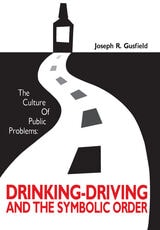
The Culture of Public Problems
Drinking-Driving and the Symbolic OrderJoseph R. Gusfield
University of Chicago Press, 1980
"A sophisticated and thoughtful critic. . . . Gusfield argues that the 'myth of the killer drunk' is a creation of the 'public culture of law.' . . . Through its dramatic development and condemnation of the anti-social character of the drinking-driver, the public law strengthens the illusion of moral consensus in American society and celebrates the virtues of a sober and orderly world."—James D. Orcutt, Sociology and Social Research
"Joseph Gusfield denies neither the role of alcohol in highway accidents nor the need to do something about it. His point is that the research we conduct on drinking-driving and the laws we make to inhibit it tells us more about our moral order than about the effects of drinking-driving itself. Many will object to this conclusion, but none can ignore it. Indeed, the book will put many scientific and legal experts on the defensive as they face Gusfield's massive erudition, pointed analysis and criticism, and powerful argumentation. In The Culture of Public Problems, Gusfield presents the experts, and us, with a masterpiece of sociological reasoning."—Barry Schwartz, American Journal of Sociology
This book is truly an outstanding achievement. . . . It is sociology of science, sociology of law, sociology of deviance, and sociology of knowledge. Sociologists generally should find the book of great theoretical interest, and it should stimulate personal reflection on their assumptions about science and the kind of consciousness it creates. They will also find that the book is a delight to read."—William B. Bankston, Social Forces
The Divided States
Unraveling National Identities in the Twenty-First CenturyEdited by Laura J. Beard and Ricia Anne Chansky
University of Wisconsin Press, 2023
Working across auto/biography studies, American studies, and human geography—all of which deal with the current interest in competing narratives, “alternative facts,” and accountability—the essays engage in and contribute to critical conversations in classrooms, scholarship, and the public sphere. The authors draw from a variety of fields, including anthropology; class analysis; critical race theory; diasporic, refugee, and immigration studies; disability studies; gender studies; graphic and comix studies; Indigenous studies; linguistics; literary studies; sociology; and visual culture. And the genres under scrutiny include diary, epistolary communication, digital narratives, graphic narratives, literary narratives, medical narratives, memoir, oral history, and testimony.
This fresh and theoretically engaged volume will be relevant to anyone interested in the multiplicity of voices that make up the US national narrative.
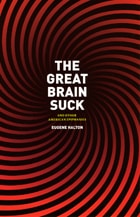
The Great Brain Suck
And Other American EpiphaniesEugene Halton
University of Chicago Press, 2008
Luckily Halton, with scalpel-sharp wit in one hand and the balm of wisdom in the other, is here to operate on the declining body politic. His initial diagnosis is bleak: fast food and too much time spent sitting, whether in our cars or on our couches, are ruining our bodies, while our minds are weakened by the proliferation of electronic devices—TVs, computers, cell phones, iPods, video games—and their alienating effects. If we are losing the battle between autonomy and automation, he asks, how can our culture regain self-sufficiency? Halton finds the answer in the inspiring visions—deeply rooted in American culture—of an organic and more spontaneous life at the heart of the work of master craftsman Wharton Esherick, legendary blues singer Muddy Waters, urban critic Lewis Mumford, and artist Maya Lin, among others.
A scathing and original jeremiad against modern materialism, The Great Brain Suck is also a series of epiphanies of a simpler but more profound life.
The Guise of Exceptionalism
Unmasking the National Narratives of Haiti and the United StatesRobert Fatton
Rutgers University Press, 2021
The Lost Promise of Patriotism
Debating American Identity, 1890-1920Jonathan M. Hansen
University of Chicago Press, 2003
Intellectuals such as William James, John Dewey, Jane Addams, Eugene V. Debs, and W. E. B. Du Bois repudiated liberalism's association with acquisitive individualism and laissez-faire economics, advocating a model of liberal citizenship whose virtues and commitments amount to what Hansen calls cosmopolitan patriotism. Rooted not in war but in dedication to social equity, cosmopolitan patriotism favored the fight against sexism, racism, and political corruption in the United States over battles against foreign foes. Its adherents held the domestic and foreign policy of the United States to its own democratic ideals and maintained that promoting democracy universally constituted the ultimate form of self-defense. Perhaps most important, the cosmopolitan patriots regarded critical engagement with one's country as the essence of patriotism, thereby justifying scrutiny of American militarism in wartime.
The New American Exceptionalism
Donald E. Pease
University of Minnesota Press, 2009
For a half century following the end of World War II, the seemingly permanent cold war provided the United States with an organizing logic that governed nearly every aspect of American society and culture, giving rise to an unwavering belief in the nation's exceptionalism in global affairs and world history. After the collapse of the Soviet Union, this cold war paradigm was replaced by a series of new ideological narratives that ultimately resulted in the establishment of another potentially endless war: the global war on terror.
In The New American Exceptionalism, pioneering scholar Donald E. Pease traces the evolution of these state fantasies and shows how they have shaped U.S. national identity since the end of the cold war, uncovering the ideological and cultural work required to convince Americans to surrender their civil liberties in exchange for the illusion of security. His argument follows the chronology of the transitions between paradigms from the inauguration of the New World Order under George H. W. Bush to the homeland security state that George W. Bush's administration installed in the wake of 9/11. Providing clear and convincing arguments about how the concept of American exceptionalism was reformulated and redeployed in this era, Pease examines a wide range of cultural works and political spectacles, including the exorcism of the Vietnam syndrome through victory in the Persian Gulf War and the creation of Islamic extremism as an official state enemy.
At the same time, Pease notes that state fantasies cannot altogether conceal the inconsistencies they mask, showing how such events as the revelations of prisoner abuse at Abu Ghraib and the exposure of government incompetence after Hurricane Katrina opened fissures in the myth of exceptionalism, allowing Barack Obama to challenge the homeland security paradigm with an alternative state fantasy that privileges fairness, inclusion, and justice.
The Rhetoric of White Slavery and the Making of National Identity
Leslie J Harris
Michigan State University Press, 2023

The Slumbering Volcano
American Slave Ship Revolts and the Production of Rebellious MasculinityMaggie Montesinos Sale
Duke University Press, 1997
This comparison of narrative response with written public reaction to the actual revolts allows Sale to investigate the precise manner in which public opinion regarding definitions of liberty evolved over this crucial period of time between the Revolutionary and Civil Wars. Mapping the ways in which unequally empowered groups claimed and transformed statements associated with the discourse of national identity, Sale succeeds in recovering a historically informed sense of the discursive and activist options available to people of another era.
In its demonstration of how the United States has been uniquely shaped by its dual status as both an imperial and a postcolonial power, this study on the discourse of natural rights and national identity in the pre-Civil War United States will interest students and scholars of American studies, African American studies, gender studies, and American history and literature.
The State of the American Mind
16 Leading Critics on the New Anti-IntellectualismMark Bauerlein
Templeton Press, 2015
That was over twenty years ago. Since then, the United States has experienced unprecedented wealth, more youth enrolling in higher education than ever before, and technology advancements far beyond what many in the 1980s dreamed possible. And yet, the state of the American mind seems to have deteriorated further. Benjamin Franklin’s “self-made man” has become a man dependent on the state. Independence has turned into self-absorption. Liberty has been curtailed in the defense of multiculturalism.
In order to fully grasp the underpinnings of this shift away from the self-reliant, well-informed American, editors Mark Bauerlein and Adam Bellow have brought together a group of cultural and educational experts to discuss the root causes of the decline of the American mind. The writers of these fifteen original essays include E. D. Hirsch, Nicholas Eberstadt, and Dennis Prager, as well as Daniel Dreisbach, Gerald Graff, Richard Arum, Robert Whitaker, David T. Z. Mindich, Maggie Jackson, Jean Twenge, Jonathan Kay, Ilya Somin, Steve Wasserman, Greg Lukianoff, and R. R. Reno. Their essays are compiled into three main categories:
- States of Mind: Indicators of Intellectual and Cognitive Decline
- These essays broach specific mental deficiencies among the population, including lagging cultural IQ, low Biblical literacy, poor writing skills, and over-medication.
- Personal and Cognitive Habits/Interests
- These essays turn to specific mental behaviors and interests, including avoidance of the news, short attention spans, narcissism, and conspiracy obsessions.
- National Consequences
- These essays examine broader trends affecting populations and institutions, including rates of entitlement claims, voting habits, and a low-performing higher education system.
Tourists of History
Memory, Kitsch, and Consumerism from Oklahoma City to Ground ZeroMarita Sturken
Duke University Press, 2007
Sturken contends that a consumer culture of comfort objects such as World Trade Center snow globes, FDNY teddy bears, and Oklahoma City Memorial t-shirts and branded water, as well as reenactments of traumatic events in memorial and architectural designs, enables a national tendency to see U.S. culture as distant from both history and world politics. A kitsch comfort culture contributes to a “tourist” relationship to history: Americans can feel good about visiting and buying souvenirs at sites of national mourning without having to engage with the economic, social, and political causes of the violent events. While arguing for the importance of remembering tragic losses of life, Sturken is urging attention to a dangerous confluence—of memory, tourism, consumerism, paranoia, security, and kitsch—that promulgates fear to sell safety, offers prepackaged emotion at the expense of critical thought, contains alternative politics, and facilitates public acquiescence in the federal government’s repressive measures at home and its aggressive political and military policies abroad.
Transnational America
Feminisms, Diasporas, NeoliberalismsInderpal Grewal
Duke University Press, 2005
Grewal combines a postcolonial perspective with social and cultural theory to argue that contemporary notions of gender, race, class, and nationality are linked to earlier histories of colonization. Through an analysis of Mattel’s sales of Barbie dolls in India, she discusses the consumption of American products by middle-class Indian women newly empowered with financial means created by India’s market liberalization. Considering the fate of asylum-seekers, Grewal looks at how a global feminism in which female refugees are figured as human rights victims emerged from a distinctly Western perspective. She reveals in the work of three novelists who emigrated from India to the United States—Bharati Mukherjee, Chitra Banerjee Divakaruni, and Amitav Ghosh—a concept of Americanness linked to cosmopolitanism. In Transnational America Grewal makes a powerful, nuanced case that the United States must be understood—and studied—as a dynamic entity produced and transformed both within and far beyond its territorial boundaries.