Results by title
78 books match the query 'National security' and 16 start with t
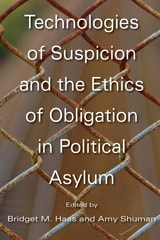
Technologies of Suspicion and the Ethics of Obligation in Political Asylum
Bridget M. Haas
Ohio University Press, 2019
Across the globe, migration has been met with intensifying modes of criminalization and securitization, and claims for political asylum are increasingly met with suspicion. Asylum seekers have become the focus of global debates surrounding humanitarian obligations, on the one hand, and concerns surrounding national security and border control, on the other. In Technologies of Suspicion and the Ethics of Obligation in Political Asylum, contributors provide fine-tuned analyses of political asylum systems and the adjudication of asylum claims across a range of sociocultural and geopolitical contexts.
The contributors to this timely volume, drawing on a variety of theoretical perspectives, offer critical insights into the processes by which tensions between humanitarianism and security are negotiated at the local level, often with negative consequences for asylum seekers. By investigating how a politics of suspicion within asylum systems is enacted in everyday practices and interactions, the authors illustrate how asylum seekers are often produced as suspicious subjects by the very systems to which they appeal for protection.
Contributors: Ilil Benjamin, Carol Bohmer, Nadia El-Shaarawi, Bridget M. Haas, John Beard Haviland, Marco Jacquemet, Benjamin N. Lawrance, Rachel Lewis, Sara McKinnon, Amy Shuman, Charles Watters

The Anthropology of Security
Perspectives from the Frontline of Policing, Counter-terrorism and Border ControlEdited by Mark Maguire, Catarina Frois, and Nils Zurawski
Pluto Press, 2014
In a post-Cold War world of political unease and economic crisis, processes of securitisation are transforming nation-states, their citizens and non-citizens in profound ways.
The book shows how contemporary Europe is now home to a vast security industry which uses biometric identification systems, CCTV and quasi-military techniques to police migrants and disadvantaged neighbourhoods. This is the first collection of anthropological studies of security with a particular but not exclusive emphasis on Europe.
The Anthropology of Security draws together studies on the lived experiences of security and policing from the perspective of those most affected in their everyday lives. The anthropological perspectives in this volume stretch from the frontlines of policing and counter-terrorism to border control.

The Future of Fallout, and Other Episodes in Radioactive World-Making
Joseph Masco
Duke University Press, 2020
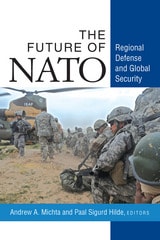
The Future of NATO
Regional Defense and Global SecurityAndrew A. Michta and Paal Sigurd Hilde, editors
University of Michigan Press, 2014

The Gaither Committee, Eisenhower, and the Cold War
EISENHOWER & COLD WARDavid L. Snead
The Ohio State University Press, 1998
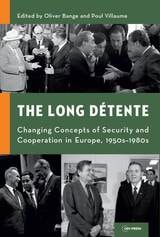
The Long Détente
Changing Concepts of Security and Cooperation in Europe, 1950s–1980sPoul Villaume
Central European University Press, 2017

The Missing Link
West European Neutrals and Regional SecurityRichard E. Bissell and Curt Gasteyger, eds.
Duke University Press, 1990

The Politics of Lists
Bureaucracy and Genocide under the Khmer RougeJames A. Tyner
West Virginia University Press, 2018
2019 Julian Minghi Distinguished Book Award winner
Scholars from a number of disciplines have, especially since the advent of the war on terror, developed critical perspectives on a cluster of related topics in contemporary life: militarization, surveillance, policing, biopolitics (the relation between state power and physical bodies), and the like. James A. Tyner, a geographer who has contributed to this literature with several highly regarded books, here turns to the bureaucratic roots of genocide, building on insight from Hannah Arendt, Zygmunt Bauman, and others to better understand the Khmer Rouge and its implications for the broader study of life, death, and power.
The Politics of Lists analyzes thousands of newly available Cambodian documents both as sources of information and as objects worthy of study in and of themselves. How, Tyner asks, is recordkeeping implicated in the creation of political authority? What is the relationship between violence and bureaucracy? How can documents, as an anonymous technology capable of conveying great force, be understood in relation to newer technologies like drones? What does data create and what does it destroy? Through a theoretically informed, empirically grounded study of the Khmer Rouge security apparatus, Tyner shows that lists and telegrams have often proved as deadly as bullet and bombs.
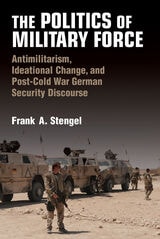
The Politics of Military Force
Antimilitarism, Ideational Change, and Post-Cold War German Security DiscourseFrank A. Stengel
University of Michigan Press, 2020

The Politics of Possibility
Risk and Security Beyond ProbabilityLouise Amoore
Duke University Press, 2013
The Privatisation of Israeli Security
Shir Hever
Pluto Press, 2017
The Secure and the Dispossessed
How the Military and Corporations Are Shaping a Climate-Changed WorldEdited by Nick Buxton and Ben Hayes
Pluto Press, 2015
The Secure and the Dispossessed gathers together essays by high-profile journalists, academics, and activists, including Christian Parenti, Nafeez Ahmed, and policy analyst Oscar Reyes. They offer a close and critical guide to questions about climate change, showing how they converge with questions about international security and global economic power, as new natural resources become available. This book is an essential guide to the key environmental and political debates which will shape future policies and elections: how managing the world’s supply of oil and gas can be squared with the environmental impact of our continued reliance on those very same fossil fuels.
The Theater of Operations
National Security Affect from the Cold War to the War on TerrorJoseph Masco
Duke University Press, 2014
Torture in the National Security Imagination
Stephanie Athey
University of Minnesota Press, 2023
Reassessing the role of torture in the context of police violence, mass incarceration, and racial capitalism
At the midpoint of a century of imperial expansion, marked on one end by the Philippine–American War of 1899–1902 and on the other by post–9/11 debates over waterboarding, the United States embraced a vision of “national security torture,” one contrived to cut ties with domestic torture and mass racial terror and to promote torture instead as a minimalist interrogation tool. Torture in the National Security Imagination argues that dispelling this vision requires a new set of questions about the everyday work that torture does for U.S. society.
Stephanie Athey describes the role of torture in the proliferation of a U.S. national security stance and imagination: as U.S. domestic tortures were refined in the Philippines at the turn of the twentieth century, then in mid-century counterinsurgency theory and the networks that brought it home in the form of law-and-order policing and mass incarceration.
Drawing on examples from news to military reports, legal writing, and activist media, Athey shows that torture must be seen as a colonial legacy with a corporate future, highlighting the centrality of torture to the American empire—including its role in colonial settlement, American Indian boarding schools, and police violence. She brings to the fore the spectators and commentators, the communal energy of violence, and the teams and target groups necessary to a mass undertaking (equipment suppliers, contractors, bureaucrats, university researchers, and profiteers) to demonstrate that, at base, torture is propelled by local social functions, conducted by networked professional collaborations, and publicly supported by a durable social imaginary.

Training for Catastrophe
Fictions of National Security after 9/11Lindsay Thomas
University of Minnesota Press, 2021
A timely, politically savvy examination of how impossible disasters shape the very real possibilities of our world
Why would the normally buttoned-down national security state imagine lurid future scenarios like a zombie apocalypse? In Training for Catastrophe, author Lindsay Thomas shows how our security regime reimagines plausibility to focus on unlikely and even unreal events rather than probable ones. With an in-depth focus on preparedness (a pivotal, emergent national security paradigm since 9/11) she explores how fiction shapes national security.
Thomas finds fiction at work in unexpected settings, from policy documents and workplace training manuals to comics and video games. Through these texts—as well as plenty of science fiction—she examines the philosophy of preparedness, interrogating the roots of why it asks us to treat explicitly fictional events as real. Thomas connects this philosophical underpinning to how preparedness plays out in contemporary politics, emphasizing how it uses aesthetic elements like realism, genre, character, and plot to train people both to regard some disasters as normal and to ignore others.
Training for Catastrophe makes an important case for how these documents elicit consent and compliance. Thomas draws from a huge archive of texts—including a Centers for Disease Control comic about a zombie apocalypse, the work of Audre Lorde, and the political thrillers of former national security advisor Richard Clarke—to ask difficult questions about the uses and values of fiction. A major statement on how national security intrudes into questions of art and life, Training for Catastrophe is a timely intervention into how we confront disasters.