Results by title
163 books match the query 'Nationalism & Patriotism' and 25 start with t

The Basque Insurgents
ETA, 1952–1980Robert P. Clark
University of Wisconsin Press, 1984
Blamed, at first, by the Spanish government for the recent Madrid train bombings, ETA (Euzkadi ta Askatasuna), the Basque nationalist organization, has been perhaps the most violent insurgent group on the European continent. Yet little is known about it outside of Spain. This book, now back in print, offers a full analytical study of ETA.

The Business of America
The Cultural Production of a Post-War NationGraham Thompson
Pluto Press, 2004
The first part of the book examines how white male literary culture has been largely hostile to business during this period and how it has represented transnational shifts in the nature of business as threats to supposedly American values like the individual, the family, or freedom. The book charts the way that such an uneasiness towards business relies upon a discourse about America, business and empire that is increasingly untenable in the post-war world.
By way of comparison, The Business of America looks at how literature by women and by writers from different racial, ethnic and sexual groups often deals with business from the more localised angle of work. Graham Thompson shows how this attention to work provides a less abstract and more oppositional approach to the connection between business and America.

The Jewish Radical Right
Revisionist Zionism and Its Ideological LegacyEran Kaplan
University of Wisconsin Press, 2005
Published with support from the Koret Jewish Studies Program

The Limits of Transnationalism
Nancy L. Green
University of Chicago Press, 2019
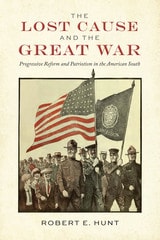
The Lost Cause and the Great War
Progressive Reform and Patriotism in the American SouthRobert E. Hunt
University of Alabama Press, 2025
How Tennessee reformers reconciled Southern heritage with rising nationalism, weaving the Lost Cause into the fabric of American progress and identity.
The Lost Cause and the Great War tells the stories of central Tennessee Progressive-era reformers to illustrate the fascinating broader issue of how Southerners steeped in Lost Cause Civil War mythologies simultaneously developed patriotic American fervor. Focusing on Luke Lea, a prominent politician and American army officer who attempted to capture Kaiser Wilhelm II during World War I, the book reveals the intricate interplay between three competing ideas: attachment to the memory of the Confederacy, intense American nationalism, and advocacy for progressive reforms.
Hunt shows that Lea and his contemporaries sought either to harmonize these competing loyalties or to compartmentalize them to use when needed. Through insightful accounts of Tennessee’s 1928 presidential campaign, the American Legion’s response to cuts to veteran benefits in 1933, and the redefinition of America’s global role post–World War II, Hunt shows how these reformers achieved a balance that held until the Civil Rights movement disrupted this delicate consensus.
Hunt’s rich account reveals how Lea and others like him wove national patriotism and Southern collective memory into a cohesive narrative that supported their broader Progressive goals. The book offers much to readers interested in Southern history, the Gilded Age, Prohibition, World War I, World War II, and the beginnings of the Civil Rights movement. It provides vivid examples of how collective memory and narratives shape social and political movements. General readers will discover how white Southerners who remained devoted to vindicating the Confederacy nonetheless became fervent supporters of America's growing nationalism in the early twentieth century.
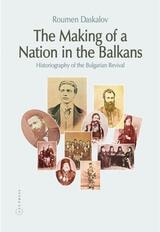
The Making of a Nation in the Balkans
Roumen Daskalov
Central European University Press, 2004
The Nationalization of the Masses
Political Symbolism and Mass Movements in Germany from the Napoleonic Wars Through the Third ReichGeorge L. Mosse
University of Wisconsin Press, 2023
The Nonconformists
Culture, Politics, and Nationalism in a Serbian Intellectual Circle, 1944-1991Nick Miller
Central European University Press, 2007

The Obsolescence of Human Rights
The Alt-Right, the Pandemic and Science as an Emerging Political CleavageFilip Balunovic
Central European University Press, 2026
The Perils of Populism
Sarah Tobias
Rutgers University Press, 2022
The Perils of Populism shows how a feminist lens can help diagnose the factors behind the global rise of right-wing populism and teach us how to resist the threat it presents to democracy. Featuring interdisciplinary essays about politics in the United States, the Middle East, Europe, and India from a variety of acclaimed theorists and activists, the volume contributes to a rapidly expanding literature on gender and the far right. Together, these chapters offer a truly intersectional analysis of the problem, addressing everything from how populism has thrived in a “post-truth” era to the ways it appeals to working-class voters looking for an alternative to neoliberalism. Yet the authors also find reasons to be hopeful, as they showcase forms of grassroots feminist activism that challenge right-wing populism by advocating for racial and economic justice.

The Present Colonizes the Past
The Future Forsaken?Romila Thapar
Seagull Books, 2026
Short, rigorous intervention on history-writing in public life.
How does the present reshape what a society chooses to remember as its past? Recent interpretations of India's history have replaced careful inquiry with narratives that mirror contemporary anxieties and ambitions, sidelining the evidence, debate, and plurality that once characterized India’s long intellectual tradition. At stake is a shift from understanding history as a method to treating it as a tool of identity and authority. In The Present Colonizes the Past, Romila Thapar asks: How have cultural and religious identities evolved through interaction rather than isolation? How have dissent and accommodation shaped social change? How have education and public discourse influenced what is accepted as knowledge? And, most urgently, how might weakened institutions and selective pasts redefine our heritage and citizenship?
The Promise of the Foreign
Nationalism and the Technics of Translation in the Spanish PhilippinesVicente L. Rafael
Duke University Press, 2005
Through close readings of nationalist newspapers and novels, the vernacular theater, and accounts of the 1896 anticolonial revolution, Rafael traces the deep ambivalence with which elite nationalists and lower-class Filipinos alike regarded Castilian. The widespread belief in the potency of Castilian meant that colonial subjects came in contact with a recurring foreignness within their own language and society. Rafael shows how they sought to tap into this uncanny power, seeing in it both the promise of nationhood and a menace to its realization. Tracing the genesis of this promise and the ramifications of its betrayal, Rafael sheds light on the paradox of nationhood arising from the possibilities and risks of translation. By repeatedly opening borders to the arrival of something other and new, translation compels the nation to host foreign presences to which it invariably finds itself held hostage. While this condition is perhaps common to other nations, Rafael shows how its unfolding in the Philippine colony would come to be claimed by Filipinos, as would the names of the dead and their ghostly emanations.

The Resolution of African Conflicts
The Management of Conflict Resolution and Post-Conflict ReconstructionAlfred Nhema
Ohio University Press, 2007
“These two volumes clearly demonstrate the efforts by a wide range of African scholars to explain the roots, routes, regimes and resolution of African conflicts and how to re-build post-conflict societies. They offer sober and serious analyses, eschewing the sensationalism of the western media and the sophistry of some of the scholars in the global North for whom African conflicts are at worst a distraction and at best a confirmation of their pet racist and petty universalist theories.”
—From the introduction by Paul Tiyambe Zeleza
This book offers analyses of a range of African conflicts and demonstrates that peace is too important to be left to outsiders.
The Rise of Populist Nationalism
Social Resentments and Capturing the Constitution in HungaryBalázs Majtényi
Central European University Press, 2020
The Rising Tide of Cultural Pluralism
The Nation-State at Bay?Edited by Crawford Young
University of Wisconsin Press, 1993
Crawford Young opens with an overview of the dramatic rise in the political significance of cultural pluralism and of scholars’ changing understanding of what drives and shapes ethnic identification. Mark Beissinger brilliantly explains the demise of the last great empire-state, the USSR, while Edward Friedman notes growing challenges to the apparent cultural homogeneity of China. Nader Entessar suggests intriguing contrasts in Azeri identity politics in Iran and the ex-USSR. Ronald Schmidt and Noel Kent explore the language and racial dimensions of the rising multicultural currents in the United States. Douglas Spitz shows the extent of the decline of the old secular vision of India of the independence generation; Alan LeBaron traces the recent emergence of an assertive Mayan identity among a submerged populace in Guatemala, long thought to be destined for Ladinoization. A case study of the diversity and uncertain future of Ethiopia dramatically emerges from four contrasting contributions: Tekle Woldemikael looks at the potential cultural tensions in Eritrea, Solomon Gashaw offers a central Ethiopian nationalist perspective, Herbert Lewis reflects the perspectives of a restless and disaffected periphery, and James Quirin provides an arresting explanation of the construction of identity amongst the Beta Israel (Ethiopian Jews). Virginia Sapiro steps back from specific regions, offering an original analysis of the interaction between cultural pluralism and gender.

The Romanov Empire and Nationalism
Essays in the Methodology of Historical ResearchAlexei Miller
Central European University Press, 2008
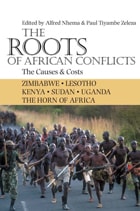
The Roots of African Conflicts
The Causes and CostsAlfred Nhema
Ohio University Press, 2007
“Africa is no more prone to violent conflicts than other regions. Indeed, Africa’s share of the more than 180 million people who died from conflicts and atrocities in the twentieth century is relatively modest.… This is not to underestimate the immense impact of violent conflicts on Africa; it is merely to emphasize the need for more balanced debate and commentary.”
—From the introduction by Paul Tiyambe Zeleza
Violent conflicts have exacted a heavy toll on Africa’s societies, polities, and economies. This book presents African scholars’ views of why conflicts start in their continent. The causes of conflict are too often examined by scholars from the countries that run the proxy wars and sell the arms to fuel them. This volume offers theoretically sophisticated, empirically grounded, and compelling analyses of the roots of African conflicts.

The Science of the Swastika
Bernard Mees
Central European University Press, 2008
The Second Palestinian Intifada
A Chronicle of a People's StruggleRamzy Baroud
Pluto Press, 2006
Ramzy Baroud is a veteran journalist and former producer for Al-Jazeera TV. This is his comprehensive account of the momentous events of the last five years which shaped the political landscape not only of Palestine and Israel but of the entire Middle East region.
Addressing the most controversial issues, including the alarming escalation in suicide bombings, and the construction of the Separation Wall, he reports on the huge rate of unemployment and hunger in the Occupied Territories -- statistics so critical that NGOs compare their magnitude to African nations such as the Congo. From the brutality of the Israeli army to the ever-compromising nature of the Palestinian Authority, few are spared Baroud’s thoughtful critique.
The book is clear and concise, with one chapter dedicated to the major events of each year, and includes a comprehensive timeline.

The Shadow of a Year
The 1641 Rebellion in Irish History and MemoryJohn Gibney
University of Wisconsin Press, 2013
Was the 1641 rebellion a justified response to dispossession and repression? Or was it an unprovoked attempt at sectarian genocide? John Gibney comprehensively examines three centuries of this debate. The struggle to establish and interpret the facts of the past was also a struggle over the present: if Protestants had been slaughtered by vicious Catholics, this provided an ideal justification for maintaining Protestant privilege. If, on the other hand, Protestant propaganda had inflated a few deaths into a vast and brutal “massacre,” this justification was groundless.
Gibney shows how politicians, historians, and polemicists have represented (and misrepresented) 1641 over the centuries, making a sectarian understanding of Irish history the dominant paradigm in the consciousness of the Irish Protestant and Catholic communities alike.
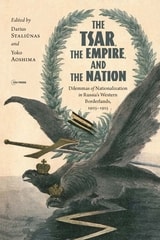
The Tsar, The Empire, and The Nation
Dilemmas of Nationalization in Russia's Western Borderlands, 1905-1915Darius Staliunas
Central European University Press, 2021
This collection of essays addresses the challenge of modern nationalism to the tsarist Russian Empire. First appearing on the empire’s western periphery this challenge, was most prevalent in twelve provinces extending from Ukrainian lands in the south to the Baltic provinces in the north, as well as to the Kingdom of Poland.
At issue is whether the late Russian Empire entered World War I as a multiethnic state with many of its age-old mechanisms run by a multiethnic elite, or as a Russian state predominantly managed by ethnic Russians. The tsarist vision of prioritizing loyalty among all subjects over privileging ethnic Russians and discriminating against non-Russians faced a fundamental problem: as soon as the opportunity presented itself, non-Russians would increase their demands and become increasingly separatist.
The authors found that although the imperial government did not really identify with popular Russian nationalism, it sometimes ended up implementing policies promoted by Russian nationalist proponents. Matters addressed include native language education, interconfessional rivalry, the “Jewish question,” the origins of mass tourism in the western provinces, as well as the emergence of Russian nationalist attitudes in the aftermath of the first Russian revolution.

The Ukrainian Question
Russian Empire and Nationalism in the 19th CenturyAlexei Miller
Central European University Press, 2003
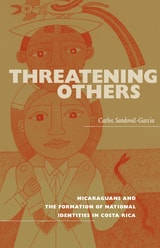
Threatening Others
Nicaraguans and the Formation of National Identities in Costa RicaCarlos Sandoval-Garcia
Ohio University Press, 2004
During the last two decades, a decline in public investment has undermined some of the national values and institutions of Costa Rica. The resulting sense of dislocation and loss is usually projected onto Nicaraguan “immigrants.”
Threatening Others: Nicaraguans and the Formation of National Identities in Costa Rica explores the representation of the Nicaraguan “other” in the Costa Rican imagery. It also seeks to address more generally why the sense of national belonging constitutes a crucial identification in contemporary societies. Interdisciplinary and based on extensive fieldwork, it looks critically at the “exceptionalism” that Costa Ricans take for granted and view as a part of their national identity.
Carlos Sandoval-García argues that Nicaraguan immigrants, once perceived as a “communist threat,” are now victims of an invigorated, racialized politics in which the Nicaraguan nationality has become an offense in itself.
Threatening Others is a deeply searching book that will interest scholars and students in Latin American studies and politics, cultural studies, and ethnic studies.

To Kill a Spy
Everyday Nationalism and Political Violence in Fin-de-Siecle EuropeZachary Mazur
Central European University Press, 2026
How does an ordinary, working-class man transform into a political executioner? And how does a society reach the tipping point where premeditated murder is celebrated as a civic duty?
This gripping historical investigation unravels the environment and conditions of radicalization in fin-de-siècle Europe. Societal shifts, mass political movements, the popular press and espionage paranoia all contributed to a fearful community, wary of outsiders and ready to do anything to defend itself.
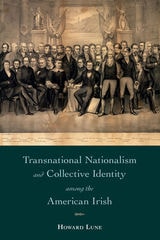
Transnational Nationalism and Collective Identity among the American Irish
Howard Lune
Temple University Press, 2020
In Transnational Nationalism and Collective Identity among the American Irish, Howard Lune considers the development and mobilization of different nationalisms over 125 years of Irish diasporic history (1791–1920) and how these campaigns defined the Irish nation and Irish citizenship.
Lune takes a collective approach to exploring identity, concentrating on social identities in which organizations are the primary creative agent to understand who we are and how we come to define ourselves. As exiled Irishmen moved to the United States, they sought to create a new Irish republic following the American model. Lune traces the construction of Irish American identity through the establishment and development of Irish nationalist organizations in the United States. He looks at how networks—such as societies, clubs, and private organizations—can influence and foster diaspora, nationalism, and nationalist movements.
By separating nationalism from the physical nation, Transnational Nationalism and Collective Identity among the American Irish uniquely captures the processes and mechanisms by which collective identities are constructed, negotiated, and disseminated. Inevitably, this work tackles the question of what it means to be Irish—to have a nationality, a community, or a shared history.