Results by title
176 books match the query 'New Testament' and 39 start with t
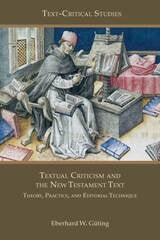
Textual Criticism and the New Testament Text
Theory, Practice, and Editorial TechniqueEberhard W. Güting
SBL Press, 2020
The fruit of more than three decades of research
This collection of fourteen essays by Eberhard W. Güting covers important aspects of editorial science with a particular focus on New Testament textual criticism. Essays cover textual emendation, text-critical procedures, literary criticism, history of scholarship, advantages and disadvantages of online manuscripts, and text-critical studies of words and phrases. The addition of a substantial introduction to text criticism makes this a valuable resource for students and teachers.
Features
- Essays concerned with establishing the original text of New Testament writings
- Nine essays published in English for the first tim
- Two previously unpublished essays
Textual History and the Reception of Scripture in Early Christianity
Johannes de Vries
SBL Press, 2013
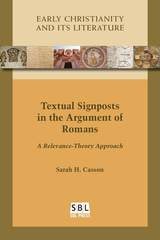
Textual Signposts in the Argument of Romans
A Relevance-Theory ApproachSarah H. Casson
SBL Press, 2019
A fresh look at the development of Paul’s argument in Romans
The Greek word gar occurs 144 times in Romans and 1,041 times in the entire New Testament. However, many instances of this connective defy easy definition, and the English translation for is often inadequate, obscuring the clue that gar gives to the direction of the communicator’s thought. In this ground-breaking work, Sarah H. Casson argues that gar offers vital guidance to the coherence of Romans. The book applies the cognitive approach of relevance theory to show how garfunctions as an indispensable guide for tracing the significant points of Paul’s argument, helping resolve questions about the coherence of sections, as well as smaller-scale exegetical problems. The work engages with key debates regarding the purpose of Romans and challenges some recent influential interpretations.
Features:
- An exegetically useful understanding of the connective gar
- A new method for determining Paul’s audience and reason for writing
- A challenge to recent key debates and influential interpretations of the purpose of Romans
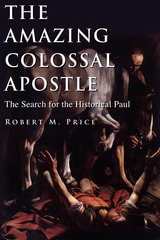
The Amazing Colossal Apostle
The Search for the Historical PaulRobert M. Price
Signature Books, 2012
As adults reading the New Testament, we catch glimpses of a very different kind of disciple—a wild ascetic whom Tertullian dubbed “the second apostle of Marcion and the apostle of the heretics.” What does scholarship tell us about the enigmatic thirteenth apostle who looms larger than life in the New Testament? The epistles give evidence of having been written at the end of the first century or early in the second—too late to have been Paul’s actual writings. So who wrote (and rewrote) them? F. C. Baur, a nineteenth-century theologian, pointed persuasively to Simon Magus as the secret identity of “Paul.” Robert M. Price, in this exciting journey of discovery, gives readers the background for a story we thought we knew.
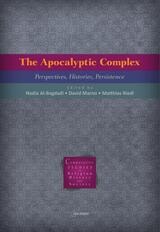
The Apocalyptic Complex
Perspectives, Histories, PersistenceMatthias Riedl
Central European University Press, 2018
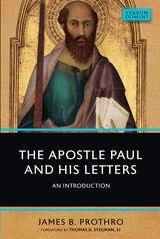
The Apostle Paul and His Letters
An IntroductionJames B. Prothro
Catholic University of America Press, 2022
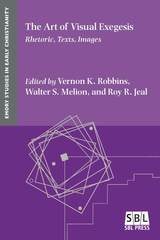
The Art of Visual Exegesis
Rhetoric, Texts, ImagesVernon K. Robbins
SBL Press, 2017
A critical study for those interested in the intersection of art and biblical interpretation
With a special focus on biblical texts and images, this book nurtures new developments in biblical studies and art history during the last two or three decades. Analysis and interpretation of specific works of art introduce guidelines for students and teachers who are interested in the relation of verbal presentation to visual production. The essays provide models for research in the humanities that move beyond traditional disciplinary boundaries erected in previous centuries. In particular, the volume merges recent developments in rhetorical interpretation and cognitive studies with art historical visual exegesis. Readers will master the tools necessary for integrating multiple approaches both to biblical and artistic interpretation.
Features
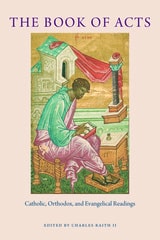
The Book of Acts
Charles Raith II
Catholic University of America Press, 2019
The Christ Party in the Corinthian Community
Ferdinand Christian Baur
SBL Press, 2021
The Concise Greek-English Lexicon of the New Testament
Frederick William Danker
University of Chicago Press, 2009
Frederick William Danker, a world-renowned scholar of New Testament Greek, is widely acclaimed for his 2000 revision of Walter Bauer’s A Greek-English Lexicon of the New Testament and Other Early Christian Literature. With more than a quarter of a million copies in print, it is considered the finest dictionary of its kind.
Danker’s Concise Greek-English Lexicon of the New Testament will prove to be similarly invaluable to ministers, seminarians, translators, and students of biblical Greek. Unlike other lexica of the Greek New Testament, which give only brief glosses for headwords, The Concise Greek-English Lexicon offers extended definitions or explanations in idiomatic English for all Greek terms.
Each entry includes basic etymological information, short renderings, information on usage, and plentiful biblical references. Greek terms that could have different English definitions, depending on context, are thoughtfully keyed to the appropriate passages. An overarching aim of The Concise Greek-English Lexicon is to assist the reader in recognizing the broad linguistic and cultural context for New Testament usage of words.
The Concise Greek-English Lexicon retains all the acclaimed features of A Greek-English Lexicon in a succinct and affordable handbook, perfect for specialists and nonspecialists alike.
The Craft of History and the Study of the New Testament
Beth M. Sheppard
SBL Press, 2012
The Critic in the World
Essays in Honor of Fernando F. SegoviaAmy Lindeman Allen
SBL Press, 2024
A Pact of Love with Criticism, A Pact of Blood with the World
Building on the legacy of Fernando F. Segovia, the pioneering essays in this volume redefine the intersection of biblical studies and geopolitics. Through a thorough exploration of how ancient texts and modern readers influence and reflect geopolitical dynamics, each contributor reveals how biblical narratives have shaped and been shaped by historical power structures, territorial conflicts and climate changes, and cultural exchanges. Essays employ contemporary geopolitical concepts that move beyond traditional readings to offer fresh insights into the strategic and ideological forces behind scriptural texts. An annotated interview with Fernando F. Segovia traces his immigration journey as an adolescent and its indelible imprint on his scholarship as a postcolonial critic. Contributors include Efraín Agosto, Amy Lindeman Allen, Reimund Bieringer, Mark G. Brett, Ahida Calderón Pilarski, Greg Carey, Jorge E. Castillo Guerra, Jin Young Choi, Stephanie Buckhanon Crowder, Gregory L. Cuéllar, Musa W. Dube, Neil Elliott, Eleazar S. Fernandez, Bridgett A. Green, Leticia A. Guardiola-Sáenz, Jacqueline M. Hidalgo, Knut Holter, Ma. Maricel S. Ibita, Ma. Marilou S. Ibita, John F. Kutsko, Sung Uk Lim, Francisco Lozada Jr., Luis Menéndez-Antuña, Rubén Muñoz-Larrondo, Robert Myles, Wongi Park, Mitri Raheb, Elisabeth Schüssler Fiorenza, Fernando F. Segovia, Yak-hwee Tan, Ekaputra Tupamahu, Gerald O. West, Hans (J. H.) de Wit, and H. Daniel Zacharias.
The First Urban Churches 1
Methodological FoundationsJames R. Harrison
SBL Press, 2015
A fresh look at early urban churches
This collection of essays examines the urban context of early Christian churches in the first-century Roman world. A city-by-city investigation of the early churches in the New Testament clarifies the challenges, threats, and opportunities that urban living provided for early Christians. Readers will come away with a better understanding of how scholars assemble an accurate picture of the cities in which the first Christians flourished.
Features:
- Analysis of urban evidence of the inscriptions, papyri, archaeological remains, coins, and iconography
- Discussion of how to use different types of evidence responsibly
- Outline of what constitutes proper methodological use for establishing a nuanced, informed portrait of ancient urban life
The First Urban Churches 2
Roman CorinthJames R. Harrison
SBL Press, 2016
Investigate the challenges, threats, and opportunities experienced by the early church
Volume two of The First Urban Churches focuses on the urban context of Christian churches in first-century Roman Corinth. An investigation of the material evidence of Corinth helps readers today understand properly the challenges, threats, and opportunities that the early Corinthian believers faced in the city. The essays demonstrate decisively the difference that such an approach makes in grappling with the meaning and context of the Corinthian epistles in the New Testament.
Features:
- Analysis of urban evidence of the inscriptions, papyri, archaeological remains, coins, and iconography
- Proposed reeconstructions of the past and its social, religious, and political significance
- A nuanced, informed portrait of ancient urban life in Corinth
The First Urban Churches 3
EphesusJames R. Harrison
SBL Press, 2018
Investigate the challenges, threats, and opportunities experienced by the early church in Ephesus
The third installment of The First Urban Churches focuses on the urban context of Christian churches in first-century Ephesus. As with previous volumes, contributors illustrate how an investigation of the material evidence will help readers understand properly the challenges, threats, and opportunities that the early Ephesian believers faced in that city. Brad Bitner, James R. Harrison, Michael Haxby, Fredrick J. Long, Guy M. Rogers, Michael Theophilos, Paul Trebilco, and Stephan Witetschek demonstrate decisively the difference that such an approach makes in grappling with the meaning and context of the New Testament writings, particularly Ephesians, Acts, and Revelation.
Features
- Analysis of urban evidence of the inscriptions, papyri, archaeological remains, coins, and iconography
- Proposed reconstructions of the past and its social, religious and political significance
- A nuanced, informed portrait of ancient urban life in Ephesus
The First Urban Churches 4
Roman PhilippiJames R. Harrison
SBL Press, 2018
Investigate the challenges and opportunities experienced by the early church
This fourth installment of The First Urban Churches, edited by James R. Harrison and L. L. Welborn, focuses on the urban context of Christian churches in first-century Roman Philippi. The international team of New Testament and classical scholars contributing to the volume present essays that use inscriptions, papyri, archaeological remains, coins, and iconography to examine the rivalries, imperial context, and ecclesial setting of the Philippian church.
Features:
- Analysis of the material and epigraphic evidence relating to first- and second-century CE Roman Philippi
- Examination of important passages from Philippians within their ancient urban context
- Investigation of the social composition and membership of the Philippian church from the archaeological and documentary evidence
The First Urban Churches 5
Colossae, Hierapolis, and LaodiceaJames R. Harrison
SBL Press, 2019
A fresh examination of early Christianity by an international team of New Testament and classical scholars
Volume 5 of The First Urban Churches investigates the urban context of Christian churches in first-century Roman Colossae, Hierapolis, and Laodicea. Building on the methodologies introduced in the first volume and supplementing the in-depth studies of Corinth, Ephesus, and Philippi (vols. 2-4), essays in this volume challenge readers to reexamine preconceived understandings of the early church and to grapple with the meaning and context of Christianity in its first-century Roman colonial context.
Features:
- Analysis of urban evidence found in inscriptions, papyri, archaeological remains, coins, and iconography
- Proposed reconstructions of the past and its social, religious, and political significance
- A nuanced, informed portrait of ancient urban life in the cities of the Lycus Valley
The First Urban Churches 6
Rome and OstiaJames R. Harrison
SBL Press, 2021
An examination of early Roman Christianity by New Testament and classical scholars
Building on the methodologies introduced in the first volume of The First Urban Churches and supplementing the in-depth studies of Corinth, Ephesus, Philippi, Colossae, Hierapolis, and Laodicea (vols. 2–5), essays in this volume challenge readers to reexamine what we know about the early church within Rome and the port city of Ostia. In the introductory section of the book, James R. Harrison discusses the material and documentary evidence of both cities, which sets the stage for the essays that follow. In the second section, Mary Jane Cuyler, James R. Harrison, Richard Last, Annelies Moeser, Thomas A. Robinson, Michael P. Theophilos, and L. L. Welborn examine a range of topics, including the Ostian Synagogue, Romans 1:2–4 against the backdrop of Julio-Claudian adoption and apotheosis traditions, and the epistle of 1 Clement. In the final section of this volume, Jutta Dresken-Welland and Mark Reasoner engage Peter Lampe’s magnum opus From Paul to Valentinus; Lampe wraps up the section and the volume with a response. Throughout, readers are provided with a rich demonstration of how the material evidence of the city of Rome illuminates the emergence of Roman Christianity, especially in the first century CE.
The First Urban Churches 7
ThessalonicaJames R. Harrison
SBL Press, 2022
The First Urban Churches 7 includes essays focused on the development of early Christianity from the mid-first century through the sixth century CE in the ancient Macedonian city of Thessalonica. An international group of contributors traces the emergence of Thessalonica’s house churches through a close study of the archaeological remains, inscriptions, coins, iconography, and Paul’s two letters to the Thessalonians. After a detailed introduction to the city, including the first comprehensive epigraphic profile of Thessalonica from the Hellenistic age to the Roman Empire, topics discussed include the Roman emperor’s divine honors, coins and inscriptions as sources of imperial propaganda, Thessalonian family bonds, Paul’s apostolic self-image, the role of music at Thessalonica and in early Christianity, and Paul’s response to the Thessalonian Jewish community. Contributors include D. Clint Burnett, Alan H. Cadwallader, Rosemary Canavan, James R. Harrison, Julien M. Ogereau, Isaac T. Soon, Angela Standhartinger, Michael P. Theophilos, and Joel R. White.
The First Urban Churches 8
Galatia and LycaoniaJames R. Harrison
SBL Press, 2025
The Galilean Economy in the Time of Jesus
David A. Fiensy
SBL Press, 2013
The Invention of Early Christian Discourse, Volume 1
Rhetography, Rhetology, and Storyline in Wisdom, Prophetic, and Apocalyptic RhetorolectVernon K. Robbins
SBL Press, 2026
The Kingdom of God in Luke’s Gospel
A Cognitive ApproachKarl C. H. Leung
SBL Press, 2026
The Narrative Self in Early Christianity
Essays in Honor of Judith PerkinsJanet E. Spittler
SBL Press, 2019
Essays that explore early Christian texts and the broader world in which they were written
This volume of twelve essays celebrates the contributions of classicist Judith Perkins to the study of early Christianity. Drawing on Perkins's insights related to apocryphal texts, representations of pain and suffering, and the creation of meaning, contributors explore the function of Christian narratives that depict pain and suffering, the motivations of the early Christians who composed these stories, and their continuing value to contemporary people. Contributors also examine how narratives work to create meaning in a religious context. These contributions address these issues from a variety of angles through a wide range of texts.
Features:
- Introductions to and treatments of several largely unknown early Christian texts
- Essays by ten women and two men influenced or mentored by Judith Perkins
- Essays on the Deuterocanon, the New Testament, and early Christian relics
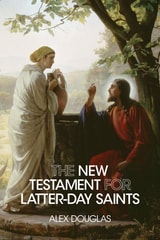
The New Testament for Latter-day Saints
Douglas, Alex
Signature Books, 2026
In The New Testament for Latter-day Saints, Alex Douglas introduces Latter-day Saint readers to the basics of modern New Testament scholarship. Douglas answers the question, “What did the authors of the Bible believe about Jesus?” elucidating the striking diversity in how Jesus is portrayed in the New Testament. It ranges from authors who saw Jesus as teacher and prophet, to those who worshipped him as God incarnate. Douglas shows how the Bible we have today is a product of these competing voices, each shaped by conflicts within early Christianity. The book also examines how key Christian ideas—such as sin, salvation, priesthood authority, and the role of women—developed as part of this conflict. Drawing on modern biblical scholarship, it places these portrayals alongside Latter-day Saint beliefs, helping readers see points of alignment and tension.
Ultimately, the book invites readers to wrestle with what it means to see revelation as a process rather than a one-time event. Readers will walk away seeing the New Testament in an entirely different light, as a record of that process.
The New Testament for Latter-day Saints
Douglas, Alex
Signature Books, 2026
In The New Testament for Latter-day Saints, Alex Douglas introduces Latter-day Saint readers to the basics of modern New Testament scholarship. Douglas answers the question, “What did the authors of the Bible believe about Jesus?” elucidating the striking diversity in how Jesus is portrayed in the New Testament. It ranges from authors who saw Jesus as teacher and prophet, to those who worshipped him as God incarnate. Douglas shows how the Bible we have today is a product of these competing voices, each shaped by conflicts within early Christianity. The book also examines how key Christian ideas—such as sin, salvation, priesthood authority, and the role of women—developed as part of this conflict. Drawing on modern biblical scholarship, it places these portrayals alongside Latter-day Saint beliefs, helping readers see points of alignment and tension.
Ultimately, the book invites readers to wrestle with what it means to see revelation as a process rather than a one-time event. Readers will walk away seeing the New Testament in an entirely different light, as a record of that process.
The Nocturnal Side of Science in David Friedrich Strauss's Life of Jesus Critically Examined
Thomas Fabisiak
SBL Press, 2015
A close look at how Strauss's engagement with popular and scholarly controversies influenced his study of the Gospels
David Friedrich Strauss's Life of Jesus Critically Examined is known as a monumental contribution to the critical, scientific study of religion and Christian origins. It was widely read and influenced literary and historical research on the Bible as well as critical philosophy between Hegel and Nietzsche. Less well-known are Strauss's writings from the same period on "the nocturnal side of nature," paranormal phenomena such as demon possession, animal magnetism, and the ghost-seeing of Frederike Hauffe, the famous "Seeress of Prevorst."
Features:
- Illuminates unfamiliar features of early nineteenth-century theology, philosophy, and medicine showing how spirituality and science blended together in these fields
- Demonstrates the importance of Western esotericism and popular religion in the history of modern biblical studies
- Sheds new light on Strauss’s study of the Gospels as myths, his critique of miracles and his account of the historical Jesus
The People beside Paul
The Philippian Assembly and History from BelowJoseph A. Marchal
SBL Press, 2015
Who are the people beside Paul, and what can we know about them?
This volume brings together an international and interdisciplinary group of scholars with a broad range of expertise and a common interest: Philippi in antiquity. Each essay engages one set of contextual particularities for Paul and the ordinary people of the Philippian assembly, while simultaneously placing them in wider settings. This 'people's history' uses both traditional and more cutting-edge methods to reconsider archaeology and architecture, economy and ethnicity, prisons and priestesses, slavery, syncretism, stereotypes of Jews, the colony of Philippi, and a range of communities. The contributors are Valerie Abrahamsen, Richard S. Ascough, Robert L. Brawley, Noelle Damico, Richard A. Horsley, Joseph A. Marchal, Mark D. Nanos, Peter Oakes, Gerardo Reyes Chavez, Angela Standhartinger, Eduard Verhoef, and Antoinette Clark Wire.
Features
- An examination of the social forms and forces that shaped and affected the Philippian church
- Essays offer insight into standard questions about the letter s hymn and audience, Paul's 'opponents,' and the sites of the community and of Paul's imprisonment
- A focused exploration of more marginalized topics and groups, including women, slaves, Jews, and members of localized cults
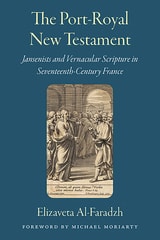
The Port Royal New Testament
Jansenists and Vernacular Scripture in Seventeenth-Century FranceElizaveta Al-Faradzh
Catholic University of America Press, 2026
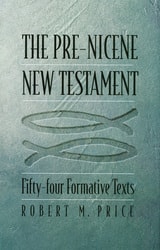
The Pre-Nicene New Testament
Fifty-four Formative TextsRobert M. Price
Signature Books, 2006
As an interpretive translation, Price’s text is both accurate and readable and is tied more closely to the Greek than most previous translations. Price conveys the meanings of words in context, carefully choosing the right phrase or idiom to convey their sense in English. For words that had a specific theological import when first written, Price leaves the Greek transliteration, giving readers archons for the fallen angels thought to be ruling the world, paraclete for encourager, andpleroma for the Gnostic godhead.
Within the collection, each book is introduced with comments about the cultural setting, information about when a document was probably written, and significant textual considerations, which together form a running commentary that continues into the footnotes. The findings of scholars, documented and summarized by Price, will come as a surprise to some readers. It appears, as Price suggests, that most of what is known about Jesus came by way of revelation to Christian oracles rather than by word of mouth as historical memory. In addition, the major characters in the New Testament, including Peter, Stephen, and Paul, appear to be composites of several historical individuals each, their stories comprising a mix of events, legend, and plot themes borrowed from the Old Testament and Greek literature.
In the New Testament world, theology developed gradually along different trajectories, with tension between the charismatic ascetics such as Marcion and Thecla, as examples, and the emerging Catholic orthodoxy of such clergy as Ignatius and Polycarp. The tension is detectable in the texts themselves, many of which represent “heretical” points of view: Gnostic, Jewish-Christian, Marcionite, and proto-orthodox, and were later edited, sometimes clumsily, in an attempt to harmonize all into one consistent theology.
What may occur to many readers, among the more striking aspects of the narratives, is that the earliest, most basic writings, such as Mark’s Gospel in inarticulate Greek, are ultimately more impressive and inspirational than the later attempts by more educated Christians to appeal to sophisticated readers with better grammar and more allusions to classical mythology and apologetic embellishments.
The critical insights and theories on display in these pages have seldom been incorporated into mainstream conservative Bible translations, and in many ways, Price has made the New Testament a whole new book for readers, allowing them, by virtue of the translation, to comprehend the meaning of the text where it is obscured by the traditional wording. Whatever usefulness teachers, students, and clergy may find here in terms of pedagogical and inspirational value, The Pre-Nicene New Testament is guaranteed to provoke further thought and conversation among the general public—hopefully toward the goal of more personal study and insights.
The Rhetoric of Abraham's Faith in Romans 4
Andrew Kimseng Tan
SBL Press, 2018
Explore Romans 4 from a sociorhetorical perspective
Andrew Kimseng Tan examines Romans using sociorhetorical interpretation to determine how Paul attempted to alleviate dissension between Judean (or “Jewish”) and non-Judean (or “gentile”) Christians. Through his analysis of Paul’s rhetoric, Tan reveals that Paul used Abraham’s faith in Genesis to demonstrate that the both groups were equally children and heirs of Abraham whose acceptance by God was through the same kind of faith that Abraham possessed, not through the Mosaic law, which Judean Christians claimed gave them a special honored status with God.
Features
- A model for the application of sociorhetorical interpretation for analyzing close readings of biblical texts
- A demonstration of the persuasive power of Romans 4 through the use of sociorhetorical interpretation
- Exploration of the relationships between important theological topics such as resurrection, the Mosaic law, the Holy Spirit, righteousness, ethical living, and eschatological salvation
The Sentences of Sextus
Walter T. Wilson
SBL Press, 2012
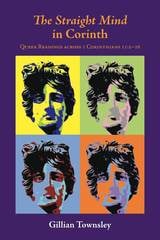
The Straight Mind in Corinth
Queer Readings across 1 Corinthians 11:2-16Gillian Townsley
SBL Press, 2017
A new reading that troubles and transgresses the normal with regard to biblical studies and our understandings of gender and sexuality
Despite its lack of both historical and exegetical clarity, 1 Corinthians 11:2-16 has often been fundamental to understandings of gender and sexuality in many Christian traditions. In particular, a hierarchical model of gender and a heterosexual model of sexuality tend to dominate and are presented as “natural” and “God-ordained.” With the materialist lesbian theory of Monique Wittig providing the theoretical basis for discussion, this book intersects various biblical, theological, and queer lines of inquiry across 1 Corinthians 11:2-16 in order to reveal and challenge these models of gender and sexuality that lie behind both the text itself and its various interpretations.
Features
- Reveals the complex relationship between effeminacy, masculinity and sexual relations in the first century Greco-Roman environment of the New Testament
- Explores the ideologies of sexuality that underlie much of the debate within evangelical circles
- Examines Karl Barth’s theology on the binary pairing of “man and woman” as asymmetrically related to each other and to God through the notion of the imago dei, revealing and challenging the ways in which this reflects androcentric and patriarchal ideologies
The Struggle over Class
Socioeconomic Analysis of Ancient Christian TextsG. Anthony Keddie
SBL Press, 2021
An interdisciplinary discussion engaging classics, archaeology, religious studies, and the social sciences
The Struggle over Class brings together scholars from the fields of New Testament and early Christianity to examine Christian texts in light of the category of class. Historically rigorous and theoretically sophisticated, this collection presents a range of approaches to, and applications of, class in the study of the epistles, the gospels, Acts, apocalyptic texts, and patristic literature. Contributors Alicia J. Batten, Alan H. Cadwallader, Cavan W. Concannon, Zeba Crook, James Crossley, Lorenzo DiTommaso, Philip F. Esler, Michael Flexsenhar III, Steven J. Friesen, Caroline Johnson Hodge, G. Anthony Keddie, Jaclyn Maxwell, Christina Petterson, Jennifer Quigley, Elisabeth Schüssler Fiorenza, Daniëlle Slootjes, and Emma Wasserman challenge both scholars and students to articulate their own positions in the ongoing scholarly struggle over class as an analytical category.
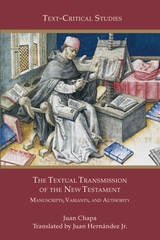
The Textual Transmission of the New Testament
Manuscripts, Variants, and AuthorityJuan Chapa
SBL Press, 2025
Juan Chapa offers nuanced discussions of many topics that currently occupy the field of textual criticism, including debates over the dating of New Testament papyri, the preference for the codex, the liturgical use of texts, the presence of nomina sacra, textual variants, the establishment of the New Testament text, problems with the term original, and the challenge of textual fluidity. His unique approach illustrates how a Catholic perspective, the rule of faith, and the Latin textual tradition can inform our understanding of the origin, preservation, and authority of the New Testament text. Chapa’s work contributes a distinctively Catholic voice to the largely Protestant chorus that has dominated the field, thus filling a lacuna in contemporary text-critical conversations.
The Use of the Old Testament in the New and other essays
studies in honor of William Franklin StinespringJames M. Efird
Duke University Press, 1972
To the Ends of the Earth
The Necropolitics of the Acts of the ApostlesEric C. Smith
SBL Press, 2026
Toward a Latino/a Biblical Interpretation
Francisco Lozada Jr.
SBL Press, 2017
Engage an interdisciplinary approach
In Toward a Latino/a Biblical Interpretation Francisco Lozada Jr. explores the complex and diverse issues related to Latino/a biblical interpretation. After laying the theoretical foundation, he offers three sample readings of biblical texts to lead readers through the intricacy of interpretation that has historically and culturally surrounded understanding what it means to do Latino/a biblical interpretation. Throughout, Lozada attempts to work out various strategies that Latinos/as have employed to read biblical texts. He argues that Latino/a biblical interpretation is concerned with identity and belongingness with a goal of transforming/liberating the Latino/a community.
Features
- An introduction to what it means to do Latino/a biblical interpretation
- A demonstration of three different reading strategies (correlation, dialogical, and ideological) that Latinos/as employ in reading biblical texts
- An exploration of whether one has to be Latino/a to do Latino/a biblical interpretation
Two Shipwrecked Gospels
The Logoi of Jesus and Papias's Exposition of Logia about the LordDennis R. MacDonald
SBL Press, 2012