Results by title
91 books match the query 'Nordic Countries' and 18 start with t

The Army of Truth
Selected PoemsHenrik Wergeland
University of Wisconsin Press, 2003
One of Norway’s most celebrated literary figures of the nineteenth century, Henrik Wergeland worked tirelessly for the civil rights of Jews in Norway. He used the words and structure of his poetry to enliven the ideals of truth, freedom, and equality. This translated volume, containing several of Wergeland’s most prominent poems, beautifully encapsulates the compelling force of his message, allowing its enduring influence to benefit a wider contemporary audience.
The Book of Settlements
LandnamabokHerman Palsson
University of Manitoba Press, 2007
The Creation of an Ethnic Identity
Being Swedish American in the Augustana Synod, 1860-1917Dag Blanck
Southern Illinois University Press, 2006
Analyzing the development of a Swedish American identity
The Creation of an Ethnic Identity: Being Swedish American in the Augustana Synod, 1860–1917 analyzes how Swedish American identity was constructed, maintained, and changed in the late nineteenth and early twentieth centuries. The Augustana Synod, the largest religious-based organization created by Swedish immigrants in the United States, played an important role in establishing what it meant to be Swedish American.
In this study, author Dag Blanck poses three fundamental questions: How did an ethnic identity develop in the Augustana Synod? What was that identity? Why was an ethnic identity formed? Based on primary sources formerly unknown or neglected, The Creation of an Ethnic Identity examines the Lutheran Augustana Synod, Augustana College, and the Augustana Book Concern to provide insights into how ethnic identity is constructed within a major religious body, a central educational institution, and a major publishing house.
Starting from the concept of ethnicity as something created or invented, Blanck goes on to explore how it was possible for a white European immigrant group like the Swedes to use its ethnicity as a tool of integration into American society. The nature of their ethnicity, says Blanck, was both determined by their cultural origins and also the values and nature of American society as they perceived it. Becoming Swedish American was also a way of becoming American.
The volume, which is augmented by illustrations, integrates the most critical scholarship on immigration and ethnicity over the past half century and provides a strong argument about how ethnicity is shaped over time within an immigrant group.
The Edda
A Collection of EssaysR.J. Glendinning
University of Manitoba Press, 1983

The Great Debate
Nietzsche, Culture, and the Scandinavian Welfare SocietyGeorg Brandes and Harald Høffding
University of Wisconsin Press, 2024
Marking the moment at which the uniquely Nordic concept of social democratic welfare was first contested in the public sphere, this debate provides insights into not only Nietzschean philosophy and its immediate reception but also the foundational concept of modern Scandinavian social, cultural, and political organization. This volume presents, for the first time in any language other than Danish, the debate in its entirety: three essays by Brandes and three by Høffding. A critical introduction by editor and translator William Banks explores the exchange in its context and convincingly argues that the principles contested by the two Danish luminaries still very much resonate in Western society today.
The Languages of Scandinavia
Seven Sisters of the NorthRuth H. Sanders
University of Chicago Press, 2017
While the two linguistic families that comprise Scandinavia’s languages ultimately have differing origins, the Seven Sisters have coexisted side by side for millennia. As Sanders reveals, a crisscrossing of names, territories, and even to some extent language genetics—intimate language contact—has created a body of shared culture, experience, and linguistic influences that is illuminated when the story of these seven languages is told as one. Exploring everything from the famed whalebone Lewis Chessmen of Norse origin to the interactions between the Black Death and the Norwegian language, The Languages of Scandinavia offers profound insight into languages with a cultural impact deep-rooted and far-reaching, from the Icelandic sagas to Swedish writer Stieg Larsson’s internationally popular Millennium trilogy. Sanders’s book is both an accessible work of linguistic scholarship and a fascinating intellectual history of language.
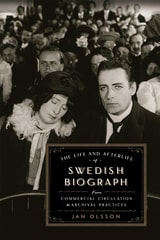
The Life and Afterlife of Swedish Biograph
From Commercial Circulation to Archival PracticesJan Olsson
University of Wisconsin Press, 2022
Sweden’s early film industry was dominated by Swedish Biograph (Svenska Biografteatern), home to star directors like Victor Sjöström and Mauritz Stiller. It is nostalgically remembered as the generative site of a nascent national artform, encapsulating a quintessentially Nordic aesthetic—the epicenter of Sweden’s cinematic Golden Age. In The Life and Afterlife of Swedish Biograph, veteran film scholar Jan Olsson takes a hard look at this established, romanticized narrative and offers a far more complete, complex, and nuanced story.
Nearly all of the studio’s original negatives were destroyed in an explosion in 1941, but Olsson’s comprehensive archival research shows how the company operated in a commercial, international arena, and how it was influenced not just by Nordic aesthetics or individual genius but also by foreign audiences’ expectations, technological demands, Hollywood innovations, and the gritty back-and-forth between economic pressures, government interference, and artistic desires. Olsson’s focus is wide, encompassing the studio’s production practices, business affairs, and cinematographic conventions, as well as the latter-day archival efforts that both preserved and obscured parts of Swedish Biograph’s story, helping construct the company’s rosy legacy. The result is a necessary rewrite to Swedish film historiography and a far fuller picture of a canonical film studio.

The Madisonian Turn
Political Parties and Parliamentary Democracy in Nordic EuropeTorbjörn Bergman and Kaare Strøm, editors
University of Michigan Press, 2013
"The Madisonian Turn is an outstanding assessment of the functioning of democratic institutions in the Nordic countries. If democracy is in trouble in Scandinavia, then it is surely facing problems everywhere, so the book will be read carefully by those concerned about contemporary governance in all modern democracies."
---Michael Gallagher, Trinity College, Dublin
"This welcome and timely re-evaluation of Nordic politics constitutes a major contribution to comparative government, and is likely to stand as the definitive treatment of politics in the region for many years to come."
---Peter Mair, European University Institute
"This book is unique in its comparative scope and the wealth of information on the state of parliamentary democracy in the Nordic countries. It is particularly useful for the comparativists who do not come from these countries, because the original literature which it covers in detail is often not accessible for the English-speaking audience."
---Hanspeter Kriesi, University of Zurich
"The strength of The Madisonian Turn is to interface detailed empirical evidence on the dynamics of democratic politics in Scandinavia with an elaboration and test of rival theories of change in the politics of postindustrial democracies. This book is an inspiration for students of Northern Europe, but also for scholars of comparative legislatures and political parties more generally."
---Herbert Kitschelt, Duke University
Parliamentary democracy is the most common regime type in the contemporary political world, but the quality of governance depends on effective parliamentary oversight and strong political parties. Denmark, Finland, Iceland, Norway, and Sweden have traditionally been strongholds of parliamentary democracy. In recent years, however, critics have suggested that new challenges such as weakened popular attachment, the advent of cartel parties, the judicialization of politics, and European integration have threatened the institutions of parliamentary democracy in the Nordic region.
This volume examines these claims and their implications. The authors find that the Nordic states have moved away from their previous resemblance to a Westminster model toward a form of parliamentary democracy with more separation-of-powers features---a Madisonian model. These features are evident both in vertical power relations (e.g., relations with the European Union) and horizontal ones (e.g., increasingly independent courts and central banks). Yet these developments are far from uniform and demonstrate that there may be different responses to the political challenges faced by contemporary Western democracies.
Torbjörn Bergman is Professor of Political Science at Umeå University, Sweden.
Kaare Strøm is Professor of Political Science at the University of California, San Diego.
Jacket Credit: Heidi Hobde Dailey

The Making of an Antifascist
Nordahl Grieg between the World WarsDean Krouk
University of Wisconsin Press, 2022
In this comprehensive and accessible book, Dean Krouk examines a significant public figure in Scandinavian literature and a critical period in modern European history through original readings of the political, ethical, and gender issues in Grieg’s works. This volume offers a first-rate analysis of the interwar period’s political and cultural agendas in Scandinavia and Europe leading to the Second World War by examining the rise of fascism, communism, and antifascism. Grieg’s poetry found renewed resonance in Norway following the 2011 far-right domestic terrorist attacks, making insight into his contradictory ideas more crucial than ever. Krouk’s presentation of Grieg’s unexpected ideological tensions will be thought-provoking for many readers in the United States and elsewhere.
The Man Who Stole Himself
The Slave Odyssey of Hans JonathanGisli Palsson
University of Chicago Press, 2016
The island nation of Iceland is known for many things—majestic landscapes, volcanic eruptions, distinctive seafood—but racial diversity is not one of them. So the little-known story of Hans Jonathan, a free Black man who lived and raised a family in early nineteenth-century Iceland, is improbable and compelling, the stuff of novels.
In The Man Who Stole Himself, Gisli Palsson lays out the story of Hans Jonathan (also known as Hans Jónatan) in stunning detail. Born into slavery in St. Croix in 1784, Hans was taken as a slave to Denmark, where he eventually enlisted in the navy and fought on behalf of the country in the 1801 Battle of Copenhagen. After the war, he declared himself a free man, believing that he was due freedom not only because of his patriotic service, but because while slavery remained legal in the colonies, it was outlawed in Denmark itself. He thus became the subject of one of the most notorious slavery cases in European history, which he lost. Then Hans ran away—never to be heard from in Denmark again, his fate unknown for more than two hundred years. It’s now known that Hans fled to Iceland, where he became a merchant and peasant farmer, married, and raised two children. Today, he has become something of an Icelandic icon, claimed as a proud and daring ancestor both there and among his descendants in America.
The Man Who Stole Himself brilliantly intertwines Hans Jonathan’s adventurous travels with a portrait of the Danish slave trade, legal arguments over slavery, and the state of nineteenth-century race relations in the Northern Atlantic world. Throughout the book, Palsson traces themes of imperial dreams, colonialism, human rights, and globalization, which all come together in the life of a single, remarkable man. Hans literally led a life like no other. His is the story of a man who had the temerity—the courage—to steal himself.
The Old Country and the New
Essays on Swedes and AmericaH. Arnold Barton
Southern Illinois University Press, 2006
Documenting a rich Scandinavian American culture and ethnic perspective
This notable collection of seventeen essays and six editorials by renowned Swedish American historian H. Arnold Barton was compiled from writings published between 1974 and 2005. The result of three decades of extensive research in the United States and Sweden, The Old Country and the New: Essays on Swedes and America, covers Swedish emigration to North America as well as the history and culture of Swedes in their new country.
In this rich mosaic of American ethnicity and cultural history, Barton analyzes the multifaceted Swedish emigration/immigration story. Essays include a survey of the historiography of emigration from the Scandinavian countries and the Scandinavian immigration to North America, Swedish emigration before 1846, and the Eric-Janssonist religious sect and its colony at Bishop Hill, Illinois.
Because Swedish immigrants were highly literate people, they wrote numerous letters describing their experiences to relatives and friends at home. What these letters related—or omitted—is the subject of another essay. Barton discusses Swedish immigrants who returned permanently to their homeland, affecting both the old country and the new. He also traces relations between the United States and Sweden, post—World War II Swedish immigration, and genealogy as history.
Offering a broad Scandinavian American ethnic perspective, The Old Country and the New appeals to both scholars and lay readers. Sixteen illustrations and a complete bibliography of Barton’s publications on Swedish American history and culture enhance the volume.
The Palace of the Snow Queen
Winter Travels in Lapland and SápmiBarbara Sjoholm
University of Minnesota Press, 2023
An exploration of the winter wonders and entangled histories of Scandinavia’s northernmost landscapes—now back in print with a new afterword by the author
After many years of travel in the Nordic countries—usually preferring to visit during the warmer months—Barbara Sjoholm found herself drawn to Lapland and Sápmi one winter just as mørketid, the dark time, set in. What ensued was a wide-ranging journey that eventually spanned three winters, captivatingly recounted in The Palace of the Snow Queen.
From observing the annual construction of the Icehotel in Jukkasjärvi, Sweden, to crossing the storied Finnmark Plateau in Norway, to attending a Sámi film festival in Finland, Sjoholm dives deep into the rich traditions and vibrant creative communities of the North. She writes of past travelers to Lapland and contemporary tourists in Sápmi, as well as of her encounters with Indigenous reindeer herders, activists, and change-makers. Her new afterword bears witness to the perseverance of the Sámi in the face of tourism, development, and climate change.
Written with keen insight and humor, The Palace of the Snow Queen is a vivid account of Sjoholm’s adventures and a timely investigation of how ice and snow shape our imaginations and create a vision that continues to draw visitors to the North.

The Rocks Will Echo Our Sorrow
The Forced Displacement of the Northern SámiElin Anna Labba
University of Minnesota Press, 2023
The deep and personal story—told through history, poetry, and images—of the forced displacement of the Sámi people from their homeland in northern Norway and Sweden and its reverberations today
More than a hundred years have passed since the Sámi were forcibly displaced from their homes in northern Norway and Sweden, a hundred years since Elin Anna Labba’s ancestors and relations drove their reindeer over the strait to the mainland for the last time. The place where they lived has remained empty ever since. We carry our homes in our hearts, Labba shares, citing the Sámi poet Áillohaš. How do you bear that weight if you were forced to leave? In a remarkable blend of historical reportage, memoir, and lyrical reimagining, Labba travels to the lost homeland of her ancestors to tell of the forced removal of the Sámi in the early twentieth century and to reclaim a place in history, and in today’s world, for these Indigenous people of northern Scandinavia.
When Norway became a country independent from Sweden in 1905, the two nations came to an agreement that called for the displacement of the Northern Sámi, who spent summers on the Norwegian coast and winters in Sweden. This “dislocation,” as the authorities called it, gave rise to a new word in Sámi language, bággojohtin, forced displacement. The first of the sirdolaččat, or “the displaced,” left their homes fully believing they would soon return. Through stories, photographs, letters, and joik lyrics, Labba gathers a chorus of Sámi expression that resonates across the years, evoking the nomadic life they were required to abandon and the immense hardship and challenges they endured: children left behind with relatives, reindeer lost when they returned to familiar territory, sorrow and estrangement that linger through generations.
Starkly poetic and emotionally heart-wrenching, this dark history is told through the voices of the sirdolaččat, echoing the displacements of other Indigenous people around the world as it depicts the singular experience of the Northern Sámi. For her extraordinary work, Labba was awarded Sweden’s most important national book prize in 2020, the August Prize for Best Nonfiction.
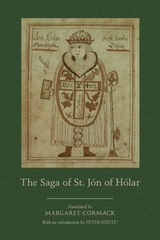
The Saga of St. Jón of Hólar
Translated by Margaret Cormack, With an Introduction byPeter Foote
Arizona Center for Medieval and Renaissance Studies, 2020
This volume contains a translation of the version of the Saga of St. Jón of Hólar that is probably closest to the first Latin vita. It is only the second saga of an Icelandic episcopal saint to appear in a modern translation in the present century. The volume consists of two parts, the first comprising a general introduction and a translation by Margaret Cormack. The second part provides a detailed scholarly analysis of the manuscripts, contents, style, and literary connections of the saga by the late Peter Foote, one of the foremost scholars of Old Norse and Icelandic literature.
The Jóns saga was written in the early thirteenth century, nearly a century after the death of its protagonist, the first bishop of the diocese of Hólar in Northern Iceland. The author of the saga combined Latin learning with native folklore to produce a readable narrative that is contemporary with the earliest family and contemporary sagas. This text provides valuable insight into the religious life of ordinary Icelanders in the thirteenth century, and the introduction corrects common misconceptions about ecclesiastical history and the cult of saints in Iceland. It will be of value to scholars of medieval Icelandic literature, hagiography, and history.
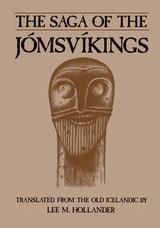
The Saga of the Jomsvikings
Translated from the Old Icelandic by Lee M. Hollander
University of Texas Press, 1955
In A.D. 986, Earl Hákon, ruler of most of Norway, won a triumphant victory over an invading fleet of Danes in the great naval battle of Hjórunga Bay. Sailing under his banner were no fewer than five Icelandic skalds, the poet-historians of the Old Norse world. Two centuries later their accounts of the battle became the basis for one of the liveliest of the Icelandic sagas, with special emphasis on the doings of the Jómsvikings, the famed members of a warrior community that feared no one and dared all. In Lee M. Hollander's faithful translation, all of the unknown twelfth-century author's narrative genius and flair for dramatic situation and pungent characterization is preserved.
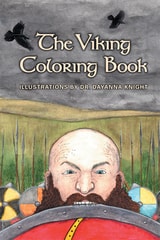
The Viking Coloring Book
Dayanna Knight
Arizona Center for Medieval and Renaissance Studies, 2017
What do you think of when you think of the Vikings? Fierce warriors? Sailors of magnificent dragon-prowed ships who terrorized North-Western Europe? Do you think of darkened halls thick with smoke and song?
Like all people those researchers now consider to be Viking were much more complex than the modern world sees them as. This coloring book is meant to show that. It is designed to provide scenes of the beauty of the early medieval world the Vikings inhabited. It is in this context that Viking cultures developed. You will find artifacts and animals, plants and landscapes within these pages to explore. Species that held some use to the Vikings, such as those that provided fur in particular have been focused on. Reconstructed scenes are inspired by the diverse world experienced in the north. There are no horned helmets here. The real Vikings were much more practical than that.

The Welfare State and Beyond
Success and Problems in ScandinaviaGunnar Heckscher
University of Minnesota Press, 1984
The Welfare State and Beyond was first published in 1984. Minnesota Archive Editions uses digital technology to make long-unavailable books once again accessible, and are published unaltered from the original University of Minnesota Press editions.
The welfare state emerged in a number of industrialized countries after the First World War as a middle ground between capitalism and socialism. The aim of architects of the welfare state was to abolish the injustices and hardships that accompanied capitalism and to do so without wholesale social or economic revolution. Establishment of the welfare state created something close to euphoria among many observers; it was, it seemed, the answer to many, if not all, troubling social questions. But it eventually became obvious that this type of society was not immune to problems.
In The Welfare State and Beyond Gunnar Heckscher examines four Nordic countries—Denmark, Finland, Norway, and Sweden—not to either criticize or defend the welfare state but to shed some light on a number of questions: Has the welfare state achieved what it attempted? Are the results generally held to be satisfactory? What important problems remain unsolved and what types of solutions have been proposed? Although Heckscher has been associated with the Conservative party in Sweden, his objective, clear-eyed analysis cites both the accomplishments of the welfare state and the troubling problems that still await resolution.
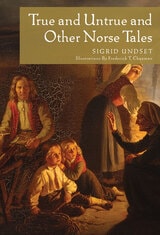
True and Untrue and Other Norse Tales
Sigrid Undset
University of Minnesota Press, 2013
A selection of Norwegian folktales chosen by Sigrid Undset, True and Untrue and Other Norse Tales is based on the classic folklore collected by Pieter Christian Asbjørnsen and Jørgen Moe. These wonderful stories tell of worlds similar to our own, worlds with love and hate, sorrow and joy, humor and pathos. Beginning with brothers named True and Untrue, the book takes readers through tales of princes and princesses, giants and trolls, husbands and wives, and a castle that is “East o’ the Sun and West o’ the Moon.” Strikingly illustrated by Frederick T. Chapman while under fire in Italy during the Second World War and with a remarkable foreword by Undset, True and Untrue and Other Norse Tales has a story for everyone.