Results by title
92 books match the query 'Notes' and 11 start with t
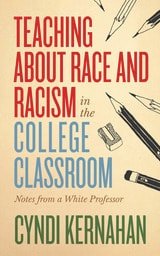
Teaching about Race and Racism in the College Classroom
Notes from a White ProfessorCyndi Kernahan
West Virginia University Press, 2019
Teaching about race and racism can be a difficult business. Students and instructors alike often struggle with strong emotions, and many people have robust preexisting beliefs about race. At the same time, this is a moment that demands a clear understanding of racism. It is important for students to learn how we got here and how racism is more than just individual acts of meanness. Students also need to understand that colorblindness is not an effective anti-racism strategy.
In this book, Cyndi Kernahan argues that you can be honest and unflinching in your teaching about racism while also providing a compassionate learning environment that allows for mistakes and avoids shaming students. She provides evidence for how learning works with respect to race and racism along with practical teaching strategies rooted in that evidence to help instructors feel more confident. She also differentiates between how white students and students of color are likely to experience the classroom, helping instructors provide a more effective learning experience for all students.
The Aesthetics of Equity
Notes on Race, Space, Architecture, and MusicCraig L. Wilkins
University of Minnesota Press, 2007
Architecture is often thought to be a diary of a society, filled with symbolic representations of specific cultural moments. However, as Craig L. Wilkins observes, that diary includes far too few narratives of the diverse cultures in U.S. society. Wilkins states that the discipline of architecture has a resistance to African Americans at every level, from the startlingly small number of architecture students to the paltry number of registered architects in the United States today.
Working to understand how ideologies are formed, transmitted, and embedded in the built environment, Wilkins deconstructs how the marginalization of African Americans is authorized within the field of architecture. He then outlines how activist forms of expression shape and sustain communities, fashioning an architectural theory around the site of environmental conflict constructed by hip-hop culture.
Wilkins places his concerns in a historical context, and also offers practical solutions to address them. In doing so, he reveals new possibilities for an architecture that acknowledges its current shortcomings and replies to the needs of multicultural constituencies.
Craig L. Wilkins, a registered architect, teaches architecture and urban planning at the University of Michigan.
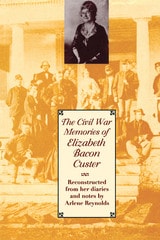
The Civil War Memories of Elizabeth Bacon Custer
Reconstructed From Her Diaries and NotesBy Elizabeth Bacon Custer
University of Texas Press, 1994
In her first year of marriage (1864-1865) to General George Armstrong Custer, Libbie Custer witnessed the Civil War firsthand. Her experiences of danger, hardship, and excitement made ideal material for a book, one that she worked on for years in later life but ultimately never published.
In this volume, Arlene Reynolds has produced a readable narrative of Libbie Custer's life during the war years by chronologically reconstructing Libbie's original, unpublished notes and diaries found in the archives of the Little Big Horn Battlefield National Monument. In these reminiscences, Libbie Custer adds striking, eloquent details to the Civil War story as she describes her life both in camp and in Washington. Her stories of incidents such as fording a swollen river sidesaddle on horseback, dancing at the Inaugural Ball near President Lincoln, and watching the massive review of the Army of the Potomac after the surrender have the engrossing quality of a well-written novel.
For general readers and students of women's history, this book tells a fascinating story of a sheltered girl's maturation into a courageous woman in the crucible of war. And for both devotees and detractors of her husband, it offers an intimate glimpse into his youth, West Point years, and early military service.
The Eloquent Shakespeare
A Pronouncing Dictionary for the Complete Dramatic Works with Notes to Untie the Modern TongueGary Logan
University of Chicago Press, 2008
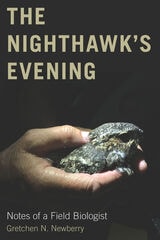
The Nighthawk's Evening
Notes of a Field BiologistGretchen N. Newberry
Oregon State University Press, 2021
This acrobatic, night-flying bird nests on rooftops and flocks in the thousands as it migrates from Alaska to Argentina and back every year. Nighthawks are strange animals, reptiles with feathers, sleepy during the day, but quick, agile, and especially adept at survival. They have the ability to withstand extreme temperatures and adapt to many habitats, but they are struggling for survival in the Anthropocene.
Newberry’s story focuses on the bird itself—its complex conservation status and cultural significance—and the larger, often hidden world of nocturnal animals. Along the way, she gives readers insight into the daily life of a scientist, especially one who works primarily at night. The Nighthawk’s Evening uses one scientist and one species to explore the challenges, disappointments, and successes of scientific research and conservation efforts. An accessible work of science, it will appeal to birders, students, wildlife managers, and anyone who is fascinated by urban wildlife.
The Old Regime and the Revolution, Volume II
Notes on the French Revolution and NapoleonAlexis de Tocqueville
University of Chicago Press, 2001
With his monumental work The Old Regime and the Revolution, Alexis de Tocqueville (1805–59)—best known for his classic Democracy in America—envisioned a multivolume philosophical study of the origins of modern France that would examine the implications of French history on the nature and development of democratic society. Volume I, which covered the eighteenth-century background to the Revolution, was published to great acclaim in 1856. On the continuation of this project, he wrote: "When this Revolution has finished its work, [this volume] will show what that work really was, and what the new society which has come from that violent labor is, what the Revolution has taken away and what it has preserved from that old regime against which it was directed."
The Weather for Poetry
Essays, Reviews, and Notes on Poetry, 1977-81Donald Hall
University of Michigan Press, 1982
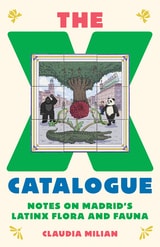
The X Catalogue
Notes on Madrid's LatinX Flora and FaunaClaudia Milian
University of Minnesota Press, 2026
A transatlantic, more-than-human exploration of LatinX presence, memory, and empire in the heart of Madrid
How does LatinXness begin in the Kingdom of Spain? In The X Catalogue, Claudia Milian offers a vade mecum of Madrid, exploring it as an ecological archive and former imperial metropolis. Approaching the “X” as metaphor, method, and philosophical practice, she extends inquiry beyond the human. Milian traces the “X” through transplanted life from the Americas: the roots of the ahuehuete tree (the Montezuma cypress), the engineering and renaming of the acocoxochitl (the dahlia), the “invasion” of the cotorras argentinas (Monk parakeets), and the exhibition of the caimán (the alligator) as a conquered object.
Critical theory and historical cultural studies meet to remap the Atlantic world through the “Xs” of arrival, circulation, and transformation. By examining how LatinXness inhabits the Spanish capital, Milian breaks open LatinX Spain and global LatinX studies. The X Catalogue resists containment, mirroring its objects of study and challenging categories such as native, foreign, or authentic. It advances a more-than-human, transatlantic understanding of LatinXness within empire studies, environmental humanities, and the critical study of tourism.
Retail e-book files for this title are screen-reader friendly with images accompanied by short alt text and/or extended descriptions.
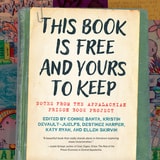
This Book is Free and Yours to Keep
Notes from the Appalachian Prison Book ProjectConnie Banta
West Virginia University Press, 2024
This Book Is Free and Yours to Keep presents a captivating collection of letters and artwork by people in prison that highlights the crucial work done by the Appalachian Prison Book Project (APBP), a nonprofit that provides books to incarcerated people in West Virginia, Virginia, Tennessee, Kentucky, Ohio, and Maryland. Through the words of people directly impacted by the criminal punishment system, the collection provides uncommon insight into reading practices and everyday life in prisons and jails while being an inspiration for prison book projects, prison reform, and abolition.
Simultaneously communicating the vital importance of access to books and education, and conveying the power of community, the letters sent to APBP by incarcerated people spark conversations about race, poverty, and incarceration and shed light on the movement for accountability for state violence. This Book Is Free and Yours to Keep elucidates the violence and neglect perpetuated by carceral systems and offers a way forward based on solidarity and collaboration.
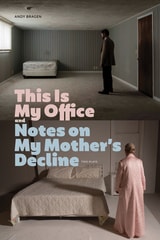
This Is My Office and Notes on My Mother’s Decline
Two PlaysAndy Bragen; foreword by Sarah Ruhl
Northwestern University Press, 2022
These plays by Andy Bragen examine the intimacies and shadows that exist between parents and children. In This Is My Office, a guided tour through an empty office becomes the unexpected portal to a forgotten New York and a father’s legacy. This play brings you face-to-face with a narrator who finds his way through doubt, soul-sickness, and doughnut cravings by telling you a story. Not the one he meant to tell, but a richer one about family, redemption, and love.
The autobiographical Notes on My Mother’s Decline evokes the final days of a woman’s life. Late at night, while his baby daughter sleeps, a son takes notes on his mother’s daily life and scenes from their complicated relationship. He is shaping a play, as well as a perspective. Two blocks away, his mother naps, smokes, reads, and drinks coffee. She is shaping her existence within encroaching confines. Bragen plumbs silences and one-sided conversations to ask how we come to know one another as parents and as children. How do we care for those we love, and what does it take to live with—and without—them?
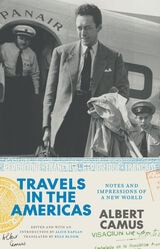
Travels in the Americas
Notes and Impressions of a New WorldAlbert Camus
University of Chicago Press, 2023
In March 1946, the young Albert Camus crossed from Le Havre to New York. Though he was virtually unknown to American audiences at the time, all that was about to change—The Stranger, his first book translated into English, would soon make him a literary star. By 1949, when he set out on a tour of South America, Camus was an international celebrity. Camus’s journals offer an intimate glimpse into his daily life during these eventful years and showcase his thinking at its most personal—a form of observational writing that the French call choses vues (things seen).
Camus’s journals from these travels record his impressions, frustrations, joys, and longings. Here are his unguarded first impressions of his surroundings and his encounters with publishers, critics, and members of the New York intelligentsia. Long unavailable in English, the journals have now been expertly retranslated by Ryan Bloom, with a new introduction by Alice Kaplan. Bloom’s translation captures the informal, sketch-like quality of Camus’s observations—by turns ironic, bitter, cutting, and melancholy—and the quick notes he must have taken after exhausting days of travel and lecturing. Bloom and Kaplan’s notes and annotations allow readers to walk beside the existentialist thinker as he experiences changes in his own life and the world around him, all in his inimitable style.