Results by title
208 books match the query 'Ohio' and 44 start with t
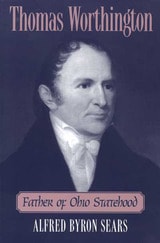
THOMAS WORTHINGTON
FATHER OF OHIO STATEHOODAlfred Byron Sears
The Ohio State University Press, 1998
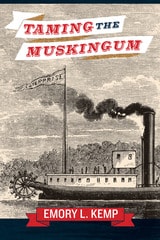
Taming the Muskingum
EMORY L. KEMP
West Virginia University Press, 2014
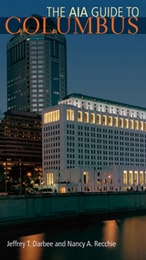
The AIA Guide to Columbus
Jeffrey T. Darbee
Ohio University Press, 2008
Columbus, the largest city in Ohio, has, since its founding in 1812, been home to many impressive architectural landmarks. The AIA Guide to Columbus, produced by the Columbus Architecture Foundation, highlights the significant buildings and neighborhoods in the Columbus metropolitan area. Skillfully blending architectural interest with historic significance, The AIA Guide to Columbus documents approximately 160 buildings and building groups and is organized geographically. Each chapter provides an opportunity to explore a special area of Columbus' built environment.
The Columbus Architecture Foundation has been affiliated with the American Institute of Architects (AIA), Columbus Chapter, for more than thirty years. Its first book project was Architecture Columbus, published in 1976. This new companion volume updates coverage of the buildings and provides a portable, accessible guide to the city's architectural history.
The AIA Guide to Columbus identifies buildings designated as historic and those that have won awards, and includes information on architectural styles, excellent photographs, maps, a glossary, and an index. The focus is on easy touring, whether the reader is walking or driving. Students, visitors, and residents with a penchant for knowing more about their city will enjoy discovering the rich heritage of Columbus' downtown, special districts, and neighborhoods.
The Bellwether
Why Ohio Picks the PresidentKyle Kondik
Ohio University Press, 2016
Since 1896, Ohio voters have failed to favor the next president only twice (in 1944 and 1960). Time after time, Ohio has found itself in the thick of the presidential race, and 2016 is shaping up to be no different. What about the Buckeye State makes it so special? In The Bellwether, Kyle Kondik, managing editor for the nonpartisan political forecasting newsletter Sabato’s Crystal Ball, blends data-driven research and historical documentation to explain Ohio’s remarkable record as a predictor of presidential results and why the state is essential to the 2016 election and beyond.
Part history, part journalism, this entertaining and astute guide proposes that Ohio has been the key state in the Electoral College for more than a century and examines what the idea of the swing state has come to mean. In discussing the evidence, Kondik uses the state’s oft-mentioned status as a microcosm of the nation as a case study to trace the evolution of the American electorate, and identifies which places in Ohio have the most influence on the statewide result. Finally, he delves into the answer to the question voting Ohioans consider every four years: Will their state remain a bellwether, or is their ability to pick the president on its way out?
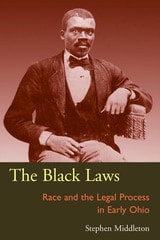
The Black Laws
Race and the Legal Process in Early OhioStephen Middleton
Ohio University Press, 2005
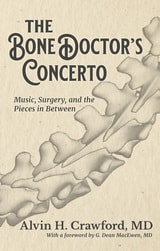
The Bone Doctor's Concerto
Music, Surgery, and the Pieces in BetweenAlvin H. Crawford, MD
Ohio University Press, 2023
Published by the University of Cincinnati Press
Born in Memphis, Tennessee in 1939, Dr. Alvin Crawford grew up and attended medical school in a segregated world. Beginning with his early life in Orange Mound—a self-contained community for freed slaves established in the 1890s—Crawford’s autobiography describes his flirtation with a music degree and time spent playing in jazz bands through the segregated South. In 1960, Crawford began his ground-breaking medical career with his entrance into the University of Tennessee College of Medicine, becoming the school’s first African American student. After completing his medical training and traveling the world as a surgeon for the Navy, Crawford found himself in Cincinnati, where he established the Comprehensive Pediatric Orthopedic Clinic at Cincinnati Children’s Hospital, the first in the region.
Underlying this story are the systemic and very personal incidents of racism Crawford experienced throughout his career. His autobiography is a personal account of segregation, integration, ambition, hard work, and taking risks.

The Born in the Spring
A Collection of Spring WildflowersJune Carver Roberts
Ohio University Press, 2024
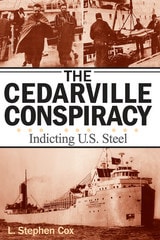
The Cedarville Conspiracy
Indicting U.S. SteelL. Stephen Cox
University of Michigan Press, 2005
The Cedarville Conspiracy is the story of that doomed ship and its crew. It is also the first Great Lakes history to expose the heroism, villainy, courage, and confusion surrounding the Cedarville disaster.
In atmospheric, cinematic style, L. Stephen Cox's gripping page-turner dramatizes the events surrounding the collision between the Norwegian and American freighters. As the mortally wounded Cedarville began to list and sink, U.S. Steel refused to allow the crew to escape to safety, while the captain secretly donned his life jacket and abandoned the sinking ship. Ten seamen died in the frigid waters that morning as the captain and survivors swam to safety.
Researching the story, author L. Stephen Cox interviewed the surviving crew and their rescuers and attorneys, examined more than 20,000 pages of Coast Guard reports, and discovered deposition transcripts and other documentary evidence that detailed the deterioration of the ship, the captain's disregard of Great Lakes navigational rules, the company's participation in the decision to confine the men aboard the sinking vessel, and the subsequent efforts by U.S. Steel to manipulate the evidence.
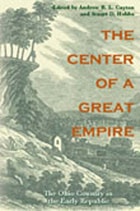
The Center of a Great Empire
The Ohio Country in the Early RepublicAndrew R. L. Cayton
Ohio University Press, 2005
“The people who lived in what became the seventeenth state in the American Union in 1803 were not only at the center of a great empire, they were at the center of the most important historical developments in the revolutionary Atlantic World.”
—From the introduction
Nowhere did the revolutions in politics, commerce, and society in the late eighteenth and early nineteenth centuries occur more quickly or more thoroughly than in the Ohio country. A forested borderland dominated by American Indians in 1780, Ohio was a landscape of farms and towns inhabited by people from all over the world by 1830. The Center of a Great Empire: The Ohio Country in the Early Republic chronicles this dramatic and all-encompassing change.
Andrew R. L. Cayton and Stuart D. Hobbs have assembled an impressive collection of articles by established and rising scholars. They address the conquest of Native Americans, the emergence of a democratic political culture, the origins of capitalism, the formation of public culture, the growth of evangelical Protestantism, the ambiguous status of African Americans, and social life in a place that most regarded as the cutting edge of human history.
For The Center of a Great Empire, distinguished historians of the American nation in its first decades question conventional wisdom. They emphasize contingency rather than inevitability and contention rather than progress. Downplaying the frontier character of Ohio, they offer new interpretations and open new paths of inquiry through investigations of race, education, politics, religion, family, commerce, colonialism, and conquest. As it underscores key themes in the history of the United States, The Center of a Great Empire pursues issues that have fascinated people for two centuries.

The Ceramic Career of M. Louise McLaughlin
Anita J. Ellis
Ohio University Press, 2003
In 1877 the thirty-year-old artist Mary Louise McLaughlin wrote China Painting, the first manual on the subject in the United States written by a woman for women. Extremely successful, it is now accepted as the book that launched the china painting movement in America.
When in 1898 McLaughlin decided to produce porcelain, the most difficult of ceramics, she showed the determination and exactitude that were her trademarks. Already renowned as a ceramicist, she became the first to produce studio porcelain in America and the first to discover the technique for decorating under the glaze. Her work was welcomed with enthusiasm in New York and Paris.
Despite the enormous influence of Mary Louise McLaughlin on the history of American ceramics, Anita Ellis’s The Ceramic Career of M. Louise McLaughlin is the first definitive study dedicated to her accomplishments.
Anita Ellis depicts the many challenges McLaughlin encountered in pursuit of her ultimately successful career. Not the least of these was her rivalry with the formidable Maria Longworth Nichols, fellow Cincinnatian and founder of the Rookwood Pottery Company. Another was that of being a woman in the arts: her primary goal had been to paint portraits on canvas, but Victorian society did not afford opportunities in what was considered a male sphere.
Replete with historic photos and color illustrations of many of McLaughlin’s works, The Ceramic Career of M. Louise McLaughlin is a tribute to a woman artist who rose to one of the most esteemed positions in her field.
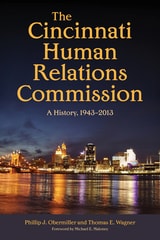
The Cincinnati Human Relations Commission
A History, 1943–2013Phillip J. Obermiller
Ohio University Press, 2018
In the summer of 1943, as World War II raged overseas, the United States also faced internal strife. Earlier that year, Detroit had erupted in a series of race riots that killed dozens and destroyed entire neighborhoods. Across the country, mayors and city councils sought to defuse racial tensions and promote nonviolent solutions to social and economic injustices. In Cincinnati, the result of those efforts was the Mayor’s Friendly Relations Committee, later renamed the Cincinnati Human Relations Commission (CHRC).
The Cincinnati Human Relations Commission: A History, 1943–2013, is a decade-by-decade chronicle of the agency: its accomplishments, challenges, and failures. The purpose of municipal human relations agencies like the CHRC was to give minority groups access to local government through internal advocacy, education, mediation, and persuasion—in clear contrast to the tactics of lawsuits, sit-ins, boycotts, and marches adopted by many external, nongovernmental organizations.
In compiling this history, Phillip J. Obermiller and Thomas E. Wagner have drawn on an extensive base of archival records, reports, speeches, and media sources. In addition, archival and contemporary interviews provide first-person insight into the events and personalities that shaped the agency and the history of civil rights in this midwestern city.
The Collected Short Stories of Harriette Simpson Arnow
Harriette Simpson Arnow
Michigan State University Press, 2005
Harriette Simpson Arnow is an American treasure. Of the twenty-five stories in this collection, fifteen were previously unpublished. Until now, the short fiction of Arnow has remained relatively obscure despite the literary acclaim given to her novels The Dollmaker and Hunter’s Horn. These stories, written early in her career for the most part, reveal an artistic vision and narrative skill and serve as harbingers for her later work. They echo her interest in both agrarian and urban communities, the sharpening of her social conscience, and her commitment to creating credible and complex characters. This collection is organized against the backdrop of her life, from Kentucky in the 1920s to Ohio and Kentucky in the 1930s and to Michigan in the 1940s. As Arnow fans read these early gems, they will be led from gravel roads to city pavement and open layers of Arnow’s development as a novelist to expose the full range of her contributions to American literature.
In 1938, Esquire purchased "The Hunters," which was eventually published as "The Two Hunters," a chilling story of a seventeen-year- old boy’s confrontation with a deputy sheriff. At the time, Esquire did not accept submissions from women, and its editors had no idea that writer H. L. Simpson was not a man. Years later, she admitted in an interview, "it worried me a little, that big lie, but I thought if they wanted a story, let them have it." Esquire paid her $125 for this story. The contributor’s notes at the back of the magazine include a photo of "H.L.Simpson," actually a photo of one of her brothers-in-law. It was her little joke on a publisher that discriminated against women....
—from the Introduction
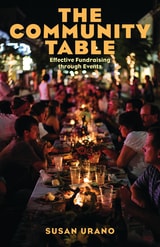
The Community Table
Effective Fundraising through EventsSusan Cole Urano
Ohio University Press, 2016
In resource-challenged Athens County, Ohio, staff and volunteers at the nonprofit Athens County Foundation came up with a daring idea: to host a locally sourced, gourmet dinner for four hundred people. The meal would be held on the brick-paved main street of the city of Athens, to raise funds for the food bank, and increase awareness of the persistent local struggle with food insecurity, as well as raise the visibility of the foundation. The logistical challenges were daunting, but the plan would unite the community around the common theme of providing for its own.
Since then, Bounty on the Bricks has become a touchstone event that raises close to one hundred thousand dollars for the food bank. In The Community Table, Athens County Foundation executive director Susan Urano translates her years of nonprofit experience with large-scale annual fundraisers into a step-by-step guide for development professionals, community leaders, and volunteers.
Urano guides readers to consider when to mount a fundraiser, who the stakeholders are, what social and financial value the event will bring to the community, and how partnerships might augment the payoff. Using real-life examples, she explains how organizers can learn from mistakes and illustrates methods of team building, conflict resolution, and problem solving. Sample ideas, timelines, budgets, publicity plans, and committee structures round out The Community Table.
The Documentary Heritage Of Ohio
Phillip R. Shriver
Ohio University Press, 2010
Key to the successful teaching and learning of history is its personalization. In presenting documents that help Ohio’s rich history come alive in the minds of its readers, this book has purposely sought to provide eyewitness, first-person narratives that will make the reader want to turn the page and keep on reading. At the same time, mindful of the significance of guideposts basic to our understanding of the development of the state, care has been taken to include those documents such as constitutions, laws, and ordinances that have truly made a difference in the shaping of our institutions and the lives of our people.
With informative and accessible introductions to each document, editors Shriver and Wunderlin have produced a book of record that reveals the sources of Ohio’s heritage. The Documentary Heritage of Ohio is the second volume in the Ohio Bicentennial Series and a must for all libraries, schools, and the bookshelves of any who wish to appreciate the state’s historic accomplishments and rich heritage not only for the bicentennial of statehood in 2003 but for many years to come.
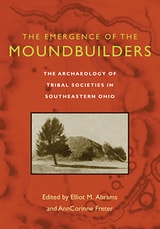
The Emergence of the Moundbuilders
The Archaeology of Tribal Societies in Southeastern OhioElliot M. Abrams
Ohio University Press, 2004
Native American societies, often viewed as unchanging, in fact experienced a rich process of cultural innovation in the millennia prior to recorded history. Societies of the Hocking River Valley in southeastern Ohio, part of the Ohio River Valley, created a tribal organization beginning about 2000 bc.
Edited by Elliot M. Abrams and AnnCorinne Freter, The Emergence of the Moundbuilders: The Archaeology of Tribal Societies in Southeastern Ohio presents the process of tribal formation and change in the region based on analyses of all available archaeological data from the Hocking River Valley. Drawing on the work of scholars in archaeology, anthropology, geography, geology, and botany, the collection addresses tribal society formation through such topics as the first pottery made in the valley, aggregate feasting by nomadic groups, the social context for burying their dead in earthen mounds, the formation of religious ceremonial centers, and the earliest adoption of corn.
Providing the most current research on indigenous societies in the Hocking Valley, The Emergence of the Moundbuilders is distinguished by its broad, comparative overview of tribal life.
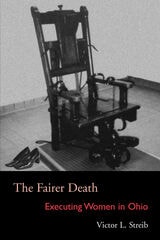
The Fairer Death
Executing Women in OhioVictor L. Streib
Ohio University Press, 2006
Women on death row are such a rarity that, once condemned, they may be ignored and forgotten. Ohio, a typical, middle-of-the-road death penalty state, provides a telling example of this phenomenon. The Fairer Death: Executing Women in Ohio explores Ohio’s experience with the death penalty for women and reflects on what this experience reveals about the death penalty for women throughout the nation.
Victor Streib’s analysis of two centuries of Ohio death penalty legislation and adjudication reveals no obvious exclusion of women or even any recognition of an issue of sex bias. In this respect, Ohio’s justice system exemplifies the subtle and insidious nature of this cultural disparity.
Professor Streib provides detailed descriptions of the cases of the four women actually executed by Ohio since its founding and of the cases of the eleven women sentenced to death in Ohio in the current death penalty era (1973–2005). Some of these cases had a profound impact on death penalty law, but most were routine and drew little attention. A generation later, reversals and commutations have left only one woman on Ohio’s death row.
Although Streib focuses specifically on Ohio, the underlying premise is that Ohio is, in many ways, a typical death penalty state. The Fairer Death provides insight into our national experience, provoking questions about the rationale for the death penalty and the many disparities in its administration.
The Family and Inheritance
Marvin Sussman
Russell Sage Foundation, 1970
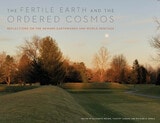
The Fertile Earth and the Ordered Cosmos
Reflections on the Newark Earthworks and World HeritageEdited by M. Elizabeth Weiser, Timothy R. W. Jordan, and Richard D. Shiels
The Ohio State University Press, 2023
The lush photos and wide-ranging essays of The Fertile Earth and the Ordered Cosmos honor this significance, not only to the global community but to local individuals and scholars who have developed intimate connections to the Earthworks. In sharing their experiences with this ancient site, public historians, archaeologists, physicists, architects, and others—including local and Indigenous voices—continue the work of nearly two hundred years of citizen efforts to protect and make accessible the Newark Earthworks after centuries of stewardship by Indigenous people. The resulting volume serves as a rich primer on the site for those unfamiliar with its history and a beautifully produced tribute for those who are already acquainted with its wonders.
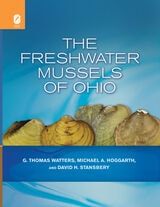
The Freshwater Mussels of Ohio
G. Thomas Watters, Michael A. Hoggarth, and David H. Stansbery
The Ohio State University Press, 2009
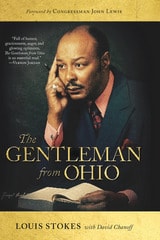
The Gentleman from Ohio
Louis Stokes with David Chanoff with a foreword by Congressman John Lewis
The Ohio State University Press, 2016
Prior to Louis Stokes’s tenure in Congress he served for many years as a criminal defense lawyer and chairman of the Cleveland NAACP Legal Redress Committee. Among the Supreme Court Cases he argued, the Terry “Stop and Frisk” case is regarded as one of the twenty-five most significant cases in the court’s history. The Gentleman from Ohio chronicles this and other momentous events in the life and legacy of Ohio’s first black representative—a man who, whether in law or politics, continually fought for the principles he believed in and helped lead the way for African Americans in the world of mainstream American politics.
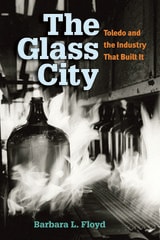
The Glass City
Toledo and The Industry That Built ItBarbara L. Floyd
University of Michigan Press, 2014
The Heritage
A Daughter's Memoir Of Louis BromfieldEllen Bromfield Geld
Ohio University Press, 1999
This lively, outspoken, and affectionate memoir preserves all things Louis Bromfield fought for or against in a life marked by surging vitality and gusto. He came from an Ohio family whose roots were in the land before the land was lost. He had his father's love of the land, and from his willful mother a hunger to know the world. From the New York City of theaters, concerts, parties, and novels, and a life in France that his success allowed, he finally returned to Ohio and established a new order for his family and friends, and for his followers, a new orbit into which they were drawn.
Ellen Bromfield Geld wrote a memoir of the man who was Louis Bromfield, father and friend, tyrant and “Boss,” alive always to whatever was worth responding to in people and in places, yet complex and lonely as a writer must essentially be to work at his craft. Now revived in paperback thirty-five years after its first publication, The Heritage remains a moving tribute and the recreation of a remarkable human being.
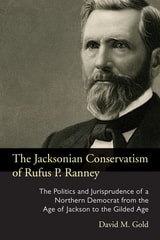
The Jacksonian Conservatism of Rufus P. Ranney
The Politics and Jurisprudence of a Northern Democrat from the Age of Jackson to the Gilded AgeDavid M. Gold
Ohio University Press, 2016
Ohio’s Rufus P. Ranney embodied many of the most intriguing social and political tensions of his time. He was an anticorporate campaigner who became John D. Rockefeller’s favorite lawyer. A student and law partner of abolitionist Benjamin F. Wade, Ranney acquired an antislavery reputation and recruited troops for the Union army; but as a Democratic candidate for governor he denied the power of Congress to restrict slavery in the territories, and during the Civil War and Reconstruction he condemned Republican policies.
Ranney was a key delegate at Ohio’s second constitutional convention and a two-time justice of the Ohio Supreme Court. He advocated equality and limited government as understood by radical Jacksonian Democrats. Scholarly discussions of Jacksonian jurisprudence have primarily focused on a handful of United States Supreme Court cases, but Ranney’s opinions, taken as a whole, outline a broader approach to judicial decision making.
A founder of the Ohio State Bar Association, Ranney was immensely influential but has been understudied until now. He left no private papers, even destroying his own correspondence. In The Jacksonian Conservatism of Rufus P. Ranney, David M. Gold works with the public record to reveal the contours of Ranney’s life and work. The result is a new look at how Jacksonian principles crossed the divide of the Civil War and became part of the fabric of American law and at how radical antebellum Democrats transformed themselves into Gilded Age conservatives.
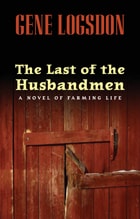
The Last of the Husbandmen
A Novel of Farming LifeGene Logsdon
Ohio University Press, 2008
“Nan turned to see Ben’s face turn as hard and white as a sauerkraut crock. When he did not respond, Nan figured that he was just going to back off as he usually did, the shy and retiring husbandman. She did not know her history. She did not know that shy and retiring husbandmen have been known to revolt against oppression with pitchforks drawn.”
—The Last of the Husbandmen
In The Last of the Husbandmen, Gene Logsdon looks to his own roots in Ohio farming life to depict the personal triumphs and tragedies, clashes and compromises, and abiding human character of American farming families and communities. From the Great Depression, when farmers tilled the fields with plow horses, to the corporate farms and government subsidy programs of the present, this novel presents the complex transformation of a livelihood and of a way of life.
Two friends, one rich by local standards, and the other of more modest means, grow to manhood in a lifelong contest of will and character. In response to many of the same circumstances—war, love, moonshining, the Klan, weather, the economy—their different approaches and solutions to dealing with their situations put them at odds with each other, but we are left with a deeper understanding of the world that they have inherited and have chosen.
Part morality play and part personal recollection, The Last of the Husbandmen is both a lighthearted look at the past and a profound statement about the present state of farming life. It is also a novel that captures the spirit of those who have chosen to work the land they love.

The Love Surgeon
A Story of Trust, Harm, and the Limits of Medical RegulationSarah B. Rodriguez
Rutgers University Press, 2020
It would be easy to dismiss Dr. Burt as a monstrous aberration, a modern-day Dr. Frankenstein. Yet as medical historian Sarah Rodriguez reveals, that’s not the whole story. The Love Surgeon asks tough questions about Burt’s heinous acts and what they reveal about the failures of the medical establishment: How was he able to perform an untested surgical procedure? Why wasn’t he obliged to get informed consent from his patients? And why did it take his peers so long to take action?
The Love Surgeon is both a medical horror story and a cautionary tale about the limits of professional self-regulation.
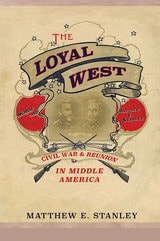
The Loyal West
Civil War and Reunion in Middle AmericaMatthew E. Stanley
University of Illinois Press, 2017
Matthew E. Stanley's intimate study explores the Civil War, Reconstruction, and sectional reunion in this bellwether region. Using the lives of area soldiers and officers as a lens, Stanley reveals a place and a strain of collective memory that was anti-rebel, anti-eastern, and anti-black in its attitudes--one that came to be at the forefront of the northern retreat from Reconstruction and toward white reunion. The Lower Middle West's embrace of black exclusion laws, origination of the Copperhead movement, backlash against liberalizing war measures, and rejection of Reconstruction were all pivotal to broader American politics. And the region's legacies of white supremacy--from racialized labor violence to sundown towns to lynching--found malignant expression nationwide, intersecting with how Loyal Westerners remembered the war.
A daring challenge to traditional narratives of section and commemoration, The Loyal West taps into a powerful and fascinating wellspring of Civil War identity and memory.
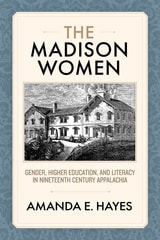
The Madison Women
Gender, Higher Education, and Literacy in Nineteenth-Century AppalachiaAmanda E Hayes
West Virginia University Press, 2024
Incorporating captivating mini-biographies of women who attended Madison College and who went on to change their communities in ways large and small, this book reveals how the lives of its students impart lessons about history, regional culture, and how we can shape the Appalachia's future.
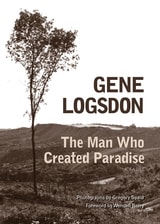
The Man Who Created Paradise
A FableGene Logsdon
Ohio University Press, 2001
Gene Logsdon’s The Man Who Created Paradise is a message of hope at a time when the very concept of earth stewardship is under attack. The fable, inspired by a true story, tells how Wally Spero looked at one of the bleakest places in America—a raw and barren strip-mined landscape—and saw in it his escape from the drudgery of his factory job. He bought an old bulldozer and used the machine to carve patiently, acre by acre, a beautiful little farm out of a seemingly worthless wasteland.
Wally’s story is a charming distillation of the themes that the late, beloved Gene Logsdon returned to again and again in his many books and hundreds of articles. Environmental restoration is the task of our time. The work of healing our land begins in our own backyards and farms, in our neighborhoods and our regions. Humans can turn the earth into a veritable paradise—if they really want to.
Noted photographer Gregory Spaid retraced the trail that Logsdon traveled when he was inspired to write The Man Who Created Paradise. His photographs evoke the same yearning for wholeness, for ties to land and community, that infuses the fable’s poetic prose.
The New American City Faces its Regional Future
A Cleveland PerspectiveDavid C. Sweet
Ohio University Press, 1999
The fate of Cleveland, Ohio, rides on a web of interdependencies on a regional scale. People and communities throughout that area of Ohio are being forced to adjust to new civic roles. The city of Cleveland must understand how it fits into Greater Cleveland. And suburbs must understand their dependence on the historic central city and be drawn into the Cleveland community.
In this sweeping study by local and national experts, these and more specific issues are raised and examined in depth. The New American City Faces Its Regional Future captures the dynamic thinking concerned with Cleveland and its surrounding region. The authors address questions of importance not only to Cleveland and its region but also to communities across the country that are facing similar issues. How does the city want to grow in the future? How can it become a more livable community? As the population of the region moves farther and farther out from the established urban areas, consuming more and more land, and as it enters its third century, these questions will need to be addressed. This book takes some first, important steps toward providing the answers.
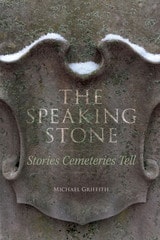
The Speaking Stone
Stories Cemeteries TellMichael Griffith
Ohio University Press, 2021
Published by the University of Cincinnati Press
The Speaking Stone: Stories Cemeteries Tell is a literary love letter to the joys of wandering graveyards. While working on a novel, author and longtime Cincinnati resident Michael Griffith starts visiting Spring Grove Cemetery and Arboretum, the nation’s third-largest cemetery. Soon he’s taking almost daily jaunts, following curiosity and accident wherever they lead. The result is this fascinating collection of essays that emerge from chance encounters with an interesting headstone, odd epitaph, unusual name, or quirk of memory. Researching obituaries, newspaper clippings, and family legacies, Griffith uncovers stories of race, feminism, art, and death.
Rather than sticking to the cemetery’s most famous, or infamous, graves, Griffith stays true to the principle of ramble and incidental discovery. The result is an eclectic group of subjects, ranging from well-known figures like the feminist icon and freethinker Fanny Wright to those much less celebrated— a spiritual medium, a temperance advocate, a young heiress who died under mysterious circumstances. Nearly ninety photos add dimension and often an element of playfulness.
The Speaking Stone examines what endures and what does not, reflecting on the vanity and poignancy of our attempt to leave monuments that last. In doing so, it beautifully weaves connections born out of the storyteller’s inquisitive mind.
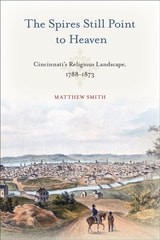
The Spires Still Point to Heaven
Cincinnati's Religious Landscape, 1788–1873Matthew Smith
Temple University Press, 2023
A case study about the formation of American pluralism and religious liberty, The Spires Still Point to Heaven explores why—and more importantly how—the early growth of Cincinnati influenced the changing face of the United States. Matthew Smith deftly chronicles the urban history of this thriving metropolis in the mid-nineteenth century. As Protestants and Catholics competed, building rival domestic missionary enterprises, increased religious reform and expression shaped the city. In addition, the different ethnic and religious beliefs informed debates on race, slavery, and immigration, as well as disease, temperance reform, and education.
Specifically, Smith explores the Ohio Valley’s religious landscape from 1788 through the nineteenth century, examining its appeal to evangelical preachers, abolitionists, social critics, and rabbis. He traces how Cincinnati became a battleground for newly energized social reforms following a cholera epidemic, and how grassroots political organizing was often tied to religious issues. He also illustrates the anti-immigrant sentiments and anti-Catholic nativism pervasive in this era.
The first monograph on Cincinnati’s religious landscape before the Civil War, The Spires Still Point to Heaven highlights Cincinnati’s unique circumstances and how they are key to understanding the cultural and religious development of the nation.

The Suburban Racial Dilemma
Housing and NeighborhoodsW. Dennis Keating
Temple University Press, 1994
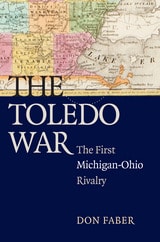
The Toledo War
The First Michigan-Ohio RivalryDon Faber
University of Michigan Press, 2008
Most are familiar with the Michigan-Ohio football rivalry, an intense but usually good-natured contest that stretches back over one hundred years. Yet far fewer may know that in the early nineteenth century Michigan and Ohio were locked in a different kind of battle---one that began before Michigan became a state.
The conflict started with a long-simmering dispute over a narrow wedge of land called the Toledo Strip. Early maps were famously imprecise, adding to the uncertainty of the true boundary between the states. When Ohio claimed to the mouth of the Maumee River, land that according to the Northwest Ordinance of 1787 fell in the territory of Michigan, the "Toledo War" began.
Today the fight may bring a smile to Michiganians and Ohioans because both states benefited: Ohioans won the war and Michigan got the Upper Peninsula. But back then passions about rightful ownership ran high, and it would take many years---and colorful personalities all the way up to presidents---to settle the dispute. The Toledo War: The First Michigan-Ohio Rivalry gives a well-researched and fascinating account of the famous war.
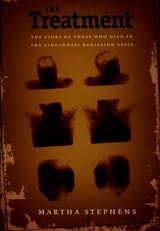
The Treatment
The Story of Those Who Died in the Cincinnati Radiation TestsMartha Stephens
Duke University Press, 2002
Martha Stephens’s report on these deaths led to the halting of the tests, but local papers did not print her charges, and for many years people in Cincinnati had no way of knowing that lethal experiments had taken place there. In 1994 other military tests were brought to light, and a yellowed copy of Stephens’s original report was delivered to a television newsroom. In Ohio, major publicity ensued—at long last—and reached around the world. Stephens uncovered the names of the victims, and a legal action was filed against thirteen researchers and their institutions. A federal judge compared the deeds of the doctors to the medical crimes of the Nazis during World War II and refused to dismiss the researchers from the suit. After many bitter disputes in court, they agreed to settle the case with the families of those they had afflicted. In 1999 a memorial plaque was raised in a yard of the hospital.
Who were these doctors and why had they done as they did? Who were the people whose lives they took? Who was the reporter who could not forget the story, the young attorney who first developed the case, the judge who issued the historic ruling against the doctors? This is Stephens’s moving account of all that transpired in these lives and her own during this epic battle between medicine and human rights.
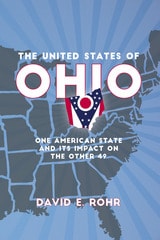
The United States of Ohio
One American State and Its Impact on the Other Forty-NineDavid E. Rohr
The Ohio State University Press, 2019
The United States of Ohio covers little-known facts about Ohio, such as how the state was the birthplace of both the National Football League and Major League Baseball and how it was Ohioans who led efforts toward racial integration in both sports. Readers will learn what makes the state a manufacturing and agricultural powerhouse—with both the largest tire company, Akron’s Goodyear, and the largest consumer products company, Cincinnati’s Proctor & Gamble, based there. The state grows, processes, and builds on a level that far outpaces the size of its population or expanse of its borders. And it is the birthplace of many prominent US figures—from Thomas Edison to John Glenn to Neil Armstrong. From sports to a century’s worth of entertainment superstars to aviation and space exploration, Ohio’s best have made for America’s greatest stories—all captured here in a look at the Buckeye State and its impact on the other forty-nine.
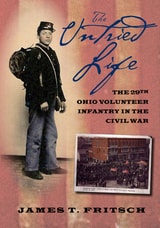
The Untried Life
The Twenty-Ninth Ohio Volunteer Infantry in the Civil WarJames T. Fritsch
Ohio University Press, 2012
Told in unflinching detail, this is the story of the Twenty-Ninth Ohio Volunteer Infantry, also known as the Giddings Regiment or the Abolition Regiment, after its founder, radical abolitionist Congressman J. R. Giddings. The men who enlisted in the Twenty-Ninth OVI were, according to its lore, handpicked to ensure each was as pure in his antislavery beliefs as its founder. Whether these soldiers would fight harder than other soldiers, and whether the people of their hometowns would remain devoted to the ideals of the regiment, were questions that could only be tested by the experiment of war.
The Untried Life is the story of these men from their very first regimental formation in a county fairground to the devastation of Gettysburg and the march to Atlanta and back again, enduring disease and Confederate prisons. It brings to vivid life the comradeship and loneliness that pervaded their days on the march. Dozens of unforgettable characters emerge, animated by their own letters and diaries: Corporal Nathan Parmenter, whose modest upbringing belies the eloquence of his writings; Colonel Lewis Buckley, one of the Twenty-Ninth’s most charismatic officers; and Chaplain Lyman Ames, whose care of the sick and wounded challenged his spiritual beliefs.
The Untried Life shows how the common soldier lived—his entertainments, methods of cooking, medical treatment, and struggle to maintain family connections—and separates the facts from the mythology created in the decades after the war.
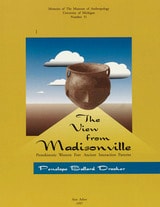
The View from Madisonville
Protohistoric Western Fort Ancient Interaction PatternsPenelope Ballard Drooker
University of Michigan Press, 1997
Madisonville was one of the key settlements of the Ohio Valley Fort Ancient people and was the subject of James Griffin’s 1943 classic, The Fort Ancient Aspect. It is a site rich in burials and artifacts documenting the earliest European influences. Drooker re-explores a century of excavation to explain how Contact Period events affected Madisonville inhabitants and their links to eastern Fort Ancient, northern Ohio, Iroquoian, Oneota, and Mississipian groups.
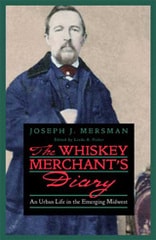
The Whiskey Merchant’s Diary
An Urban Life in the Emerging MidwestJoseph J. Mersman
Ohio University Press, 2007
Joseph J. Mersman was a liquor merchant, a German American immigrant who aspired—successfully—to become a self-made man. Hundreds of the residents of Mersman’s hometown in Germany immigrated to Cincinnati in the 1830s, joining many thousands of other German immigrants. In 1847, at the age of twenty-three, Mersman began recording his activities in a bound volume, small enough to fit into his coat pocket. His diary, filled with work and play, eating and drinking, flirting and dancing, provides a unique picture of everyday life, first in Cincinnati and then in St. Louis, the new urban centers of the emerging Midwest.
Outside of Gold Rush diaries and emigration journals, few narrative records of the antebellum period have been published. Illustrated with photographs, maps, and period advertisements, the diary reveals how a young man worked to establish himself during an era that was rich in opportunity.
As a whiskey rectifier, Mersman bought distilled spirits, redistilled or reprocessed them to remove contaminants or increase the alcohol content, and added various flavorings before selling his product to liquor retailers. In his diary, he describes scrambling for capital, marketing his wares, and arranging transportation by steamboat, omnibus, and train. Although the business that he sought to master was eliminated by the passage of the Pure Food Law of 1906, Mersman, like most rectifiers, was a reputable wholesaler. Merchants like him played an important role in distributing liquor in nineteenth-century America.
Mersman confronted serious disease, both as a sufferer from syphilis and as a witness to two devastating cholera epidemics. Unlike other residents of St. Louis, who fled the relative safety of the countryside, he remained in the city and saw the impact of the epidemics on the community.
Linda A. Fisher’s extensive, insightful, and highly readable annotations add a wealth of background information to Mersman’s story. Her professional training and career as a physician give her a particularly valuable perspective on the public health aspects of Mersman’s life and times.
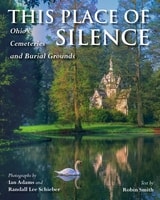
This Place of Silence
Ohio's Cemeteries and Burial GroundsIan Adams; Randall Lee Schieber; Robin L. Smith
Ohio University Press, 2024
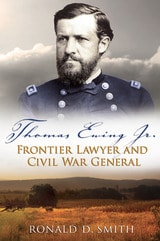
Thomas Ewing Jr.
Frontier Lawyer and Civil War GeneralRonald D. Smith
University of Missouri Press, 2008
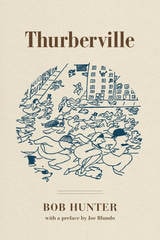
Thurberville
Bob Hunter
The Ohio State University Press, 2017
Thurber’s Columbus was a wild and crazy place, a city full of fascinating and sometimes peculiar characters, many in his own family. Because of the widespread popularity of his stories, that was also the Columbus that many of his readers around the world came to know.
Thurberville chronicles those characters and explores that world. But it also examines the real city where Thurber struggled and then blossomed as a college student, worked as a newspaper reporter and a press agent, and achieved international fame as a humorist and cartoonist after he left town, in part by writing about the subjects he left behind.
Much of Thurber’s best work was cultivated by experiences Thurber had in Columbus and in his dealings with family, friends, teachers, and acquaintances there. They are worth a revisit and, in some cases, an introduction.
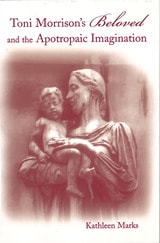
Toni Morrison's Beloved and the Apotropaic Imagination
Kathleen Marks
University of Missouri Press, 2002
Apotropaic, from the Greek, meaning “to turn away from,” refers to rituals that were performed in ancient times to ward off evil deities. Modern scholars use the term to denote an action that, in attempting to prevent an evil, causes that very evil. Freud employed the apotropaic to explain his thought concerning Medusa and the castration complex, and Derrida found the apotropaic’s logic of self-sabotage consonant with his own thought.
Marks draws on this critical history and argues that Morrison’s heroine’s effort to keep the past at bay is apotropaic: a series of gestures aimed at resisting a danger, a threat, an imperative. These gestures anticipate, mirror, and put into effect that which they seek to avoid—one does what one finds horrible so as to mitigate its horror. In Beloved, Sethe’s killing of her baby reveals this dynamic: she kills the baby in order to save it. As do all great heroes, Sethe transgresses boundaries, and such transgressions bring with them terrific dangers: for example, the figure Beloved. Yet Sethe’s action has ritualistic undertones that link it to the type of primal crimes that can bring relief to a petrified community. It is through these apotropaic gestures that the heroine and the community resist what Morrison calls “cultural amnesia” and engage in a shared past, finally inaugurating a new order of love.
Toni Morrison’s Beloved and the Apotropaic Imagination is eclectic in its approach—calling upon Greek religion, Greek mythology and underworld images, and psychology. Marks looks at the losses and benefits of the kind of self-damage/self-agency the apotropaic affords. Such an approach helps to frame the questions of the role of suffering in human life, the relation between humans and the underworld, and the uses of memory and history.
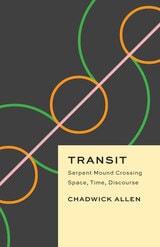
Transit
Serpent Mound Crossing Space, Time, DiscourseChadwick Allen
University of Chicago Press, 2026
In Transit, Chadwick Allen chronicles the surprising history of how the ancient snake effigy known as Serpent Mound, located in what is now southern Ohio, traveled to Seattle, Washington in the 1970s, at the height of American Indian activism associated with the Red Power movement. Allen considers Indigenous earthworks built for thousands of years across the eastern half of the North American continent, questioning what it would mean if they were understood not as static entities fixed in space and time, but as animate forces with the ability to travel. Allen also looks at the origins of the “modern” effigy in the nineteenth century, when archaeologists reconstructed Serpent Mound’s deteriorating form to create a static icon suitable for touristic display within the confines of a settler state memorial.
Drawing from archival research, interviews, and site-specific encounters, Transit meditates on the significance of building an earthen effigy in the Pacific Northwest, as part of what became the Daybreak Star Indian Cultural Center, and on the complexity of the mound’s generative contexts. Allen’s research intersects the mid-twentieth century, when artist Robert Smithson created his iconic Spiral Jetty earth sculpture and when the Muscogee (Creek) Nation designed its innovative Mound Building. The story remains ongoing in the twenty-first century, as new mounds are rising in Oklahoma and artists, activists, and intellectuals are again asserting the power of Indigenous design.
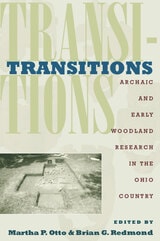
Transitions
Archaic and Early Woodland Research in the Ohio CountryMartha P. Otto
Ohio University Press, 2008
The late archaic and early woodland peoples lived in the Ohio region between 5,000 and 2,000 years ago. This was a time of transition, when hunters and gatherers began to grow native seed crops, establish more permanent settlements, and develop complex forms of ritual and ceremonialism, sometimes involving burial mound construction.
The focused archaeological studies described in Transitions: Archaic and Early Woodland Research in the Ohio Country shed light on this important episode in human cultural development. The authors describe important archaeological sites such as the rich Late Archaic settlements of southwestern Ohio and the early Adena Dominion Land Company enclosure in Franklin County. They present detailed accounts of Native American behavior, such as the use of smoking pipes by Adena societies and a reconstruction of mound use and ritual.
Transitions is the result of a comprehensive, long-term study focusing on particular areas of Ohio with the most up-to-date and detailed treatment of Ohio’s native cultures during this important time of change. This book will be of great value to students and other readers who wish to go beyond the general and often dated treatments of Ohio archaeology currently available.