Results by title
51 books match the query 'Ojibwa Indians' and 14 start with t
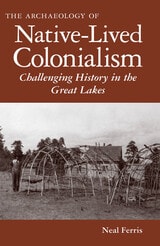
The Archaeology of Native-Lived Colonialism
Challenging History in the Great LakesNeal Ferris
University of Arizona Press, 2009
In reconsidering Native adaptation and resistance to colonial British rule, Ferris reviews five centuries of interaction that are usually read as a single event viewed through the lens of historical bias. He first examines patterns of traditional lifeway continuity among the Ojibwa, demonstrating their ability to maintain seasonal mobility up to the mid-nineteenth century and their adaptive response to its loss. He then looks at the experience of refugee Delawares, who settled among the Ojibwa as a missionary-sponsored community yet managed to maintain an identity distinct from missionary influences. And he shows how the archaeological history of the Six Nations Iroquois reflected patterns of negotiating emergent colonialism when they returned to the region in the 1780s, exploring how families managed tradition and the contemporary colonial world to develop innovative ways of revising and maintaining identity.
The Archaeology of Native-Lived Colonialism convincingly utilizes historical archaeology to link the Native experience of the eighteenth and nineteenth centuries to the deeper history of sixteenth- and seventeenth-century interactions and with pre-European times. It shows how these Native communities succeeded in retaining cohesiveness through centuries of foreign influence and material innovations by maintaining ancient, adaptive social processes that both incorporated European ideas and reinforced historically understood notions of self and community.
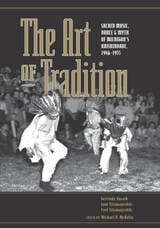
The Art of Tradition
Sacred Music, Dance & Myth of Michigan's Anishinaabe, 1946-1955Michael D. McNally
Michigan State University Press, 2009
The Art of Tradition documents the complexity of Native life and culture at a critical juncture in Native American history, where the rekindling of pride in Native cultures characteristic of the later twentieth century met the generation of elders who spent their early years speaking Native tongues but who came of age in boarding schools and amid strong pressures of assimilation. Because this period was deemed by most ethnographers of the time to be one of "acculturation," marking the end of traditional Native cultures, the authors' appreciation for the integrity of mid-century Native culture stands out markedly from other scholarship of the day. The songs, dance steps, and stories collected here are evidence of the artful work of maintaining and breathing new life into traditions, often in contexts that seem anything but traditional, by indigenous elders and artists. As the editor notes, there are no "Native informants" in this study, only collaborators whose lives are shown to be as resilient as the repertories they performed.
The Chippewa Landscape of Louise Erdrich
Allan Chavkin
University of Alabama Press, 1999
Louise Erdrich is arguably the most prolific and prominent contemporary writer of American Indian descent in North America today. Her novels and short stories have won great critical acclaim and are widely taught in American and world literature courses.
This collection of original ssays focuses on Erdrich's writings rooted in the Chippewa experience. Premier scholars of Native American literature investigate narrative structure, signs of ethnicity, the notions of luck and chance in Erdrich's narrative cosmology, her use of hunting metaphors, her efforts to counter stereotypes of American Indian women, her use of comedy in exploring American Indians' tragic past, her intentions underlying the process of revision in Love Medicine, and other subjects.
Including a variety of theoretical approaches, this book provides a comprehensive examination of Erdrich's work, making it more accessible to new readers and richer to those already familiar with her work.

The Community Apart
A Case Study of a Canadian Indian Reserve CommunityYngve Georg Lithman
University of Manitoba Press, 1984

The Dog's Children
Anishinaabe Texts told by Angeline WilliamsLeonard Bloomfield
University of Manitoba Press, 1991
The Eagle Returns
The Legal History of the Grand Traverse Band of Ottawa and Chippewa IndiansMatthew L.M. Fletcher
Michigan State University Press, 2012
The Founding Mothers of Mackinac Island
The Agatha Biddle Band of 1870Theresa L. Weller
Michigan State University Press, 2021
The Foxie Otter Site
A Multicomponent Occupation North of Lake HuronChristopher C. Hanks
University of Michigan Press, 1988
The Invasion
Janet Lewis
Michigan State University Press, 2000
The Invasion, a novel originally published in 1932, marked the debut of historical novelist Janet Lewis, who went on to write numerous poems and short stories as well as the novels The Wife of Martin Guerre and The Trial of Soren Quist. Lewis grew up in the Lake country of the Old Northwest and The Invasion is based on family stories she heard as a child.The Invasion displays well-researched historical accuracy, an innate understanding of and feeling for Native American culture enhanced by the author's fluency in the Ojibway language, and an economy of style that is remarkable for a first novel.
In 1790, John Johnston, a cultivated young Irishman, came to the far corner of the Northwest Territory to make his fortune intending to spend only a year. Instead he married Ozhah-guscoday- wayquay (The Woman of the Glade), daughter of the Ojibway chief Waub- ojeeg, and settled on the St. Mary's River. Together they founded a family that was loved, respected, and famous throughout the region for honesty, fairness, and hospitality. Their home was the center of culture for the area and for every visiting traveler, Native American or white. The Invasion chronicles a time when one culture violently supplanted another even as it depicts a family that blends two cultures together.
Henry Rowe Schoolcraft considered the Johnston family his most valued connection to the Native American population. He eventually married Jane Johnston, daughter of John and The Woman of the Glade, and remain close to her entire family. In his diary, Schoolcraft wrote of the Johnstons, "I have in fact stumbled, as it were, on the only family in Northwest America who could in Indian lore have acted as my guide, philosopher, and friend."
The Murder of Joe White
Ojibwe Leadership and Colonialism in WisconsinErik M. Redix
Michigan State University Press, 2014
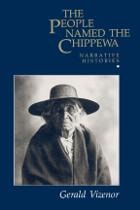
The People Named The Chippewa
Narrative HistoriesGerald Vizenor Vizenor
University of Minnesota Press, 1984
Ranging in time and space from Madeline Island and the reservations of northern Minnesota to the urban reservation of Minneapolis-St. Paul, Vizenor recounts the experiences of the Chippewa and their encounters with the white people who "named" them.
"Through some very funny moments, Vizenor raises serious questions for the pan-Indian movements and 'radical' academics. A teacher and scholar wishing to avoid and to correct the mistakes of twentieth-century scholarship in discussing 'Indians,' 'Native Americans' or 'Amerindians' would do well to begin with these stories; they are the strength of the Anishinaabeg." World Literature Today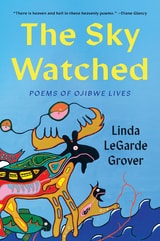
The Sky Watched
Poems of Ojibwe LivesLinda LeGarde Grover
University of Minnesota Press, 2022
A collective memoir in poetry of an Ojibwe family and tribal community, from creation myth to this day, updated with new poems
Reaching from the moment of creation to the cry of a newborn, The Sky Watched gives poetic voice to Ojibwe family life. In English and Ojibwe, those assembled here—voices of history, of memory and experience, of children and elders, Indian boarding school students, tribal storytellers, and the Manidoog, the unseen beings who surround our lives—come together to create a collective memoir in poetry as expansive and particular as the starry sky.
This world unfolds in the manner of traditional Ojibwe storytelling, shaped by the seasons and the stages of life, marking the significance of the number four in the Ojibwe worldview. Summoning spiritual and natural lore, award-winning poet and scholar Linda LeGarde Grover follows the story of a family, a tribe, and a people through historical ruptures and through intimate troubles and joys—from the sundering of Ojibwe people from their land and culture to singular horrors like the massacre at Wounded Knee to personal trauma suffered at Indian boarding schools. Threaded throughout are the tribal traditions and knowledge that sustain a family and a people through hardship and turmoil, passed from generation to generation, coming together in the manifold power and beauty of the poet’s voice.
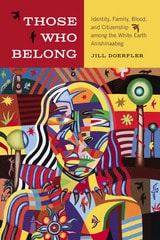
Those Who Belong
Identity, Family, Blood, and Citizenship among the White Earth AnishinaabegJill Doerfler
Michigan State University Press, 2015
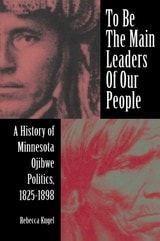
To Be the Main Leaders of Our People
A History of Minnesota Ojibwe Politics, 1825-1898Rebecca Kugel
Michigan State University Press, 1998
In the spring of 1868, people from several Ojibwe villages located along the upper Mississippi River were relocated to a new reservation at White Earth, more than 100 miles to the west. In many public declarations that accompanied their forced migration, these people appeared to embrace the move, as well as their conversion to Christianity and the new agrarian lifestyle imposed on them. Beneath this surface piety and apparent acceptance of change, however, lay deep and bitter political divisions that were to define fundamental struggles that shaped Ojibwe society for several generations.
In order to reveal the nature and extent of this struggle for legitimacy and authority, To Be The Main Leaders of Our People reconstructs the political and social history of these Minnesota Ojibwe communities between the years 1825 and 1898. Ojibwe political concerns, the thoughts and actions of Ojibwe political leaders, and the operation of the Ojibwe political system define the work's focus. Kugel examines this particular period of time because of its significance to contemporary Ojibwe history. The year 1825, for instance, marked the beginning of a formal alliance with the United States; 1898 represented not an end, but a striking point of continuity, defying the easy categorizations of Native peoples made by non-Indians, especially in the closing years of the nineteenth century.
In this volume, the Ojibwe "speak for themselves," as their words were recorded by government officials, Christian missionaries, fur traders, soldiers, lumbermen, homesteaders, and journalists. While they were nearly always recorded in English translation, Ojibwe thoughts, perceptions, concerns, and even humor, clearly emerge. To Be The Main Leaders of Our People expands the parameters of how oral traditions can be used in historical writing and sheds new light on a complex, but critical, series of events in ongoing relations between Native and non-Native people.