Results by title
141 books match the query 'Oregon' and 24 start with t
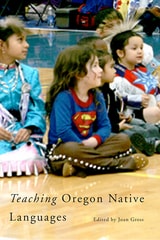
Teaching Oregon Native Langauges
Joan Gross
Oregon State University Press, 2007

The Archaeoclimatology Atlas of Oregon
The Modeled Distribution in Space and Time of Past ClimatesReid A Bryson
University of Utah Press, 2009
The Macrophysical Climate Model (MCM) used for the atlas presents an innovative means of modeling past climate that has been rigorously tested and verified against field evidence worldwide. Broad-scale reconstructions of specific times in the past provide detailed site-specific graphs of precipitation, temperature, evaporation, and snowfall for more than 75 locations in Oregon.
Applications of the model and its implications for human populations in Oregon are explored for each region of the state, demonstrating the variability of human-climate interactions.
Supplemental Spatial Maps

The Collected Poems of Ada Hastings Hedges
Ada Hastings Hedges
Oregon State University Press, 2020
Except for a twelve-year sojourn in southeastern Oregon and two years in Los Angeles, Hedges lived in Portland from 1910 until her death in 1980. She was assistant editor at Binfords & Mort Publishers and a supervising editor in the Works Progress Administration. She taught briefly at Warner Pacific College in the 1960s.
Hedges wrote in a style notable for precision, clarity, and smoothness of line. More than half of her poems in this collection are sonnets. A poet of the city as well as the desert, her work offers a compelling perspective on mid-century Portland life. In 1933 she published her only book, Desert Poems. That collection is reprinted here in its entirety, along with scores of additional poems published in a wide variety of venues, making this the first comprehensive collection of Hedges’s work.
A detailed introduction by the editors and annotations to the text provide information about revisions, publication dates, and notable features. Also included is an essay by Hedges asking “Can Poetry Be Taught?” In her afterword, Oregon poet Ingrid Wendt writes of her admiration for Hedges’s “fierceness of spirit, lack of sentimentality, and complex vision.”
For readers interested in women’s literature, Pacific Northwest poetry, and the literature of Eastern Oregon, this volume reintroduces a compelling regional voice.
The Color of Night
Race, Railroaders, and Murder in the Wartime WestMax Geier
Oregon State University Press, 2015
In this deeply researched and detailed account, Geier explores how race, gender, and class affected the attitudes of local town-folk, law officers, and courtroom jurors toward Black trainmen on the West Coast, at a time when militarization skewed perceptions of virtue, status, and authority. He delves into the working conditions and experiences of unionized Black trainmen in their “home and away” lives in Los Angeles and Portland, while illuminating the different ways that they, and other residents of Oregon and southern California, responded to news of “Oregon’s murdered war bride.” Reporters, civil rights activists, and curiosity seekers transformed the trial and appeals process into a public melodrama.
The investigation, trial, and conviction of Robert Folkes galvanized civil rights activists, labor organizers, and community leaders into challenging the flawed judicial process and ultimately the death penalty in Oregon, serving as a catalyst for civil rights activism that bridged rural and urban divides. The Color of Night will appeal to “true crime” aficionados, and to anyone interested in the history of race and labor relations, working conditions, community priorities, and attitudes toward the death penalty in the first half of the 20th century.
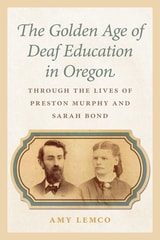
The Golden Age of Deaf Education in Oregon
Through the Lives of Preston Murphy and Sarah BondAmy Lemco
Oregon State University Press, 2027
Preston Murphy and Sarah Bond traveled west to Oregon on separate wagon trains in the 1850s. Both were children of Protestant minister fathers who followed the Oregon Trail to claim land and establish towns and institutions. Preston and Sarah married in 1874 and went on to build their lives in Oregon’s Willamette Valley, running a boot shop and raising six children. They were also both deaf.
The Golden Age of Deaf Education in Oregon is one of the first books to explore Deaf history in the Pacific Northwest. Drawing from primary sources, Amy Lemco explores the history of Deaf culture in early Oregon through the lives of Preston Murphy and Sarah Bond. Their stories offer a glimpse into the growth of Deaf education in the developing American West and provide a unique lens to explore the intertwining of global, national, and regional histories and their effect on Deaf culture at the turn of the century.
While Preston became deaf after a childhood illness in Illinois, Sarah, along with two of her brothers, was born deaf in Iowa. In Oregon their varied deaf experiences would pave the way for the Oregon School for the Deaf but also illuminate how deaf Oregonians navigated daily life and remained closely connected to their hearing communities. It is the hidden experiences of Preston and Sarah’s ordinary lives that make their stories extraordinary.
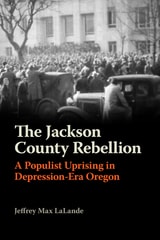
The Jackson County Rebellion
A Populist Uprising in Depression-Era OregonJeffrey Max LaLande
Oregon State University Press, 2023
The Jackson County Rebellion explores a dramatic if little-known populist insurgency in the American West. Author Jeff LaLande takes a deep dive into a tumultuous uprising that captured national attention as it played out in rural Oregon. First tracing its roots back to the area’s tradition of protest, including the Ku Klux Klan of the 1920s, he focuses on Jackson County’s politics of upheaval during the worst days of the Great Depression. The broad strokes of the episode may be familiar to contemporary readers: Demagogues fanning rage — relentlessly accusing an elite of corruption and conspiracy. The strife-torn episode featured nativist and anti-Semitic elements.
The local press played a key role in the events. Two inflammatory newspapers, one owned by wealthy orchardist Llewellyn Banks and the other by politician Earl Fehl, became the vehicles by which these men won the loyalty of rural and working-class residents. Partners in demagoguery, Banks and Fehl created a movement — dubbed the “Good Government Congress” that very nearly took over county government through direct action, ballot theft, and threats of violence. Among those opposing the two men was Harvard-educated Robert Ruhl, owner/editor of the Medford Mail-Tribune, who faced off against Banks and Fehl. Despite boycotts and threats of sabotage. Ruhl ran a resolute editorial campaign against the populist threat in his Mail-Tribune, which won a Pulitzer Prize for its reporting on the uprising.
The rebellion blazed hotly but not for long. Its end was marked by the arrest of its leaders after the fiercely contested 1932 election and by Banks’s murder of the police officer sent to arrest him. Placing the Jackson County Rebellion squarely within America’s long tradition of populist uprisings against the perceived sins of an allegedly corrupt, affluent local elite, LaLande argues that this little-remembered episode is part of a long history of violent conflict in the West that continues today.

The Jewish Oregon Story, 1950-2010
Ellen Eisenberg
Oregon State University Press, 2016
Six chapters examine a community grappling with, and increasingly embracing, change, from the dramatic national shifts in women’s roles and inter-group relations, to local issues such as the razing of the historic South Portland Jewish neighborhood. An original community musical frames the creation of a new Portland Jewish identity, emerging out of the ashes of South Portland and tapping ethnic expression as an antidote to suburbanization and assimilation. A peek behind the scenes exposes the crucial role of women’s voluntarism, and traces the impact of women entering the workforce and winning acceptance as equals in organizational and ritual life. Chapters on involvement in liberal politics and advocacy for Israel explore communal engagement that reflected national trends, but, beginning in the 1980s, were increasingly shaped by emerging local progressivism. A final chapter charts recent shifts in Oregon Jewish geography, demographics, and organizational life, exploring the rebirth of smaller communities and the embrace of post-denominational Jewry, spirituality, and an ethos of environmentalism and inclusion.
The Jewish Oregon Story will appeal to readers of American Jewish history and Oregon/western history, particularly those interested in questions of ethnicity and identity. Drawing on extensive archival sources and recent scholarship, the book aims to engage both academic audiences and general readers.

The Nehalem Tillamook
An EthnographyElizabeth D. Jacobs
Oregon State University Press, 2003
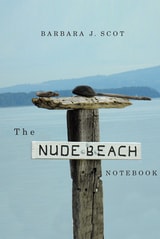
The Nude Beach Notebook
Barbara J. Scot
Oregon State University Press, 2014
Scot uses long, meditative walks on the “clothing optional” beach of the idyllic Sauvie Island near Portland, Oregon, to explore family responsibility, time’s passage, and faith. She weaves entries from her notebook—a record of the island’s wildlife, descriptions of the “Odd Ones” she encounters on the beach, and stories about the native people who once lived on the river—with the main narrative, tracing her search for her brother, her close friendship with a fellow writer, and daily life on the houseboat moorage where she lives.
The Nude Beach Notebook highlights the importance of place as a means for exploring and interpreting one’s own story. In the end, Scot’s walks on Sauvie Island lead to her own redemptive journey. She considers the uses of fiction and non-fiction in memory and in writing, the brevity and beauty of human existence, and the inscrutable, enduring mystery of death.
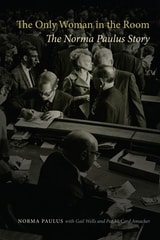
The Only Woman in the Room
The Norma Paulus StoryNorma Paulus
Oregon State University Press, 2017
Paulus came from a family of Roosevelt Democrats, but when a friend campaigned for a Republican seat in the state legislature, she switched parties. As she put it, “The Republicans were in politics for all the right reasons.” Amid the nationwide political upheavals of the late 1960s, Oregon’s Republicans, led by popular governor Tom McCall, seemed to be her kind of people—principled, pragmatic, and committed to education, the environment, and equality for all citizens under the law.
Paulus’s appointment by Governor McCall to the Marion-Polk Boundary Commission in 1969, a precursor to Oregon’s urban growth boundaries, helped launched her on a long and distinguished career of public service. She ran successfully for the Oregon House of Representatives in 1970, the first women to do so in the district. After three terms in the House, where she championed environmental causes, women’s rights and government transparency, she was elected Oregon’s Secretary of State in 1976—the first woman to hold that office and be elected to a statewide office in Oregon. She was the Republican candidate for governor in 1986, served a stint on the Northwest Power and Conservation Council, went on to become Oregon’s superintendent of public instruction, and headed the Oregon Historical Society.
During her years of public service, spanning the 1970s through the early 2000s, Norma Paulus occupied a distinctive niche in Oregon’s progressive political ecosystem. Her vivid personality and strong convictions endeared her to a broad swath of citizens. Beautiful and opinionated, charming and forceful, Paulus was widely covered in statewide and national newspapers and television during her eventful, sometimes controversial career. Now, The Only Woman in the Room sums up her life and work in a lively, anecdotal history that will appeal to historians, political scientists, newshounds, and ordinary citizens alike.
The Pacific Northwest Coast
Living with the Shores of Oregon and WashingtonPaul D. Komar
Duke University Press, 1998
In this guide, Paul D. Komar, one of the nation’s leading coastal oceanographers, examines the lessons taught by ages of geological and cultural history. With explanations of the area’s geological evolution, including natural shoreline erosion and sea-cliff landsliding, Komar details human interaction with the coast: erosion caused by early settlers, the development and destruction of Bayocean Spit, the disastrous effects caused by the 1982–1983 El Niño, and the notorious failure of a construction project on the picturesqueæbut unstableæbluffs at Jump-Off Joe. Emphasizing the actual and potential harm to human projects and to the natural heritage of the coast, Komar provides the knowledge necessary for finding a safe home near the shore while preserving the beauty that draws us to it.
The Tillamook
A Created Forest Comes of AgeGail Wells
Oregon State University Press, 1999
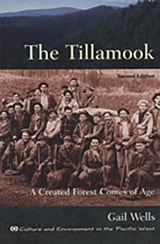
The Tillamook
A Created Forest Comes of Age: Second EditionGail Wells
Oregon State University Press, 2004
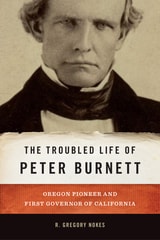
The Troubled Life of Peter Burnett
Oregon Pioneer and First Governor of CaliforniaR. Gregory Nokes
Oregon State University Press, 2018
It was one heck of a resume. Yet with the exception of the wagon road to California, in none of these roles was Burnett considered successful or well remembered. Indeed, he resigned from many of his most important positions, including the governorship, where he was widely perceived a failure.
Burnett’s weakness was that he refused to take advice from others. He insisted on marching to his own drum, even when it led to some terrible decisions. A former slaveholder, he could never seem to get beyond his single-minded goal of banning blacks and other minorities from the West.
The Troubled Life of Peter Burnett is the first full-length biography of this complicated character. Historians, scholars, and general readers with an interest in Western history will welcome R. Gregory Nokes’ accessible and deeply researched account.
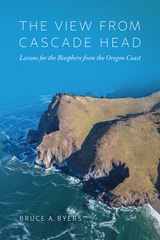
The View From Cascade Head
Lessons for the Biosphere from the Oregon CoastBruce A. Byers
Oregon State University Press, 2020
Cascade Head is Oregon’s only biosphere reserve, part of the international network of biosphere reserves coordinated by UNESCO. Biosphere reserves around the world are laboratories for understanding how humans affect ecosystems and models for how we can heal the human-nature relationship.
The View from Cascade Head illustrates three main lessons: the actions and efforts of committed individuals can make a difference; ecological mysteries still abound despite decades of scientific research; and our worldviews—how we think about our place in nature—shape our individual and collective effect on the ecosystems we inhabit. Byers helps us understand how these lessons apply everywhere and can lead us toward a more sustainable relationship with our home planet.
This Ecstatic Nation
The American Landscape and the Aesthetics of PatriotismTerre Ryan
University of Massachusetts Press, 2011
Terre Ryan examines this phenomenon by exploring the overlapping trails of national mythology, landscape aesthetics, patriotic discourse, and public policy. Tracing her journeys around bombing grounds in Nevada, logging sites in Oregon, and energy fields in Wyoming, she argues that business and government agencies often frame commercial projects and national myths according to nineteenth-century beliefs about landscape and bounty. Advertisements and political promotional materials following this aesthetic framework perpetuate frontier-era ideas about the environment as commodity, scenery, and cultural trashlands. Transmitted through all types of media, nineteenth-century perspectives on landscape continue to inform mainstream perceptions of the environment, environmental policies, and representations of American patriotism.
Combining personal narrative with factual reportage, political and cultural critique, and historical analysis, Ryan reframes the images we see every day and places them into a larger national narrative.
This Is Not For You
An Activist's Journey of Resistance and ResilienceRichard Brown
Oregon State University Press, 2021
The book finds Brown approaching his eightieth birthday and reflecting on his life. As he recalls his childhood in 1940s Harlem, his radicalization in the newly desegregated Air Force, and his decades of activism in one of America’s whitest cities, he questions how much longer he’ll do this work, and he wonders who, if anyone, will take his place.
This is a book about how and why to become an engaged, activist citizen, and how activists can stay grounded, no matter how deeply they immerse themselves in the work. It also offers an intimate, firsthand look at policing: what policing is and could be, how civilians can have a say, and how police can and should be responsive to and inclusive of civilian voices. This Is Not For You speaks on every page about being Black in America: about Black pride; Black history, art, and culture; and the experience of resisting white supremacy. It also stands as a much-needed counternarrative to Portlandia, telling a different story about the city and who has shaped it.
Over fifty percent of royalties earned on this book will be donated to organizations working on behalf of Black Portlanders.
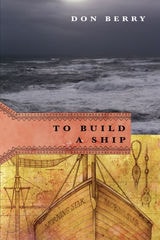
To Build a Ship
Don Berry
Oregon State University Press, 2004
In To Build a Ship, Don Berry explores the extent to which a man can betray himself and his morality for a dream or an obsession. It's the story of a handful of settlers who take up land in the fertile Tillamook Bay Valley in the early 1850s -- defiant dreamers battling the wilderness. With impenetrable mountains at their backs and the open sea as their sole road to trade, they are suddenly isolated from the outside world when the only captain willing to enter their harbor dies. With the survival of their new settlement threatened, they decide to build their own schooner.
At first the challenge brings out the best in the men, but soon the tensions inherent in this monumental task engulf them. Obstacles accumulate and complications mount: a death, a murder trial, trouble with restive Indians, and finally a travesty of justice. Excitement, shock, and gripping drama mark this story of men pushed to the point of madness as they see the Morning Star of Tillamook slowly take shape on the wild Pacific shore.
Don Berry's three novels about the Oregon Territory — Trask, Moontrap, and To Build a Ship — are as rich and compelling today as when they were first published more than 40 years ago. The new OSU Press editions of these books include an introduction by Jeff Baker, former book critic for The Oregonian.

To Win the Indian Heart
Music at Chemawa Indian SchoolMelissa D. Parkhurst
Oregon State University Press, 2014
In To Win the Indian Heart: Music at Chemawa Indian School, Melissa Parkhurst records the history of the school’s musical life. She explores the crucial role music was meant to play in the total transformation of Indian children, and the cultural recovery and resiliency it often inspired instead. Parkhurst chronicles the complex ways in which students, families, faculty, and administrators employed music, both as a tool for assimilation and, conversely, as a vehicle for student resistance—a subject long overlooked in literature on Indian education and the assimilation campaign.
Combining oral histories of Chemawa alumni with archival records of campus life, the book examines the prominent forms of music making at Chemawa—school band, choirs, private lessons, pageants, dance, garage bands, and powwows. Parkhurst traces the trajectory of federal Indian policy, highlighting students’ creative responses and the ways in which music reveals the inherent contradictions in the U.S. government’s assimilation practices.
To the Promised Land
A History of Government and Politics in OregonTom Marsh
Oregon State University Press, 2012
From Jason Lee’s first letter urging Congress to take possession of the Oregon Country to John Kitzhaber’s precedent-setting third term as governor, from the land frauds of the early 20th century to the state’s land-use planning goals, from the Beach Bill to the Bottle Bill, this book tells Oregon’s story.
Featuring interesting trivia, historical photographs, and biographical sketches of key politicians, To the Promised Land is an essential volume for readers interested in Oregon’s history.
Toward One Oregon
Rural-Urban Interdependence and the Evolution of a StateMichael Hibbard
Oregon State University Press, 2011
Toward Oregon 2050
Planning a Better FutureMegan Horst
Oregon State University Press, 2024
In this compelling volume, leading experts in land use and urban planning, in cooperation with other scholars and community partners, envision various possible futures and begin the work of developing statewide plans to guide Oregon through the decades ahead. Building on the state’s policy innovation and planning legacy, contributors to Toward Oregon 2050 address current challenges such as housing scarcity, income inequality, the rural-urban divide, and climate change. They offer recommendations on a range of issues, from culture to incarceration, transportation to voting rights, all with the goal of imagining what a fair and equitable Oregon might look like.
Some of the imagined futures—with worsening effects of climate change, environmental harms, and social inequities—are not bright for many Oregonians. Other futures include enhanced resiliency to forest fires and flooding, more Oregonians in high-paying jobs and in secure housing, and more children walking and biking to school. But those positive futures are not guaranteed, and getting there won’t be easy. They’ll require all stakeholders—state and local government, members of all political parties, private businesses, non-profit organizations, and individual residents—to play a role in ensuring a better future for the next generation of Oregonians.
Intended for all Oregonians who care about their state’s future, Toward Oregon 2050 will also appeal to scholars and planners who have long looked to Oregon for inspiration and lessons learned. The book invites readers to envision the future of Oregon and to contribute their part toward a better future for the state.
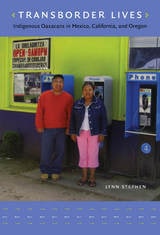
Transborder Lives
Indigenous Oaxacans in Mexico, California, and OregonLynn Stephen
Duke University Press, 2007
Stephen weaves the personal histories and narratives of indigenous transborder migrants together with explorations of the larger structures that affect their lives. Taking into account U.S. immigration policies and the demands of both commercial agriculture and the service sectors, she chronicles how migrants experience and remember low-wage work in agriculture, landscaping, and childcare and how gender relations in Oaxaca and the United States are reconfigured by migration. She looks at the ways that racial and ethnic hierarchies inherited from the colonial era—hierarchies that debase Mexico’s indigenous groups—are reproduced within heterogeneous Mexican populations in the United States. Stephen provides case studies of four grass-roots organizations in which Mixtec migrants are involved, and she considers specific uses of digital technology by transborder communities. Ultimately Stephen demonstrates that transborder migrants are reshaping notions of territory and politics by developing creative models of governance, education, and economic development as well as ways of maintaining their cultures and languages across geographic distances.
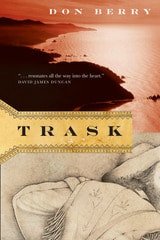
Trask
Don Berry
Oregon State University Press, 2004
Trask is at once a gripping tale of adventure and a portrayal of one man's return to the naked simplicity of life. Inspired by his belief in the transcendent power of nature, his fascination with Eastern philosophy, and the lives of historical men and women, Don Berry created a story that is strongly imagined and powerfully rendered-a landmark work. This new edition of Berry's celebrated first novel includes an introduction by Jeff Baker, book critic for The Oregonian.