Results by title
74 books match the query 'Paleontology' and 19 start with t
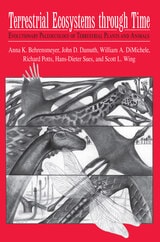
Terrestrial Ecosystems Through Time
Evolutionary Paleoecology of Terrestrial Plants and AnimalsAnna K. Behrensmeyer, John D. Damuth, William A. DiMichele, Richard Potts, Hans-
University of Chicago Press, 1992
ecological history of life on land—from the earliest traces
of terrestrial organisms over 400 million years ago to the
beginning of human agriculture. By providing myriad insights
into the unique ecological information contained in the
fossil record, it establishes a new and ambitious basis for
the study of evolutionary paleoecology of land ecosystems.
A joint undertaking of the Evolution of Terrestrial
Ecosystems Consortium at the National Museum of Natural
History, Smithsonian Institution, and twenty-six additional
researchers, this book begins with four chapters that lay out
the theoretical background and methodology of the science of
evolutionary paleoecology. Included are a comprehensive
review of the taphonomy and paleoenvironmental settings of
fossil deposits as well as guidelines for developing
ecological characterizations of extinct organisms and the
communities in which they lived. The remaining three
chapters treat the history of terrestrial ecosystems through
geological time, emphasizing how ecological interactions have
changed, the rate and tempo of ecosystem change, the role of
exogenous "forcing factors" in generating ecological change,
and the effect of ecological factors on the evolution of
biological diversity.
The six principal authors of this volume are all associated
with the Evolution of Terrestrial Ecosystems program at the
National Museum of Natural History, Smithsonian Institution.
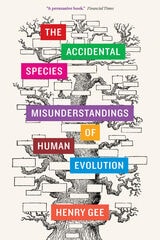
The Accidental Species
Misunderstandings of Human EvolutionHenry Gee
University of Chicago Press, 2013
The Accidental Species combines Gee’s firsthand experience on the editorial side of many incredible paleontological findings with healthy skepticism and humor to create a book that aims to overturn popular thinking on human evolution—the key is not what’s missing, but how we’re linked.
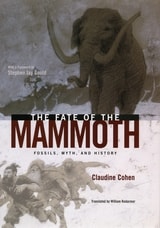
The Fate of the Mammoth
Fossils, Myth, and HistoryClaudine Cohen
University of Chicago Press, 2002
Cohen uses the mammoth and the theories that naturalists constructed around it to illuminate wider issues in the history of science, showing how changing views about a single object reveal the development of scientific methods, practices, and ideas. How are fossils discovered, reconstructed, displayed, and interpreted? What stories are told about them, by whom, and how do these stories reflect the cultures and societies in which they are told?
To find out, Cohen takes us on a grand tour of the study of mammoth remains, from England, Germany, and France to Russia and America, and from the depths of Africa to the frozen frontiers of Alaska and Siberia, where intact mammoth corpses have been discovered in the permafrost. Along the way, she shows how paleontologists draw on myth and history, as well as on scientific evidence, to explore the deep history of the earth and of life. Cohen takes her history from the sixteenth century right up to the present, when researchers are using molecular biology to retrieve mammoth DNA, calling up dreams of cloning the mammoth and one day seeing herds of woolly mammoths roaming the frozen steppes.
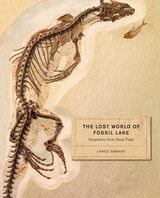
The Lost World of Fossil Lake
Snapshots from Deep TimeLance Grande
University of Chicago Press, 2013
The Meaning of Fossils
Episodes in the History of PalaeontologyMartin J. S. Rudwick
University of Chicago Press, 1985
"Rudwick has not merely written the first book-length history of palaeontology in the English language; he has written a very intelligent one. . . . His accounts of sources are rounded and organic: he treats the structure of arguments as Cuvier handled fossil bones."—Roy S. Porter, History of Science
The Origin of Higher Taxa
Palaeobiological, Developmental, and Ecological PerspectivesT. S. Kemp
University of Chicago Press, 2015
Looking beyond the microevolutionary force of Darwinian natural selection, Kemp enters the realm of macroevolution, or evolution above the species level. From the origin of mammals to the radiation of flowering plants, these large-scale patterns—such as the rise of novel organismal design, adaptive radiations, and lineage extinctions—encompass the most significant trends and transformations in evolution. As macroevolution cannot be studied by direct observation and experiment, scientists have to rely on the outcome of evolution as evidence for the processes at work, in the form of patterns of species appearances and extinctions in a spotty fossil record, and through the nature of species extant today. Marshalling a wealth of new fossil and molecular evidence and increasingly sophisticated techniques for their study, Kemp here offers a timely and original reinterpretation of how higher taxa such as arthropods, mollusks, mammals, birds, and whales evolved—a bold new take on the history of life.
The Paleobiological Revolution
Essays on the Growth of Modern PaleontologyEdited by David Sepkoski and Michael Ruse
University of Chicago Press, 2009
The People's Peking Man
Popular Science and Human Identity in Twentieth-Century ChinaSigrid Schmalzer
University of Chicago Press, 2008
The People’s Peking Man is a skilled social history of twentieth-century Chinese paleoanthropology and a compelling cultural—and at times comparative—history of assumptions and debates about what it means to be human. By focusing on issues that push against the boundaries of science and politics, The People’s Peking Man offers an innovative approach to modern Chinese history and the history of science.
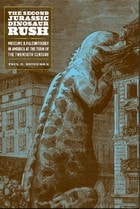
The Second Jurassic Dinosaur Rush
Museums and Paleontology in America at the Turn of the Twentieth CenturyPaul D. Brinkman
University of Chicago Press, 2010
The so-called “Bone Wars” of the 1880s, which pitted Edward Drinker Cope against Othniel Charles Marsh in a frenzy of fossil collection and discovery, may have marked the introduction of dinosaurs to the American public, but the second Jurassic dinosaur rush, which took place around the turn of the twentieth century, brought the prehistoric beasts back to life. These later expeditions—which involved new competitors hailing from leading natural history museums in New York, Chicago, and Pittsburgh—yielded specimens that would be reconstructed into the colossal skeletons that thrill visitors today in museum halls across the country.
Reconsidering the fossil speculation, the museum displays, and the media frenzy that ushered dinosaurs into the American public consciousness, Paul Brinkman takes us back to the birth of dinomania, the modern obsession with all things Jurassic. Featuring engaging and colorful personalities and motivations both altruistic and ignoble, The Second Jurassic Dinosaur Rush shows that these later expeditions were just as foundational—if not more so—to the establishment of paleontology and the budding collections of museums than the more famous Cope and Marsh treks. With adventure, intrigue, and rivalry, this is science at its most swashbuckling.
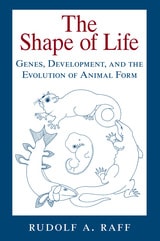
The Shape of Life
Genes, Development, and the Evolution of Animal FormRudolf A. Raff
University of Chicago Press, 1996
Raff uses the evolution of animal body plans to exemplify the interplay between developmental mechanisms and evolutionary patterns. Animal body plans emerged half a billion years ago. Evolution within these body plans during this span of time has resulted in the tremendous diversity of living animal forms.
Raff argues for an integrated approach to the study of the intertwined roles of development and evolution involving phylogenetic, comparative, and functional biology. This new synthesis will interest not only scientists working in these areas, but also paleontologists, zoologists, morphologists, molecular biologists, and geneticists.
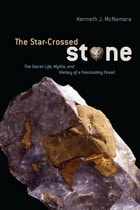
The Star-Crossed Stone
The Secret Life, Myths, and History of a Fascinating FossilKen McNamara
University of Chicago Press, 2010
Throughout the four hundred thousand years that humanity has been collecting fossils, sea urchin fossils, or echinoids, have continually been among the most prized, from the Paleolithic era, when they decorated flint axes, to today, when paleobiologists study them for clues to the earth’s history.
In The Star-Crossed Stone, Kenneth J. McNamara, an expert on fossil echinoids, takes readers on an incredible fossil hunt, with stops in history, paleontology, folklore, mythology, art, religion, and much more. Beginning with prehistoric times, when urchin fossils were used as jewelry, McNamara reveals how the fossil crept into the religious and cultural lives of societies around the world—the roots of the familiar five-pointed star, for example, can be traced to the pattern found on urchins. But McNamara’s vision is even broader than that: using our knowledge of early habits of fossil collecting, he explores the evolution of the human mind itself, drawing striking conclusions about humanity’s earliest appreciation of beauty and the first stirrings of artistic expression. Along the way, the fossil becomes a nexus through which we meet brilliant eccentrics and visionary archaeologists and develop new insights into topics as seemingly disparate as hieroglyphics, Beowulf, and even church organs.
An idiosyncratic celebration of science, nature, and human ingenuity, The Star-Crossed Stone is as charming and unforgettable as the fossil at its heart.
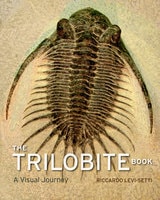
The Trilobite Book
A Visual JourneyRiccardo Levi-Setti
University of Chicago Press, 2014
Featuring specimens from Bohemia to Newfoundland, California to the Tucson Gem and Mineral Show, and Wales to the Anti-Atlas Mountains of Morocco, Levi-Setti’s magnificent book reanimates these “butterflies of the seas” in 235 astonishing full-color photographs. All original, Levi-Setti’s images serve as the jumping-off point for tales of his global quests in search of these highly sought-after fossils; for discussions of their mineralogical origins, as revealed by their color; and for unraveling the role of the now-extinct trilobites in our planetary history.
Sure to enthrall paleontologists with its scientific insights and amateur enthusiasts with its beautiful and informative images, The Trilobite Book combines the best of science, technology, aesthetics, and personal adventure. It will inspire new collectors for eras to come.
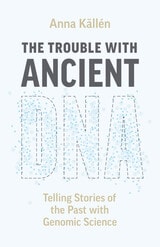
The Trouble with Ancient DNA
Telling Stories of the Past with Genomic ScienceAnna Källén
University of Chicago Press, 2025
In recent years, discoveries brought to light through analysis of ancient DNA—or aDNA—have made headlines around the world. While ancient DNA studies may appear to focus on laboratory science and objective results, the findings have also relied heavily on storytelling and can be influenced by political interests.
In The Trouble with Ancient DNA, Anna Källén explores how the parameters of genetic science influence the stories we tell about our ancient ancestors, questioning what narratives we can and should take at face value. Through accounts of migrations, warriors, and figures like Cheddar Man, we see enticing and potent narratives that reach far beyond what can be gathered from the scientific study of molecules alone. Rather, by privileging certain narratives and questions—like those about sex or eye and skin color—our stories of ancient DNA are spun around the structure of today’s methodologies, technologies, and popular and political interests. Källén considers how DNA is used to sensationalize stories, how its use poses questions of ethics and care, and who is responsible if stories of ancient DNA are adopted for dangerous political projects.
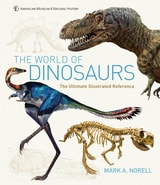
The World of Dinosaurs
An Illustrated TourMark A. Norell
University of Chicago Press, 2019
“Perhaps the easiest way to glimpse . . . all this new knowledge is to leaf through Norell’s The World of Dinosaurs. . . . One of the principal paleontologists of our time."—New York Review of Books
“A delight.”—Open Letters Review
“Possibly the best general audience dinosaur book of 2019.”—Paleoaerie
Dinosaurs have held sway over our imaginations since the discovery of their bones first shocked the world in the nineteenth century. From the monstrous beasts stalking Jurassic Park to the curiosities of the natural history museum, dinosaurs are creatures that unite young and old in awestruck wonder. Digging ever deeper into dinosaurs’ ancient past, science continues to unearth new knowledge about them and the world they inhabited, a fantastic time when the footprints of these behemoths marked the Earth that we humans now walk.
Who better to guide us through this ancient world than paleontologist Mark A. Norell? A world-renowned expert in paleontology, with a knowledge of dinosaurs as deep as the buried fossils they left behind, Norell is in charge of what is perhaps America’s most popular collection of dinosaur bones and fossils, the beloved displays at the American Museum of Natural History in New York. In The World of Dinosaurs, he leads readers through a richly illustrated collection detailing the evolution of these ancient creatures. From the horns of the Protoceratops to the wings of the Archaeopteryx, readers are invited to explore profiles of dinosaurs along with hundreds of color photographs, sketches, maps, and other materials—all rooted in the latest scientific discoveries—sure to both capture the imagination and satisfy a prehistoric curiosity. The World of Dinosaurs presents an astonishing collection of knowledge in an immersive visual journey that will fascinate any fan of Earth’s ancient inhabitants.
This Is Life
A Journey from Inside Your Body to Beyond EarthChristophe Galfard
University of Chicago Press, 2026
Christophe Galfard, acclaimed author of the international bestseller The Universe in Your Hand, takes readers on an extraordinary journey across time and space—from the origins of Earth’s life to the search for extraterrestrials.
What is life? In this majestic book, Christophe Galfard, celebrated author and former graduate student of Stephen Hawking, takes us on a wonder-filled voyage to answer this question. He guides us from our planet’s birth and the mysterious bacteria that lived billions of years ago, through the extreme evolutionary turns that saw dog-sized sea scorpions and trees covered in scales, to the visionary discoveries of the past two centuries that have allowed us to understand human bodies and imagine alien ones.
With Galfard as our guide, readers go back in time to Earth’s origins, swim inside our bloodstream, and sail in space beyond the safety of our terrestrial haven. We experience the birth of Earth, the demise of the dinosaurs, and the possible creation of life in outer space. This Is Life offers a glimpse of other worlds detected only in recent years, beyond the Solar System, where life could be thriving. The end of the book’s journey signals new beginnings, and we are left with the overwhelming sense that, as members of a long line of living creatures, we belong to a reality far greater and more complex than we ever imagined.
Through brilliant storytelling and delightful humor, Galfard connects the latest scientific discoveries and makes the secrets of the living world accessible to all. This Is Life will transform the way you see the world and your place in it.
This Is Life
A Journey from Inside Your Body to Beyond EarthChristophe Galfard
University of Chicago Press, 2026
Christophe Galfard, acclaimed author of the international bestseller The Universe in Your Hand, takes readers on an extraordinary journey across time and space—from the origins of Earth’s life to the search for extraterrestrials.
What is life? In this majestic book, Christophe Galfard, celebrated author and former graduate student of Stephen Hawking, takes us on a wonder-filled voyage to answer this question. He guides us from our planet’s birth and the mysterious bacteria that lived billions of years ago, through the extreme evolutionary turns that saw dog-sized sea scorpions and trees covered in scales, to the visionary discoveries of the past two centuries that have allowed us to understand human bodies and imagine alien ones.
With Galfard as our guide, readers go back in time to Earth’s origins, swim inside our bloodstream, and sail in space beyond the safety of our terrestrial haven. We experience the birth of Earth, the demise of the dinosaurs, and the possible creation of life in outer space. This Is Life offers a glimpse of other worlds detected only in recent years, beyond the Solar System, where life could be thriving. The end of the book’s journey signals new beginnings, and we are left with the overwhelming sense that, as members of a long line of living creatures, we belong to a reality far greater and more complex than we ever imagined.
Through brilliant storytelling and delightful humor, Galfard connects the latest scientific discoveries and makes the secrets of the living world accessible to all. This Is Life will transform the way you see the world and your place in it.
Tracks in Deep Time
The St. George Dinosaur Discovery Site at Johnson FarmJerald D. Harris and Andrew R. Milner
University of Utah Press, 2015
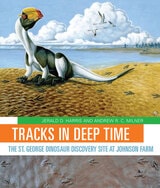
Tracks in Deep Time presents, for the first time, an engaging, thoroughly readable account of the history, geology, and paleontology of this important site. Two hundred million years ago, Lake Dixie covered the site. Within its waters and along its shores, a diverse ecosystem of dinosaurs, early crocodylians, fishes, plants, and other organisms thrived, leaving behind thousands of footprints and other fossils preserved in layers of rock. Unusual fossils found here include the world’s largest collection of tracks left by swimming dinosaurs and one of only six traces known to have been made by a sitting, meat-eating dinosaur. With approachable text and lavish, full-color photographs and illustrations, Jerald Harris and Andrew Milner describe how geologists and paleontologists have painstakingly reconstructed a vivid “snapshot” of life from the Early Jurassic epoch.
Trilobites
Riccardo Levi-Setti
University of Chicago Press, 1995
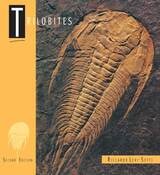
This second edition features coverage of a greater variety of trilobites, an improved photographic atlas reorganized to present their evolutionary progression, and over 200 photographs.
Tropical Arctic
Lost Plants, Future Climates, and the Discovery of Ancient GreenlandJennifer McElwain, Marlene Hill Donnelly, and Ian Glasspool
University of Chicago Press, 2021
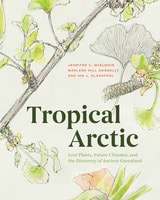
While today’s Greenland is largely covered in ice, in the time of the dinosaurs the area was a lushly forested, tropical zone. Tropical Arctic tracks a ten-million-year window of Earth’s history when global temperatures soared and the vegetation of the world responded.
A project over eighteen years in the making, Tropical Arctic is the result of a unique collaboration between two paleobotanists, Jennifer C. McElwain and Ian J. Glasspool, and award-winning scientific illustrator Marlene Hill Donnelly. They began with a simple question: “What was the color of a fossilized leaf?” Tropical Arctic answers that question and more, allowing readers to experience Triassic Greenland through three reconstructed landscapes and an expertly researched catalog of extinct plants. A stunning compilation of paint and pencil art, photos, maps, and engineered fossil models, Tropical Arctic blends art and science to bring a lost world to life. Readers will also enjoy a front-row seat to the scientific adventures of life in the field, with engaging anecdotes about analyzing fossils and learning to ward off polar bear attacks.
Tropical Arctic explains our planet’s story of environmental upheaval, mass extinction, and resilience. By looking at Earth’s past, we see a glimpse of the future of our warming planet—and learn an important lesson for our time of climate change.