Results by title
104 books match the query 'Parenting' and 17 start with t
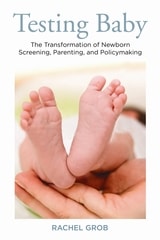
Testing Baby
The Transformation of Newborn Screening, Parenting, and PolicymakingGrob, Rachel
Rutgers University Press, 2011
Within forty-eight hours after birth, the heel of every baby in the United States has been pricked and the blood sent for compulsory screening to detect or rule out a large number of disorders. Newborn screening is expanding rapidly, fueled by the prospect of saving lives. Yet many lives are also changed by it in ways not yet recognized.
Testing Baby is the first book to draw on parents’ experiences with newborn screening in order to examine its far-reaching sociological consequences. Rachel Grob’s cautionary tale also explores the powerful ways that parents’ narratives have shaped this emotionally charged policy arena. Newborn screening occurs almost always without parents’ consent and often without their knowledge or understanding, yet it has the power to alter such things as family dynamics at the household level, the context of parenting, the way we manage disease identity, and how parents’ interests are understood and solicited in policy debates.
The Changing Rhythms of American Family Life
Suzanne M. Bianchi
Russell Sage Foundation, 2006
The Child
An Encyclopedic CompanionRichard A. Shweder, Editor in Chief
University of Chicago Press, 2009
The Child: An Encyclopedic Companion offers both parents and professionals access to the best scholarship from all areas of child studies in a remarkable one-volume reference.
Bringing together contemporary research on children and childhood from pediatrics, child psychology, childhood studies, education, sociology, history, law, anthropology, and other related areas, The Child contains more than 500 articles—all written by experts in their fields and overseen by a panel of distinguished editors led by anthropologist Richard A. Shweder. Each entry provides a concise and accessible synopsis of the topic at hand. For example, the entry “Adoption” begins with a general definition, followed by a detailed look at adoption in different cultures and at different times, a summary of the associated mental and developmental issues that can arise, and an overview of applicable legal and public policy.
While presenting certain universal facts about children’s development from birth through adolescence, the entries also address the many worlds of childhood both within the United States and around the globe. They consider the ways that in which race, ethnicity, gender, socioeconomic status, and cultural traditions of child rearing can affect children’s experiences of physical and mental health, education, and family. Alongside the topical entries, The Child includes more than forty “Imagining Each Other” essays, which focus on the particular experiences of children in different cultures. In “Work before Play for Yucatec Maya Children,” for example, readers learn of the work responsibilities of some modern-day Mexican children, while in “A Hindu Brahman Boy Is Born Again,” they witness a coming-of-age ritual in contemporary India.
Compiled by some of the most distinguished child development researchers in the world, The Child will broaden the current scope of knowledge on children and childhood. It is an unparalleled resource for parents, social workers, researchers, educators, and others who work with children.
The Dadly Virtues
Adventures from the Worst Job You'll Ever LoveJonathan V. Last
Templeton Press, 2015
The Dadly Virtues is a tongue-in-cheek collection of encouragement and guidance for any stage of fatherhood, from pacifying babies to prepping for senior prom, from cutting the cord to getting the first, “Best Grandpa” t-shirt. P.J. O’Rourke sets the stage with the chapter, “What Do Men Get from Fatherhood? Besides What They Put In …” and then is followed by:
•Matthew Continetti’s, “Newborn Terror: The Moment You Realize that ‘Bundle of Joy’ Is a Euphemism for Something Very Different.”
•Stephen F. Hayes’ “Siblings: The Best Gift You’ll Ever Give Your Kids.”
•Jonah Goldberg’s “Get Your Kid a Dog: The Moral Case for Pets.”
•Tucker Carlson’s “In Praise of Adventure: How to Fill a Child’s Life with Excitement and Danger (without Getting Them Killed).”
•Michael Graham’s, “Dating: Enjoy the Movie and Please Keep the Impregnation to a Minimum.”
•Christopher Caldwell’s “College: It’s Not as Bad as You Think; It’s Worse.”
•Andrew Ferguson’s “Emerging Adults and Empty Nesters: Just When You Had Fatherhood All Figured Out.”
•Toby Young’s “The Dark Side: Bad Parenting and the Things We Think, but Do Not Say.”
•Joseph Epstein’s “Thanks, Grandpa: Grandfatherhood and the Spirit of the Age.”
•And more.
Father-to-be, two-time-dad, or granddad, each essay will make you laugh and, at the same time, reinforce your commitment to the virtuous—the dadly—life.
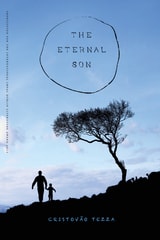
The Eternal Son
Cristovão Tezza
Tagus Press, 2013
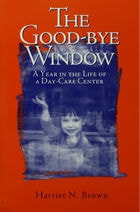
The Good-bye Window
A Year in the Life of a Day-Care CenterHarriet Brown
University of Wisconsin Press, 1998
Have you ever wondered what really goes on at your child’s day-care center after you say good-bye? Harriet Brown did. To satisfy her curiosity, she spent an entire year observing Red Caboose, a center in Madison, Wisconsin. This engaging and thought-provoking book is the story of that year.
In her beautifully written personal account, journalist and mother Brown takes us behind the scenes at a day-care center that works. At Red Caboose, one of the oldest independent centers in the country, we meet teachers who have worked with young children for more than twenty years. We watch the child-care union and parents struggle to negotiate a contract without ripping apart the fabric of trust and love that holds the Red Caboose community together.
We look at the center’s finances, to see what keeps Red Caboose going at a time when other good centers are disappearing. Best of all, we get to know the children, families, and teachers of Red Caboose—their struggles, their sorrows, their triumphs.
Started twenty-five years ago by a group of idealistic parents, the center has not only survived but thrived through some pretty tough times. In the world of day care, Red Caboose is a special place, a model for what child care in this country could and should be: not just babysitting, not just a service to working parents, but a benefit for children, families, teachers, and the community at large.
Brown sets her rich and engaging stories in the greater political and social context of our time. Why is so much child care bad? Why should working Americans worry about the link between welfare reform and child care? What can we learn from the history of child care?
This book is a must-read for parents, educators, and anyone who enjoys first-rate writing and dead-on insight into the lives of our youngest children and those who care for them.
“[Brown’s] writing is beautiful and her scholarship sound. Students considering day-care careers, day-care professionals, and concerned parents will gain insight by reading this provocative book, as will anyone who cares about the future of young children in this country.”—Choice
“I admire enormously the ambition of this book—its eagle-eyed witness and engrossing detail, plus the social importance of the project. I wish there were in the world more books like it.”—Lorrie Moore, author of Who Will Run the Frog Hospital?
“The Good-bye Window is a fascinating peek into the secret world of children. With the poignancy of Anne LaMott, and the reportorial grace of Tracy Kidder, Harriet Brown has written a terrific and worthwhile book.”—Meg Wolitzer, author of This Is Your Life
“Harriet Brown’s well-told story of the Red Caboose child-care center should be read by teachers and parents, but also by every legislator and politician in the land. Only a writer as good as Ms. Brown could display the dramatic complexities of a school community in which the youngest members enter crawling and emerge a few years later as articulate, empathetic, and well-socialized individuals, ready for the ‘real world.’”—Vivian Gussin Paley, author of The Boy Who Would Be a Helicopter
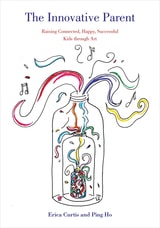
The Innovative Parent
Raising Connected, Happy, Successful Kids through ArtErica Curtis
Ohio University Press, 2019
2019 National Parenting Products Award Winner
Even the best talk-based practices in parenting can be limiting. How can art help parents temper storms of emotion, defuse sibling conflicts, get teeth brushed, and raise happy, successful kids? In The Innovative Parent, Erica Curtis and Ping Ho integrate cutting-edge research, years of clinical expertise, and their own parenting experience into a revolutionary yet practical guide to creative parenting. Plentiful illustrations and anecdotes bring concepts to life and show art in action with kids and parents.
Together, Curtis and Ho let parents in on art therapy trade secrets to help children make sense of emotions, build connections with others, develop problem-solving skills, resolve day-to-day conflicts, process and retain information, confront fears and anxiety, and much more. These are complex tasks for something as seemingly simple as making art, yet therein lies the beauty of The Innovative Parent: its down-to-earth approach is simple, doable, and fun.
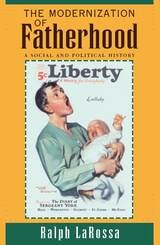
The Modernization of Fatherhood
A Social and Political HistoryRalph LaRossa
University of Chicago Press, 1997
LaRossa explains that during the interwar period the image of the father as economic provider, pal, and male role model, all in one, became institutionalized. Using personal letters and popular magazine and newspaper sources, he explores how the social and economic conditions of the Roaring Twenties and the Great Depression—a period of technical innovation as well as economic hardship—fused these expectations into a cultural ideal. With chapters on the U.S. Children's Bureau, the fathercraft movement, the magazine industry and the development of Parent's Magazine, and the creation of Father's Day, this book is a major addition to the growing literature on masculinity and fatherhood.
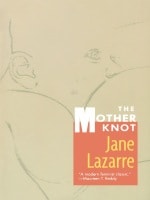
The Mother Knot
Jane Lazarre
Duke University Press, 1997
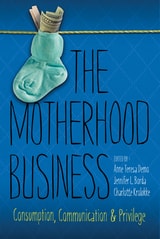
The Motherhood Business
Consumption, Communication, and PrivilegeEdited by Anne Teresa Demo, Jennifer L. Borda, and Charlotte Kroløkke
University of Alabama Press, 2015
Examining how motherhood, consumption, and privilege shape identities in contemporary culture.
The Motherhood Business is a piercing collection of ten original essays that reveal the rhetoric of the motherhood industry. Focusing on the consumer life of mothers and the emerging entrepreneurship associated with motherhood, the collection considers how different forms of privilege (class, race, and nationality) inform discourses about mothering, consumption, mobility, and leisure.
The Motherhood Business follows the harried mother’s path into the anxious maelstrom of intelligent toys, healthy foods and meals, and educational choices. It also traces how some enterprising mothers leverage cultural capital and rhetorical vision to create thriving baby- and child-based businesses of their own, as evidenced by the rise of mommy bloggers and “mompreneurs”over the last decade.
Starting with the rapidly expanding global fertility market, The Motherhood Business explores the intersection of motherhood, consumption, and privilege in the context of fertility tourism, international adoption, and transnational surrogacy. The synergy between motherhood and the marketplace demonstrated across the essays affirms the stronghold of “intensive mothering ideology” in decisions over what mothers buy and how they brand their businesses even as that ideology evolves. Across diverse contexts, the volume also identifies how different forms or privilege shape how mothers construct their identities through their consumption and entrepreneurship.
Although social observers have long commented on the link between motherhood and consumerism, little has been written within the field of rhetoric. Penetrating and interdisciplinary, The Motherhood Business illuminates how consumer culture not only shapes contemporary motherhood but also changes in response to mothers who constitute a driving force of the economy.
The Parental Experience in Midlife
Edited by Carol D. Ryff and Marsha Mailick Seltzer
University of Chicago Press, 1996
With a strong emphasis on the diversity of midlife parenting, including sociodemographic variations and specific parent or child characteristics such as single parenting or raising a child with a disability, this volume presents for the first time the complex factors that influence the quality of the midlife parenting experience.
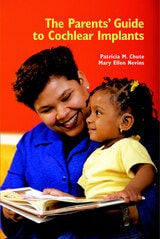
The Parents' Guide to Cochlear Implants
Patricia M. Chute
Gallaudet University Press, 2002
Most importantly, parents will learn their roles in helping their child adjust to and successfully use the cochlear implant. The Parents’ Guide to Cochlear Implants emphasizes such critical subjects as learning to listen through home activities, implants as tools for language development, and critical issues regarding school placement. This encouraging book considers the implications for performance in light of the whole child, including issues related to Deaf culture and cochlear implants. The authors also include brief stories by parents whose children have had implants that provide reassuring actual experiences to parents considering the procedure for their own child. With a last word on parenting perspectives and a rich source of resources in the appendices, this one-of-a-kind guide will arm parents of deaf children with complete confidence to make informed decisions about cochlear implantation.
The Scattered Family
Parenting, African Migrants, and Global InequalityCati Coe
University of Chicago Press, 2013
The Silent Garden
A Parent's Guide to Raising a Deaf ChildPaul W. Ogden
Gallaudet University Press, 2017
Authors Paul W. Ogden and David H. Smith, who are both deaf, present examples and research that guide parents through often unfamiliar territory. From coping mechanisms for parents to advice on creating healthy home environments, the authors cover a range of topics that impact day-to-day actions and decision-making. The topic of communication is discussed extensively as communication access and language development are crucial not only for intellectual growth, but also for positive family and social relationships. The authors look at American Sign Language, listening and spoken language, written English, and various other modes of communication available to deaf children. Different educational options are presented, and technology—including the debate about cochlear implants—is reviewed. Deaf children with special needs are considered here as well. Each topic is accompanied by real-life stories that offer further insight.
Always encouraging, The Silent Garden empowers parents to be the best advocates for their deaf children. Throughout, the authors emphasize that each choice is highly personal, and they stress that all deaf children have the potential to lead rich, productive, and exciting lives.
Also available in Spanish - El Jardín Silencioso: Una guía para los padres para criar a un niño sordo is a condensed Spanish edition that features the first five chapters of The Silent Garden. Topics covered include coping mechanisms for parents, creating healthy family environments, fostering independence, and understanding the perspectives of siblings.
The Silent Garden
A Parent’s Guide to Raising a Deaf ChildPaul W. Ogden
Gallaudet University Press, 2016
Authors Paul W. Ogden and David H. Smith, who are both deaf, present examples and research that guide parents through often unfamiliar territory. From coping mechanisms for parents to advice on creating healthy home environments, the authors cover a range of topics that impact day-to-day actions and decision-making. The topic of communication is discussed extensively as communication access and language development are crucial not only for intellectual growth, but also for positive family and social relationships. The authors look at American Sign Language, listening and spoken language, written English, and various other modes of communication available to deaf children. Different educational options are presented, and technology—including the debate about cochlear implants—is reviewed. Deaf children with special needs are considered here as well. Each topic is accompanied by real-life stories that offer further insight.
Always encouraging, The Silent Garden empowers parents to be the best advocates for their deaf children. Throughout, the authors emphasize that each choice is highly personal, and they stress that all deaf children have the potential to lead rich, productive, and exciting lives.
Also available in Spanish - El Jardín Silencioso: Una guía para los padres para criar a un niño sordo is a condensed Spanish edition that features the first five chapters of The Silent Garden. Topics covered include coping mechanisms for parents, creating healthy family environments, fostering independence, and understanding the perspectives of siblings.
The Varnished Truth
Truth Telling and Deceiving in Ordinary LifeDavid Nyberg
University of Chicago Press, 1993
The Varnished Truth takes us beyond philosophical speculation and clinical analysis to give us a sense of what it really means to tell the truth. As Nyberg lays out the complexities involved in leading a morally decent life, he compels us to see the spectrum of alternatives to telling the truth and telling a clear-cut lie.
Thinking about the Baby
Gender and Transitions into ParenthoodSusan Walzer
Temple University Press, 1998
How do new mothers and fathers think about babies, and what is the influence of parental consciousness in reproducing motherhood and fatherhood as different experiences? The reports of new parents in this book illustrate the power of gendered cultural imagery in how women and men think about their roles and negotiate their parenting arrangement.
New parents talk about what it means to them to be a "good" mother or father and how this plays out in their working arrangements and their everyday interactions over child care. The author carefully unravels the effects of social norms, personal relationships, and social institutions in channeling parents toward gender-differentiated approaches to parenting.