Results by title
55 books match the query 'Pease, Donald E.' and 9 start with t
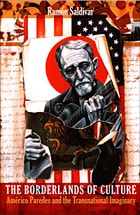
The Borderlands of Culture
Americo Paredes and the Transnational ImaginaryRamón Saldívar
Duke University Press, 2006
Saldívar demonstrates how Paredes’s poetry, prose, and journalism prefigured his later work as a folklorist and ethnographer. In song, story, and poetry, Paredes first developed the themes and issues that would be central to his celebrated later work on the “border studies” or “anthropology of the borderlands.” Saldívar describes how Paredes’s experiences as an American soldier, journalist, and humanitarian aid worker in Asia shaped his understanding of the relations between Anglos and Mexicans in the borderlands of south Texas and of national and ethnic identities more broadly. Saldívar was a friend of Paredes, and part of The Borderlands of Culture is told in Paredes’s own words. By explaining how Paredes’s work engaged with issues central to contemporary scholarship, Saldívar extends Paredes’s intellectual project and shows how it contributes to the remapping of the field of American studies from a transnational perspective.
The Color of Sex
Whiteness, Heterosexuality, and the Fictions of White SupremacyMason Stokes
Duke University Press, 2001
The Color of Sex reveals what happens when race and sexuality meet, when white desire encounters its own ambivalence. As Stokes argues, whiteness and heterosexuality exist in anxious relation to one another. Mutually invested in “the normal,” they support each other in their desperate insistence on the cultural logic of exclusion. At the same time, however, they threaten one another in their attempt to create and sustain a white future, since reproducing whiteness necessarily involves the risk of contamination
Charting the curious movements of this “white heterosexuality,” The Color of Sex inaugurates a new moment in our ongoing attempt to understand the frenzied interplay of race and sexuality in America. As such, it will appeal to scholars interested in race theory, sexuality studies, and American history, culture, and literature.
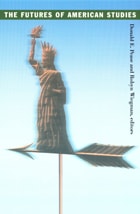
The Futures of American Studies
Donald E. Pease and Robyn Wiegman, eds.
Duke University Press, 2002
Contributors. Lindon Barrett, Nancy Bentley, Gillian Brown, Russ Castronovo, Eric Cheyfitz, Michael Denning, Winfried Fluck, Carl Gutierrez-Jones, Dana Heller, Amy Kaplan, Paul Lauter, Günter H. Lenz, George Lipsitz, Lisa Lowe, Walter Benn Michaels, José Estaban Muñoz, Dana D. Nelson, Ricardo L. Ortiz, Janice Radway, John Carlos Rowe, William V. Spanos
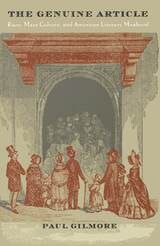
The Genuine Article
Race, Mass Culture, and American Literary ManhoodPaul Gilmore
Duke University Press, 2001
From characters in Indian melodramas and minstrel shows to exhibits in popular museums and daguerrotype galleries, primitive racialized figures circulated as “the genuine article” of manliness in the antebellum United States. Gilmore argues that these figures were manipulated, translated, and adopted not only by canonical authors such as Hawthorne, Thoreau, Cooper, and Melville but also by African American and Native American writers like William Wells Brown and Okah Tubbee. By examining how these cultural notions of race played out in literary texts and helped to construct authorship as a masculine profession, Gilmore makes a unique contribution to theories of class formation in nineteenth-century America.
The Genuine Article will enrich students and scholars of American studies, gender studies, literature, history, sociology, anthropology, popular culture, and race.
The New American Exceptionalism
Donald E. Pease
University of Minnesota Press, 2009
For a half century following the end of World War II, the seemingly permanent cold war provided the United States with an organizing logic that governed nearly every aspect of American society and culture, giving rise to an unwavering belief in the nation's exceptionalism in global affairs and world history. After the collapse of the Soviet Union, this cold war paradigm was replaced by a series of new ideological narratives that ultimately resulted in the establishment of another potentially endless war: the global war on terror.
In The New American Exceptionalism, pioneering scholar Donald E. Pease traces the evolution of these state fantasies and shows how they have shaped U.S. national identity since the end of the cold war, uncovering the ideological and cultural work required to convince Americans to surrender their civil liberties in exchange for the illusion of security. His argument follows the chronology of the transitions between paradigms from the inauguration of the New World Order under George H. W. Bush to the homeland security state that George W. Bush's administration installed in the wake of 9/11. Providing clear and convincing arguments about how the concept of American exceptionalism was reformulated and redeployed in this era, Pease examines a wide range of cultural works and political spectacles, including the exorcism of the Vietnam syndrome through victory in the Persian Gulf War and the creation of Islamic extremism as an official state enemy.
At the same time, Pease notes that state fantasies cannot altogether conceal the inconsistencies they mask, showing how such events as the revelations of prisoner abuse at Abu Ghraib and the exposure of government incompetence after Hurricane Katrina opened fissures in the myth of exceptionalism, allowing Barack Obama to challenge the homeland security paradigm with an alternative state fantasy that privileges fairness, inclusion, and justice.

The Public Life of Privacy in Nineteenth-Century American Literature
Stacey Margolis
Duke University Press, 2005
Margolis provides readings of fiction by Hawthorne and James as well as Susan Warner, Mark Twain, Charles Chesnutt, and Pauline Hopkins. In these writers’ works, she traces a distinctive novelistic tradition that viewed social developments—such as changes in political partisanship and childhood education and the rise of new politico-legal forms like negligence law—as means for understanding how individuals were shaped by their interactions with society. The Public Life of Privacy in Nineteenth-Century American Literature adds a new level of complexity to understandings of nineteenth-century American culture by illuminating a literary tradition full of accidents, mistakes, and unintended consequences—one in which feelings and desires were often overshadowed by all that was external to the self.
The Yale Indian
The Education of Henry Roe CloudJoel Pfister
Duke University Press, 2009
Roe Cloud’s white-collar activism was entwined with the Progressive Era formation of an Indian professional and managerial class, a Native “talented tenth,” whose members strategically used their contingent entry into arenas of white social, intellectual, and political power on behalf of Indians without such access. His Yale training provided a cross-cultural education in class-structured emotions and individuality. While at Yale, Roe Cloud was informally adopted by a white missionary couple. Through them he was schooled in upper-middle-class sentimentality and incentives. He also learned how interracial romance could jeopardize Indian acceptance into their class. Roe Cloud expanded the range of what modern Indians could aspire to and achieve.
Trans-Americanity
Subaltern Modernities, Global Coloniality, and the Cultures of Greater MexicoJosé David Saldívar
Duke University Press, 2012
Translating Empire
Jose Marti, Migrant Latino Subjects, and American ModernitiesLaura Lomas
Duke University Press, 2008
Lomas challenges longstanding conceptions about Martí through readings of neglected texts and reinterpretations of his major essays. Against the customary view that emphasizes his strong identification with Ralph Waldo Emerson and Walt Whitman, the author demonstrates that over several years, Martí actually distanced himself from Emerson’s ideas and conveyed alarm at Whitman’s expansionist politics. She questions the association of Martí with pan-Americanism, pointing out that in the 1880s, the Cuban journalist warned against foreign geopolitical influence imposed through ostensibly friendly meetings and the promotion of hemispheric peace and “free” trade. Lomas finds Martí undermining racialized and sexualized representations of America in his interpretations of Buffalo Bill and other rituals of westward expansion, in his self-published translation of Helen Hunt Jackson’s popular romance novel Ramona, and in his comments on writing that stereotyped Latino/a Americans as inherently unfit for self-government. With Translating Empire, Lomas recasts the contemporary practice of American studies in light of Martí’s late-nineteenth-century radical decolonizing project.