126 books match the query 'People with disabilities' and 16 start with t
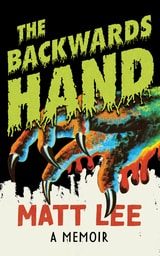
cover of The Backwards Hand: A Memoir

The Backwards Hand

A Memoir

Matt Lee

Northwestern University Press, 2024

Fear. Disgust. Pity. The cripple evokes our basest human emotions—as does the monster.

Told in lyric fragments, The Backwards Hand traces Matt Lee’s experience living in the United States for more than thirty years with a rare congenital defect. Weaving in historical research and pop culture references, Lee dissects how the disabled body has been conflated with impurity, worthlessness, and evil. His voice swirls amid those of artists, criminals, activists, and philosophers. With a particular focus on horror films, Lee juxtaposes portrayals of fictitious monsters with the real-life atrocities of the Nazi regime and the American eugenics movement. Through examining his struggles with physical and mental health, Lee confronts his own beliefs about monstrosity and searches for atonement as he awaits the birth of his son.

The Backwards Hand interrogates what it means to be a cripple in a predominantly ableist society, deconstructing how perceptions of disability are—and are not—reflected in art and media.
[more]
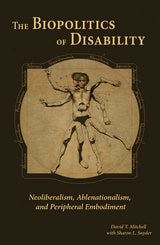
cover of The Biopolitics of Disability: Neoliberalism, Ablenationalism, and Peripheral Embodiment

The Biopolitics of Disability

Neoliberalism, Ablenationalism, and Peripheral Embodiment

David T. Mitchell with Sharon L. Snyder

University of Michigan Press, 2015
In the neoliberal era, when human worth is measured by its relative utility within global consumer culture, selected disabled people have been able to gain entrance into late capitalist culture. The Biopolitics of Disability terms this phenomenon “ablenationalism” and asserts that “inclusion” becomes meaningful only if disability is recognized as providing modes of living that are alternatives to governing norms of productivity and independence. Thus, the book pushes beyond questions of impairment to explore how disability subjectivities create new forms of embodied knowledge and collective consciousness. The focus is on the emergence of new crip/queer subjectivities at work in disability arts, disability studies pedagogy, independent and mainstream disability cinema (e.g., Midnight Cowboy), internet-based medical user groups, anti-normative novels of embodiment (e.g., Richard Powers’s The Echo-Maker) and, finally, the labor of living in “non-productive” bodies within late capitalism.
[more]
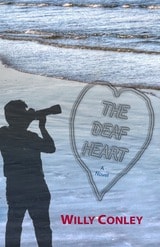
cover of The Deaf Heart: A Novel

The Deaf Heart

A Novel

Willy Conley

Gallaudet University Press, 2015

       Told through a series of quirky, irreverent short stories and letters home during the early 1980s, The Deaf Heart chronicles a year in the life of Dempsey “Max” McCall, a Deaf biomedical photography resident at a teaching hospital on the island of Galveston, Texas. Max strives to become certified as a Registered Biological Photographer while straddling the deaf and hearing worlds. He befriends Reynaldo, an impoverished Deaf Mexican, and they go on a number of unusual escapades around the island.

       At the hospital, Max has to contend with hearing doctors, nurses, scientists, and teachers. While struggling through the rigors of his residency and running into bad luck in meeting women, Max discovers an ally in his hearing housemate Zag, a fellow resident who is also vying for certification. Toward the end of his residency, Max meets Maddy, a Deaf woman who helps bring balance to his life.

       Author Willy Conley’s stories, some humorous, some poignant, reveal Max’s struggles and triumphs as he attempts to succeed in the hearing world while at the same time navigating the multicultural and linguistic diversity within the Deaf world.
[more]
cover of The Difference That Disability Makes

The Difference That Disability Makes

Rod Michalko

Temple University Press, 2002

Rod Michalko launches into this book asking why disabled people are still feared, still regarded as useless or unfit to live, not yet welcome in society? Michalko challenges us to come to grips with the social meanings attached to disability and the body that is not "normal."Michalko's analysis draws from his own understanding of blindness and narratives by other disabled people. Connecting lived experience with social theory, he shows the consistent exclusion of disabled people from the common understandings of humanity and what constitutes the good life. He offers new insight into what suffering a disability means to individuals as well as to the polity as a whole. He shows how disability can teach society about itself, about its determination of what is normal and who belongs. Guiding us to a new understanding of how disability, difference, and suffering are related, this book enables us to choose disability as a social identity and a collective political issue. The difference that disability makes can be valuable and worthwhile, but only if we choose to make it so.
[more]
cover of The Disability Rights Movement: From Charity to Confrontation

The Disability Rights Movement

From Charity to Confrontation

Doris Fleischer

Temple University Press, 2011

In this updated edition, Doris Zames Fleischer and Frieda Zames expand their encyclopedic history of the struggle for disability rights in the United States, to include the past ten years of disability rights activism.The book includes a new chapter on the evolving impact of the Americans with Disabilities Act, the continuing struggle for cross-disability civil and human rights, and the changing perceptions of disability.

The authors provide a probing analysis of such topics as deinstitutionalization, housing, health care, assisted suicide, employment, education, new technologies, disabled veterans, and disability culture.

Based on interviews with over one hundred activists, The Disability Rights Movement tells a complex and compelling story of an ongoing movement that seeks to create an equitable and diverse society, inclusive of people with disabilities.
[more]
cover of The Enlightened Army

The Enlightened Army

By David Toscana; translated by David William Foster

University of Texas Press, 2019
Ignacio Matus is a public school history teacher in Monterrey, Mexico, who gets fired because of his patriotic rantings about Mexico’s repeated humiliations by the United States. Not only did Mexico’s northern neighbor steal a large swath of the country in the Mexican-American War, but according to Matus it also denied him Olympic glory. Excluded from the 1924 Olympics, Matus ran his own parallel marathon and beat the time of the American who officially won the bronze medal. After spending decades attempting to vindicate his supposed triumph and claim the medal, Matus seeks an even bigger vindication—he will reconquer Texas for Mexico! Recruiting an army of “los iluminados,” the enlightened ones, Matus sets off on a quest as worthy of Don Quixote as it is doomed. David Toscana is one of Latin America’s leading contemporary writers, and his books have won several prestigious awards, including the Casa de las Américas Prize for The Enlightened Army. The novel’s treatment of the troubled relations between Mexico and the United States makes it highly topical at a time when immigration and border walls capture headlines, while its lyrical writing and humorous take on the absurdities of everyday life offer timeless pleasures.
[more]
cover of The Fisher King: A Novel

The Fisher King

A Novel

Anthony Powell

University of Chicago Press, 2004

Aboard the Alecto, prolific romance author Valentine Beals ruminates on the ship's most seemingly incongruous couple: a graceful, ethereal, virginal dancer named Barberina Rookwood and her lover, Saul Henchman, a crippled, emasculated war hero and photographer. Fancifully, Beals imagines Henchman to be the reembodiment of one of the most mysterious Arthurian legends, the Fisher King—the maimed and impotent ruler of a barren country of whom Perceval failed to ask the right questions. A myth with many permutations—and a blurred borderland between them—the Fisher King legend dovetails the various explanations Powell offers from his competing narrators as to why a talented young dancer would forsake her art to care for a feeble older man.

Ostensibly a novel about gossip on a cruise ship, The Fisher King is much more: a highly stylized narrative infused with Greek mythology, legend, and satire.

[more]
cover of The History of Special Education: From Isolation to Integration

The History of Special Education

From Isolation to Integration

Margret A. Winzer

Gallaudet University Press, 1993

This comprehensive volume examines the facts, characters, and events that shaped this field in Western Europe, Canada, and the United States. From the first efforts to teach disabled people in early Christian and Medieval eras to such current mandates as Public Law 94-142, this study breaks new ground in assessing the development of special education as a formal discipline.
 
     The History of Special Education presents a four-part narrative that traces its emergence in fascinating detail from 16th-century Spain through the Age of Enlightenment in 17th-century France and England to 18th-century issues in Europe and North America of placement, curriculum, and early intervention. The status of teachers in the 19th century and social trends and the movement toward integration in 20th century programs are considered as well.
[more]
cover of The Inclusive Corporation: A Disability Handbook for Business Professionals

The Inclusive Corporation

A Disability Handbook for Business Professionals

Griff Hogan

Ohio University Press, 2003

Because of the Americans with Disabilities Act and the enormous market of aging adults coping with impairments, disability has become an important issue for all businesses. The Inclusive Corporation is the first book to address comprehensively this issue of disability as it relates to all of the areas critical to effective business management.

The Inclusive Corporation succinctly presents disability-related information and resources that business managers need, and does so in a way that is highly readable and easy to use. The book is respectful and understanding of business requirements, while at the same time conveying a comprehensive knowledge of disability issues.

Matters of legal compliance, social responsibility, recruitment, diversity, employee supervision, customer service, product design and marketing — all are dealt with in The Inclusive Corporation. The result of the author's many years of experience working with businesses to improve their ability to include disabled people both as customers and employees, The Inclusive Corporation will be welcomed by people with disabilities and by business professionals nationwide.
[more]
cover of The Life Worth Living: Disability, Pain, and Morality

The Life Worth Living

Disability, Pain, and Morality

Joel Michael Reynolds

University of Minnesota Press, 2022

A philosophical challenge to the ableist conflation of disability and pain

More than 2,000 years ago, Aristotle said: “let there be a law that no deformed child shall live.” This idea is alive and well today. During the past century, Supreme Court Justice Oliver Wendell Holmes Jr. argued that the United States can forcibly sterilize intellectually disabled women and philosopher Peter Singer argued for the right of parents to euthanize certain cognitively disabled infants. The Life Worth Living explores how and why such arguments persist by investigating the exclusion of and discrimination against disabled people across the history of Western moral philosophy.

Joel Michael Reynolds argues that this history demonstrates a fundamental mischaracterization of the meaning of disability, thanks to the conflation of lived experiences of disability with those of pain and suffering. Building on decades of activism and scholarship in the field, Reynolds shows how longstanding views of disability are misguided and unjust, and he lays out a vision of what an anti-ableist moral future requires.

The Life Worth Living is the first sustained examination of disability through the lens of the history of moral philosophy and phenomenology, and it demonstrates how lived experiences of disability demand a far richer account of human flourishing, embodiment, community, and politics in philosophical inquiry and beyond.

Accessibility features: Retail e-book files for this title are screen-reader friendly with images accompanied by short alt text and/or extended descriptions.
[more]
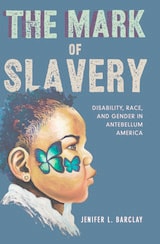
cover of The Mark of Slavery: Disability, Race, and Gender in Antebellum America

The Mark of Slavery

Disability, Race, and Gender in Antebellum America

Jenifer L. Barclay

University of Illinois Press, 2021

Exploring the disability history of slavery

Time and again, antebellum Americans justified slavery and white supremacy by linking blackness to disability, defectiveness, and dependency. Jenifer L. Barclay examines the ubiquitous narratives that depicted black people with disabilities as pitiable, monstrous, or comical, narratives used not only to defend slavery but argue against it. As she shows, this relationship between ableism and racism impacted racial identities during the antebellum period and played an overlooked role in shaping American history afterward. Barclay also illuminates the everyday lives of the ten percent of enslaved people who lived with disabilities. Devalued by slaveholders as unsound and therefore worthless, these individuals nonetheless carved out an unusual autonomy. Their roles as caregivers, healers, and keepers of memory made them esteemed within their own communities and celebrated figures in song and folklore.

Prescient in its analysis and rich in detail, The Mark of Slavery is a powerful addition to the intertwined histories of disability, slavery, and race.
[more]
cover of The Matter of Disability: Materiality, Biopolitics, Crip Affect

The Matter of Disability

Materiality, Biopolitics, Crip Affect

David T. Mitchell, Susan Antebi, and Sharon L. Snyder, Editors

University of Michigan Press, 2019
The Matter of Disability returns disability to its proper place as an ongoing historical process of corporeal, cognitive, and sensory mutation operating in a world of dynamic, even cataclysmic, change. The book’s contributors offer new theorizations of human and nonhuman embodiments and their complex evolutions in our global present, in essays that explore how disability might be imagined as participant in the “complex elaboration of difference,” rather than something gone awry in an otherwise stable process. This alternative approach to materiality sheds new light on the capacities that exist within the depictions of disability that the book examines, including Spider-Man, Of Mice and Men, and Bloodchild.
[more]
cover of The Right to Maim: Debility, Capacity, Disability

The Right to Maim

Debility, Capacity, Disability

Jasbir K. Puar

Duke University Press, 2017
In The Right to Maim Jasbir K. Puar brings her pathbreaking work on the liberal state, sexuality, and biopolitics to bear on our understanding of disability. Drawing on a stunning array of theoretical and methodological frameworks, Puar uses the concept of “debility”—bodily injury and social exclusion brought on by economic and political factors—to disrupt the category of disability. She shows how debility, disability, and capacity together constitute an assemblage that states use to control populations. Puar's analysis culminates in an interrogation of Israel's policies toward Palestine, in which she outlines how Israel brings Palestinians into biopolitical being by designating them available for injury. Supplementing its right to kill with what Puar calls the right to maim, the Israeli state relies on liberal frameworks of disability to obscure and enable the mass debilitation of Palestinian bodies. Tracing disability's interaction with debility and capacity, Puar offers a brilliant rethinking of Foucauldian biopolitics while showing how disability functions at the intersection of imperialism and racialized capital.
[more]
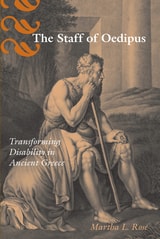
cover of The Staff of Oedipus: Transforming Disability in Ancient Greece

The Staff of Oedipus

Transforming Disability in Ancient Greece

Martha L. Rose

University of Michigan Press, 2013

Ancient Greek images of disability permeate the Western consciousness: Homer, Teiresias, and Oedipus immediately come to mind. But The Staff of Oedipus looks at disability in the ancient world through the lens of disability studies, and reveals that our interpretations of disability in the ancient world are often skewed. These false assumptions in turn lend weight to modern-day discriminatory attitudes toward disability.

Martha L. Rose considers a range of disabilities and the narratives surrounding them. She examines not only ancient literature, but also papyrus, skeletal material, inscriptions, sculpture, and painting, and draws upon modern work, including autobiographies of people with disabilities, medical research, and theoretical work in disability studies. Her study uncovers the realities of daily life for people with disabilities in ancient Greece and challenges the translation of the term adunatos (unable) as "disabled," with all its modern associations.
[more]
cover of This Abled Body: Rethinking Disabilities in Biblical Studies

This Abled Body

Rethinking Disabilities in Biblical Studies

Hector Avalos

SBL Press, 2007

The burgeoning field of disability studies has recently emerged within the humanities and social sciences and, as a result, disability is no longer seen as the biological condition of an individual body but as a complex product of social, political, environmental, and biological discourses. The groundbreaking essays of This Abled Body engage biblical studies in conversation with the wider field of disability studies. They explore the use of the conceptual category “disability” in biblical and Near Eastern texts and examine how conceptions of disability become a means of narrating, interpreting, and organizing human life. Employing diverse approaches to biblical criticism, scholars explore methodological issues and specific texts related to physical and cognitive disabilities. Responses to the essays by established disability activists and academics working in the social sciences and humanities conclude the volume. The contributors are Martin Albl, Hector Avalos, Bruce C. Birch, Carole R. Fontaine, Thomas Hentrich, Nicole Kelley, Janet Lees, Sarah J. Melcher, David Mitchell, Jeremy Schipper, Sharon Snyder, Holly Joan Toensing, Neal H. Walls, and Kerry H. Wynn.
[more]
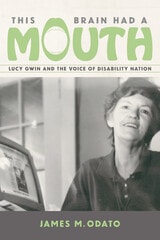
cover of This Brain Had a Mouth: Lucy Gwin and the Voice of Disability Nation

This Brain Had a Mouth

Lucy Gwin and the Voice of Disability Nation

James M. Odato

University of Massachusetts Press, 2021

Author, advocacy journalist, disability rights activist, feminist, and founder of Mouth magazine, Lucy Gwin (1943—2014) made her mark by helping those in "handicaptivity" find their voice. Gwin produced over one hundred issues of the magazine—one of the most radical and significant disability rights publications—and masterminded its acerbic, sometimes funny, and often moving articles about people from throughout the disability community.

In this engrossing biography, James M. Odato provides an intimate portrait of Gwin, detailing how she forged her own path into activism. After an automobile accident left her with a brain injury, Gwin became a tireless advocate for the equal rights of people she termed "dislabled." More than just a publisher, she fought against corruption in the rehabilitation industry, organized for the group Not Dead Yet, and much more. With Gwin's story at the center, Odato introduces readers to other key disability rights activists and organizations, and supplies context on current contentious topics such as physician-assisted suicide. Gwin's impact on disability rights was monumental, and it is time her story is widely known.
[more]