Results by title
64 books match the query 'Pets' and 11 start with t
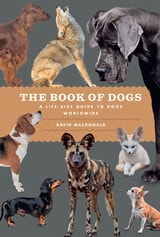
The Book of Dogs
A Life-Size Guide to Canids WorldwideDavid W. Macdonald
University of Chicago Press, 2026
For all dog lovers, a stunningly illustrated and scientifically informed global guide to our beloved canine companions and their wild kin.
Dogs are spectacularly diverse. From the world’s smallest wild canid, the diminutive fennec fox, to the majestic grey wolf, and from the towering great Dane to the tiny Chihuahua, The Book of Dogs celebrates the connections between humans’ best friends, their ancestors, and their wild cousins, offering insights into both wild and domestic canines and profiling every related species in the dog family Canidae as well as the vast variety of domestic dog breeds.
No other book so comprehensively and globally covers the most widespread family of carnivore species, helping to show that humans’ companions are part of a much larger animal world. Leading canid expert and award-winning author David W. Macdonald accessibly explains developments in the study of genetics to reveal the ancestry of modern canids and the astonishing hybridization among them. In addition to showcasing the diversity of our planet’s dogs, the book presents the latest research on the ecology, behavior, and society of wild dog species. These compelling descriptions with beautiful photographs—including life-size snout images of each of the thirty-seven wild canid species and over two hundred global breeds—offer readers of The Book of Dogs a chance to meet and understand our companions and their kin like never before.
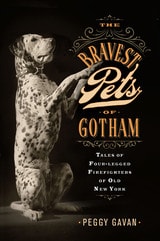
The Bravest Pets of Gotham
Tales of Four-Legged Firefighters of Old New YorkPeggy Gavan
Rutgers University Press, 2024
The Bravest Pets of Gotham takes readers on a fun historical tour of Old New York, sharing touching and comical stories about the bond between FDNY firefighters and their four-legged or feathered friends. The book contains more than one hundred astonishing, emotional, and sometimes hilariously absurd tales of the FDNY animal mascots whose extraordinary intelligence, acts of bravery, and funny antics deserve to be remembered. Some anecdotes depict fire companies that broke the one-pet rule and welcomed a veritable menagerie of animals into their firehouses, including goats, turtles, and even monkeys. Whether you are an animal lover, a history buff, or a fan of firefighting, The Bravest Pets of Gotham is full of stories that will thrill and amuse you.
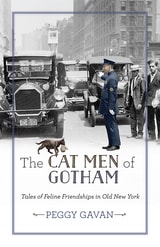
The Cat Men of Gotham
Tales of Feline Friendships in Old New YorkPeggy Gavan
Rutgers University Press, 2019
The nineteenth century was a rough time to be a stray cat in New York City. The city’s human residents dealt with feline overpopulation by gassing unwanted cats or tossing them in rivers. But a few lucky strays were found by a diverse array of men—including firemen, cops, athletes, and politicians—who rescued them from the streets and welcomed them into their homes and hearts.
This book tells the stories of these heroic cat men of Gotham and their beloved feline companions. Not only does it introduce us to some remarkable men, but we get to meet many extraordinary cats as well, from Chinese stowaways prowling the Chelsea Piers to the sole feline survivor of the USS Maine explosion. Among the forty-two profiles, we find many feline Cinderella stories, as humble alley cats achieved renown as sports team mascots, artists’ muses, and even presidential pets.
Sure to appeal to cat fanciers and history fans alike, The Cat Men of Gotham will give you a new appreciation for Old New York and the people and animals who made it their home. As it takes you on a journey through the streets of Manhattan and Brooklyn, it will amuse and astound you with tales of powerful men and their pussycats.
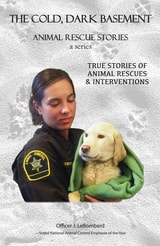
The Cold Dark Basement
True Stories of Animal Rescues and InterventionsJodi LeBombard
Parkhurst Brothers, Inc., 2024
The Companion Species Manifesto
Dogs, People, and Significant OthernessDonna J. Haraway
Prickly Paradigm Press, 2003
The Difficulty of Being a Dog
Roger Grenier
University of Chicago Press, 2000
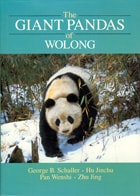
The Giant Pandas of Wolong
George B. Schaller, Hu Jinchu, Pan Wenshi, and Zhu Jing
University of Chicago Press, 1985
Although giant pandas have few natural enemies, the periodic die-off of bamboo, their main food, threatens their survival. In order to understand the panda's vital link to bamboo, the research team has explored many aspects of the animal's life, collecting information on both wild and captive pandas. Though a herbivore, the panda retains the simple digestive tract of a carnivore. Unable to digest cellulose in plants, it receives relatively little nutrition from the bamboo it eats. As a result, it must eat many kilograms of bamboo each day, foraging for fourteen hours or more throughout a day and night.
Known to the Chinese for several thousand years as daxiongmao, "large bear-cat," the giant panda has defied easy classification. The authors review anatomical, biochemical, behavioral, and paleontological evidence, concluding that the animal is neither bear nor raccoon but belongs in a separate family, perhaps with the small red panda.
The giant panda has captured the imagination of the public more than any other animal. By presenting their groundbreaking and crucial research to the public, the authors of The Giant Pandas of Wolong hope to spur further research and action that will help this precious animal survive.
The Great Cat and Dog Massacre
The Real Story of World War Two's Unknown TragedyHilda Kean
University of Chicago Press, 2017
In The Great Cat and Dog Massacre, Hilda Kean unearths the history, piecing together the compelling story of the life—and death—of Britain’s wartime animal companions. She explains that fear of imminent Nazi bombing and the desire to do something to prepare for war led Britons to sew blackout curtains, dig up flower beds for vegetable patches, send their children away to the countryside—and kill the family pet, in theory sparing them the suffering of a bombing raid. Kean’s narrative is gripping, unfolding through stories of shared experiences of bombing, food restrictions, sheltering, and mutual support. Soon pets became key to the war effort, providing emotional assistance and helping people to survive—a contribution for which the animals gained government recognition.
Drawing extensively on new research from animal charities, state archives, diaries, and family stories, Kean does more than tell a virtually forgotten story. She complicates our understanding of World War II as a “good war” fought by a nation of “good” people. Accessibly written and generously illustrated, Kean’s account of this forgotten aspect of British history moves animals to center stage—forcing us to rethink our assumptions about ourselves and the animals with whom we share our homes.
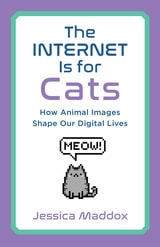
The Internet Is for Cats
How Animal Images Shape Our Digital LivesJessica Maddox
Rutgers University Press, 2023
The Internet is for Cats examines how animal images are employed to create a lighter, more playful mood, uniting users within online spaces that can otherwise easily become fractious and toxic. Placing today’s pet videos, photos, and memes within a longer history of mediated animal images, communication scholar Jessica Maddox also considers the factors that make them unique. She explores the roles that animals play within online economies of cuteness and attention, as well as the ways that animal memes and videos respond to common experiences of life under neoliberalism.
Conducting a rich digital ethnography, Maddox combines observations and textual analysis with extensive interviews of the people who create, post and share animal media, including TikTok influencers seeking to make their pets famous, activists tweeting about wildlife conservation, and Redditors upvoting every cute cat photo. The Internet is for Cats will leave you with a new appreciation for the human social practices behind the animal images you encounter online.

The Last Walk
Reflections on Our Pets at the End of Their LivesJessica Pierce
University of Chicago Press, 2012
The product of a lifetime of loving pets, studying philosophy, and collaborating with scientists at the forefront of the study of animal behavior and cognition, The Last Walk asks—and answers—the toughest questions pet owners face. The result is informative, moving, and consoling in equal parts; no pet lover should miss it.
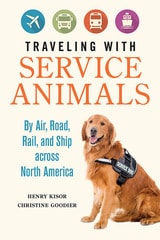
Traveling with Service Animals
By Air, Road, Rail, and Ship across North AmericaHenry Kisor and Christine Goodier
University of Illinois Press, 2019