Results by title
130 books match the query 'Philosophers' and 28 start with t
Taking the Naturalistic Turn, Or How Real Philosophy of Science Is Done
Edited Organized and Moderated by Werner Callebaut
University of Chicago Press, 1993
This innovative book presents candid, informal debates among scholars who examine the benefits and problems of studying science in the same way that scientists study the natural world. Callebaut achieves the effect of face-to-face engagement through separate interviews with participants.
Contributors include William Bechtel, Robert Brandon, Richard M. Burian, Donald T. Campbell, Patricia Churchland, Jon Elster, Ronald N. Giere, David L. Hull, Philip Kitcher, Karin Knorr Cetina, Bruno Latour, Richard Levins, Richard C. Lewontin, Elisabeth Lloyd, Helen Longino, Thomas Nickles, Henry C. Plotkin, Robert J. Richards, Alexander Rosenberg, Michael Ruse, Dudley Shapere, Elliott Sober, Ryan Tweney, and William Wimsatt.
"Why can't we have both theoretical ecology and natural histories, lovingly done?"—Philip Kitcher
"Don't underestimate the arrogance of philosophers!"—Elisabeth Lloyd
The American Philosopher
Conversations with Quine, Davidson, Putnam, Nozick, Danto, Rorty, Cavell, MacIntyre, KuhnGiovanna Borradori
University of Chicago Press, 1993
Giovanna Borradori, in her substantial introduction, explains the history of the analytic movement in America and the home-grown reaction against it. In the late nineteenth and early twentieth centuries, American philosophy was a socially engaged interdisciplinary enterprise. In transcendentalism and pragmatism, then the dominant currents in American thought, philosophy was connected to history, psychology, and public issues. But in the 1930s, the imported European movement of logical positivism redefined philosophical discourse in terms of mathematical logic and theory of language. Under the influence of this analytic view, American philosophy became a professionalized discipline, divorced from public debate and intellectual history and antagonistic to the other, more humanistic tradition of continental thought.
The American Philosopher explores the opposition between analytic and continental thought and shows how recent American work has begun to bridge the gap between the two traditions. Through a reexamination of pragmatism, and through an attempt to understand philosophy in a more hermeneutical way, the participants narrow the distance between America's distinctly scientific philosophy and Europe's more literary approach.
Moving beyond classical analytic philosophy, the participants confront each other on a number of topics. The logico-linguistic orientations of Quine and Davidson come up against the more discursive, interdisciplinary agendas of Rorty, Putnam, and Cavell. Nozick's theory of pluralist anarchism goes face-to-face with the aesthetic neo-foundationalism of Danto. And Kuhn's hypothesis of paradigm shifts is measured against MacIntyre's ethics of "virtues."
Borradori's conversations offer an unconventional portrait of the way philosophers think about their work; scholars and students will not be its only beneficiaries, so will everyone who wonders about the current state of American philosophy.
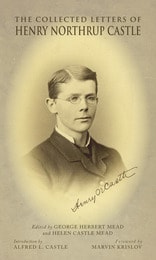
The Collected Letters of Henry Northrup Castle
Henry Northrup Castle
Ohio University Press, 2012
George Herbert Mead, one of America’s most important and influential philosophers, a founder of pragmatism, social psychology, and symbolic interactionism, was also a keen observer of American culture and early modernism. In the period from the 1870s to 1895, Henry Northrup Castle maintained a correspondence with family members and with Mead—his best friend at Oberlin College and brother-in-law—that reveals many of the intellectual, economic, and cultural forces that shaped American thought in that complex era. Close friends of John Dewey, Jane Addams, and other leading Chicago Progressives, the author of these often intimate letters comments frankly on pivotal events affecting higher education, developments at Oberlin College, Hawaii (where the Castles lived), progressivism, and the general angst that many young intellectuals were experiencing in early modern America.
The letters, drawn from the Mead-Castle collection at the University of Chicago, were collected and edited by Mead after the tragic death of Henry Castle in a shipping accident in the North Sea. Working with his wife Helen Castle (one of Henry’s sisters), he privately published fifty copies of the letters to record an important relationship and as an intellectual history of two progressive thinkers at the end of the nineteenth century. American historians, such as Robert Crunden and Gary Cook, have noted the importance of the letters to historians of the late nineteenth century.
The letters are made available here using the basic Mead text of 1902. Additional insights into the connection between Mead, John Dewey, Henry and Harriet Castle, and Hawaii’s progressive kindergarten system are provided by the foundation’s executive director Alfred L. Castle. Marvin Krislov, president of Oberlin College, has added additional comments on the importance of the letters to understanding the intellectual relationship that flourished at Oberlin College.
Published with the support of the Samuel N. and Mary Castle Foundation.
The Complete Notebooks
Albert Camus
University of Chicago Press, 2025
Throughout his career, French writer and philosopher Albert Camus kept a series of notebooks that offers an unrivaled glimpse into the writer at his most personal and reflective. These notebooks contain his thoughts on politics, solitude, personal failings and regrets, his travels, and his relationships with friends and rivals. They also provide insight into his process as a thinker—his frustrations, his ideas for novels and plays (some pursued and others abandoned), his routines, his aspirations, and his self-recriminations.
For Camus devotees, there is no more intimate experience than reading these notebooks. On the one hand, his fallibility is on full display: He is irritated by mediocrity, frustrated with his health, plagued by insomnia, and miserable about life’s petty necessities. Yet, he is also intensely curious and observant, sometimes moved to rapture by landscapes and people. Readers will experience the bounty of Camus’s philosophical imagination and witness firsthand how his ideas take shape. The notebooks contain drafts of letters to friends and recorded reflections on the compromises that being in the world demands.
This publication marks the first time Camus’s complete notebooks have been published in one comprehensive volume. Expertly and movingly translated by Ryan Bloom with extensive footnotes contextualizing the entries, The Complete Notebooks will remain a literary treasure for years to come.
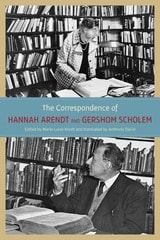
The Correspondence of Hannah Arendt and Gershom Scholem
Hannah Arendt and Gershom Scholem
University of Chicago Press, 2017
Arendt and Scholem met in 1932 in Berlin and quickly bonded over their mutual admiration for and friendship with Walter Benjamin. They began exchanging letters in 1939, and their lively correspondence continued until 1963, when Scholem’s vehement disagreement with Arendt’s Eichmann in Jerusalem led to a rupture that would last until Arendt’s death a dozen years later. The years of their friendship, however, yielded a remarkably rich bounty of letters: together, they try to come to terms with being both German and Jewish, the place and legacy of Germany before and after the Holocaust, the question of what it means to be Jewish in a post-Holocaust world, and more. Walter Benjamin is a constant presence, as his life and tragic death are emblematic of the very questions that preoccupied the pair. Like any collection of letters, however, the book also has its share of lighter moments: accounts of travels, gossipy dinner parties, and the quotidian details that make up life even in the shadow of war and loss.
In a world that continues to struggle with questions of nationalism, identity, and difference, Arendt and Scholem remain crucial thinkers. This volume offers us a way to see them, and the development of their thought, anew.

The Correspondence of Richard Price, Volume II
March 1778–February 1786D. O. Thomas, ed.
Duke University Press, 1983
The Correspondence of Richard Price, Volume III
February 1786–February 1791William Bernard Peach, editor
Duke University Press, 1983
Price's correspondence with Adams, Franklin, Jefferson, Rush, and other Americans concern the issues of slavery, the rebellion in Massachusetts, use of paper money, opposition to the establishment of religion, and the status of the federal government. Letters to Priestly, Lansdowne, and others in Britain are about science and technology, the crisis in the United Provinces, armed neutrality, the national debt, revolution, religious sects, and foreign relations. In his correspondence with French leaders following the fall of the Bastille, particularly with le Duc del la Rochefoucauld, Price expresses his high hopes for the growth of civil and religious freedom in France.
Indispensable for an understanding of the work of one of the best known and most distinguished Welshmen of the eighteenth century, this book—and the series—will also be of interest to those who study the history of ideas.
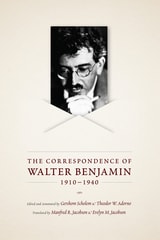
The Correspondence of Walter Benjamin, 1910-1940
Walter Benjamin
University of Chicago Press, 1994
A powerful, mesmerizing collection of letters from one of the most important intellectuals and writers of the twentieth century

The Good European
Nietzsche's Work Sites in Word and ImageDavid Farrell Krell and Donald L. Bates
University of Chicago Press, 1997
"A brilliant juxtaposition of life and thought. . . . The sympathy of this pictorial biography is rivaled by few books on Nietzsche."—Charles M. Stang, Boston Book Review
"[A] distinguished addition to the Nietzsche-friendly corpus."—Alain de Botton, Los Angeles Times Book Review
"An odd and oddly endearing record of Nietzsche's travels."—John Banville, New York Review of Books
The Good Life
Yi-Fu Tuan
University of Wisconsin Press, 1986
“[Tuan] explores answers to an old and unanswerable question: how should we live? . . . The Good Life is a little anthology of good feeling, touchstones of joy . . . These pleasures make the book a pleasure, not of conviction or belief, but of conversation’s meandering exploration.”—New York Times Book Review
“Tuan, after all, is one of the few geographers who can be read for pleasure, and by the public as well as by the professional. But read not merely for pleasure, nor yet to mark, learn, and inwardly digest. Rather, consider Tuan’s challenge to identify your concept of the good life, and then try to construct that life.”—Environment and Planning D: Society and Space
The Intellectual Legacy of Herman Dooyeweerd (1894-1977)
A Hopeful Philosophy for our TimeMaarten Verkerk
Amsterdam University Press, 2025
The work of Herman Dooyeweerd is currently attracting global interest. From the United States to Korea, from New Zealand to Brazil, and from the United Kingdom to South Africa, professionals across various disciplines—philosophers, engineers, politicians, economists, and others—are expanding upon his ideas within their respective fields. At the same time, his work is becoming increasingly relevant as contemporary society displays characteristics reminiscent of those observed in European culture a century ago. The Intellectual Legacy of Herman Dooyeweerd (1894-1977): A Hopeful Philosophy for our Time introduces his most significant concepts and numerous examples of their contemporary applications.
The Intellectual Legacy of Herman Dooyeweerd (1894-1977)
A Hopeful Philosophy for our TimeMaarten Verkerk
Amsterdam University Press, 2025
The work of Herman Dooyeweerd is currently attracting global interest. From the United States to Korea, from New Zealand to Brazil, and from the United Kingdom to South Africa, professionals across various disciplines—philosophers, engineers, politicians, economists, and others—are expanding upon his ideas within their respective fields. At the same time, his work is becoming increasingly relevant as contemporary society displays characteristics reminiscent of those observed in European culture a century ago. The Intellectual Legacy of Herman Dooyeweerd (1894-1977): A Hopeful Philosophy for our Time introduces his most significant concepts and numerous examples of their contemporary applications.
The Ironic Hume
By John Valdimir Price
University of Texas Press, 1965
Many of the seemingly bland assertions and bald statements of the eighteenth-century philosopher David Hume contain more than the mind immediately perceives. Author John Valdimir Price contends that an understanding of Hume's writings cannot be separated from an understanding of his life. By examining the works of Hume, Price shows the way in which an ironic way of seeing events and an ironic mode of expression permeated Hume's life and writings.
Price examines Hume's irony as it is exhibited in letters to his friends and in his writings concerned with morality, people, philosophy, politics, history, and above all religion. Hume's opinions on life in general are stated in works ranging from the Treatise of Human Nature and the Essays, Moral and Political, through the Enquiry concerning Human Understanding and the Enquiry concerning Principles of Morals, to the Dialogue and Four Dissertations of his maturity.
Price feels that Hume's recognition of the ironic in life came about from his perception of the disproportion between human hopes and human accomplishments. The rhetorical consequences of applying reason to a duality in human nature creates the ironic mode. Hume conceived man's opposing tendencies as his willingness to commit himself orally to a concept, a dogma, an idea, or an ideology, and his unwillingness to involve himself in the logical and rhetorical implications of articulating those principles.
Hume's use of the ironic mode in his writings provides him with a means of challenging certain dogmatic assumptions common to thought, particularly to traditional religious thought; it acts as a mask for his sceptical intentions, and it is an implied criticism of many ideas. In his political writing, Hume frequently implied that the question under argument was almost too ridiculous to deserve serious treatment. This tactic was effectively employed in the Account of Stewart, in which Hume came to the defense of a friend.
In his most profitable venture, the History of England, Hume not only used irony to advantage, but developed a new approach to the writing of history—the use of narrative. He presented history as a series of more or less connected events, not as a series of "right" or "wrong" attitudes.
The author believes that Hume's initial religious scepticism, combined with the predominant satiric-ironic mode in the literature of his time, led him to seek irony as a method of self expression. This scepticism, which permeated all of Hume's attitudes toward life, reached its most complete expression in the Dialogues concerning Natural Religion, which accepted reason as its guide, but also accepted experience as its master.
The Life and Thought of Alexandre Kojève
Marco Filoni and David Broder (Trans.)
Northwestern University Press, 2025
A fresh and vivid reappraisal of one of the most influential intellects of the modern era
Alexandre Kojève is one of the twentieth century’s most seductive and intriguing figures. A product of the Russian merchant bourgeoisie, he became, depending on one’s point of view, either an overzealous bureaucrat or a secret agent who infiltrated the upper echelons of French state bureaucracy, spending the last twenty years of his life working in international diplomacy and high finance. Marco Filoni describes each facet of Kojève’s different lives in crystalline detail: the cultural circles of his youth, his studies, his philosophical passions, his fundamental theoretical choices, and his intellectual network, as well as the students who would become part of the intellectual elite, including Lacan, Bataille, and Merleau-Ponty. Drawing on rich archival material, unpublished texts, correspondence, and written and oral testimonies, The Life and Thought of Alexandre Kojève is a major benchmark for scholars of Kojève and of twentieth-century intellectual and political history. Filoni paints a vibrant portrait of one of the most influential intellectuals of the modern era, deftly composing Kojève’s personal, political, and philosophical lives.
The Life and Thought of Josiah Royce
Revised and Expanded EditionJohn Clendenning
Vanderbilt University Press, 1999
Infuses the first, highly acclaimed edition with new material that deepens our understanding of this distinguished American philosopher
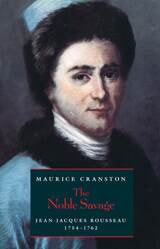
The Noble Savage
Jean-Jacques Rousseau, 1754-1762Maurice Cranston
University of Chicago Press, 1991
"Luckily for us, Maurice Cranston's The Noble Savage: Jean-Jacques Rousseau, 1754-1762 has managed to craft a highly detailed account of eight key years of Rousseau's life in such a way that we can both understand and even, on occasion, sympathize."—Olivier Bernier, Wall Street Journal
Maurice Cranston (1920-1993), a distinguished scholar and recipient of the James Tait Black Memorial Prize for his biography of John Locke, was professor of political science at the London School of Economics. His numerous books include The Romantic Movement and Philosophers and Pamphleteers, and translations of Rousseau's The Social Contract and Discourse on the Origins of Inequality.
The Philosophy of Autobiography
Edited by Christopher Cowley
University of Chicago Press, 2015
Cowley and his contributors show that while philosophers have seemed uninterested in autobiography, they have actually long been preoccupied with many of its conceptual elements, issues such as the nature of the self, the problems of interpretation and understanding, the paradoxes of self-deception, and the meaning and narrative structure of human life. But rarely have philosophers brought these together into an overarching question about what it means to tell one’s life story or understand another’s. Tackling these questions, the contributors explore the relationship between autobiography and literature; between story-telling, knowledge, and agency; and between the past and the present, along the way engaging such issues as autobiographical ethics and the duty of writing. The result bridges long-standing debates and illuminates fascinating new philosophical and literary issues.
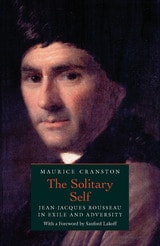
The Solitary Self
Jean-Jacques Rousseau in Exile and AdversityMaurice Cranston
University of Chicago Press, 1997
"The Solitary Self is a fitting coda to a magisterial work. Cranston . . . is a compelling stylist who narrates Rousseau's tribulations with a mixture of compassion and dry humor."—Thomas Pavel, Wall Street Journal
"Cranston not only recreates for his readers a rounded view of Rousseau himself, he sets it firmly in the social and political context of Europe's ancien regime. . . . An engrossing work of history."—John Gray, New Statesman
"Cranston's painstaking archival research and lucid style yield the most detailed and thoroughly documented biography of Rousseau written in English. His epilogue masterfully sums up Rousseau's importance as political philosopher and initiator of romantic sensibilities."—Choice
"Anyone curious about the paradoxes of a most paradoxical man will not go wrong by starting with this invaluable biography."—James Miller, Washington Post Book World
"As absorbing as a picaresque novel."—Naomi Bliven, New Yorker
"A monument of scholarship. . . . This amazing biography, like Boswell's account of Johnson, recreates the daily life of Rousseau: what he did, who he saw, what he said, what he wrote. . . . We may be quite confident that we hold in our hands the authoritative account of this life. The definitive Rousseau."—Isaac Kramnick, New Republic
Maurice Cranston (1920-1993), a distinguished scholar and recipient of the James Tait Black Memorial Prize for his biography of John Locke, was professor of political science at the London School of Economics. His numerous books include The Romantic Movement and Philosophers and Pamphleteers, and translations of Rousseau's The Social Contract and Discourse on the Origins of Inequality.
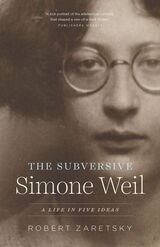
The Subversive Simone Weil
A Life in Five IdeasRobert Zaretsky
University of Chicago Press, 2021
Though Weil published little during her life, after her death, thanks largely to the efforts of Albert Camus, hundreds of pages of her manuscripts were published to critical and popular acclaim. While many seekers have been attracted to Weil’s religious thought, Robert Zaretsky gives us a different Weil, exploring her insights into politics and ethics, and showing us a new side of Weil that balances her contradictions—the rigorous rationalist who also had her own brand of Catholic mysticism; the revolutionary with a soft spot for anarchism yet who believed in the hierarchy of labor; and the humanitarian who emphasized human needs and obligations over human rights. Reflecting on the relationship between thought and action in Weil’s life, The Subversive Simone Weil honors the complexity of Weil’s thought and speaks to why it matters and continues to fascinate readers today.
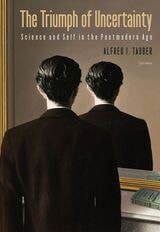
The Triumph of Uncertainty
Science and Self in the Postmodern AgeAlfred I. Tauber
Central European University Press, 2022
Tauber, a leading figure in history and philosophy of science, offers a unique autobiographical overview of how science as a discipline of thought has been characterized by philosophers and historians over the past century. He frames his account through science’s – and his own personal – quest for explanatory certainty.
During the 20th century, that goal was displaced by the probabilistic epistemologies required to characterize complex systems, whether in physics, biology, economics, or the social sciences. This “triumph of uncertainty” is the inevitable outcome of irreducible chance and indeterminate causality. And beyond these epistemological limits, the interpretative faculties of the individual scientist (what Michael Polanyi called the “personal” and the “tacit”) invariably affects how data are understood. Whereas positivism had claimed radical objectivity, post-positivists have identified how a web of non-epistemic values and social forces profoundly influence the production of knowledge.
Tauber presents a case study of these claims by showing how immunology has incorporated extra-curricular social elements in its theoretical development and how these in turn have influenced interpretive problems swirling around biological identity, individuality, and cognition. The correspondence between contemporary immunology and cultural notions of selfhood are strong and striking. Just as uncertainty haunts science, so too does it hover over current constructions of personal identity, self knowledge, and moral agency. Across the chasm of uncertainty, science and selfhood speak.
The Weimar Origins of Rhetorical Inquiry
David L. Marshall
University of Chicago Press, 2020
The Work of Mourning
Jacques Derrida
University of Chicago Press, 2001
Gathered here are texts—letters of condolence, memorial essays, eulogies, funeral orations—written after the deaths of well-known figures: Roland Barthes, Paul de Man, Michel Foucault, Louis Althusser, Edmond Jabès, Louis Marin, Sarah Kofman, Gilles Deleuze, Emmanuel Levinas, Jean-François Lyotard, Max Loreau, Jean-Marie Benoist, Joseph Riddel, and Michel Servière.
With his words, Derrida bears witness to the singularity of a friendship and to the absolute uniqueness of each relationship. In each case, he is acutely aware of the questions of tact, taste, and ethical responsibility involved in speaking of the dead—the risks of using the occasion for one's own purposes, political calculation, personal vendetta, and the expiation of guilt. More than a collection of memorial addresses, this volume sheds light not only on Derrida's relation to some of the most prominent French thinkers of the past quarter century but also on some of the most important themes of Derrida's entire oeuvre-mourning, the "gift of death," time, memory, and friendship itself.
"In his rapt attention to his subjects' work and their influence upon him, the book also offers a hesitant and tangential retelling of Derrida's own life in French philosophical history. There are illuminating and playful anecdotes—how Lyotard led Derrida to begin using a word-processor; how Paul de Man talked knowledgeably of jazz with Derrida's son. Anyone who still thinks that Derrida is a facetious punster will find such resentful prejudice unable to survive a reading of this beautiful work."—Steven Poole, Guardian
"Strikingly simpa meditations on friendship, on shared vocations and avocations and on philosophy and history."—Publishers Weekly
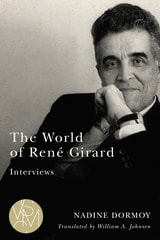
The World of René Girard
InterviewsNadine Dormoy
Michigan State University Press, 2024
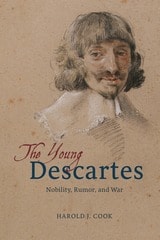
The Young Descartes
Nobility, Rumor, and WarHarold J. Cook
University of Chicago Press, 2018
In The Young Descartes, Harold J. Cook tells the story of a man who did not set out to become an author or philosopher—Descartes began publishing only after the age of forty. Rather, for years he traveled throughout Europe in diplomacy and at war. He was present at the opening events of the Thirty Years' War in Central Europe and Northern Italy, and was also later involved in struggles within France. Enduring exile, scandals, and courtly intrigue, on his journeys Descartes associated with many of the most innovative free thinkers and poets of his day, as well as great noblemen, noblewomen, and charismatic religious reformers. In his personal life, he expressed love for men as well as women and was accused of libertinism by his adversaries.
These early years on the move, in touch with powerful people and great events, and his experiences with military engineering and philosophical materialism all shaped the thinker and philosopher Descartes became in exile, where he would begin to write and publish, with purpose. But though it is these writings that made ultimately made him famous, The Young Descartes shows that this story of his early life and the tumultuous times that molded him is sure to spark a reappraisal of his philosophy and legacy.
Thomas Aquinas and His Predecessors
The Philosophers and the Church FathersLeo J. Elders
Catholic University of America Press, 2018

Thomas Hobbes in His Time
Ralph Ross, Herbert W. Schneider, and Theodore Waldman, Editors
University of Minnesota Press, 1975
Thomas Hobbes in His Time was first published in 1975. Minnesota Archive Editions uses digital technology to make long-unavailable books once again accessible, and are published unaltered from the original University of Minnesota Press editions.
Thomas Hobbes, the seventeenth-century English philosopher, is the subject of lively discussion among philosophers, historians, and political theorists today. Both as a participant in a revolutionary commonwealth and as a student of the science of human nature, Hobbes has achieved a new relevance to contemporary society. As the editors of this volume point out, moralists are apt to place him in the twentieth century, and historians are apt to portray him as an antique. The aim of these essays is to get an accurate account of how radical Hobbes was in his own revolutionary century.
The essays are the fruit of years of cooperative study, going back to John Dewey's calling attention to Hobbe's interest in transforming the courts of common law into courts of equity. The recent discovery of more manuscripts and the publication of better editions of his writings have stimulated an extensive reinterpretation of Hobbe's ideas and goals.
Even in his own time, Hobbes was subject to attacks from many sides. Although scholars now generally reject the stereotype of "Hobbism" which grew during four centuries of revolutionary developments, new stereotypes to describe his philosophy have emerged. By assessing Hobbes in terms of his own day, the book will serve to counteract much contemporary misunderstanding.
The essays cover four aspects of Hobbe's thought: his political theory, his views on religion, his moral philosophy, and his theory of motion and philosophical method. With the exception of John Dewey's "The Motivation of Hobbes's Political Philosophy," all the essays were written especially for this book. The other essays and authors are "The Anglican Theory of Salvation in Hobbes" by Paul Johnson, San Bernardino State College; "Some Puzzles in Hobbes" by Ralph Ross, Scripps College, The Claremont Colleges; "The Piety of Hobbes" by Herbert W. Schneider, emeritus professor of Columbia University and Claremont Graduate School, The Claremont Colleges; "The Generation of the Public Person" by Theodore Waldman, Harvey Mudd College, The Claremont Colleges; and "The Philosophia Prima of Thomas Hobbes" by Craig Walton, University of Nevada.
To Live Is to Resist
The Life of Antonio GramsciJean-Yves Frétigné
University of Chicago Press, 2021
One of the most influential political thinkers of the twentieth century, Antonio Gramsci (1891–1937) has left an indelible mark on philosophy and critical theory. His innovative work on history, society, power, and the state has influenced several generations of readers and political activists, and even shaped important developments in postcolonial thought. But Gramsci’s thinking is scattered across the thousands of notebook pages he wrote while he was imprisoned by Italy’s fascist government from 1926 until shortly before his death.
To guide readers through Gramsci’s life and works, historian Jean-Yves Frétigné offers To Live Is to Resist, an accessible, compelling, and deeply researched portrait of an extraordinary figure. Throughout the book, Frétigné emphasizes Gramsci’s quiet heroism and his unwavering commitment to political practice and resistance. Most powerfully, he shows how Gramsci never surrendered, even in conditions that stripped him of all power—except, of course, the power to think.
Turning On the Mind
French Philosophers on TelevisionTamara Chaplin
University of Chicago Press, 2007