Results by title
103 books match the query 'Philosophy, Modern' and 27 start with t
The Ambuiguity of Being
Lonergan and the Problems of the SupernaturalJonathan R. Heaps
Catholic University of America Press, 2024
The Confessions of Odysseus
Nalin Ranasinghe
St. Augustine's Press, 2021
Predrag Cicovacki in his indispensable preface to the book, elucidates: “In Ranasinghe’s view, Odysseus is both the first recognizable human being and a model of curious and concupiscent human rationality that constantly strives toward the virtues of self-knowledge and moderation. Homer leads us to believe that the cosmos leans toward virtue, although its fundamental truths may be inherently unspeakable. This is the line of thought that Ranasinghe believes was further developed by Socrates, Plato, and Jesus, while being obscured by Aristotle, Augustine, and their followers. Homer’s later epic and his central insights are, according to Ranasinghe, the most fertile soil on which a humane civilization can grow and flourish.”
Yet Ranasinghe ultimately says it best. “Homer must be read as the wisest Greeks did, not for fantastic tales of the Olympians but because his myths reveal eternal constants of the human state: the soul’s ruling passions and the possibility of knowing and educating these false gods. Wrestled with thus the Iliad becomes a cautionary tale, not one urging literal reading or mindless mimesis. It may always be that for the few who grasp Homer, many more will obey his gods or imitate his antiheroes; but the Odyssey hints that while its poet sees this potential for misuse, he is willing to take a noble risk and hope that eros can listen to and educate thumos. This faith is implicit in his tale of Achilles and the Trojan War. It is vital today that we see how the West’s end resembles its angry origins, as depicted in the Iliad. This is why Homer is said to be as fresh as the morning newspaper. His wisdom may outlive our literacy.”
The Correspondence between Princess Elisabeth of Bohemia and René Descartes
Princess Elisabeth of Bohemia and René Descartes
University of Chicago Press, 2007
Between the years 1643 and 1649, Princess Elisabeth of Bohemia (1618–80) and René Descartes (1596–1650) exchanged fifty-eight letters—thirty-two from Descartes and twenty-six from Elisabeth. Their correspondence contains the only known extant philosophical writings by Elisabeth, revealing her mastery of metaphysics, analytic geometry, and moral philosophy, as well as her keen interest in natural philosophy. The letters are essential reading for anyone interested in Descartes’s philosophy, in particular his account of the human being as a union of mind and body, as well as his ethics. They also provide a unique insight into the character of their authors and the way ideas develop through intellectual collaboration.
Philosophers have long been familiar with Descartes’s side of the correspondence. Now Elisabeth’s letters—never before available in translation in their entirety—emerge this volume, adding much-needed context and depth both to Descartes’s ideas and the legacy of the princess. Lisa Shapiro’s annotated edition—which also includes Elisabeth’s correspondence with the Quakers William Penn and Robert Barclay—will be heralded by students of philosophy, feminist theorists, and historians of the early modern period.
The Culture of the Body
Genealogies of ModernityDalia Judovitz
University of Michigan Press, 2001
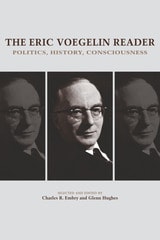
The Eric Voegelin Reader
Politics, History, ConsciousnessCharles R. Embry
University of Missouri Press, 2023
Drawing from the University of Missouri Press’s thirty-four-volume edition of The Collected Works of Eric Voegelin (1990-2009), Charles Embry and Glenn Hughes have assembled a selection of representative works of Voegelin, satisfying a longstanding need for a single volume that can serve as a general introduction to Voegelin’s philosophy. The collection includes writings that demonstrate the range and creativity of Voegelin’s thought as it developed from 1956 until his death in 1985 in his search for the history of order in human society.
The Reader begins with excerpts from Autobiographical Reflections (1973), which include an orienting mixture of biographical information, philosophical motivations, and the scope of Voegelin’s project. It reflects key periods of Voegelin’s philosophical development, pivoting on his flight from the Gestapo.
The next section focuses on Voegelin’s understanding of the contemporary need to re-ground political science in a non-positivistic, post-Weberian outlook and method. It begins with Voegelin’s historical survey of science and scientism, followed by his explanation of what political science now requires in his introduction to The New Science of Politics. Also included are two essays that exemplify the practice of this “new science.” Voegelin started his academic career as a political scientist, and these early essays indicate his wide philosophical vision.
Voegelin recognized that a fully responsible “new science of politics” would require the development of a philosophy of history. This led to the writing of his magnum opus, the five-volume Order and History (1956–1985). This section of the Reader includes his introductions to volumes 1, 2 and 4 and his most essential accounts of the theoretical requirements and historical scope of a philosophy of history adequate to present-day scholarship and historical discoveries.
In the course of his career, Voegelin came to understand that political science, political philosophy, and philosophy of history must have as their theoretical nucleus a sound philosophical anthropology based on an accurate philosophy of human consciousness. The next set of writings consists of one late lecture and four late essays that exemplify how Voegelin recovers the wisdom of classical philosophy and the Western religious tradition while criticizing modern misrepresentations of consciousness. The result is Voegelin’s contemporary accounts of the nature of reason, the challenge of truly rational discussion, and the search for divine origins and the life of the human spirit.
During his philosophical journey, Voegelin addressed the historical situatedness of human existence, explicating the historicity of human consciousness in a manner that gave full due to the challenges of acknowledging both human immersion in the story of history and the ability of consciousness to arrive at philosophically valid truths about existence that are transhistorical. The essays in this final section present the culmination of his philosophical meditation on history, consciousness, and reality.
The Gadamer Reader
A Bouquet of the Later WritingsHans-Georg Gadamer
Northwestern University Press, 2007
The History of Continental Philosophy
Edited by Alan D. Schrift
University of Chicago Press, 2010
From Kant to Kierkegaard, from Hegel to Heidegger, continental philosophers have indelibly shaped the trajectory of Western thought since the eighteenth century. Although much has been written about these monumental thinkers, students and scholars lack a definitive guide to the entire scope of the continental tradition. The most comprehensive reference work to date, this eight-volume History of Continental Philosophy will both encapsulate the subject and reorient our understanding of it. Beginning with an overview of Kant’s philosophy and its initial reception, the History traces the evolution of continental philosophy through major figures as well as movements such as existentialism, phenomenology, hermeneutics, and poststructuralism. The final volume outlines the current state of the field, bringing the work of both historical and modern thinkers to bear on such contemporary topics as feminism, globalization, and the environment. Throughout, the volumes examine important philosophical figures and developments in their historical, political, and cultural contexts.
The first reference of its kind, A History of Continental Philosophy has been written and edited by internationally recognized experts with a commitment to explaining complex thinkers, texts, and movements in rigorous yet jargon-free essays suitable for both undergraduates and seasoned specialists. These volumes also elucidate ongoing debates about the nature of continental and analytic philosophy, surveying the distinctive, sometimes overlapping characteristics and approaches of each tradition. Featuring helpful overviews of major topics and plotting road maps to their underlying contexts, A History of Continental Philosophy is destined to be the resource of first and last resort for students and scholars alike.
The Intimate Strangeness of Being
Metaphysics after DialecticWilliam Desmond
Catholic University of America Press, 2012
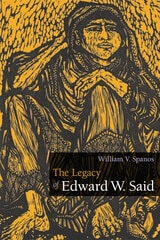
The Legacy of Edward W. Said
William V. Spanos
University of Illinois Press, 2008
With the untimely death of Edward W. Said in 2003, various academic and public intellectuals worldwide have begun to reassess the writings of this powerful oppositional intellectual. Figures on the neoconservative right have already begun to discredit Said’s work as that of a subversive intent on slandering America’s benign global image and undermining its global authority. On the left, a significant number of oppositional intellectuals are eager to counter this neoconservative vilification, proffering a Said who, in marked opposition to the “anti-humanism” of the great poststructuralist thinkers who were his contemporaries--Jacques Derrida, Jean-Francois Lyotard, Jacques Lacan, Louis Althusser, and Michel Foucault--reaffirms humanism and thus rejects poststructuralist theory.
In this provocative assessment of Edward Said’s lifework, William V. Spanos argues that Said’s lifelong anti-imperialist project is actually a fulfillment of the revolutionary possibilities of poststructuralist theory. Spanos examines Said, his legacy, and the various texts he wrote--including Orientalism,Culture and Imperialism, and Humanism and Democratic Criticism--that are now being considered for their lasting political impact.
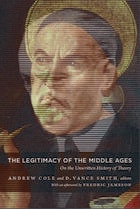
The Legitimacy of the Middle Ages
On the Unwritten History of TheoryAndrew Cole and D. Vance Smith, eds.
Duke University Press, 2010
In The Legitimacy of the Middle Ages, modernists and medievalists, as well as scholars specializing in eighteenth-, nineteenth-, and twentieth-century comparative literature, offer a new history of theory and philosophy through essays on secularization and periodization, Marx’s (medieval) theory of commodity fetishism, Heidegger’s scholasticism, and Adorno’s nominalist aesthetics. One essay illustrates the workings of medieval mysticism in the writing of Freud’s most famous patient, Daniel Paul Schreber, author of Memoirs of My Nervous Illness (1903). Another looks at Michael Hardt and Antonio Negri’s Empire, a theoretical synthesis whose conscientious medievalism was the subject of much polemic in the post-9/11 era, a time in which premodernity itself was perceived as a threat to western values. The collection concludes with an afterword by Fredric Jameson, a theorist of postmodernism who has engaged with the medieval throughout his career.
Contributors: Charles D. Blanton, Andrew Cole, Kathleen Davis, Michael Hardt, Bruce Holsinger, Fredric Jameson, Ethan Knapp, Erin Labbie, Jed Rasula, D. Vance Smith, Michael Uebel
The Merleau-Ponty Reader
Leonard Lawlor and Ted Toadvine
Northwestern University Press, 2007
Arranged chronologically, the essays are grouped in three sections corresponding to the major periods of Merleau-Ponty’s work: First, the years prior to his appointment to the Sorbonne in 1949, the early, existentialist period during which he wrote important works on the phenomenology of perception and the primacy of perception; second, the years of his work as professor of child psychology and pedagogy at the Sorbonne, a period especially concerned with language; and finally, his years as chair of modern philosophy at the Collège de France, a time devoted to the articulation of a new ontology and philosophy of nature. The editors, who provide an interpretive introduction, also include previously unpublished working notes found in Merleau-Ponty’s papers after his death. Translations of all selections have been updated and several appear here in English for the first time.
By contextualizing Merleau-Ponty’s writings on the philosophy of art and politics within the overall development of his thought, this volume allows readers to see both the breadth of his contribution to twentieth-century philosophy and the convergence of the various strands of his reflection.
The Modern Age
James V. Schall
St. Augustine's Press, 2011
The Modern Turn
Michael Rohlf
Catholic University of America Press, 2017
This volume approaches the modern turn not as an event that occurred all at once, but rather as a series of shifts in different areas of philosophy at different times. The essays are arranged broadly in chronological order of the topics they treat. Among the themes that recur most often in these essays are, first, that modern philosophy is characteristically preoccupied with questions about foundations and, second, that it ultimately prioritizes practice over theory. But the virtues of this text is in presenting a wide range or perspectives on modern philosophy – what constitutes it as modern, when it arose, and what its shortcomings may be.
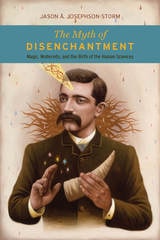
The Myth of Disenchantment
Magic, Modernity, and the Birth of the Human SciencesJason Ananda Josephson Storm
University of Chicago Press, 2017
Josephson-Storm traces the history of the myth of disenchantment in the births of philosophy, anthropology, sociology, folklore, psychoanalysis, and religious studies. Ironically, the myth of mythless modernity formed at the very time that Britain, France, and Germany were in the midst of occult and spiritualist revivals. Indeed, Josephson-Storm argues, these disciplines’ founding figures were not only aware of, but profoundly enmeshed in, the occult milieu; and it was specifically in response to this burgeoning culture of spirits and magic that they produced notions of a disenchanted world.
By providing a novel history of the human sciences and their connection to esotericism, The Myth of Disenchantment dispatches with most widely held accounts of modernity and its break from the premodern past.
The Opening of the American Mind
Ten Years of The PointThe Point
University of Chicago Press, 2020
Featuring award-winning and highly acclaimed essays from The Point’s first ten years, The Opening of the American Mind traces the path of American intellect from the magazine’s inception in 2009, when Barack Obama was ascending the steps of the White House, to the brink of the 2020 election. The essays, chosen both for the way they capture their time and transcend it, are assembled into five sections that address cycles of cultural frustrations, social movements, and the aftermath of the 2016 election, and provide lively, forward-looking considerations of how we might expand our imaginations into the future. Spanning the era of Obama and Trump, Occupy Wall Street and Black Lives Matter, #MeToo and renewed attention to reparations, this anthology offers critical reflections on some of the decade’s most influential events and stands as a testament to the significance of open exchange. The intellectual dialogue provided by The Point has never been more urgently needed, and this collection will bring the magazine’s vital work to an even broader readership.
The Philosophy of Living
François Jullien
Seagull Books, 2015
Living holds us between two places. It expresses what is most elementary—to be alive—and the absoluteness of our aspiration—finally living! But could we desire anything other than to live? In The Philosophy of Living, François Jullien meditates on Far Eastern thought and philosophy to analyze concepts that can be folded into a complete philosophy of living, including the idea of the moment, the ambiguity of the in-between, and what he calls the “transparency of morning.” Jullien here develops a strategy of living that goes beyond morality and dwells in the space between health and spirituality.
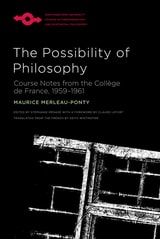
The Possibility of Philosophy
Course Notes from the Collège de France, 1959–1961Maurice Merleau-Ponty, Edited by Stéphanie Ménasé with a foreword by Claude Lefort, Translated from the French by Keith Whitmoyer
Northwestern University Press, 2022
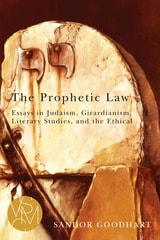
The Prophetic Law
Essays in Judaism, Girardianism, Literary Studies, and the EthicalSandor Goodhart
Michigan State University Press, 2014
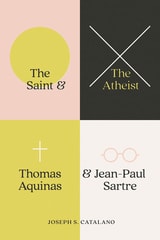
The Saint and the Atheist
Thomas Aquinas and Jean-Paul SartreJoseph S. Catalano
University of Chicago Press, 2021
Compact and open to readers of varying backgrounds, this book represents Catalano’s efforts to bring a lifetime of work on Sartre into an accessible consideration of philosophical questions by placing him in conversation with Aquinas, and it serves as a primer on key ideas of both philosophers. By bringing together these two figures, Catalano offers a fruitful space for thinking through some of the central questions about faith, conscience, freedom, and the meaning of life.
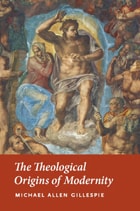
The Theological Origins of Modernity
Michael Allen Gillespie
University of Chicago Press, 2008
Exposing the religious roots of our ostensibly godless age, Michael Allen Gillespie reveals in this landmark study that modernity is much less secular than conventional wisdom suggests. Taking as his starting point the collapse of the medieval world, Gillespie argues that from the very beginning moderns sought not to eliminate religion but to support a new view of religion and its place in human life. He goes on to explore the ideas of such figures as William of Ockham, Petrarch, Erasmus, Luther, Descartes, and Hobbes, showing that modernity is best understood as a series of attempts to formulate a new and coherent metaphysics or theology.
“Bringing the history of political thought up to date and situating it against the backdrop of contemporary events, Gillespie’s analyses provide us a way to begin to have conversations with the Islamic world about what is perhaps the central question within each of the three monotheistic religions: if God is omnipotent, then what is the place of human freedom?”—Joshua Mitchell, Georgetown University
The Thinking of the Master
Bataille between Hegel and SurrealismPeter Burger
Northwestern University Press, 2002
The Thought of John Sallis
Phenomenology, Plato, ImaginationBernard Freydberg
Northwestern University Press, 2012
Sallis’s work possesses an intrinsic power and originality, as well as deep interpretive insight. This book is a descriptive and critical journey through his thought, providing an overview for readers who wish to gain a sense of its sweep, along with discrete sections on particular philosophical disciplines for readers whose interests are more specific. It grapples with the challenges Sallis’s thought presents, making them explicit and opening them up to further consideration. And it attempts to locate his thought within both contemporary continental philosophy and philosophy as a whole. Essential for any student of continental philosophy, The Thought of John Sallis expounds on his work in a manner that increases access, honors its depth, and opens up unexplored possibilities for philosophy.
The Virtual Point of Freedom
Essays on Politics, Aesthetics, and ReligionLorenzo Chiesa
Northwestern University Press, 2016
Themes out of School
Effects and CausesStanley Cavell
University of Chicago Press, 1988
Fantasies of film and television and literature, flashes across the landscape of literary theory, philosophical discourse, and French historiography give Cavell his starting points in these twelve essays. Here is philosophy in and out of "school," understood as a discipline in itself or thought through the works of Shakespeare, Molière, Kierkegaard, Thoreau, Brecht, Makavejev, Bergman, Hitchcock, Astaire, and Keaton.
Toward a Premodern Posthumanism
Anarchic Ontologies of Earthly Life in Early Modern FranceChad Córdova
Northwestern University Press, 2025
Drawing on early modern French thought to free nature and aesthetics from metaphysical humanism
What good is aesthetics in a time of ecological crisis? Toward a Premodern Posthumanism: Anarchic Ontologies of Earthly Life in Early Modern France shows that philosophical aesthetics contains unheeded potentialities for challenging the ontological subjection of nature to the human subject. Drawing on deconstructive, ecological, and biopolitical thought, Chad Córdova uncovers in aesthetics something irreducible to humanist metaphysics: an account of how beings emerge and are interrelated, responsive, and even response-able without reason or why.
This anarchic and atelic ontology, recovered from Kant, becomes the guiding thread for a new, premodern trajectory of posthumanism. Charting a path from Aristotle to Heidegger to today’s plant-thinking, with new readings of Montaigne, Pascal, Diderot, Rousseau, and others along the way, this capacious study reveals the untimely relevance of pre-1800 practices of writing, science, and art. Enacting a multitemporal mode of reading, Córdova offers a defense and illustration of the importance of returning to early modern texts as a way to rethink nature, art, ethics, and politics in a time when these concepts are in flux and more contentious than ever.
Tracking the Meaning of Life
A Philosophical JourneyYuval Lurie
University of Missouri Press, 2006
Traversing the Imaginary
Richard Kearney and the Postmodern ChallengeEdited by Peter Gratton and John Panteleimon Manoussakis; Foreword by Richard Kearney
Northwestern University Press, 2007
The book opens with Kearney's own "prelude" in which he traces his intellectual itinerary as it traverses the three imaginaries explored in the volume: the dialogical, the political, and the narrative. The interviews that follow the first section allow readers to listen in on conversations between Kearney and some of the most interesting and respected thinkers of our time—Noam Chomsky, Charles Taylor, Jacques Derrida, Paul Ricouer, and Martha Nussbaum—as they reveal new and unexpected aspects of their thought on stories and mourning, ethics and narrative, terror and religion, intellectuals and ideology. The next section, on the political imaginary, looks at Kearney's distinctive contribution to the political situation in Ireland and in Europe more generally; and in the last, on narrative, writers including David Wood, Terry Eagleton, and Mark Dooley focus on Kearney's novels as instances of narrative theory put into literary practice. Concluding with Kearney's postscript, an essay on "Traversals and Epiphanies in Joyce and Proust," the volume comes full circle, encompassing the full extent of Richard Kearney's engagement and offerings as a philosopher,