Results by title
60 books match the query 'Physical' and 9 start with t
The Afterlife Is Where We Come From
Alma Gottlieb
University of Chicago Press, 2003
In this unique and engaging ethnography of babies, Alma Gottlieb explores how religious ideology affects every aspect of Beng childrearing practices—from bathing infants to protecting them from disease to teaching them how to crawl and walk—and how widespread poverty limits these practices. A mother of two, Gottlieb includes moving discussions of how her experiences among the Beng changed the way she saw her own parenting. Throughout the book she also draws telling comparisons between Beng and Euro-American parenting, bringing home just how deeply culture matters to the way we all rear our children.
All parents and anyone interested in the place of culture in the lives of infants, and vice versa, will enjoy The Afterlife Is Where We Come From.
"This wonderfully reflective text should provide the impetus for formulating research possibilities about infancy and toddlerhood for this century." — Caren J. Frost, Medical Anthropology Quarterly

The Empirical Base of Linguistics
Grammaticality Judgments and Linguistic MethodologyCarson T. Schütze
University of Chicago Press, 1996
Integrating substantive and methodological findings, Schütze proposes a model in which judgments result from interactions of linguistic competence with general cognitive processes, and offers practical suggestions about collecting more useful data. The result is a work of importance to linguists, cognitive psychologists, and philosophers of language alike.
The Human Career
Human Biological and Cultural Origins, Third EditionRichard G. Klein
University of Chicago Press, 2009
Since its publication in 1989, The Human Career has proved to be an indispensable tool in teaching human origins. This substantially revised third edition retains Richard G. Klein’s innovative approach while showing how cumulative discoveries and analyses over the past ten years have significantly refined our knowledge of human evolution.
Klein chronicles the evolution of people from the earliest primates through the emergence of fully modern humans within the past 200,000 years. His comprehensive treatment stresses recent advances in knowledge, including, for example, ever more abundant evidence that fully modern humans originated in Africa and spread from there, replacing the Neanderthals in Europe and equally archaic people in Asia. With its coverage of both the fossil record and the archaeological record over the 2.5 million years for which both are available, The Human Career demonstrates that human morphology and behavior evolved together. Throughout the book, Klein presents evidence for alternative points of view, but does not hesitate to make his own position clear.
In addition to outlining the broad pattern of human evolution, The Human Career details the kinds of data that support it. For the third edition, Klein has added numerous tables and a fresh citation system designed to enhance readability, especially for students. He has also included more than fifty new illustrations to help lay readers grasp the fossils, artifacts, and other discoveries on which specialists rely. With abundant references and hundreds of images, charts, and diagrams, this new edition is unparalleled in its usefulness for teaching human evolution.
The Infanticide Controversy
Primatology and the Art of Field ScienceAmanda Rees
University of Chicago Press, 2009
Infanticide in the natural world might be a relatively rare event, but as Amanda Rees shows, it has enormously significant consequences. Identified in the 1960s as a phenomenon worthy of investigation, infanticide had, by the 1970s, become the focus of serious controversy. The suggestion, by Sarah Hrdy, that it might be the outcome of an evolved strategy intended to maximize an individual’s reproductive success sparked furious disputes between scientists, disagreements that have continued down to the present day.
Meticulously tracing the history of the infanticide debates, and drawing on extensive interviews with field scientists, Rees investigates key theoretical and methodological themes that have characterized field studies of apes and monkeys in the twentieth century. As a detailed study of the scientific method and its application to field research, The Infanticide Controversy sheds new light on our understanding of scientific practice, focusing in particular on the challenges of working in “natural” environments, the relationship between objectivity and interpretation in an observational science, and the impact of the public profile of primatology on the development of primatological research. Most importantly, it also considers the wider significance that the study of field science has in a period when the ecological results of uncontrolled human interventions in natural systems are becoming ever more evident.

The Mental and the Physical
The Essay and a PostscriptHerbert Feigl
University of Minnesota Press, 1967
The Mental and the Physical was first published in 1967. Minnesota Archive Editions uses digital technology to make long-unavailable books once again accessible, and are published unaltered from the original University of Minnesota Press editions.
Professor Feigl's essay "The 'Mental' and the 'Physical'" has provoked a great deal of comment, criticism, and discussion since it first appeared as a part of the content of Volume II of the Minnesota Studies in the Philosophy of Science about ten years ago. Now Professor Feigl takes account of the critical discussions and presents his own comments with respect to the most important points raised in the criticisms. The essay itself is presented here in full, along with the postscript. The British Journal for the Philosophy of Science has called the essay "a 'super-colossal' survey of the mind-body problem." In its review of the earlier book containing the essay, Thought said: "This essay deserves careful reading by every philosopher concerned with genuine philosophical dialogue."
The Mimetic Brain
Jean-Michel Oughourlian
Michigan State University Press, 2016
Offering up clinical studies and a complete reevaluation of classical psychiatry, Oughourlian explores the interaction among reason, emotions, and imitation and reveals that rivalry—the blind spot in contemporary neuroscientific understandings of imitation—is a misunderstood driving force behind mental illness. Oughourlian’s analyses shake the very foundations of psychiatry as we know it and open up new avenues for both theoretical research and clinical practice.

The Physical and the Digital City
Invisible Forces, Data and ManifestationsEdited by Silvio Carta
Intellect Books, 2024
The Physical and the Digital City is a unique collection of projects wherein researchers and designers show how the theories of technology that underpin digital urban assemblages are applied in practical and spatial terms. The authors are experts in their respective fields who pursue cutting-edge solutions for city-making and consider the theoretical premise critically.
The book is designed to be a self-contained and interdisciplinary reference text to introduce students, designers, and scholars to the idea of urban application and its relation to the physical and the digital. Accessible to both urban planners and cultural theorists, the book will clarify the role of digital technologies within the city, along with its possible implications for people and communities. While the work is oriented to the academic and professional communities interested in architectural, urban, and digital design from different angles, it will appeal to anyone interested in how metropolises embrace digital technologies for more operational efficiency.
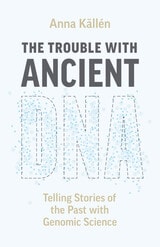
The Trouble with Ancient DNA
Telling Stories of the Past with Genomic ScienceAnna Källén
University of Chicago Press, 2025
In recent years, discoveries brought to light through analysis of ancient DNA—or aDNA—have made headlines around the world. While ancient DNA studies may appear to focus on laboratory science and objective results, the findings have also relied heavily on storytelling and can be influenced by political interests.
In The Trouble with Ancient DNA, Anna Källén explores how the parameters of genetic science influence the stories we tell about our ancient ancestors, questioning what narratives we can and should take at face value. Through accounts of migrations, warriors, and figures like Cheddar Man, we see enticing and potent narratives that reach far beyond what can be gathered from the scientific study of molecules alone. Rather, by privileging certain narratives and questions—like those about sex or eye and skin color—our stories of ancient DNA are spun around the structure of today’s methodologies, technologies, and popular and political interests. Källén considers how DNA is used to sensationalize stories, how its use poses questions of ethics and care, and who is responsible if stories of ancient DNA are adopted for dangerous political projects.
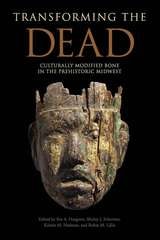
Transforming the Dead
Culturally Modified Bone in the Prehistoric MidwestEve A. Hargrave
University of Alabama Press, 2015
Revealing how the dead continued to shape the spiritual and social worlds of prehistoric North America.
Transforming the Dead is a collection of essays that examines culturally modified human bones and their roles as “cultural and ritual objects” among prehistoric Eastern Woodland cultures. Previous scholarship has explored the role of human body parts in Native American cultures as trophies of war and revered ancestors. This collection discusses new evidence that human elements were also important components of daily and ritual activities across the Eastern Woodlands. The contributors to this volume discuss each case study within the unique regional and temporal contexts of the material, rather than seeking universal answers to how these objects were used.
Most research addressing modified human bone has focused on cut marks and trauma associated with warfare, trophy taking, and burial practices. The editors and contributors of Transforming the Dead document the varied and often overlooked ways that human bone was intentionally modified through drilling, incising, cutting, and polishing for utilitarian, ornamental, spiritual, or ritual use. Examples include bracelets and gorgets to be worn, as well as musical rasps, pipe stems, masks, and protective talismans. The form and function of these objects are not unusual; their construction from the remains of “another” sets them apart.
Through a flexible but systematic analysis of the archaeological record, the contributors bring into focus how the careful selection, modification, and retention of particular bones or body parts of an individual after death offer insights into concepts of personhood, the body, life, and death among the prehistoric Native Americans in the Midwest.