Results by title
413 books match the query 'Pictorial works' and 80 start with t
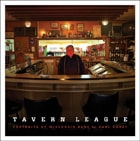
Tavern League
Portraits of Wisconsin BarsCarl Corey
Wisconsin Historical Society Press, 2011
In Tavern League, photographer Carl Corey documents a unique and important segment of the Wisconsin community. Our bars are unique micro-communities, offering patrons a sense of belonging. Many of these bars are the only public gathering place in the rural communities they serve. These simple taverns offer the individual the valuable opportunity for face to face conversation and camaraderie, particularly as people become more physically isolated through the accelerated use of the internet’s social networking, mobile texting, gaming, and the rapid-fire of email.
This collection of 60 pictures captures the Wisconsin tavern as it is today. Carl Corey’s view is both familiar and undeniably unique, his pictures resonant with anyone who has set foot in a Wisconsin tavern. As the Milwaukee Journal Sentinel’s Mary Louise Schumacher has written, “Carl Corey’s photographs . . . document iconic American places that are taken for granted. . . . They are comforting images, places we know, but also eerie and remote, presented with a sense of romance and nostalgia that suggests they are already past.”
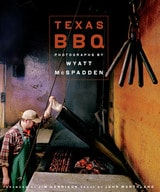
Texas BBQ
Photographs by Wyatt McSpaddenBy Wyatt McSpadden
University of Texas Press, 2009
To Texans, barbecue is elemental. Succulent, savory, perfumed with smoke and spice, it transcends the term "comfort food." It's downright heavenly, and it's also a staff of Texas life. Like a dust storm or a downpour, barbecue is a force of Texas nature, a stalwart tie to the state's cultural and culinary history. Though the word is often shortened to "BBQ," the tradition of barbecue stands Texas-tall.
Photographer Wyatt McSpadden has spent some twenty years documenting barbecue—specifically, the authentic family-owned cafes that are small-town mainstays. Traveling tens of thousands of miles, McSpadden has crisscrossed the state to visit scores of barbecue purveyors, from fabled sites like Kreuz's in Lockhart to remote spots like the Lazy H Smokehouse in Kirbyville. Color or black-and-white, wide angle or close up, his pictures convey the tradition and charm of barbecue. They allow the viewer to experience each place through all five senses. The shots of cooking meat and spiraling smoke make taste and smell almost tangible. McSpadden also captures the shabby appeal of the joints themselves, from huge, concrete-floored dining halls to tiny, un-air-conditioned shacks. Most of all, McSpadden conveys the primal physicality of barbecue—the heat of fire, the heft of meat, the slickness of juices—and also records ubiquitous touches such as ancient scarred carving blocks, torn screen doors and peeling linoleum, and toothpicks in a recycled pepper sauce jar.
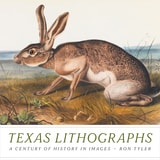
Texas Lithographs
A Century of History in ImagesRon Tyler
University of Texas Press, 2023
2024 Ewell L. Newman Book Award, American Historical Print Collectors Society
2024 Kate Broocks Bates Award for Historical Research, Texas State Historical Association
2024 TCU Texas Book Prize, Friends of the TCU Library and the TCU Press
2024 Kempner Family Book Prize—Nonfiction,The Philosophical Society of Texas
A stunning and comprehensive collection of lithographs from 1818 to 1900 Texas.
Westward expansion in the United States was deeply intertwined with the technological revolutions of the nineteenth century, from telegraphy to railroads. Among the most important of these, if often forgotten, was the lithograph. Before photography became a dominant medium, lithography—and later, chromolithography—enabled inexpensive reproduction of color illustrations, transforming journalism and marketing and nurturing, for the first time, a global visual culture. One of the great subjects of the lithography boom was an emerging Euro-American colony in the Americas: Texas.
The most complete collection of its kind—and quite possibly the most complete visual record of nineteenth-century Texas, period—Texas Lithographs is a gateway to the history of the Lone Star State in its most formative period. Ron Tyler assembles works from 1818 to 1900, many created by outsiders and newcomers promoting investment and settlement in Texas. Whether they depict the early French colony of Champ d’Asile, the Republic of Texas, and the war with Mexico, or urban growth, frontier exploration, and the key figures of a nascent Euro-American empire, the images collected here reflect an Eden of opportunity—a fairy-tale dream that remains foundational to Texans’ sense of self and to the world’s sense of Texas.
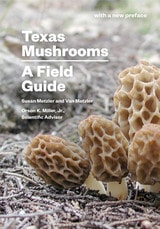
Texas Mushrooms
A Field GuideBy Susan and Van Metzler
University of Texas Press, 1992
Hundreds of species of mushrooms flourish in Texas, from the desert and semiarid regions of West Texas to the moist and acid soils of East Texas, where species that can also be found in South America live alongside those that might be spotted in Malaysia and Europe. Texas Mushrooms was the first—and is still the only—guide to all of the state’s mushrooms.
This colorful, easy-to-follow book will surprise and delight uninitiated nature enthusiasts while also supplying the experienced mushroom hunter with expert identification information. Excellent color photographs and precise descriptions of over 200 species will enable the mushroom hunter—even the amateur—to make quick, careful, easy distinctions between the edible varieties and the potentially toxic ones. In addition, kitchen-tested recipes are included, along with charts giving spore sizes and a list of recommended further reading.
In Texas, mushroom hunting can be a year-round, state-wide activity, and with this enticing field guide, collecting, identifying, and preparing wild mushrooms will become an activity the entire family can enjoy while appreciating the beauty of Texas from a new and fascinating angle.
Texas Takes Shape
A History in Maps from the General Land OfficeBy Mark Lambert, James Harkins, Brian A. Stauffer, and Patrick Walsh
University of Texas Press, 2025
2025 Second Place, Presidio La Bahía Award, Sons of the Republic of Texas
2026 Ron Tyler Award for Best Illustrated Book on Texas History and Culture, Texas State Historical Association (TSHA)
A comprehensive volume on historical mapping in Texas.
The Texas General Land Office’s map collection contains over 45,000 maps, some dating from the sixteenth century, making it one of the most important cartographic archives in Texas. As products and agents of history drawn by cartographers with motives and means as diverse as the places they document, maps provide a unique perspective on geopolitical, cultural, and economic processes. The maps of the GLO offer key insights into Texas’s sprawling history. They speak to issues of changing borders, social and political upheaval, and questions of sovereignty and power.
Texas Takes Shape offers an illuminating selection from the GLO archive: over one hundred maps that tell—and sometimes obscure—the stories of European colonization, Spanish and Mexican rule, the Republic of Texas, and the modern US state. There are maps here of every scale, from the hemispheric visions of European explorers to individual survey plats. Accompanying essays offer fascinating lessons on topics ranging from Indigenous cartography to military and railroad mapmaking and frontier surveys. Artful and informative, Texas Takes Shape examines a unique place through the eyes and imaginations of those who sought to govern it, profit from it, understand it, and call it home.
The Appalachians
America's First and Last FrontierMari-Lynn Evans
West Virginia University Press, 2013
A beautifully produced companion volume to the public television documentary The Appalachians fills the void in information about the region, offering a rich portrait of its history and its legacy in music, literature, and film. The text includes essays by some of Appalachia’s most respected scholars and journalists; excerpts from never-before-published diaries and journals; firsthand recollections from native Appalachians including Loretta Lynn, Ricky Skaggs, and Ralph Stanley; indigenous song lyrics and poetry; and oral histories from common folk whose roots run strong and deep. The book also includes more than one hundred illustrations, both archival and newly created. Here is a wondrous book celebrating a unique and valuable heritage.
The Art of Ectoplasm
Encounters with Winnipeg's Ghost PhotographsSerena Keshavjee
University of Manitoba Press, 2023
The Art of Medicine
Over 2,000 Years of Images and ImaginationJulie Anderson, Emm Barnes, and Emma Shackleton
University of Chicago Press, 2011
Since ancient times people have depended on medical practitioners to enhance life, to treat illness and injuries, and to help reduce pain and suffering. The scientifically based discipline that we know today stands beside diverse traditions, belief systems, and bodies of medical knowledge that have evolved in fascinating ways across cultures and continents. Throughout this history, successive generations have created artistic representations of these varied aspects of medicine, illustrating instruction manuals, documenting treatments, and creating works of art that enable individuals to express their feelings and ideas about medicine, health, and illness. From ancient wall paintings and tomb carvings to sculpture, installations, and digitally created artworks, the results are extraordinary and pay tribute to how medicine has affected our lives and the lives of our ancestors.
Drawing on the remarkable holdings of the Wellcome Collection in London, The Art of Medicine offers a unique gallery of rarely seen paintings, artifacts, drawings, prints, and extracts from manuscripts and manuals to provide a fascinating visual insight into our knowledge of the human body and mind, and how both have been treated with medicine. Julie Anderson, Emm Barnes, and Emma Shackleton take readers on a fascinating visual journey through the history of medical practice, exploring contemporary biomedical images, popular art, and caricature alongside venerable Chinese scrolls, prehistoric Mesoamerican drawings, paintings of the European Renaissance, medieval Persian manuscripts, and more. The result is a rare and remarkable visual account of what it was and is to be human in sickness and health.
The Art of Migration
Birds, Insects, and the Changing Seasons in ChicagolandPaintings by Peggy Macnamara
University of Chicago Press, 2013
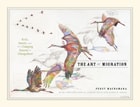
As the only artist in residence at the Field Museum, Peggy Macnamara has a unique vantage point for studying these patterns and capturing their distinctive traits. Her magnificent watercolor illustrations capture flocks, movement, and species-specific details. The illustrations are accompanied by text from museum staff and include details such as natural histories, notable features for identification, behavior, and how species have adapted to environmental changes. The book follows a gentle seasonal sequence and includes chapters on studying migration, artist’s notes on illustrating wildlife, and tips on the best ways to watch for birds and insects in the Chicago area.
A perfect balance of science and art, The Art of Migration will prompt us to marvel anew at the remarkable spectacle going on around us.
The Art of the Blues
A Visual Treasury of Black Music's Golden AgeBill Dahl
University of Chicago Press, 2016
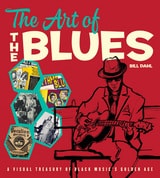
What will astonish readers who thumb through these pages is the amazing range of ways that the blues have been represented—whether via album covers, posters, flyers, 78 rpm labels, advertising, or other promotional materials. We see the blues as it was first visually captured in the highly colorful sheet music covers of the early twentieth century. We see striking and hard-to-find label designs from labels big (Columbia) and small (Rhumboogie). We see William Alexander’s humorous artwork on postwar Miltone Records; the cherished ephemera of concert and movie posters; and Chess Records’ iconic early albums designed by Don Bronstein, which would set a new standard for modern album cover design.
What these images collectively portray is the evolution of a distinctively American art form. And they do so in the richest way imaginable. The result is a sumptuous book, a visual treasury as alive in spirit as the music it so vibrantly captures.
The Bathers
Jennette Williams
Duke University Press, 2009
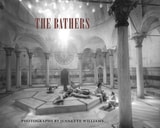
To create the images in The Bathers, Williams drew on gestures and poses found in iconic paintings of nude women, including tableaux of bathers by Paul Cézanne and Auguste Renoir, renderings of Venus by Giorgione and Titian, Dominique Ingres’s Odalisque and Slave, and Pablo Picasso’s Les Demoiselles d’Avignon. By alluding to these images and others, Williams sought to reflect the religious and mythological associations of water with birth and rebirth, comfort and healing, purification and blessing. She also used copies of the paintings to communicate with her Hungarian- and Turkish-speaking subjects—homemakers, factory workers, saleswomen, secretaries, managers, teachers, and students. Working in steam-filled environments, Williams created quiet, dignified images that evoke not only canonical representations of female nudes but also early pictorial photography. At the same time, they raise contemporary questions about the gaze, the definition of documentary photography, and the representation and perception of beauty and femininity, particularly as they relate to the aging body. Above all else, her photos are sensuously evocative. They invite the viewer to feel the steam, hear the murmur of conversation, and reflect on the allure of the female form.
A CDS Book
Published by Duke University Press and the Center for Documentary Photography
The Black Rock Desert
Text by William L. Fox; Photographs by Mark Klett
University of Arizona Press, 2002
The Book of Beetles
A Life-Size Guide to Six Hundred of Nature's GemsPatrice Bouchard
University of Chicago Press, 2014
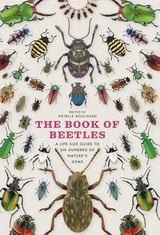
The Book of Beetles celebrates the beauty and diversity of this marvelous insect. Six hundred significant beetle species are covered, with each entry featuring a distribution map, basic biology, conservation status, and information on cultural and economic significance. Full-color photos show the beetles both at their actual size and enlarged to show details, such as the sextet of spots that distinguish the six-spotted tiger beetle or the jagged ridges of the giant-jawed sawyer beetle. Based in the most up-to-date science and accessibly written, the descriptive text will appeal to researchers and armchair coleopterists alike.
The humble beetle continues to grow in popularity, taking center stage in biodiversity studies, sustainable agriculture programs, and even the dining rooms of adventurous and eco-conscious chefs. The Book of Beetles is certain to become the authoritative reference on these remarkably adaptable and beautiful creatures.
The Book of Eggs
A Life-Size Guide to the Eggs of Six Hundred of the World's Bird SpeciesMark E. Hauber
University of Chicago Press, 2014
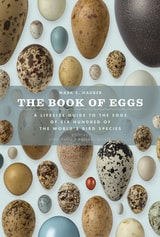
The Book of Eggs introduces readers to eggs from six hundred species—some endangered or extinct—from around the world and housed mostly at Chicago’s Field Museum of Natural History. Organized by habitat and taxonomy, the entries include newly commissioned photographs that reproduce each egg in full color and at actual size, as well as distribution maps and drawings and descriptions of the birds and their nests where the eggs are kept warm. Birds’ eggs are some of the most colorful and variable natural products in the wild, and each entry is also accompanied by a brief description that includes evolutionary explanations for the wide variety of colors and patterns, from camouflage designed to protect against predation, to thermoregulatory adaptations, to adjustments for the circumstances of a particular habitat or season. Throughout the book are fascinating facts to pique the curiosity of binocular-toting birdwatchers and budding amateurs alike. Female mallards, for instance, invest more energy to produce larger eggs when faced with the genetic windfall of an attractive mate. Some seabirds, like the cliff-dwelling guillemot, have adapted to produce long, pointed eggs, whose uneven weight distribution prevents them from rolling off rocky ledges into the sea.
A visually stunning and scientifically engaging guide to six hundred of the most intriguing eggs, from the pea-sized progeny of the smallest of hummingbirds to the eggs of the largest living bird, the ostrich, which can weigh up to five pounds, The Book of Eggs offers readers a rare, up-close look at these remarkable forms of animal life.
The Book of Leaves
A Leaf-by-Leaf Guide to Six Hundred of the World's Great TreesAllen J. Coombes
University of Chicago Press, 2010
Of all our childhood memories, few are quite as thrilling, or as tactile, as those of climbing trees. Scampering up the rough trunk, spying on the world from the cool green shelter of the canopy, lying on a limb and looking up through the leaves at the summer sun almost made it seem as if we were made for trees, and trees for us.Even in adulthood, trees retain their power, from the refreshing way their waves of green break the monotony of a cityscape to the way their autumn transformations take our breath away.
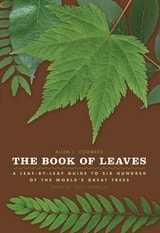
In this lavishly illustrated volume, the trees that have enriched our lives finally get their full due, through a focus on the humble leaves that serve, in a sense, as their public face. The Book of Leaves offers a visually stunning and scientifically engaging guide to six hundred of the most impressive and beautiful leaves from around the world. Each leaf is reproduced here at its actual size, in full color, and is accompanied by an explanation of the range, distribution, abundance, and habitat of the tree on which it’s found. Brief scientific and historical accounts of each tree and related species include fun-filled facts and anecdotes that broaden its portrait.
The Henry’s Maple, for instance, found in China and named for an Irish doctor who collected leaves there, bears little initial resemblance to the statuesque maples of North America, from its diminutive stature to its unusual trifoliolate leaves. Or the Mediterranean Olive, which has been known to live for more than 1,500 years and whose short, narrow leaves only fall after two or three years, pushed out in stages by the emergence of younger leaves.
From the familiar friends of our backyards to the giants of deep woods, The Book of Leaves brings the forest to life—and to our living rooms—as never before.
The Book of Seeds
A Life-Size Guide to Six Hundred Species from around the WorldEdited by Paul Smith
University of Chicago Press, 2018
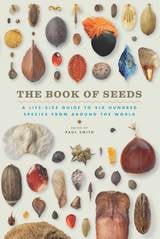
The Book of Seeds takes readers through six hundred of the world’s seed species, revealing their extraordinary beauty and rich diversity. Each page pairs a beautifully composed photo of a seed—life-size, and, in some cases, enlarged to display fine detail—with a short description, a map showing distribution, and information on conservation status. The whole spectrum of seeds is covered here. There are prolific species like corn and less widely distributed species, like the brilliant blue seeds of the traveler’s palm or the bird of paradise flower, aptly named for its distinctive orange coiffure. There are tiny seeds and seeds weighing up to forty pounds. And while seeds in all their shapes, sizes, and colors grant us sustenance, there are even some we would be wise to treat with caution, such as the rosary pea, whose seeds are considered more toxic than ricin.
The essential guide to these complex plant creations, The Book of Seeds offers readers a rare, up-close look that will inspire scientists and nature lovers alike.
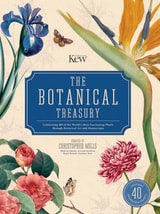
The Botanical Treasury
Celebrating 40 of the World’s Most Fascinating Plants through Historical Art and ManuscriptsEdited by Christopher Mills
University of Chicago Press, 2016
This treasury features a full-color exploration of our most important and interesting plants; facsimiles of rarely seen letters, maps, and journals from the Royal Botanic Gardens, Kew; and forty beautifully reproduced, frameable prints. Together they offer a fascinating look at the world of plant hunting and the cultivation of our knowledge about the plant world.
Every one of the featured plants is extraordinary in some way, be it for its appearance, biology, medicinal properties, or importance to economics, politics, or the arts. Equally extraordinary are the stories associated with the discovery of these plants, revealing the lengths to which collectors and growers would go to find them. The entries build a history of botany and paint a larger picture of the age of exploration.
The Botanical Treasury is a rare treat. Looking through its pages and relishing its prints allows us to fully understand why we are so driven to learn all we can about the natural world. It is an exceptional gift that will wow gardeners, and anyone else fascinated by the greenery that sustains and inspires us.
The Brazilian Photographs of Genevieve Naylor, 1940–1942
Robert M. Levine
Duke University Press, 1998
Working under the constraints of the Vargas dictatorship, the instructions of her employers, and a chronic shortage of film and photographic equipment, Naylor took advantage of the freedom granted her as an employee of the U.S. government. Traveling beyond the fashionable neighborhoods of Rio de Janeiro, she conveys in her work the excitement of an outside observer for whom all is fresh and new—along with a sensibility schooled in depression-era documentary photography of Dorothea Lange and Walker Evans, as well as the work of Cartier-Bresson and filmmaker Serge Eisenstein. Her subjects include the very rich and the very poor, black Carnival dancers, fishermen, rural peasants from the interior, workers crammed into trolleys—ordinary Brazilians in their own setting—rather than simply Brazilian symbols of progress as required by the dictatorship or a population viewed as exotic Latins for the consumption of North American travelers.
With Levine’s text providing details of Naylor’s life, perspectives on her photographs as social documents, and background on Brazil’s wartime relationship with the United States, this volume, illustrated with more than one hundred of Naylor’s Brazilian photographs will interest scholars of Brazilian culture and history, photojournalists and students of photography, and all readers seeking a broader perspective on Latin American culture during World War II.
Genevieve Naylor began her career as a photojournalist with Time, Fortune, and the Associated Press before being sent to Brazil. In 1943, upon her return, she became only the second woman to be the subject of a one-woman show at New York’s Museum of Modern Art. She served as Eleanor Roosevelt’s personal photographer and, in the 1950s and 1960s became well known for her work in Harper’s Bazaar, primarily as a fashion photographer and portraitist. She died in 1989.
The Bridges of New Jersey
Portraits of Garden State CrossingsSteven M. Richman
Rutgers University Press, 2005
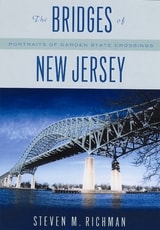
In The Bridges of New Jersey, Steven M. Richman provides a rare photographic and poetic journey across sixty of the state's bridges, ranging from impressive suspension spans such as the Ben Franklin and George Washington Bridges, to the small wrought iron and stone bridges that are cherished by local citizens. The book provides a rich diversity of stories that place the bridges in the context of New Jersey history and culture. Richman also explores the contribution New Jersey bridges have made to engineering-some of the most prominent engineers of the nineteenth and twentieth centuries either lived or established businesses in the Garden State or designed its bridges.
Lavishly illustrated with over seventy photographs, this book is much more than a documentary survey. It is a visual portrait that beautifully captures the metaphoric significance and aesthetic pleasures of New Jersey's bridges, and indeed all bridges. Perhaps more than any other structure built by humans, bridges typify progress and they give us a sense of connectedness. The Bridges of New Jersey provides a compelling visual demonstration of these symbolic functions, as well as their practical purposes and engineering accomplishments.
The Chicago River
An Illustrated History and Guide to the River and Its Waterways, Second EditionDavid M. Solzman
University of Chicago Press, 2006
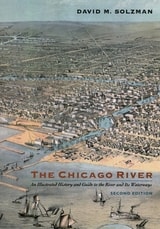
The river is indeed the soul of the city—it runs through the heart of downtown, and it is a vehicle for both pleasure and the industry that keeps Chicago humming. With The Chicago River, Solzman has succeeded in writing an encyclopedic work—at once guidebook and history—that explores the river’s physical character and natural history. Examining the river’s past, contemplating its present, and forecasting its future, Solzman draws on his unparalleled knowledge to point out places of scientific and historic interest—involving everything from infamous murder cases to invasive zebra mussels. The book’s 200 photographs and maps perfectly complement Solzman’s vivid prose, leading readers on a visual journey as sinuous as the river it celebrates—a journey interspersed with plenty of river lore, facts, and literary quotations.
Solzman, a veteran Chicago River tour guide, has also compiled a diverse collection of easy and enjoyable tours for anyone who wants to experience the river by foot, boat, canoe, or car. And he provides an appendix that lists river-related organizations, museums, tours, and riverfront restaurants and clubs.
With practical tips, evocative language, and an astonishing array of anecdotes, TheChicago River is the most comprehensive guide to the river and its waterways, the perfect companion for everyone from the active river enthusiast to the armchair traveler.
The Climb from Salt Lick
A Memoir of AppalachiaNancy L. Abrams
West Virginia University Press, 2018
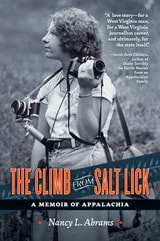
The Climb from Salt Lick is the remarkable memoir of an outsider coming into adulthood. It is the story of a unique place and its people from the perspective of a woman who documents its burdens and its beauty, using words and pictures to tell the rich stories of those around her.
The Color of Loss
An Intimate Portrait of New Orleans after KatrinaPhotographs and introduction by Dan Burkholder
University of Texas Press, 2008
The devastation of New Orleans after Hurricane Katrina has been imprinted in our collective visual memory by thousands of images in the media and books of dramatic photographs by Robert Polidori, Larry Towell, Chris Jordan, Debbie Fleming Caffrey, and others. New Orleanians want the world to see and respond to the destruction of their city and the suffering of its people—and yet so many images of so much destruction threaten a visual and emotional overload that would tempt us to avert our eyes and become numb.
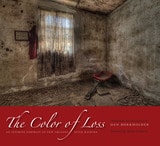
In The Color of Loss, Dan Burkholder presents a powerful new way of seeing the ravaged homes, churches, schools, and businesses of New Orleans. Using an innovative digital photographic technology called high dynamic range (HDR) imaging, in which multiple exposures are artistically blended to bring out details in the shadows and highlights that would be hidden in conventional photographs, he creates images that are almost like paintings in their richness of color and profusion of detail. Far more intense and poetic than purely documentary photographs, Burkholder's images lure viewers to linger over the artifacts of people's lives—a child's red wagon abandoned in a mud-caked room, a molding picture of Jesus—to fully understand the havoc thrust upon the people of New Orleans.
In the deserted, sinisterly beautiful rooms of The Color of Loss, we see how much of the splendor and texture of New Orleans washed away in the flood. This is the hidden truth of Katrina that Dan Burkholder has revealed.
The Deep
The Extraordinary Creatures of the AbyssClaire Nouvian
University of Chicago Press, 2007
On dry land, most organisms are confined to the surface, or at most to altitudes of a hundred meters—the height of the tallest trees. In the oceans, though, living space has both vertical and horizontal dimensions: with an average depth of 3800 meters, the oceans offer 99% of the space on Earth where life can develop. And the deep sea, which has been immersed in total darkness since the dawn of time, occupies 85% of ocean space, forming the planet’s largest habitat. Yet these depths abound with mystery. The deep sea is mostly uncharted—only about 5 percent of the seafloor has been mapped with any reasonable degree of detail—and we know very little about the creatures that call it home. Current estimates about the number of species yet to be found vary between ten and thirty million. The deep sea no longer has anything to prove; it is without doubt Earth’s largest reservoir of life.
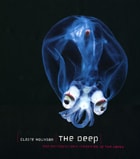
Combining the latest scientific discoveries with astonishing color imagery, The Deep takes readers on a voyage into the darkest realms of the ocean. Revealing nature’s oddest and most mesmerizing creatures in crystalline detail, The Deep features more than two hundred color photographs of terrifying sea monsters, living fossils, and ethereal bioluminescent creatures, some photographed here for the very first time. Accompanying these breathtaking photographs are contributions from some of the world’s most respected researchers that examine the biology of deep-sea organisms, the ecology of deep-sea habitats, and the history of deep-sea exploration.
An unforgettable visual and scientific tour of the teeming abyss, The Deep celebrates the incredible diversity of life on Earth and will captivate anyone intrigued by the unseen—and unimaginable—creatures of the deep sea.
The Denver Artists Guild
Its Founding Members; An Illustrated HistoryStan Cuba
University Press of Colorado, 2015
In 1928, the newly organized Denver Artists Guild held its inaugural exhibition in downtown Denver. Little did the participants realize that their initial effort would survive the Great Depression and World War II—and then outlive all of the group’s fifty-two charter members.
The guild’s founders worked in many media and pursued a variety of styles. In addition to the oils and watercolors one would expect were masterful pastels by Elsie Haddon Haynes, photographs by Laura Gilpin, sculpture by Gladys Caldwell Fisher and Arnold Rönnebeck, ceramics by Anne Van Briggle Ritter and Paul St. Gaudens, and collages by Pansy Stockton. Styles included realism, impressionism, regionalism, surrealism, and abstraction. Murals by Allen True, Vance Kirkland, John E. Thompson, Louise Ronnebeck, and others graced public and private buildings—secular and religious—in Colorado and throughout the United States. The guild’s artists didn’t just contribute to the fine and decorative arts of Colorado; they enhanced the national reputation of the state.
Then, in 1948, the Denver Artists Guild became the stage for a great public debate pitting traditional against modern. The twenty-year-old guild split apart as modernists bolted to form their own group, the Fifteen Colorado Artists. It was a seminal moment: some of the guild’s artists became great modernists, while others remained great traditionalists.
Enhanced by period photographs and reproductions of the founding members’ works, The Denver Artists Guild chronicles a vibrant yet overlooked chapter of Colorado’s cultural history. The book includes a walking tour of guild members’ paintings and sculptures viewable in Denver and elsewhere in Colorado, by Leah Naess and author Stan Cuba.
In honor of the book’s release, the Byers-Evans House Gallery will showcase a collection of founding guild members’ works starting June 26, 2015. The exhibit, also titled The Denver Artists Guild: Its Founding Members, contains paintings from artists such as the famed Paschal Quackenbush, Louise Ronnebeck, Albert Byron Olson, Elisabeth Spalding, Waldo Love and Vance Kirkland. The show will be on display through September 26, 2015.
The Dianshizhai Pictorial
Shanghai Urban Life, 1884–1898Ye Xiaoqing
University of Michigan Press, 2003
The Douglass Century
Transformation of the Women’s College at Rutgers UniversityDenda, Kayo
Rutgers University Press, 2018
The Douglass Century celebrates the college’s longevity and diversity as distinctive accomplishments, and analyzes the contributions of Douglass administrators, alumnae, and students to its survival, while also investigating multiple challenges that threatened its existence. This book demonstrates how changing historical circumstances altered the possibilities for women and the content of higher education, comparing the Jazz Age, American the Great Depression, the Second World War, the post-war Civil Rights era, and the resurgence of feminism in the 1970s and 1980s. Concluding in the present day, the authors highlight the college’s ongoing commitment to Mabel Smith Douglass’ founding vision, “to bring about an intellectual quickening, a cultural broadening in connection with specific training so that women may go out into the world fitted…for leadership…in the economic, political, and intellectual life of this nation.” In addition to providing a comprehensive history of the college, the book brings its subjects to life with eighty full-color images from the Special Collections and University Archives, Rutgers University Libraries.

The Drake Relays
America's Athletic ClassicDavid Peterson
University of Iowa Press, 2014
Pulitzer Prize–winning photographer David Peterson has been covering the Drake Relays for nearly forty years, but his love affair with the meet started earlier, when he ran on three winning relay teams there for Kansas State University. Now, drawing upon an unmatched personal archive, he offers the pictures of a lifetime spent on the Blue Oval. He captures on camera athletes of all levels in triumph and defeat, in mid-stride or leap, embracing their fans, their moms and dads, and their kids. In addition to the stars of the past, such as Carl Lewis, Suzy Favor Hamilton, and Herschel Walker, and those of the ’00s, like Lolo Jones and Jeremy Wariner, we see teenagers who may be the stars of the future, as well as the many athletes who will never be famous but nonetheless show themselves—and their sport—at their best.
A beautiful celebration of the Drake Relays and the diverse sports that make up “track and field,” this book will evoke memories and inspire runners, throwers, and jumpers everywhere.
The Echo of Things
The Lives of Photographs in the Solomon IslandsChristopher Wright
Duke University Press, 2013
The Elemental Prairie
Sixty Tallgrass PlantsOlson, George
University of Iowa Press, 2005
The Escape
From a Seventeenth-Century Drawing Manual of the Face and Its ExpressionsDavid Schutter
University of Chicago Press, 2021
Collected here, Schutter’s work recreates not the subject matter but the very values of Lebrun’s drawings—light, gesture, scale, and handling of materials. The cross-hatching in the original was used to make classical tone and volume, in Schutter’s hand the technique makes for unstable impressions of strained neck and deeply furrowed brow, or for drawing marks and scribbles unto themselves. As such, these drawings end up denying a neat closure—unlike their academic source material—and render unsettling states of mind that require repeated viewing. Accompanied by essays from art critic Barry Schwabsky and Neubauer Collegium curator Dieter Roelstraete, The Escape will appeal to students, critics, and admirers of seventeenth-century, modern, and contemporary art alike.
The Extraordinary Story of the Apple
David Mabberley and Barry Juniper
Royal Botanic Gardens, Kew, 2018
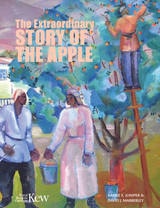
Using DNA evidence, Juniper and Mabberley trace the fruit’s geographical journey through time and across countries. They show how the apple has long been one of the most important fruits in the temperate regions of the world, and that it has been beloved since the times of the Persians, Greeks, and Romans. Its reach grew thanks to its reputation as a highly nutritional food source as well as one that is remarkably convenient, as the apple can be stored throughout a harsh winter or easily transported over long distances. The authors also examine the apple’s global influence on human culture. After all, it’s the fruit that played a key role in the fall of Adam and Eve, the inspiration for Newton’s Law of Gravity, and the rise of a tech behemoth.
With a nod to this book’s roots with the Royal Botanic Gardens, Kew, chapters also cover types of apple and apple crops, grafting techniques over time, archaeological discoveries, use as a food and in cider making, as well as the latest research in apple biology. This fascinating book is illustrated throughout with color illustrations, paintings, photographs, and line drawings, and will make the ideal read for gardeners, growers, botanists, historians, archaeologists and zoologists alike. The next time you pluck an apple from a supermarket bushel, you’ll understand the millennia of human—and Ursidae—influences on that humble fruit.

The Fifty-Year Texas Road Trip
On Assignment from Earth to UncertainRandy Mallory
University of North Texas Press, 2025
The Flowering Plants
Flowering Rush to RushesRobert H. Mohlenbrock
Southern Illinois University Press, 2006
The second edition of Flowering Plants: Flowering Rush to Rushes offers new material, including a preface, seventeen new illustrations of the additional species now known from Illinois, a revised list of illustrations, and an appendix of the additions and changes since 1970 in the identification, classification, and location of the plants included in the first edition. This new edition of the first volume in the multi-volume series of The Illustrated Flora of Illinois—which provides a working reference for the identification and classification of these plant forms in the state—includes flowering rushes, arrowheads, pondweeds, naiads, duckweeds, cattails, bur reeds, spiderworts, and rushes.
In his introduction, Robert H. Mohlenbrock defines terms and procedures used in the identification and classification of this group of flowering plants referred to as monocotyledons—plants that produce upon germination a single cotyledon or seed-leaf and are often identified by their tall, slender, grass-like leaves. He outlines the life histories and morphologies of the representative monocots and illustrates the plants’ habits and frequencies in Illinois.
Geared to the amateur as well as the professional botanist, the volume includes a glossary of definitions and identification keys to classify the plants according to order, family, genus, and species. The identifying characteristics of each descending class are also given in detail. The morphology of each species is outlined along with data on frequency of occurrence, related soil and climate conditions, and history of past collections. Among the 125 illustrations are detailed sketches of the important features of each species and maps indicating the geographical locations of each species in Illinois.
The Golden Age of Boston Television
Terry Ann Knopf
University Press of New England, 2017
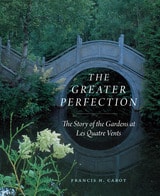
The Greater Perfection
The Story of the Gardens at Les Quatre VentsFrancis H. Cabot
University of Chicago Press, 2023
Featured in the 2018 film The Gardener, Les Quatre Vents in Charlevoix County, Quebec, has been acclaimed as the most aesthetically satisfying and horticulturally exciting landscape experience in North America. This twenty-acre garden seamlessly combines traditional and novel elements into a splendid composition, adorned with unexpected touches and perfectly compatible with its natural surroundings.
The Greater Perfection, first published in 2001, illustrates the delights, diversions, and surprises that await the garden’s visitors. Francis H. Cabot’s account of the challenges he faced in developing Les Quatre Vents reveals the fascinating process behind the creation of a world-class garden that has become a mecca for horticultural enthusiasts around the globe. Winner of the 2003 Annual Literature Award of the Council on Botanical and Horticultural Libraries and featuring stunning full-color images by five leading garden photographers, The Greater Perfection is one of the most beautiful books on gardens to appear in years. This new printing includes a foreword by Marianne Cabot Welch, Cabot’s daughter, that further contextualizes the gardens and explores how a place rooted in the past can confront the future.
The Guide to Oklahoma Wildflowers
Patricia Folley
University of Iowa Press, 2012
The Hanford Reach
A Land of ContrastsText by Susan Zwinger; Photographs by Skip Smith
University of Arizona Press, 2004
The Important Plant Areas of Mozambique
Edited by Iain Darbyshire, Sophie Richards, and Jo Osborne
Royal Botanic Gardens, Kew, 2023
The Important Plant Areas of Mozambique is based on the Mozambique TIPAs project run in collaboration between Royal Botanic Gardens, Kew, Mozambique’s Agricultural Research Institute (Instituto de Investigação Agrária de Moçambique – IIAM), and the University Eduardo Mondlane. Drawing on information from the TIPAs database, The Important Plant Areas of Mozambique includes color maps and photographs, site descriptions, and tables to present information on the botanical significance, habitat, and geology of the region. The book will also address conservation issues and ecosystem services to promote Mozambique’s critical plant sites and inform conservation leaders in government, NGOs, universities, and local communities about Mozambique’s threatened habitats.
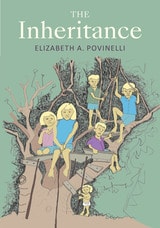
The Inheritance
Elizabeth A. Povinelli
Duke University Press, 2021

The Iowa State Fair
Kurt Ullrich
University of Iowa Press, 2014
In 2013, Kurt Ullrich set out to chronicle the magic of the Iowa State Fair in words and photographs. Join him as August days and nights blow warm and easy over the fairgrounds, brushing lightly against fellow travelers on this earth, both human and not. He captures precious moments of extreme joy and unbridled delight in these beautiful black-and-white images, celebrating the brash rural energy of the fair, from Big Wheel races to people-watching goats, fair queen contestants to arm wrestlers, Percherons to ponies. Prize pigs, prize sheep, prize apples, and the famous butter cow all have their moment in the limelight. Iowa’s very best ear of corn and old friends reminiscing outside their RVs draw the photographer’s fond eye, as do brightly lit beer stands and the brilliant arc of the Ferris wheel against the night sky.
If you always go to the Iowa State Fair, this book is for you. If you’ve never been, it will show you what you’re missing—and you’ll understand why it’s well past time you dropped by.
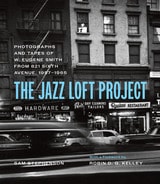
The Jazz Loft Project
Photographs and Tapes of W. Eugene Smith from 821 Sixth Avenue, 1957–1965W. Eugene Smith and Sam Stephenson
University of Chicago Press, 2023
In 1957, Eugene Smith walked away from his longtime job at Life and the home he shared with his wife and four children to move into a dilapidated, five-story loft building at 821 Sixth Avenue in New York City’s wholesale flower district. The loft was the late-night haunt of musicians, including some of the biggest names in jazz—Charles Mingus, Zoot Sims, Bill Evans, and Thelonious Monk among them. Here, from 1957 to 1965, he made nearly 40,000 photographs and approximately 4,000 hours of recordings of musicians. Smith found solace in the chaotic, somnambulistic world of the loft and its artists, and he turned his documentary impulses away from work on his major Pittsburg photo essay and toward his new surroundings.
Smith’s Jazz Loft Project has been legendary in the worlds of art, photography, and music for more than forty years, but until the publication of this book, no one had seen his extraordinary photographs or read any of the firsthand accounts of those who were there and lived to tell the tales.
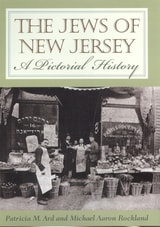
The Jews of New Jersey
A Pictorial HistoryPatricia M. Ard and Michael Aaron Rockland
Rutgers University Press, 2001
Jews have called New Jersey home since the late seventeenth century, and they currently make up almost 6 percent of the states residents. Yet, until now, no book has paid tribute to the richness of Jewish heritage in the Garden State. The Jews of New Jersey: A Pictorial History redresses this lack with a lively narrative and hundreds of archival and family photographsmany rarethat bring this history to life.
Patricia Ard and Michael Rockland focus on representative Jewish communities throughout the state, paying particular attention to the extraordinary stories of ordinary people. Through the joys and struggles of homemakers, storekeepers, factory workers, athletes, children, farmers, activists, religious leaders, and Holocaust survivors, the authors tell the stories of how these communities have evolved, thrived, and changed. They note the difficulties posed by intermarriage and assimilation and, at the same time, depict a burgeoning revival of Jewish orthodoxy and traditions.
The Jews of New Jersey will please both the historian and general reader. Its heartwarming stories and pictures truly make the point that it is through the joys, triumphs, and defeats of everyday people that history is made.

The Last River
Life Along Arkansas's Lower WhiteTurner Browne
University of Arkansas Press, 1993

The Lincoln Highway
Main Street across America, A Tenth Aniversary EditionDrake Hokanson
University of Iowa Press, 1999
Ten years after its original publication, Drake Hokanson's best-selling book continues to inspire readers to leave the interstate for a road less traveled, but one that still fuels the American preoccupation with the open road.
In his new introduction to this tenth anniversary edition, Hokanson revisits the Lincoln Highway and finds it changed—much for the better—since the original publication of this book. Most notably, he calls attention to the reinvigorated Lincoln Highway Association and its efforts to preserve what is left of the old road. Hokanson finds more and more tourists traveling the road—not only Americans but foreigners as well—by car, bus, and motorcycle on journeys not to any particular destination, but simply to see America.

The Lincoln Image
ABRAHAM LINCOLN AND THE POPULAR PRINTHarold Holzer, Gabor S. Boritt, and Mark E . Neely Jr.
University of Illinois Press, 1984
The Modern Cowboy
John R. Erickson
University of North Texas Press, 2004
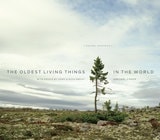
The Oldest Living Things in the World
Rachel Sussman
University of Chicago Press, 2014
Her work is both timeless and timely, and spans disciplines, continents, and millennia. It is underscored by an innate environmentalism and driven by Sussman’s relentless curiosity. She begins at “year zero,” and looks back from there, photographing the past in the present. These ancient individuals live on every continent and range from Greenlandic lichens that grow only one centimeter a century, to unique desert shrubs in Africa and South America, a predatory fungus in Oregon, Caribbean brain coral, to an 80,000-year-old colony of aspen in Utah. Sussman journeyed to Antarctica to photograph 5,500-year-old moss; Australia for stromatolites, primeval organisms tied to the oxygenation of the planet and the beginnings of life on Earth; and to Tasmania to capture a 43,600-year-old self-propagating shrub that’s the last individual of its kind. Her portraits reveal the living history of our planet—and what we stand to lose in the future. These ancient survivors have weathered millennia in some of the world’s most extreme environments, yet climate change and human encroachment have put many of them in danger. Two of her subjects have already met with untimely deaths by human hands.
Alongside the photographs, Sussman relays fascinating – and sometimes harrowing – tales of her global adventures tracking down her subjects and shares insights from the scientists who research them. The oldest living things in the world are a record and celebration of the past, a call to action in the present, and a barometer of our future.
The Paper Zoo
500 Years of Animals in ArtCharlotte Sleigh
University of Chicago Press, 2017
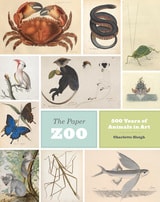
In this stunning book, historian of science Charlotte Sleigh draws on the ultimate bibliophile’s menagerie—the collections of the British Library—to present a lavishly illustrated homage to this historical collaboration between art and science. Gathering together a breathtaking range of nature illustrations from manuscripts, prints, drawings, and rare printed books from across the world, Sleigh brings us face to face (or face to tentacle) with images of butterflies, beetles, and spiders, of shells, fish, and coral polyps. Organized into four themed sections—exotic, native, domestic, and paradoxical—the images introduce us to some of the world’s most renowned natural history illustrators, from John James Audubon to Mark Catesby and Ernst Haeckel, as well as to lesser-known artists. In her accompanying text, Sleigh traces the story of the art of natural history from the Renaissance through the great age of exploration and into the nineteenth century, offering insight into the changing connections between the natural and human worlds.
But the story does not end there. From caterpillars to crabs, langurs to dugongs, stick insects to Old English pigs; from the sinuous tail feathers of birds of paradise to the lime-green wings of New Zealand’s enormous flightless parrot, the kakapo; from the crenellated plates of a tortoise’s shell to imagined likenesses of unicorns, mermaids, and dinosaurs, the story continues in this book. It is a Paper Zoo for all time.
The River Knows Everything
Desolation Canyon and the GreenJames M Aton
Utah State University Press, 2009
The Road to Mexico
Lawrence J. Taylor and Maeve Hickey
University of Arizona Press, 1997
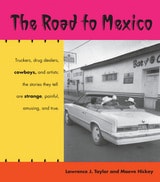
Equipped with camera, pen, and a lively curiosity, photographer Maeve Hickey and writer Lawrence J. Taylor set out to capture whatever might come their way on the road to Mexico. They roamed and rambled, they stayed well off the beaten track, and they talked to nearly everyone they met, from wisecracking waitresses to landed gentry to street urchins dressed in rags. Their book brings to life the calf ropers and casinos, the saints and sinners, the mariachis and miracles in a no-man's-land that sometimes seems to belong neither to the United States nor to Mexico.
Following the footsteps of earlier travelers-traders, warriors, missionaries, and explorers-these modern pilgrims take a hands-on approach to their journey. Throughout, both writer and photographer convey the sizzle and spice of a land where Indian, Mexican, and Anglo worlds have collided, coexisted, and melted into each other for centuries. Their eye for the hidden telling detail carries the reader straight into the action, and their zest for excitement spurs any traveler to drop everything, grab a bag, and hit the road to Mexico.